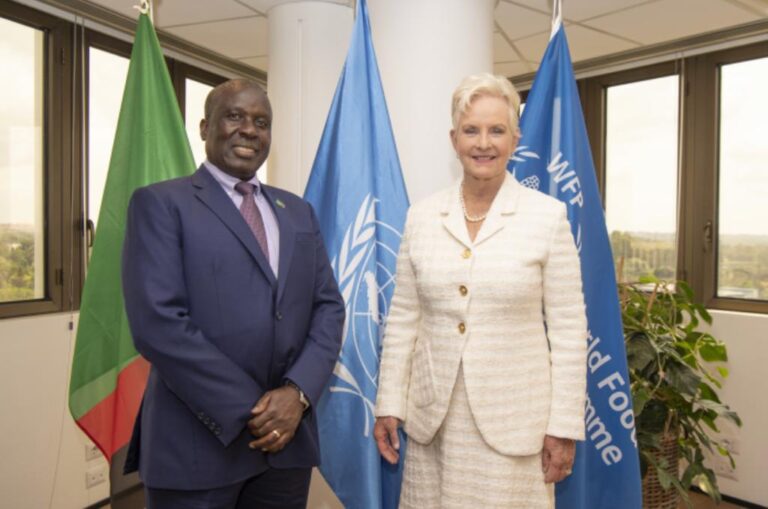
President Hakainde Hichilema pledges to double Zambia’s economy after August 2026 elections by positioning provinces as development engines.
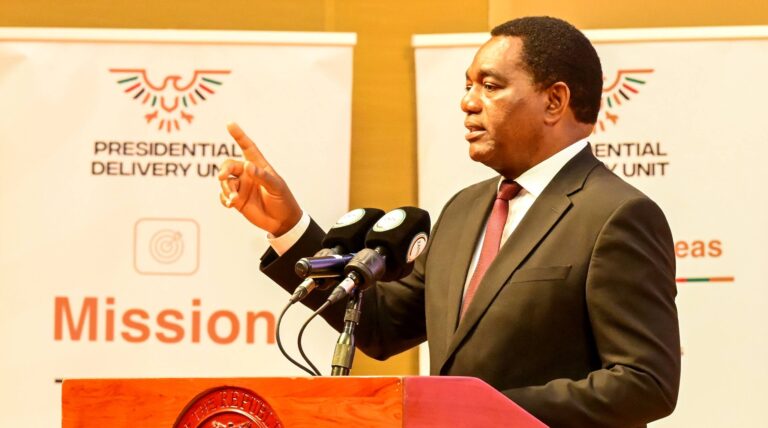
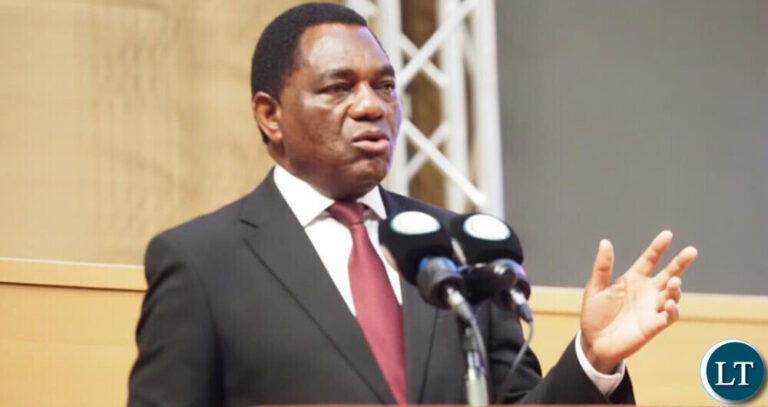
Speaking at the Presidential Delivery Unit National Delivery Day in Lusaka yesterday, Hichilema cited medicine availability rising above 80 percent and declining maternal mortality as evidence of policy effectiveness. The President addressed provincial leadership, civil servants and private sector representatives gathered to review implementation progress under the Eighth National Development Plan.
The Public-Private Dialogue Forum and Presidential Delivery Unit, introduced in 2023, transformed public sector delivery from laissez-faire to results-oriented service, Hichilema said. He noted that when he took office in 2021, unnecessary processes hampered government action, requiring structured intervention to unlock implementation capacity across ministries.
Hichilema highlighted Copperbelt Energy Corporation and ZCCM-Investment Holdings capitalisation increases as proof of improved investment climate, with market values rising from US$300 million to US$1 billion and US$350 million to US$2 billion respectively between 2021 and 2025. ZCCM-IH Chairperson Phesto Musonda commended the PDU for ensuring economic reforms reach line ministries responsible for mining, energy and agriculture sectors.
The decentralised development strategy shifts implementation authority to provincial centres, aiming to distribute growth beyond traditional urban hubs. This approach aligns with the Eighth National Development Plan’s emphasis on regional economic participation and resource allocation. Treasury Secretary Felix Nkulukusa said the revised 2026 Benchmark Bond Policy will make domestic bond markets more predictable and efficient, supporting government borrowing strategy.
Agriculture remains central to the economic agenda, with maize production projected at four million tonnes this year. Hichilema described surplus management through value addition and market access expansion as critical to sustaining farmer incomes and food security. He noted that increased maize availability could reduce pressure on illegal cross-border exports by providing alternative domestic supply channels.
“National interest must come before personal interest,” Hichilema said, calling for unity across public and private sectors to achieve coordinated development outcomes.
The government’s focus on provincial empowerment coincides with the Constituency Development Fund increase to K40 million per constituency, which has delivered 13,581 community projects including 4,090 classrooms and 830 health posts. Grade nine pass rates rose from 54.4 percent to 72.2 percent under the expanded fund, according to PDU reports presented at the event.
Commerce Minister Chipoka Mulenga confirmed the night travel ban on commercial vehicles lifts April 1 via Statutory Instrument, supporting the Kazungula One Stop Border Post’s 24-hour operations with Botswana. This measure advances the 24-hour economy vision and cross-border trade facilitation, with the Southern Africa Development Community Truckers Association welcoming the policy shift.
With general elections scheduled for August 2026, the administration faces pressure to demonstrate tangible results from policy interventions before voters decide. Opposition figures have questioned whether provincial decentralisation can deliver measurable improvements within the remaining campaign period, though Economic Front president Wynter Kabimba stated that elections do not warrant suspension of legal accountability mechanisms.
Economic indicators including copper production targets of 3 million tonnes annually by 2031 and beef export revenue goals of $1 billion per year require sustained investment and policy consistency beyond the electoral cycle. The Zambia Association of Manufacturers has called for tailored financing solutions to support productivity gains in the manufacturing sector.
The Presidential Delivery Unit will coordinate ministry performance tracking against Eighth National Development Plan benchmarks, with quarterly public reporting on provincial development metrics starting next month.