
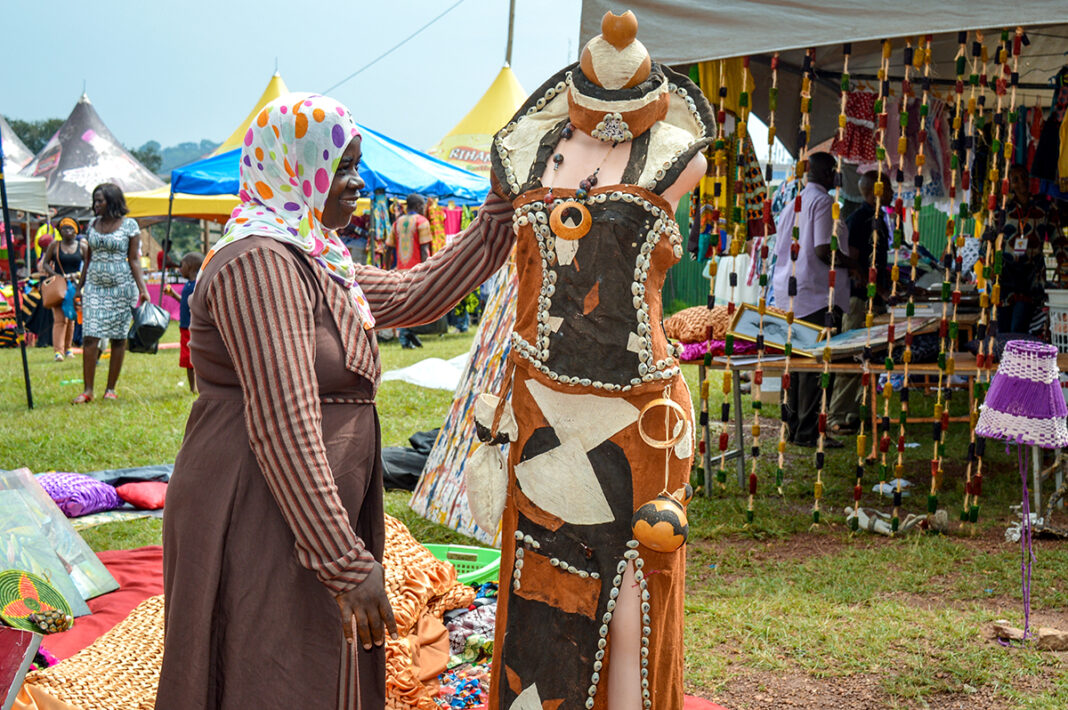
The women are part of a community training programme that teaches how to extract natural colours from tree bark, leaves, fruits and vegetables to produce dyes used in making shirts, bags and dresses.
The initiative is being spearheaded by Twaabane Creative Centre under the Tongabezi Trust School, where local residents are trained in textile production and natural dyeing techniques.
Speaking during an exhibition at the Livingstone International Cultural and Arts Festival, head of production Timothy Siachibuye said the project has grown from a small school experiment into a fully registered TEVETA training centre.
“This programme is not just about training, it is about giving people a way to earn a living while protecting the environment through the use of natural materials like tree bark,” he said.
The centre currently accommodates about 25 trainees per intake due to limited machinery, with around 100 beneficiaries having already completed the programme across four cohorts.
To support participants, each trainee receives a daily allowance of K15 during the training period—an initiative that has helped attract more women into the programme. Some graduates have since been retained as trainers, ensuring skills are passed on within the community.
Despite its success, the project faces challenges such as limited equipment and resources, which restrict the number of people who can be trained at a time.
Even so, the initiative is steadily evolving into a hub for eco-friendly textile innovation, with plans to expand production and establish a sustainable batik industry driven by natural dyes.
“Our goal is to build something that will last and create opportunities for future generations while preserving our environment,” Siachibuye said.




Muslim from where???