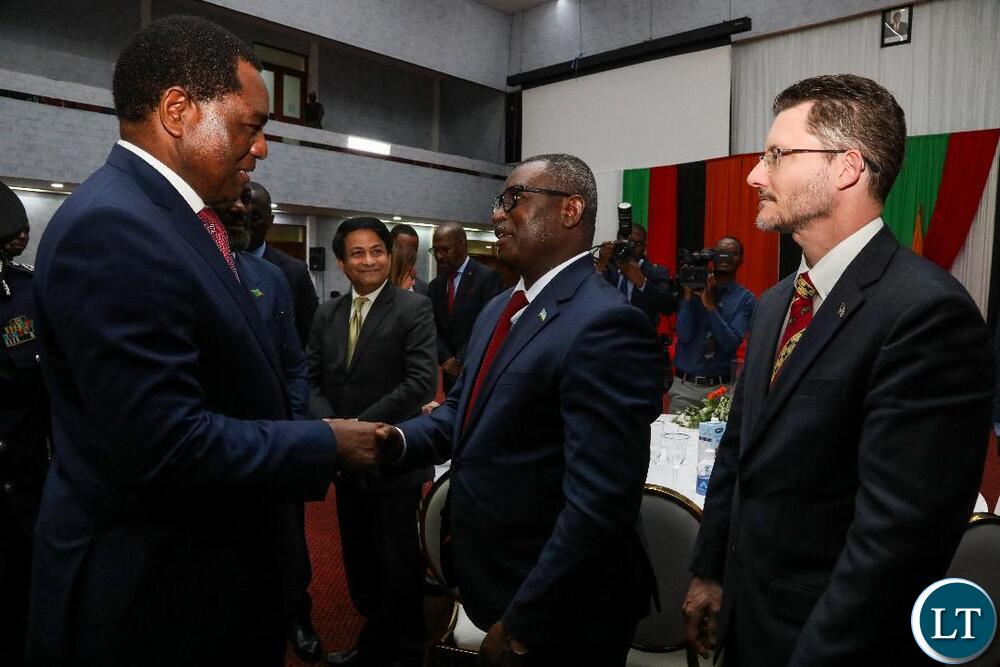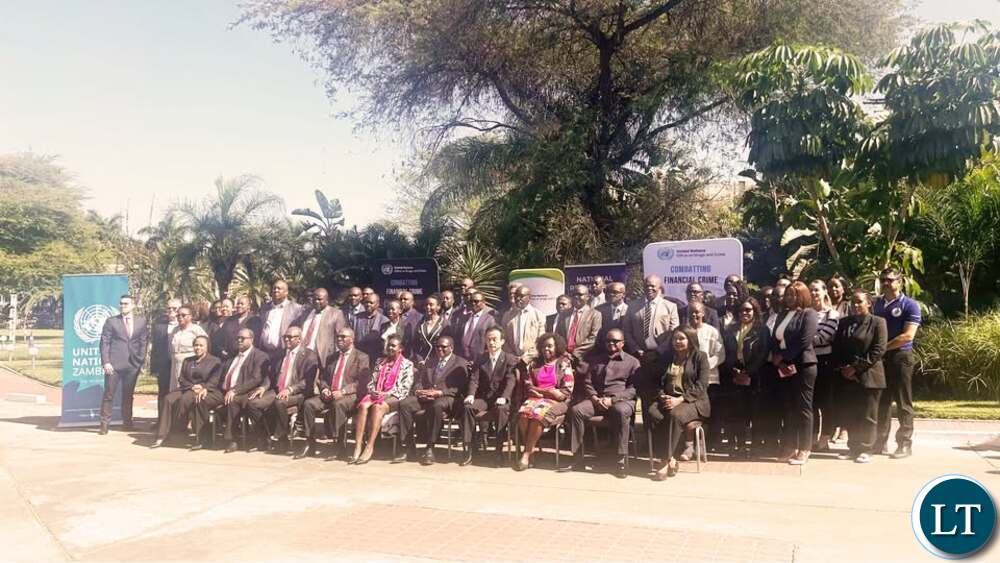
Attorney General, Mulilo Kabesha, has officially launched a United Nations (UN) Office on Drugs and Crime (UNODC) Project aimed at promoting economic development, trade facilitation and responsible business along the Lobito Corridor.
Speaking at the event, Mr Kabesha said the corridor is more than a transport route, but a strategic economic lifeline with potential to redefine trade, investment, industrial growth, and regional cooperation across southern and Central Africa.
Mr Kabesha further stated that the project, funded by the Government of Japan and implemented with UNODC and other partners, seeks to strengthen governance, transparency and anti-corruption measures as trade and investment along the corridor increase.
Mr Kabesha highlighted that Zambia’s role in the corridor aligns with regional integration goals under the Southern African Development Community (SADC) and the African Continental Free Trade Agreement.
“Africa’s prosperity will be built through cooperation, connectivity, and collective ambition,” he said.
Mr Kabesha also stressed that infrastructure alone would not deliver lasting growth but true and lasting economic development must be anchored on strong governance, transparency, accountability, and ethical business conduct.
The Attorney General urged business leaders to adopt the National Corporate Governance Code, saying it was a strategic framework designed to promote ethical leadership, responsible decision making, and transparency, accountability, risk management, and long term sustainability.
He added that good governance is now a requirement for investors, financial institutions and development partners.
Mr Kabesha also highlighted Zambia’s role in negotiating the Lobito Corridor Transit Transport Facilitation Agreement signed in January 2023 by Angola, Zambia and the Democratic Republic of Congo (DRC), and a Memorandum of Understanding signed in Brussels in October 2023 with the African Development Bank, EU and US.
He said his office had pushed for changes to ensure the MoU respected Zambia’s jurisdiction.
Mr Kabesha added that the project aims to reduce the cost of doing business, connect Zambian enterprises to global markets, and safeguard against illicit trade, money laundering and organised crime.
“Along this corridor, investment must benefit communities, trade must promote shared prosperity, and development must be inclusive, sustainable, and secure,” he said.
Japanese Ambassador to Zambia, Takeuchi Kazuyuki, has pledged continued support for Zambia and the DRC to build a Lobito Corridor that drives trade while upholding integrity, transparency and inclusivity.
Ambassador Takeuchi said the initiative reflected Japan’s commitment to sustainable growth in the region.
“The Lobito Corridor is not merely a transport route. It is a right path for regional integration, trade and prosperity,” he said, adding that while the corridor offers transformative opportunities, it also faces serious risks, including illicit financial flows such as tax evasion and smuggling, and inconsistent enforcement.
Mr Takeuchi further noted that his country stands ready to work with governments and development partners to strengthen institutional resilience and safeguard the corridor’s integrity.
The Ambassador commended Zambia’s coordination efforts, noting that under the Director of Public Prosecutions, more than 22 ministries, regulators and law enforcement bodies had come together to disrupt financial crime.
“The UNODC project, he said, would complement this by training law enforcement and criminal justice officials and supporting intelligence sharing and joint operations with agencies such as the Anti – Corruption Commission (ACC) and Drug Enforcement Commission (DEC) under SADC frameworks,” he said
Ambassador Takeuchi also highlighted Japan’s interest in Zambia’s mining sector, which he said was vital to the global green energy transition.
“Japan is committed to working with Zambia to develop responsible supply chains for critical minerals essential for green technologies and advanced technologies,” he said.
Meanwhile, Angola’s Ambassador to Zambia, Albino Malungo, called on public and private partners to ensure economic activities along the corridor were fair, transparent and inclusive.
“The success of this programme depends on your efforts, engagement, and your presence.
And, DRC Ambassador to Zambia, Didier Bapanga, said the Lobito corridor offers Africa a new chapter to write and grow the economy.
“The Lobito corridor is naturally impacting, and will create jobs,” he said.
United Nations Resident Coordinator, Beatrice Mutali, said the project effectiveness depends on harmonised policies, strong institutions and robust governance including aligned customs, trade and regulatory frameworks across borders.