Ministry of Technology and Science says the Artificial Intelligence Readiness Assessment Methodology RAM 2.0 process will shape the next phase of the country’s AI policy as the current National AI Strategy expires this year.
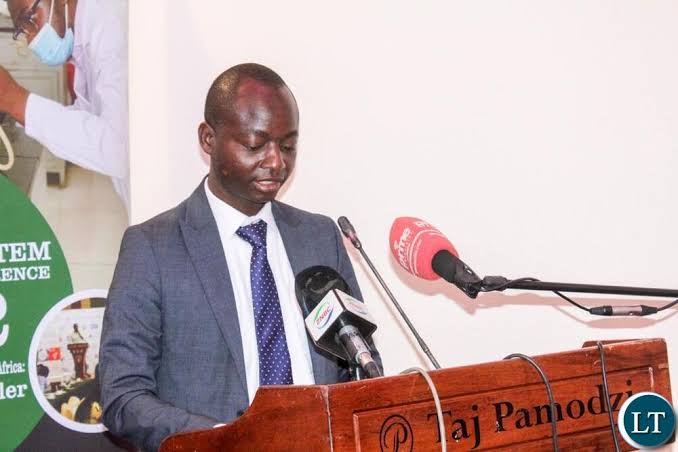
Ministry of Technology and Science Permanent Secretary Brilliant Habeenzu said that AI is driving unprecedented global transformation.
The Permanent Secretary cited projections that the global AI market could exceed $5 billion in 2026 and reach several trillion dollars by early 2030s, with AI contributing significantly to productivity, growth and GDP expansion.
Dr Habeenzu was speaking at the official opening of a two-day Expert Consultation on the UNESCO Artificial Intelligence Readiness Assessment Methodology RAM 2.0 in Lusaka.
He stated that the continent stands to gain, with African Development Bank studies projecting that inclusive and responsible AI development could add up to $1 trillion to Africa’s GDP by 2035 which is equivalent to nearly one third of the continent’s current economic output.
“Zambia, therefore, can take advantage of this growth to unlock substantial opportunities, particularly in agriculture, health care, mining, education, finance, and public services,” he stated.
Dr Habeenzu indicated that AI can help with improved ergonomics and service delivery in health, resource optimisation and safety in mining, personalised learning in education, fintech inclusion, and citizen-centric governance
And United Nations Educational, Scientific, Cultural Organisation (UNESCO) Regional Head for Human and Social Sciences, Abdul Lamin noted that AI is transforming economies, public services, health, education, labour markets and governance worldwide.
Dr Lamin noted that in 2021 UNESCO member states, including Zambia, adopted recommendations on the Ethics of Artificial Intelligence, the first global normative instrument on the technology.
He added that Zambia was chosen among global pilot countries for the revised RAM 2.0 methodology, reflecting its growing leadership in digital transformation and commitment to aligning AI with national objectives and international ethical standards.
Dr Lamin stressed that the existence of a strategy should not be mistaken for institutional readiness.
“Successful implementation requires governance structures, regulatory frameworks, infrastructure, research, skills and safeguards.
“With the current strategy expiring at the end of 2026, RAM 2.0 offers an evidence-based chance to take stock, assess institutional capacity, and generate recommendations for the next strategy and governance framework, ” he explained.
He emphasised that the value is not just the final report but the multi stakeholder process involving government, academia, industry, civil society, youth and media.