
By Mukumbuta Liswaniso
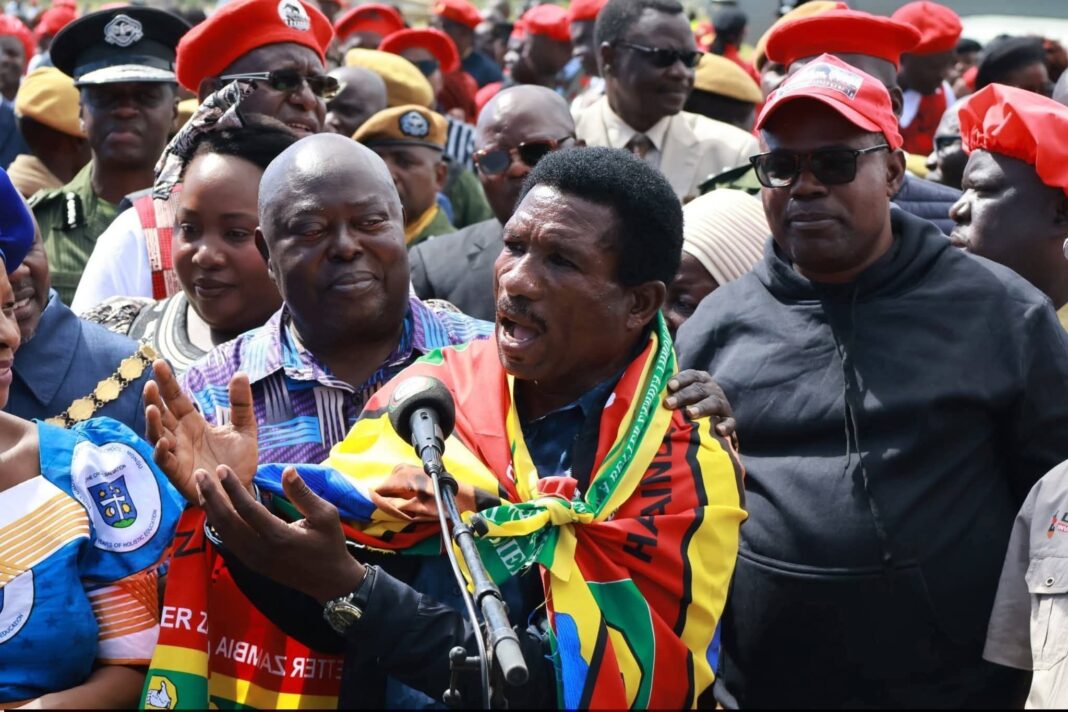
MONGU, March 29, 2026 — A steady stream of defections into the United Party for National Development is reshaping Zambia’s political field ahead of the August elections, concentrating influence around the ruling party while steadily draining capacity from its rivals.
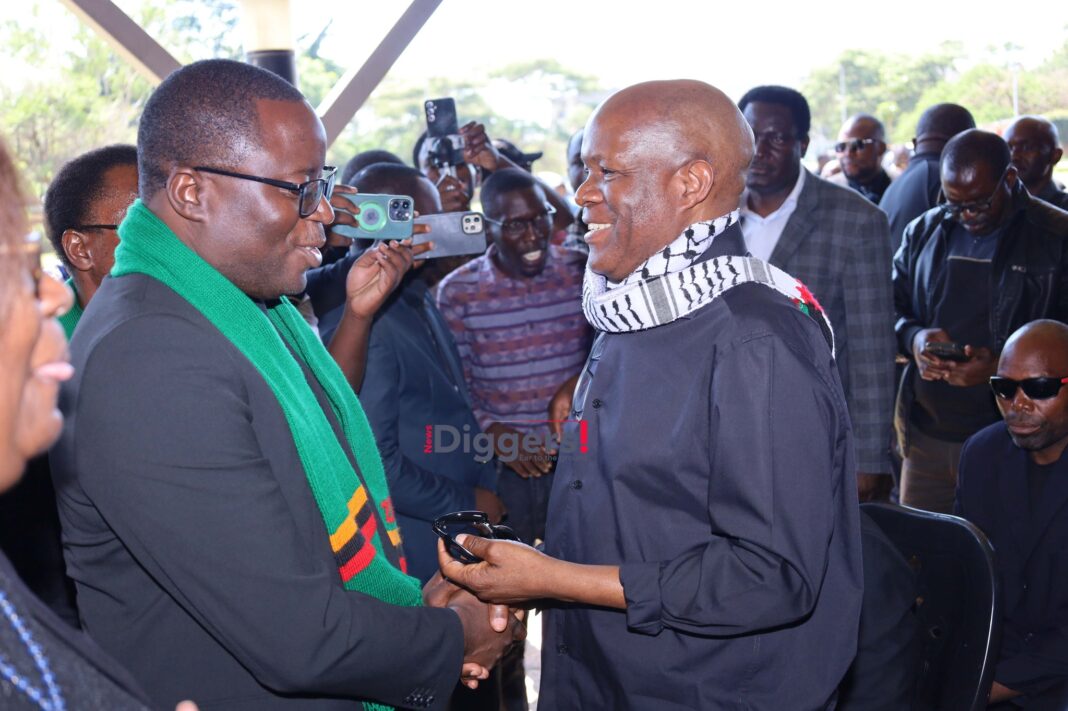
Recent crossings, including that of former minister Michael Katambo, reflect a pattern that has moved beyond isolated decisions. The frequency and profile of those leaving opposition ranks point to a shift in political positioning that is unfolding across the system rather than within a single party structure.
UPND Media Director Mark Simuuwe has described the movement as a national realignment, presenting it in Mongu during the Kuomboka Ceremony as a sign that leaders are aligning with stability and direction under President Hakainde Hichilema. The message from within the ruling party is consistent — momentum is building, and it is drawing actors toward a centre that is expanding both numerically and geographically.
Opposition parties have entered this moment already weakened. Internal disputes, leadership struggles and inconsistent messaging have eroded cohesion, leaving structures exposed at a time when resilience is required. Those weaknesses have created openings that are now being filled at speed.
Movement at this scale signals a broader recalibration. Political actors are adjusting to a landscape where remaining outside the ruling structure carries increasing difficulty, particularly for those whose influence depends on visibility, access and sustained relevance.
The consequences are visible in how opposition parties now function. Campaign structures are thinning. Coordination is weakening. Messaging lacks the consistency required to hold ground nationally. Each departure compounds the strain, reducing both organisational strength and the ability to present a unified political alternative.
That erosion extends into Parliament, where numbers shape the tone of engagement. A reduced opposition presence alters the intensity of scrutiny, lowers resistance to government positions and changes how legislative processes unfold. Oversight remains, but its force is diminished as the balance shifts further in one direction.
The pattern builds through accumulation rather than rupture. Each defection reinforces the next, gradually redistributing influence until the shift becomes unmistakable in how political space is occupied.
Economic signals are reinforcing that movement. Renewed activity in the mining sector, including developments at Mopani Copper Mines and the expansion of the Lumwana project, has strengthened perceptions of stability around the ruling party. That perception carries political weight, drawing actors toward a centre that appears both durable and dominant.
Alignment under those conditions becomes easier to justify. The ruling party’s position is strengthened not only by policy direction but by the growing belief that it anchors the country’s economic trajectory. Momentum gathers around that perception, pulling more actors into the same orbit.
Opposition structures, already under strain, are left with less room to stabilise. Political competition depends on organisation, endurance and the ability to project a coherent presence across regions. When those elements weaken, competition does not disappear immediately, but it becomes thinner, less coordinated and increasingly reactive.
The change takes hold gradually, without a single defining moment. Influence consolidates step by step, reshaping the political field in ways that become clear only once the imbalance has taken form.
The ruling party presents the moment as consolidation — an expansion of reach, mandate and national direction. At the same time, opposition space is contracting under sustained pressure, with fewer actors able to organise effectively outside the dominant structure.
Both realities are unfolding simultaneously, drawn from the same sequence of events.
What lies ahead will be shaped not only by numerical strength, but by the condition of the political field itself. Electoral competition depends on more than participation; it requires viable alternatives capable of sustaining pressure and presenting credible choice.




These are not defections. These are consequences of a non functional economy and people are looking for jobs.
Manifestations of serious lack of jobs in Zambia wrongly translated as defections. Survival tactics in full motion. Let us please create jobs to stop this prostitution in politics. This is now becoming embarrassing
Very strategic. Kill the party that poses competition and close the mbulikishilo, mbulikishilo being holes strategically placed by mice from their dens as alternative escape routes when being hunted, and then celebrate that you are catching all the mice as they cant escape using the normal escape system. Mayor’s and MPs looking for jobs, what with those lucrative gratuities. Other people just looking for food and survival and UPND thinks those are defectors
This is how you repay the party that gave you an opportunity
indeed ITS POVERTY, BECAUSE OF A DISFUNCTIONAL ECONOMY, ITS NOTHING TO DO WITH PRINCIPLE
Eulipo fye nechunsu. Bushe Mu Zambia tamwaba abamano?