Wednesday, June 17, 2026
18.3 C
Lusaka
Home Blog Page 211

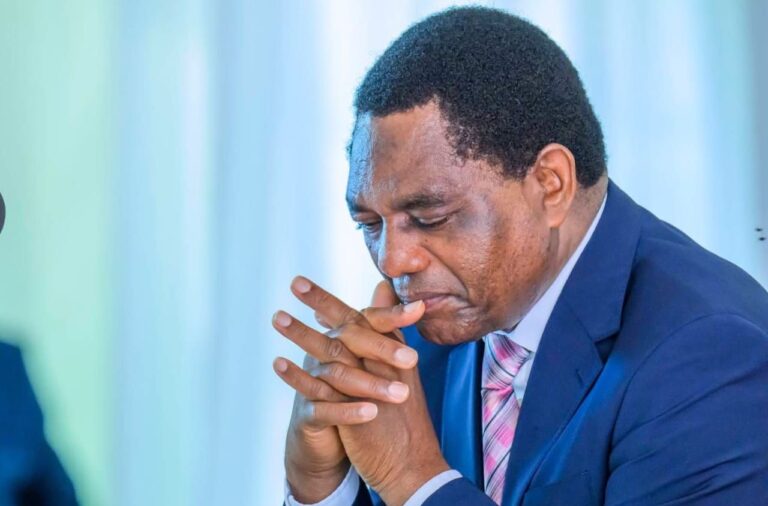
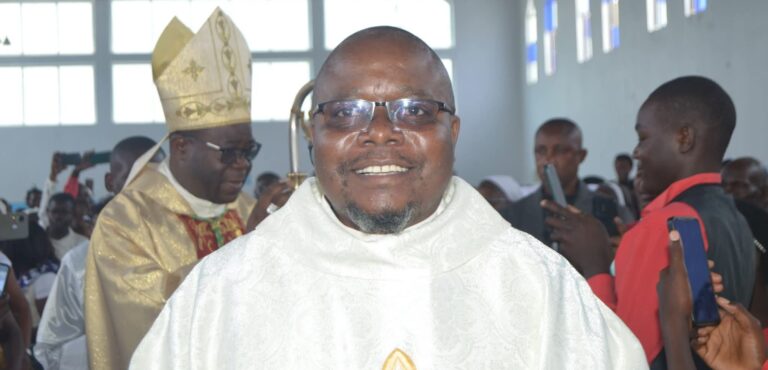
Hichilema’s Peace Call Lacks Justice, Says Catholic Priest

19

Hichilema’s Peace Call Lacks Justice, Says Catholic Priest

A Catholic priest and governance advocate has described President Hakainde Hichilema’s recent call for peace, love, and reconciliation as hypocritical, arguing that such appeals are hollow without concrete action on justice, accountability, and service delivery.

Father Andrew Mukosa, Director at Dignitatis Humanea, said reconciliation cannot be achieved through rhetoric alone and must be preceded by demonstrable steps to address grievances and correct governance failures.

He said calls for unity and peace lose credibility when they are not matched by corrective action, stressing that reconciliation should follow justice rather than precede it.

Father Mukosa said genuine national unity flows from fair treatment, accountability, and open dialogue, not ceremonial or seasonal messaging. He urged political leaders to engage in self-reflection, acknowledge governance shortcomings, and involve communities in sincere reconciliation processes.

According to Father Mukosa, leadership credibility is built through confronting failures directly rather than relying on public appeals unsupported by action.

He cited persistent service-delivery challenges as evidence of deeper systemic neglect, pointing to deteriorating health infrastructure, stalled district development projects, underfunded Constituency Development Fund initiatives, and perceived mismanagement of public resources. He said these failures have eroded public trust and deepened social divisions.

The cleric warned against what he termed a “negative peace,” where the absence of open conflict masks unresolved tensions. He said lasting harmony depends on justice-driven governance and effective service delivery, particularly for public servants and vulnerable communities who rely on functioning state institutions.

Father Mukosa’s remarks followed the President’s Christmas address to the nation, in which President Hichilema invoked Christian scripture and symbolism, describing the birth of Jesus Christ as a message of hope, love, dialogue, and reconciliation.

In the address, the President urged Zambians to renew their commitment to peace, unity, and reconciliation, saying national cohesion is built through humility, understanding, and peaceful engagement even in times of difference. He called on citizens to celebrate responsibly, avoid drunk driving, observe road safety, spend time in prayer and family fellowship, and show compassion to the less privileged during the festive season.

The President also appealed for generosity and care for vulnerable members of society, saying the true spirit of Christmas lies in giving, sharing, and ensuring that no one feels forgotten, as the nation works towards a peaceful and prosperous Zambia grounded in Christian values.

However, Father Mukosa maintained that peace without accountability risks entrenching grievances, insisting that national reconciliation must be anchored in tangible reforms rather than seasonal or symbolic rhetoric.

Christmas Baby Survives Emergency Birth at Liteta District Hospital

0

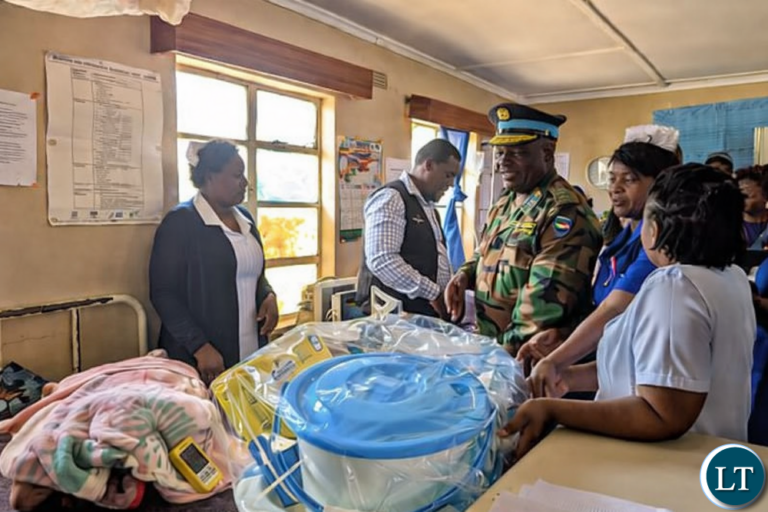
The only baby born on Christmas Day at Liteta District Hospital in Chibombo District survived a critical and life-threatening start after being prematurely detached from the placenta, Medical Officer in-charge Dr. Kenneth Musonda has revealed.

Dr. Musonda disclosed this during a Christmas visit to the hospital by Zambia Air Force (ZAF) Commander Lieutenant General Oscar Nyoni, who was celebrating the festive season with mothers and their newborns.

“This is a special baby,” Dr. Musonda told the Commander. “The mother came with a complication early in the morning and the baby was prematurely detached from the placenta.”

He explained that the emergency required swift action, with health workers rushing the mother to the emergency centre for urgent intervention to assess and stabilize both her and the baby.

“It (the baby) was received under emergency conditions, and we are grateful that the outcome was positive,” Dr. Musonda said.

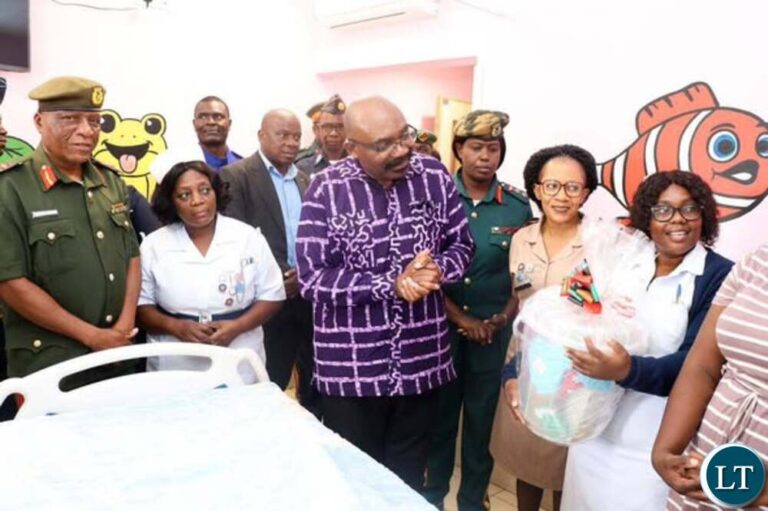
The Christmas baby was the only child born at the hospital on December 25 and was among six other newborns who later received baby hampers personally handed over by Lt. Gen. Nyoni.

During the visit, the Commander personally placed a baby hamper into the hands of the Christmas baby’s mother. At the time, the newborn was still receiving blood as nurses closely monitored the situation in the maternity ward. Both the mother and baby are reported to be recovering well.

The visit also included a donation from the ZAF Commander and his team, who provided the hospital with assorted equipment, mattresses, cleaning materials, and baby hampers.

State Opposes Amnesty International’s Bid to Join Cyber Law Challenge

0

The State has opposed an application by Amnesty International to join a constitutional case challenging Zambia’s Cyber Security and Cyber Crimes Act, 2025. In an affidavit filed in the High Court, the State argues the organization has not met the legal requirements to participate as a friend of the court (amicus curiae).

The underlying petition was filed by the Law Association of Zambia (LAZ) against the Attorney General. LAZ contends that certain provisions of the new cyber laws infringe upon fundamental freedoms guaranteed by the Constitution. The Zambia Free Press Initiative Limited is already involved in the matter as an amicus curiae.

In an affidavit sworn by Assistant Director for Postal Services and Policy Development Khumbuzo Nkunika, the State contends Amnesty International’s application is “premature, procedurally flawed and unnecessary.”

The State specifically faulted the organization for failing to submit a draft amicus brief, which it said prevents the court from assessing whether Amnesty’s contribution would offer unique value beyond the arguments of the existing parties. Nkunika noted that the main petitioners and respondents have not yet filed their amended pleadings, meaning the issues Amnesty wishes to address can still be fully argued by the primary parties involved.

“The applicant has not established any special expertise or distinction that would materially assist the court,” Nkunika stated. The affidavit further warned that admitting Amnesty International could lead to duplication of arguments and a multiplicity of submissions on the same constitutional questions.

The State maintains that the interpretation of the constitution is within the court’s competence, aided by the existing parties, and that Amnesty’s participation would not enhance the judicial process.

In its application, Amnesty International had argued that its involvement is both relevant and necessary due to the broad range of rights—including privacy, freedom of expression, association, and access to information—implicated by the cyber laws. The organization stated that its comparative expertise would assist the court in aligning domestic law with constitutional and international human rights standards.

Sichone Stresses Composure Ahead of Decisive Clash with Comoros

0

With little margin for error remaining in their Africa Cup of Nations campaign, Zambia’s Chipolopolo are preparing for a pivotal Group stage encounter against Comoros tonight at the Mohammed V Stadium.

The match follows Zambia’s opening draw against Mali and is widely seen as crucial to their chances of progressing in the tournament. However, head coach Moses Sichone has projected a calm and measured approach.

“The game today is more of a decider, but I am not putting my players under pressure. I am not under pressure going into this game,” Sichone stated.

He emphasized that each match requires a unique tactical plan, suggesting that past encounters with Comoros would have little bearing on tonight’s fixture. “Every game is different and every game is prepared differently, with a tailored formation. Having played Comoros before may not count,” the coach explained.

Sichone drew positives from the team’s performance against Mali, noting improved composure as the game progressed. “I saw a lot of positives in my players as the game against Mali progressed. That was one big takeaway for me,” he said.

Chipolopolo captain Fashion Sakala echoed the coach’s focus, reaffirming the squad’s determination to advance beyond the group stage. He described the opening draw as a timely wake-up call for the team.

With qualification hopes on the line, Zambia will be aiming for a positive result against Comoros. Kick-off is scheduled for 19:30 hours Zambian time.

Government to Review Maina Soko Medical Centre Staffing

0

LUSAKA – The Cabinet Office will on Monday begin a review of the establishment of Maina Soko Military Hospital to facilitate the deployment of junior doctors, Defence Minister Ambrose Lufuma has announced.

The move addresses concerns raised by the hospital’s commandant, Brigadier General Levy Muchemwa, who stated the facility faces significant staffing shortages. He reported that the hospital currently operates with only 316 medical personnel against an approved establishment of 879, leaving a majority of the workforce as support staff.

During a visit to distribute Christmas gift hampers to patients, Minister Lufuma acknowledged the challenges and assured that staffing levels would be improved through recruitment. He also pledged that the Zambia National Service (ZNS) would promptly repair a leaking roof at the medical centre.

Brig Gen Muchemwa thanked the minister for the gesture and confirmed the hospital was operating normally over the Christmas holiday. He disclosed that 65 patients were admitted on Christmas Day, including soldiers, their dependents, civilians, and authorised patients.

Minister Lufuma further revealed that patient numbers at the hospital have more than doubled in the past three years. As of November 2025, the facility recorded 93,488 patients, compared to 47,008 in 2022, with projections suggesting the total may exceed 100,000 by year’s end.

Mundubile Accuses UPND of Democratic Erosion, Economic Deception and Institutional Capture

15

Mundubile Accuses UPND of Democratic Erosion, Economic Deception and Institutional Capture

In a raw, unfiltered Christmas-night conversation on KBN TV’s State of the Nation with Kennedy Mambwe, Patriotic Front Member of Parliament and presidential contender Hon. Brian Mundubile delivered a sweeping indictment of the United Party for National Development government, accusing it of presiding over democratic backsliding, economic deception, and institutional intimidation that has left Zambians “suffering in silence” at a moment traditionally associated with hope and renewal.

Mundubile framed his assessment around what he described as a profound national dissonance. While December 25 commemorates the birth of Christ, he said the country’s social and economic mood reflected exhaustion rather than celebration.

“Today doesn’t feel like Christmas,” Mundubile said, describing communities grappling with prolonged power outages, unpaid farmers, rising living costs, and households rationing essentials rather than festive meals. He said the disappearance of the Christmas spirit was not symbolic but rooted in lived hardship, with many families entering the holiday period without electricity, income certainty, or food security.

At the centre of his critique was President Hakainde Hichilema, whom Mundubile accused not only of failing to govern effectively but of actively dismantling democratic safeguards. He identified the December 15 passage of Constitution Amendment Bill No. 7 as a defining moment, calling it “the darkest day in our democratic history.”

Mundubile said the amendment, previously declared illegal by the Constitutional Court, was forced through Parliament by suspending Standing Orders to allow the second and third readings to be concluded in a single sitting. He described the move as a deliberate act of defiance against judicial authority and public participation, arguing that constitutional reform had been reduced to a numerical exercise rather than a national consensus process.

He disclosed that hours before the vote, he convened a meeting of Patriotic Front lawmakers to reaffirm opposition to the bill. Despite this, six of the 29 MPs who had earlier endorsed his presidential bid voted in favour of the amendment.

“They disappointed the entire nation,” Mundubile said, adding that the decision represented a betrayal not only of party positions but of constituents who expected Parliament to act as a constitutional firewall rather than a rubber stamp.

Beyond the constitutional process itself, Mundubile widened his critique to what he described as systematic erosion of institutional independence. He accused the Executive of fostering a climate of fear across the judiciary, legislature, and oversight bodies, saying the separation of powers had been hollowed out through intimidation and selective enforcement.

He cited the removal of three judges as evidence that judicial independence had been compromised, asserting that constitutional restraint had been replaced by executive convenience. Responsibility for this, he said, rested squarely with the Presidency.

“The backstops are the President,” Mundubile said. “It is his government appointing party cadres to the Judicial Complaints Commission, his administration setting the tone of fear. He bears ultimate responsibility.”

Turning to economic governance, Mundubile rejected official claims of recovery, dismissing reported 3.6 percent gross domestic product growth as disconnected from everyday reality. He said growth figures offered little comfort to farmers who had delivered maize months earlier but remained unpaid.

He challenged claims that funds had been secured for farmer payments, questioning why growers were still sleeping in bank corridors waiting for money that authorities insisted had already been released.

“If the funds exist, why the delay?” Mundubile asked. “This isn’t inefficiency. It’s deception.”

He said the impact of delayed payments extended beyond agriculture, feeding into rural poverty, disrupted planting cycles, and rising household debt as farmers borrowed informally to survive.

Mundubile also took aim at the government’s expanded Constituency Development Fund, describing it as a politically marketed illusion rather than a genuine development strategy. He said that over four years, nearly K900 billion had been approved in national budgets, yet only K19 billion, approximately 2.3 percent, had been allocated to CDF.

Even under perfect management, he argued, CDF could not deliver transformative development. He noted that a single rural water project costs more than K100 million, far exceeding what constituency-level allocations could realistically sustain.

“They market CDF to distract from the fact that central government has abandoned development,” he said, arguing that the state had retreated from national-scale planning while projecting decentralisation as progress.

On infrastructure, Mundubile challenged the Ministry of Infrastructure to identify a single nationally funded project completed under the current administration. Beyond the privately financed dual carriageway, he said there were no completed roads, bridges, hospitals, or major public works attributable to government capital investment.

He contrasted this with the Patriotic Front’s former approach of structured backbone infrastructure linking provinces and economic zones, accusing the current administration of pursuing development that was “random, reactive, and empty,” with no coherent national plan.

Mundubile said the consequences of these policies were visible across society. He cited youths on the Copperbelt who were promised mining equipment and licenses under social contracts but remained unemployed. He pointed to Mopani workers opting for voluntary separation despite high unemployment, and civil servants whose salaries had been steadily eroded by inflation, deductions, and rising living costs.

Despite the severity of his critique, Mundubile positioned his presidential ambition around a forward-looking economic agenda anchored in employment creation rather than social transfers. He said poverty could only be ended through jobs that restored dignity.

His proposed strategy centres on industrialisation across agriculture, mining, and tourism. In agriculture, he proposed establishing ten fully serviced farming blocks nationwide, equipped with irrigation, storage, and processing facilities, supported by outgrower schemes to generate large-scale employment and value addition before export.

In mining, Mundubile pledged strict enforcement of the Local Content Act, insisting that Zambian businesses must secure at least 40 percent of the estimated US$5 billion in annual mine supply contracts.

“This is not about press briefings,” he said. “It’s about structure. Employment creates dignity. Dignity ends poverty.”

Mundubile also addressed speculation that he was covertly aligned with the ruling party, dismissing the claims unequivocally. He said he had never met President Hichilema outside Parliament and had no private communication, favours, or arrangements with him.

“I am not a project,” he said. “I stand on my record.”

As the discussion concluded, Mundubile returned to what he described as his central motivation: restoring national hope. He said his pursuit of leadership was driven not by power, but by the need to rebuild trust, dignity, and opportunity in a country he believed had lost its way.

“I seek it to restore hope to the mother walking for water, the farmer waiting for payment, the youth with no future,” he said. “That is the Zambia I believe in.”

For many watching from homes darkened by load-shedding on Christmas night, Mundubile’s message resonated not merely as political critique, but as a reflection of a broader national reckoning over governance, justice, and economic direction.

 

RTA claims 59 year old woman’s life

0

A 59 year old woman identified as Jelita Kunda of Chiundaponde village in Kanchibiya district of Muchinga Province has died on the spot in a road traffic accident.


Muchinga Province Police Commissioner Dennis Moola who disclosed the incident to the media in Mpika, said the accident happened near Chilonga market area along the Great North Road about 25km South of Mpika district.

Mr Moola said the accident happened around 11:30 hours on December 23, 2025.

He disclosed that involved was a motor vehicle faw truck and trailer registration number CAC 1255 ZM/ABK 2306 T, property of Super Care Logistics of Ndola which was loaded with copper destined for Tanzania.

“The now deceased had sustained fatal head and body injuries and was pronounced dead upon arrival at Chilonga Mission hospital,” he said.

He added that the now deceased woman met her fate as she was crossing the road from north to south of Mpika boma and in the process was hit by the said truck.

The Police Commissioner said the truck which had its grill damaged and depressed bumper, was being driven from the south to the northern direction by Peter Sikalangwe, aged 49 of Ntindi village in Nakonde district with two passengers on board, who escaped unhurt.

He said the faw truck has since been impounded and parked at the Mpika police station.

Mr Moola added that the body of the deceased has since been deposited at Chilonga Mission Hospital mortuary awaiting postmortem and burial.

Meanwhile, Mpika District Commissioner David Siame has urged motorists and other road users to exercise patience and follow road traffic rules especially this festival season.

“During the festive season many people tend to be very busy and forget to observe road traffic rules,” he said.

VEEP encourages volunteer nurses at UTH

0

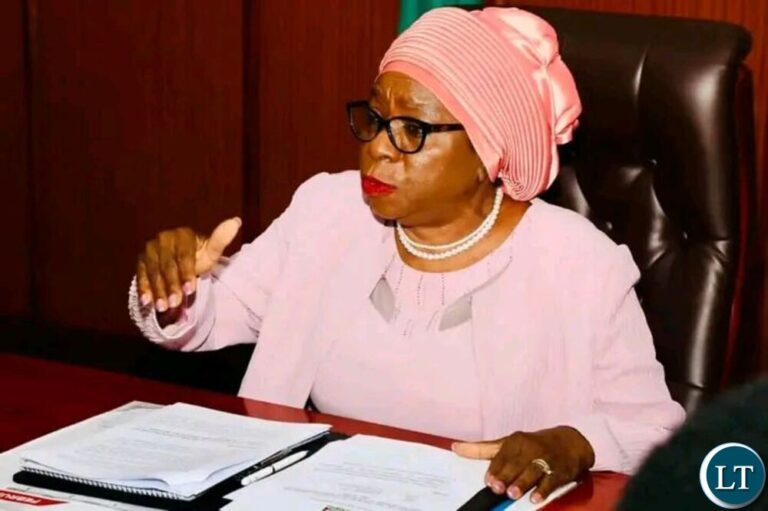
Vice President Mutale Nalumango has encouraged nurses volunteering at the University Teaching Hospital (UTH) to continue serving the community with dedication and commitment.

The media reports that Mrs Nalumango urged the volunteers not to tire but rather to continue offering their services to the people with diligence.

She encouraged the volunteers to remain strong and focused as they discharge their duties.

Mrs Nalumango assured the volunteers that the process of recruiting staff in the Ministry of Health is in progress.

The Vice President said this shortly after presenting Christmas hampers to babies born in the early hours of today.

And speaking on behalf of the volunteers, a nurse, Gladys Munsaka, thanked the Vice President for addressing them and encouraging them to strive in their profession.

Lusaka province records gains in education

0

Lusaka Province Administration Principal Public Relations Officer, Logic Lukwanda, says government has made significant strides in the education sector in line with Sustainable Development Goal number 4, which aims to ensure inclusive and equitable quality education, while promoting lifelong learning opportunities for all, by 2030.

Mr Lukwanda says key interventions such as the school feeding programme and skills development, supported through the Constituency Development Funds (CDF) are contributing to improved access and quality in education, especially for vulnerable groups in Lusaka province.

Mr Lukwanda told the media that the introduction of the Free Education Policy, has also contributed significantly to the increased number of learners in Lusaka province, rising to 600,000 in 2025 from 400,000 in 2022.

He added that to meet the teacher pupil ratio, over 1,150 teachers have been recruited in Lusaka Province between 2022 and 2025, as well as the procurement of more than 60,000 desks, mainly through CDF and the Ministry of Education, in line with the Presidential directive that no learner should sit on the floor while in class.

Mr Lukwanda noted that the province has also recorded massive infrastructure development, including the construction of 218 classrooms, five fully-fledged secondary schools, as well as Early Childhood Education hubs and satellite centres, which are currently under construction.

“These strides reflect key development outcomes such as improved education and skills development, enhanced food, health and nutrition, improved water supply and sanitation, and reduced poverty, vulnerabilities and inequalities,” he said.

Lundazi motorbike rider loses life in RTA

0

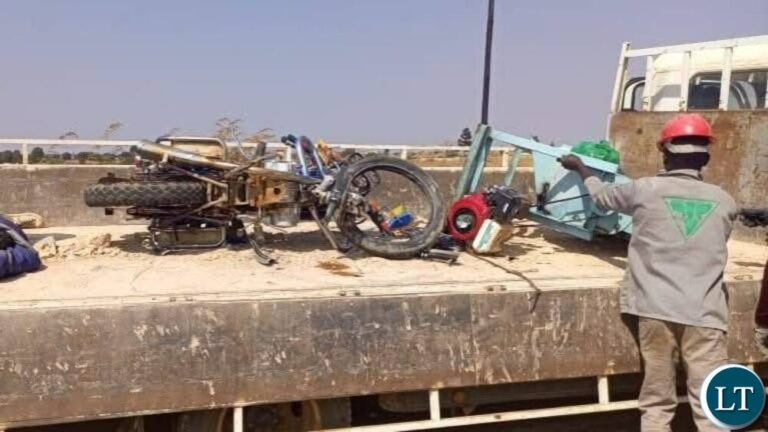
A motorbike rider has died on the spot while his two passengers have sustained internal injuries and are admitted to Lundazi District Hospital, in Eastern Province.

The admitted are male pillion passengers whose identities are unknown.

Eastern Police Chief, Robertson Mweemba has confirmed the accident and the death of Shadreck Mwale, who sustained fatal head injuries and died on the spot.

The deceased also sustained a fractured left leg.

He says the accident happened after the deceased, Shadreck Mwale, 29, of Choloka village in Lundazi district lost control of the motorbike and hit into a tree.

“The motorbike, Sanlg registration number  ARB 4257 is reported to have its front part extensively damaged,” he said.

The deceased rider was riding along Mphamba-Choloka gravel road about 10 kilometers west of Lundazi Town at Kafumenku village, today, December 25, 2025, around 07:00 hours when the accident happened.

“The body of the deceased has since been deposited into the Lundazi District Hospital mortuary awaiting post mortem examination,” Mr Mweemba indicated.

Police encourage safety during festivities

0

Muchinga Province Police Commissioner Dennis Moola has urged residents in the region to observe safety measures on the road during the festive season.

Mr Moola noted that safety measures on the road are important measures that are supposed to be observed by pedestrians, cyclists and motorists especially during the festive season.


Speaking in a phone interview with the media, the Police Commissioner said drinking and driving will not be tolerated.


“Avoid alcohol when driving and as police we are available to check if you are drunk and you will be booked,” he said.


He further said the police officers have put up snap checkpoints to capture vehicles and motorcycles that are over speeding on the roads.


The Police Commissioner however urged the residents not to give motor vehicles to people who do not have drivers license.


And District Administrative Officer Maurice Kabanda who spoke on behalf of Lavushimanda District Commissioner Terries Kunda, appealed to the residents to observe measures during this festive season saying the period often records high cases of road traffic accidents.


“We are appealing to everyone to place road safety at the center of their celebrations because during the festival season road traffic accidents tend to increase due to road users being excited which always lead to over speeding,” he said.


He further urged pedestrians to be alert and observe crossing points to avoid accidents.


Mr Kabanda however appealed to the parents and guardians to closely educate children on safety measures on the roads especially in trading centres and along major roads like the Great North Road.


He also called on residents to cooperate with Zambia Police service and Road Transport and Safety Agency (RTSA) officers who are enforcing traffic regulations during this festive season.

Copperbelt DC’s in vehicle empowerment

0

Copperbelt Province Permanent Secretary, Lawrence Mwanza has handed over six motor vehicles to District Commissioners in the province.

‎Specking during the handover ceremony, Mr Mwanza said that the vehicles will help improve mobility for DCs who constantly move to far-fetched areas.

‎He said most DCs have been facing difficulties in monitoring on-going projects in the districts, saying the vehicles will make their work easier.

‎He added that the investment in transport is part of the government’s broader agenda to decentralise and improve the performance of the public sector.

‎Mr Mwanza urged the DCs to avoid abusing the vehicles, reiterating that they should be used only for official duties.

‎”The vehicles are bought using public resources and are to be used strictly for official duties in line with government regulations.” He said.

‎Mr Mwanza explained that empowering local government officials with necessary resources such as vehicles is key to improving the impact of government services at the grassroots level.

‎Kitwe DC, Oncemore Ngonomo thanked the government for the motor vehicles as they will help them with mobility.

‎Mr Ngonomo said that the effort from the government will go a long way in helping them to do what is expected of them.

FRA Failure Leaves Disabled Farmers Without Inputs

8

FRA Failure Leaves Disabled Farmers Without Inputs

People living with disabilities in Sinda District of Eastern Province have said delays by the Food Reserve Agency (FRA) in paying farmers for maize delivered during the current marketing season have affected them more severely than other groups, leaving many unable to prepare for the next planting cycle and pushing already vulnerable households deeper into hardship.

District chairperson Ayenera Phiri said the failure by FRA to promptly clear payments had left disabled farmers without the means to buy fertiliser and seed, despite having successfully delivered maize and holding official FRA receipts. He said the delays had compounded the structural disadvantages faced by persons with disabilities in rural farming communities.

Phiri said cultivation for farmers with disabilities was already difficult because of limited access to capital, labour, and inputs, and that the non-payment for maize deliveries had worsened their situation. He said many disabled farmers relied on timely FRA payments to meet basic needs and reinvest in farming activities.

“We don’t have fertiliser this year because we took our maize to FRA but to date we have not been paid,” Phiri said, explaining that the delay had left farmers uncertain about whether they would be able to plant within the remaining window of the rainy season.

He said the situation had been made worse by the exclusion of many people with disabilities from agricultural cooperatives. According to Phiri, disabled farmers were often rejected when they attempted to join cooperatives, which limited their access to the e-voucher system used to distribute farming inputs.

Phiri said the exclusion was frequently justified on the basis that persons with disabilities were perceived as high-risk or incapable of meeting cooperative obligations. He said this perception had left disabled farmers dependent on Social Cash Transfer support while being denied access to productive farming programmes.

“In cooperatives we are rejected because of our disability, and now we don’t know how we will survive,” Phiri said.

He said the lack of FRA payments had also closed off borrowing options for disabled farmers. Phiri said lenders were unwilling to extend credit to farmers with disabilities, even when they presented proof of maize delivery and pending payment from FRA.

“Despite having FRA receipts, people are refusing to lend us money because of our physical status,” Phiri said, adding that many potential lenders believed disabled farmers would be unable to repay loans regardless of evidence to the contrary.

He said this perception had intensified the vulnerability of disabled farmers, who lacked alternative income sources or assets that could be used as collateral. According to Phiri, the inability to borrow had left many households without food security and without the means to invest in the next farming season.

Phiri said the uncertainty surrounding payment timelines had created anxiety and distress among affected farmers. He said many did not know when they would receive their money or whether the delay would extend further into the planting season.

“We don’t know when we are going to get our monies. FRA should think about us over our monies,” he said, urging the agency to prioritise payments to vulnerable groups.

He appealed to President Hakainde Hichilema to intervene and establish the cause of the payment delays, saying direct action was needed to prevent further hardship. Phiri said prompt payment would allow disabled farmers to buy fertiliser, secure seed, and make use of the remaining planting period.

“Let it give us our monies fast so that we get helped. The delay of FRA has put us in a fix,” he said.

The concerns raised by disabled farmers in Sinda reflect broader frustrations among maize producers across the country, thousands of whom have yet to be paid for grain delivered to FRA. Farmers have expressed mixed reactions to how the agriculture sector has been managed, with delays affecting preparation for the next farming season.

For farmers with disabilities, however, the consequences have been more severe due to limited coping mechanisms. Unlike able-bodied farmers who may supplement income through casual labour or alternative activities, many disabled farmers depend almost entirely on farming proceeds and social support.

Phiri said the continued delay threatened to reverse gains made through inclusive agriculture and social protection programmes. He warned that if disabled farmers missed the planting season, they risked prolonged food insecurity and deeper dependence on welfare support.

He said the situation called for urgent intervention to ensure that vulnerable groups were not left behind in agricultural policy implementation. According to Phiri, addressing the payment delays would not only restore confidence among disabled farmers but also affirm government commitments to inclusion and equity.

Zambia Ends 2025 Between Progress and Pressure

8

Zambia Ends 2025 Between Progress and Pressure

From the Inbox

Zambia closes 2025 under the weight of sharply competing realities. Official optimism, festive goodwill messages, and endorsements of government performance sit alongside audit red flags, economic strain, governance disputes, and public unease that has not dissipated with the calendar year.

At community level, traditional leadership has openly expressed satisfaction with the direction of government policy, particularly in social welfare, education access, and decentralised development. Expanded social cash transfers, community development projects, and increased local participation in decision-making have been cited as evidence that public policy is no longer confined to Lusaka but is increasingly visible in rural and peri-urban Zambia. These assessments present a picture of a state regaining relevance in everyday life.

However, this optimism is sharply counterbalanced by institutional findings that raise serious questions about financial discipline and administrative capacity. Recent audit reviews show that 17 local authorities executed procurement transactions valued at more than K68 million without obtaining mandatory tax clearance. The transactions involved goods and services procured under public funds, yet bypassed procedures meant to ensure compliance, transparency, and accountability.

The findings have brought renewed scrutiny to the management of decentralised funds, especially at a time when allocations under the Constituency Development Fund have increased significantly. While communities may see visible infrastructure and empowerment projects, the absence of strict compliance mechanisms exposes the system to misuse, inefficiency, and potential abuse. The issue is not the existence of development, but whether it is being delivered within the law.

The contradiction between policy praise and procedural failure underscores a deeper governance challenge. Development delivery and institutional discipline are advancing unevenly, creating a situation where progress in one area is undermined by weakness in another. This tension has become a defining feature of the current governance environment.

Economic indicators add further complexity. Official figures show that the economy recorded moderate growth in the third quarter of the year, while inflation closed at just over 11 percent. These figures have been presented as evidence that stabilisation efforts are beginning to take effect following prolonged economic distress.

Yet the lived experience of households tells a different story. Food prices remain high, electricity supply is unreliable, and alternative energy sources such as charcoal have become increasingly expensive. Salaries for many workers have stagnated, while deductions, loan repayments, and statutory obligations consume a large share of monthly income. For many families, disposable income has effectively disappeared.

The Christmas season has magnified this reality. Traditionally a period of relief and social cohesion, the festive season has instead been marked by restraint. Households have reduced travel, simplified meals, and postponed celebrations altogether. Markets are stocked, but purchasing power is weak. Traders watch goods remain unsold, while consumers calculate survival rather than celebration.

This economic pressure has wider implications. Informal traders and small businesses that rely on festive spending to stabilise cash flow have been hit hard. The slowdown in consumption reinforces income insecurity, creating a feedback loop that limits recovery at community level despite positive macroeconomic signals.

Political and governance debates have also intensified. The enactment of recent constitutional amendments has been framed by authorities as a historic step toward inclusive governance and broader representation. Supporters highlight provisions related to proportional representation and expanded participation as milestones in democratic development.

However, critics argue that the process was rushed, insufficiently consultative, and dismissive of earlier judicial guidance on public participation. The result has been a polarised national conversation focused not only on the content of the amendments, but on the legitimacy of how they were adopted. Rather than closing debate, the amendments have entrenched it.

Electoral integrity concerns have further sharpened the political climate. With by-elections looming and the general elections approaching, warnings have been raised against the misuse of public resources, inducements disguised as development, and blurred boundaries between governance and campaigning. These concerns reflect longstanding anxieties about fairness and neutrality in the electoral process.

Public anxiety has also been fuelled by crime, court cases, and social justice concerns that have dominated recent reporting. Allegations involving abuse of authority, violent crime, and domestic disputes have placed renewed pressure on law enforcement and the justice system to demonstrate impartiality and effectiveness. These cases contribute to a broader sense of institutional strain.

Meanwhile, public commentary sections have revealed a citizenry that is increasingly vocal, divided, and sceptical. Letters and opinion pieces reflect frustration over economic hardship, governance conduct, foreign relations, civil registration processes, and unresolved national disputes. While opinions differ sharply, they share a common thread of demand for accountability, clarity, and dignity in public life.

Taken together, the year-end picture is one of a country balancing aspiration with anxiety. Welfare programmes are expanding, yet compliance failures persist. Economic growth is recorded, yet households remain under strain. Constitutional reform is enacted, yet legitimacy is contested. Festive goodwill exists, yet public confidence remains fragile.

As Zambia approaches 2026, the central challenge is no longer whether policies exist, but whether institutions can enforce rules, translate growth into relief, and align political reform with public trust. The year closes not with resolution, but with a clear test before the state: to ensure that progress is not only announced, but sustained, accountable, and felt where it matters most.

Constitution Treated as Executive Project, Says Kateka

Constitution Treated as Executive Project, Says Kateka

New Heritage Party president Chishala Kateka has accused President Hakainde Hichilema of treating the Constitution as a personal instrument following the enactment of Constitution Amendment Bill No. 7, arguing that the process undermined constitutional safeguards, weakened public participation, and set a troubling precedent for governance.

Kateka said the manner in which the amendment was introduced, debated, and passed reflected executive dominance over a process that should have been inclusive, consultative, and grounded in constitutional procedure. She said constitutional reform required broad national consensus and strict adherence to judicial guidance, rather than reliance on parliamentary numbers and political expediency.

She argued that the amendment process departed from established principles governing constitutional change, particularly the requirement for meaningful public consultation. According to Kateka, citizens were denied adequate opportunity to understand, interrogate, and influence changes that directly affect the country’s governance architecture.

Kateka further criticised the disregard of Constitutional Court guidance, saying the court had previously emphasised the need for extensive public participation in constitutional amendments. She said proceeding without addressing those concerns amounted to institutional defiance and weakened respect for constitutional oversight.

She said constitutional provisions were not ordinary policy instruments that could be altered at will, but foundational rules that governed the relationship between the state and citizens. According to Kateka, altering such provisions without national buy-in eroded democratic legitimacy and public trust.

Kateka accused the Executive of manipulating parliamentary processes to advance changes whose long-term implications had not been adequately examined. She said provisions relating to proportional representation were introduced in a manner that limited scrutiny and debate, depriving the public of clarity on how such changes would affect electoral outcomes and political representation.

She said the process transformed the Constitution from a shared national document into what she described as a personal project driven by executive preference. According to Kateka, this approach risked reducing constitutional governance to the discretion of those in power, rather than anchoring it in collective consent.

Kateka warned that normalising such conduct could open the door to future amendments that further centralised power, weakened checks and balances, and reduced the independence of key institutions. She said constitutional amendments should strengthen democratic safeguards, not dilute them.

She also expressed concern about the broader implications for the rule of law, arguing that when constitutional processes are perceived as politically engineered, public confidence in legal institutions diminishes. According to Kateka, citizens begin to view constitutional rules as flexible tools rather than binding constraints.

Kateka said Zambia’s constitutional history was shaped by struggle and compromise, making it imperative that changes to the document be approached with restraint and humility. She said the Constitution belonged to the people and should reflect national consensus rather than partisan interests.

She said the current approach risked polarising the country by framing constitutional reform as a contest between political camps rather than a collective national exercise. According to Kateka, this polarisation undermined the legitimacy of the amendments and heightened political tension.

Kateka also questioned the timing of the amendment, saying it occurred amid economic hardship and social strain that limited public engagement. She argued that pressing ahead under such conditions further weakened the credibility of the process.

She said the amendment had shifted focus away from pressing economic and social challenges facing citizens, drawing attention instead to political restructuring whose benefits were unclear to ordinary households. According to Kateka, constitutional reform should not distract from governance priorities that directly affect livelihoods.

Kateka said the consequences of the amendment would become clearer over time, particularly as the country moved closer to the next general elections. She warned that disputes over constitutional legitimacy could complicate electoral processes and undermine confidence in outcomes.

She said restoring confidence required recommitting to inclusive governance and respect for institutional boundaries. According to Kateka, future constitutional reforms should be guided by dialogue, transparency, and strict adherence to legal standards.

Kateka maintained that constitutional authority derived from the people, not from political office. She said leaders were custodians rather than owners of the Constitution and should exercise that responsibility with restraint.

The criticism adds to ongoing public debate over the implications of Constitution Amendment Bill No. 7 and the broader direction of governance reforms. As the country adjusts to the changes introduced by the amendment, questions about process, legitimacy, and institutional balance continue to shape political discourse.