Zambia’s annual inflation rate slowed to 7.1 percent in March 2026 from 7.5 percent recorded in February, signalling a continued easing in price pressures across the economy.
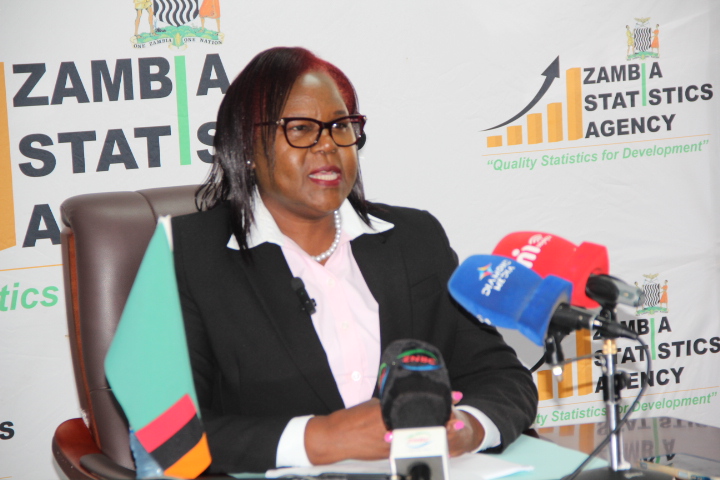
Statistician General Sheila Mudenda announced the figures during the dissemination of the March Statistics Bulletin, stating that the latest rate reflects the average increase in the cost of goods and services between March 2025 and March 2026. The moderation places inflation within the six to eight percent target band, reinforcing a period of relative price stability after sustained pressure in previous months.
The slowdown was driven by movements in both food and non-food components, which together shape the country’s inflation trajectory. Annual food inflation dropped to 7.8 percent from 8.2 percent, reflecting reduced price increases across a wide range of staple and household items.
Mudenda said the easing in food prices was linked to movements in cereals, including breakfast mealie meal, roller mealie meal, maize grain, imported rice, and wheat flour. Price changes were also recorded in fruit such as lemons, apples, watermelon, and avocadoes, alongside vegetables including lumanda, cassava leaves, tomatoes, cucumber, sweet potatoes, green pepper, and maize cobs. Cooking oil also contributed to the overall trend.
These shifts point to broader supply-side dynamics within the food sector, where fluctuations in production, distribution, and seasonal availability continue to influence household expenditure patterns. The moderation in food inflation is particularly significant given its direct impact on the cost of living.
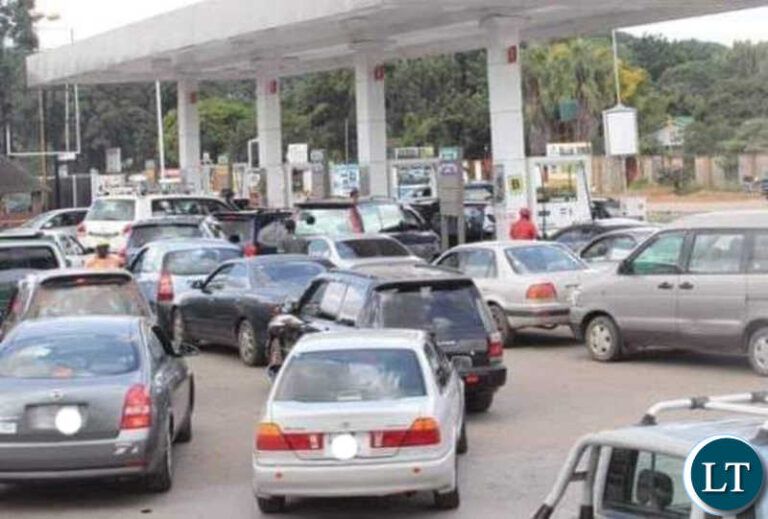
Non-food inflation also declined, falling to 5.9 percent from 6.5 percent recorded in February. Mudenda attributed this movement to price changes in materials used for home maintenance and repair, including cement, building sand, paint, floor tiles, and glass. Adjustments in fuel prices, such as diesel, petrol, and paraffin, as well as the cost of motor vehicles, further contributed to the slowdown.
The combined effect of easing food and non-food prices has reinforced the overall disinflation trend, offering some relief in the rate at which prices are rising. However, inflation remains positive, meaning costs are still increasing, though at a slower pace.
Beyond inflation, the statistical release also pointed to shifts in economic growth patterns. Zambia’s economy grew by 1.6 percent in the fourth quarter of 2025, down from 8.3 percent recorded during the same period in 2024. This represents a decline of 6.7 percentage points, highlighting a slowdown in economic momentum.
Mudenda said the growth recorded in the fourth quarter of 2025 was supported by performance in agriculture, forestry and fishing, and construction, which contributed 1.7 percent. Manufacturing added 1.2 percent, while transportation and storage contributed 0.9 percent to overall growth.
The figures suggest that while the economy remains on a growth path, the pace of expansion has moderated compared to the previous year. Sectoral contributions continue to play a central role in sustaining output, particularly in agriculture and construction, which remain key drivers.
Preliminary annual GDP estimates further show that Zambia’s economy grew by 3.8 percent in 2025 at constant 2010 prices. The annual figure represents the combined performance of all four quarters and provides a broader picture of economic activity over the year.
Trade performance also reflected changes in economic conditions. Cumulative total trade decreased by 5.6 percent, falling from K105.2 billion in February 2025 to K99.3 billion in February 2026. The decline signals adjustments in both import and export activity, with implications for currency flows and external balance.
Mudenda said the findings provide a clear picture of the economy’s direction and are critical for planning and decision-making across sectors. The data offers insight into price movements, production trends, and trade performance, all of which shape policy and investment choices.
The March statistics therefore present a mixed picture. Inflation has moderated and remains within target, pointing to improved price stability. At the same time, growth indicators show a slowdown in economic expansion, highlighting underlying pressures that continue to affect output.