
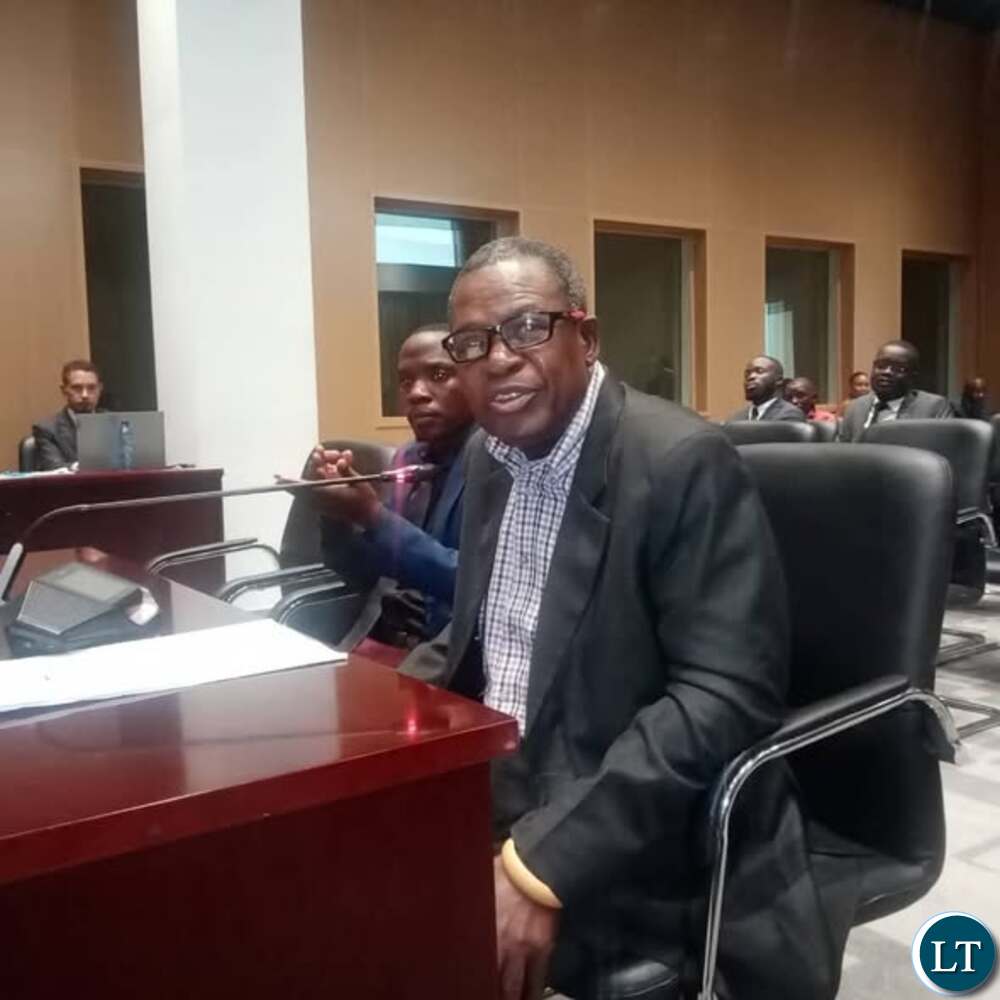
Former Minister of Justice Wynter Kabimba has submitted before the Technical Committee on Constitutional Amendments that the seven local languages, including sign language should clearly be stipulated in the Zambian constitution.
Mr Kabimba says language acts as one’s identity and culture to many Africans, Zambians included, hence the need to include the seven vernacular languages in the amended constitution.
Making his submissions to the on-going public sittings in Lusaka today, Mr Kabimba observed that english constitutes to only two percent of the country’s population while the seven local languages account for 98 percent.
“South Africa has 11 official languages and the 12th one is sign language. Here in Zambia, out of the two percent, some people struggle to either read or speak English.
It is therefore my considered view that seven other local languages that we have should be put in our constitution,” he said.
He explained that out of the two percent some people in the country cannot speak, write or read the Queen’s language, English.
He proposed the inclusion of seven vernacular languages of Zambia, plus sign language, in the constitution.
Zambia has seven vernacular languages namely Bemba, Kaonde, Lunda, Luvale, Lozi, Nyanja and Tonga that are often spoken on both radio and television besides the official, English.
He observed that South Africa has adopted and has 12 official languages including sign language in its constitution.
And the former cabinet minister has also submitted for the inclusion of a clause in the republican constitution on land allocation.
Meanwhile, Laura Mitti, a governance expert submitted that the tenure Ward Development Committees (WDC’s) be increased to five years from two and half-years.
Ms Mitti, the Alliance for Community Action Executive Director, said WDCs should serve for five years just like the Member of Parliament (MPs) because they have close interface with the grassroots people in the constituency and work even hard in communities.
She observed that WDCs ‘fill-the-gap’ in cases where an MPs does not usually visit his or her constituency.
Lucky Kalunga, a youth activist, said that the inclusion of youths and women in appointments should not be a condition but legalized in the constitution.
Mr Kalunga bemoaned that the number of youths and women in both positions of influence and political corridors of power remains much to be desired with.
“Men dominate appointments both politically and culturally but for the youths and women, it’s just a small number. This is why we want a clause on youth and women representation clearly stated in the constitution,” he lamented.



I just want the inspector General of Police to be seconded to Zambia by the commonwealth or any other international agency. We have to have a neutral person in that role. How can we put that in the constitution. That’s my submission.