By Katoka Mweenda
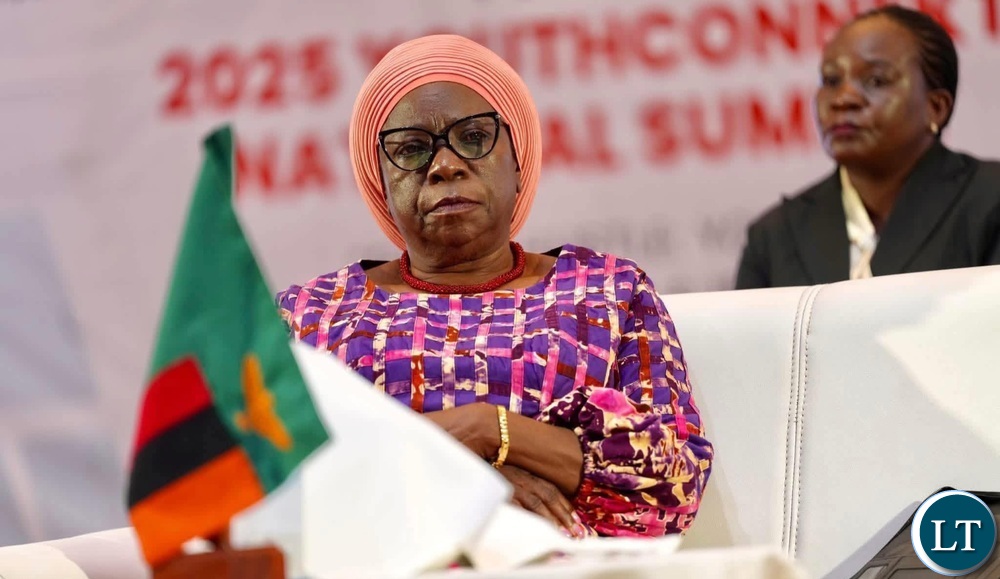
Costa Mwansa’s recent interview with the Vice President Madam Nalumango was more than revealing—it was a political car crash for the Hichilema administration. It exposed not only a defenseless economic record, but a Vice President completely detached from the daily economic realities of ordinary Zambians. Worse, it solidified a damning, long-held perception–Hakainde Hichilema governs as a lone ranger, while his deputy occupies space rather than shaping policy.
When pressed on the contradictions in the UPND’s economic narrative, the Vice President stumbled–exposing her lack of economic literacy. Costa posed a simple question–how can the administration boast an inflation rate of 6.7% when the cost of a basic food basket has skyrocketed to K12,000—a K4,000 leap from the PF era, when inflation allegedly hovered above 24%?
Confronted with a chart showing that staples have doubled—cooking oil jumping from K119 to K200, and ubunga soaring from K130 to K272—her defense was nothing short of embarrassing: “money has lost value.” If we accept her logic, the buying power of the Kwacha has cratered by 50% under Hichilema’s watch. It begs the immediate questions–who is to blame for this decline, and why is the currency supposedly stronger abroad but entirely worthless at home? It is clear that her framing offered no answers, only evasions. It also lacked logic and coherence.
Worse still, was her economic solution. Suggesting that higher salaries are the antidote to inflation defies basic macroeconomic logic. You cannot fight rising prices by pumping more liquidity into wages—especially in an economy where the vast majority of citizens survive outside the formal banking system, far from a government paycheck.
While this argument appeals a tiny salaried workers, it completely ignores the struggle of the majority of Zambians.
For instance, Namaliketi selling tomatoes and “kalembula” for K3 doesn’t get a state payroll deposit. Neither does the unemployed youth scrambling for bus fare or a bag of mealie meal. For them, a wage hike announced on television is a phantom solution to a very real crisis. It is an insult in fact.
It is puzzling that the Vice President conflated declining inflation with declining prices. In economic terms, a dropping inflation rate doesn’t mean life is getting cheaper; it just means prices are destroying pockets at a slightly slower velocity–high prices remain the same longer. Yet Zambians do not eat macroeconomic statistics. They feel the economy at the bus stop, the grocery stall, and the local shop. It is this reality Costa sought to address.
If the Hichilema administration genuinely wants to crash prices, it should look at the levers it actually controls–taxes and levies. Prohibitive taxes—most notably VAT—act as an artificial inflation engine on everyday goods. If State House is serious about easing the cost of living, broad-based tax relief is the only viable emergency brake. Without it, the state is simply subsidizing its reserves on the backs of the poor.
Then there is the administration’s favorite scapegoat–the national debt. Borrowing and debt servicing are standard features of modern governance; every administration inherits a liabilities column. The true metric of success is not whether debt exists, but whether current management is stimulating growth and relieving pressure on the citizenry. On this front, the strategy is failing.
In the end, Costa may have won the journalistic duel, but the real tragedy is the government’s inability to speak plainly about prices, unemployment, taxes, and debt. Zambians are tortured by macroeconomic jargon and pivot-heavy PR. They don’t want new promises—they want an economic reality that finally matches the numbers in their pockets.
New promises of International Airports and Universities won’t address the issue of the high cost of living which most Zambians are experiencing–they are only adding “salt sana” to their daily wounds! Just as the VP could not talk herself out of this problem, Hichilema won’t dance himself out of Costa’s question–Zambians need answers to why prices are too high under this regime. Will August 13 provide an answer?