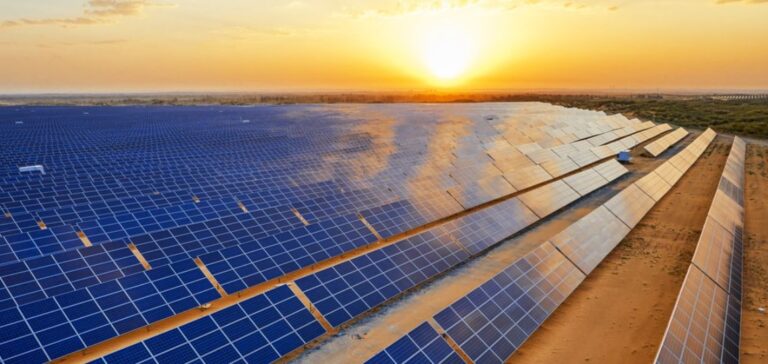
Government has formally launched one of Zambia’s largest renewable energy investments after signing contracts for the installation of two-megawatt solar photovoltaic power plants in all 156 constituencies under the Presidential Constituency Energy Initiative. Valued at K4.3 billion, the programme is expected to create approximately 15,600 jobs while adding 312 megawatts to the national electricity grid as part of efforts to strengthen the country’s long-term energy security.
The nationwide initiative forms part of President Hakainde Hichilema’s broader plan to increase Zambia’s electricity generation capacity to 10,000 megawatts by 2030. Government says expanding electricity generation is central to supporting industrial growth, improving productivity in agriculture and creating an environment capable of attracting more private sector investment across the country.
Speaking during the contract signing ceremony in Lusaka, Ministry of Local Government and Rural Development Permanent Secretary for Technical Services Nicholas Phiri said each constituency would receive a two-megawatt solar power plant under the programme.
“The initiative seeks to design, supply, install, test and commission 2MW solar photovoltaic power plants in each of the 156 constituencies of Zambia,” Mr Phiri said.
He explained that electricity generated from the plants would be evacuated into the Zesco national grid, helping narrow the country’s electricity deficit while improving the reliability of power supply to homes, businesses and public institutions.
Government expects the project to deliver benefits beyond electricity generation. Partly financed through the Constituency Development Fund, the initiative is designed to improve access to electricity in underserved areas, stimulate local enterprise development, create employment opportunities and strengthen service delivery by local authorities. Officials believe the increased power supply will also support year-round irrigation, enabling the country to move closer to its target of producing 10 million metric tonnes of maize annually.
Another key feature of the programme is its revenue-sharing model. According to Mr Phiri, local authorities will receive dividends generated from the constituency-based solar plants, providing councils with an additional source of income to strengthen their financial position and improve public services within their respective districts.
Government has engaged five Engineering, Procurement and Construction joint ventures to deliver the project. The contractors include Sunshare Construction Limited in partnership with China Railway Construction Engineering Group Co. Limited, China Civil Engineering Construction Corporation, Golden Baobab Investments in partnership with Huawei Technologies Zambia Limited, Chetam Metals Fabrication together with ZamChin Construction Limited, and China Jiangxi International in partnership with Qingdao Haier Photovoltaic New Energy.
Mr Phiri urged all contractors to mobilise immediately and complete the works within the stipulated 12-month implementation period. He also called on Zesco to provide the necessary technical supervision throughout implementation to ensure the infrastructure meets the required engineering, safety and operational standards.
Speaking on behalf of the contractors, China Civil Engineering Construction Corporation Southern Africa Managing Director Jacques Liao pledged to deliver quality infrastructure while prioritising local employment, skills transfer and procurement from Zambian businesses wherever possible. He said the contractors remained committed to working closely with local communities throughout implementation to maximise the programme’s long-term economic benefits.
Representing local authorities, Lusaka Town Clerk Oliver Muuka described the initiative as a major step towards sustainable development, saying the solar plants would not only improve electricity supply but also provide councils with a dependable revenue stream capable of supporting better service delivery across the country.
The programme builds on Government’s electricity sector reforms introduced through the Electricity (Open Access) Regulations of July 2024, which liberalised the market and opened greater participation for Independent Power Producers and electricity traders. Since the reforms, Zambia’s installed generation capacity has risen from approximately 3,777 megawatts in 2024 to about 3,985 megawatts, supported by investments including the 136-megawatt Itimpi II Solar Plant commissioned in Kitwe earlier this year.
Once completed, the Presidential Constituency Energy Initiative is expected to become one of Zambia’s most extensive renewable energy programmes, significantly increasing the country’s solar generation capacity while reducing dependence on hydropower. The investment is also expected to strengthen resilience against future drought-related electricity shortages, diversify the national energy mix and provide a foundation for sustained economic growth driven by improved access to reliable power.