
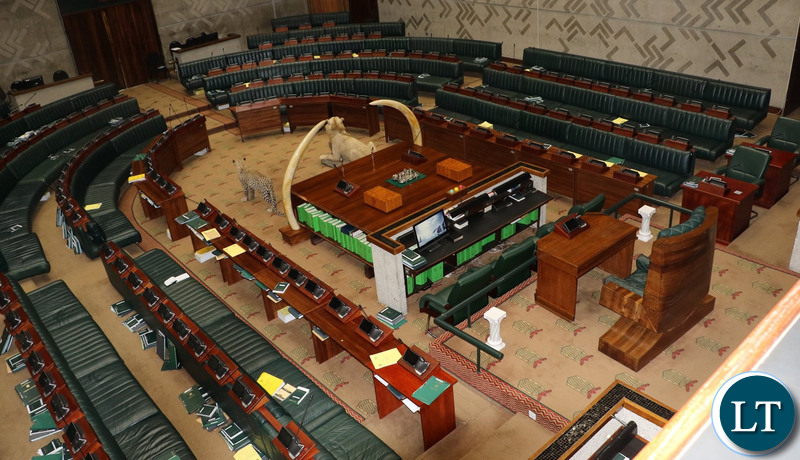
Speaker, Discipline, and the Unspoken Perception Inside Parliament
Inside Zambia’s National Assembly, the Speaker’s authority is not questioned in principle. Everyone in the chamber knows the Standing Orders are the rules. Every MP knows the presiding officer holds that final gavel. But beneath the procedural surface, there is a recurring sentiment that some suspensions and rulings look selective, or that enforcement can lean harder on certain voices.
Most MPs will never say this on the floor. They will not risk being ruled out of order for imputing motive. But in private political discussion, in café corners at Parliament Motel, and in corridors outside the chamber, this perception exists. Some MPs feel that interventions arrive faster and harsher depending on who is speaking, not only what is said. The friction point is not the rulebook itself but interpretation of when the Speaker decides a statement is disorderly, combative, inflammatory, or threatening the dignity of the House.
The basic tension is this:
- The Speaker believes they are safeguarding order.
- Some MPs believe order is enforced unevenly.
This is where political optics matter. When the same procedure punishes some very quickly while others appear to get longer rope, MPs translate that as bias. Fair or unfair, this is how they interpret it. The Speaker might see a technical breach. The MP interprets the ruling as targeted. That perception gap is the breeding ground of the belief that certain benches are handled differently.
There is also a second deep current: the suspicion that the Speaker reacts more sternly to opposition posture, and more diplomatically to government benches. Again: not because Standing Orders say so, but because MPs measure patterns over time. When the same category of intervention produces different consequence, it produces narrative.
And in politics, narrative matters more than procedure.This is why disciplinary actions routinely ignite emotional response. Suspensions are not seen as individual correction. They are read as a larger institutional signal about power control in the chamber. They become proof to some that the playing field inside the chamber is heavily tilted.
This is where the political truth sits: Parliament is not only a law-making arena. It is a stage of power. Each ruling is not merely administrative. It is interpreted symbolically. MPs remember who gets shut down fast. They remember who gets protected with “caution first.” They know who is likely to be told “order” and who is likely to be removed from the microphone. The Speaker might be enforcing discipline. MPs might be reading control.
That is the tension.And until both sides acknowledge that Parliament is not just procedure but perception, this belief will not disappear.



When we tell you that ethics for our leaders are very important, you call us names see now what is happening in parliament. The solution here is clear going forward anyone want to hold a constitutional office in Zambia must have the following:
(1) Full grade 12 certificate or its equivalent with at least four credits plus at least one distinction or two in any subject (No proper grade certificate or its equivalent then no entry)
(2) Full grade 12 certificate with grade seven or eight should never be accepted same to its equivalent
(3) First degree in any subject provided ETHICS are fully cover and confirmed by ZAQA.
No more kaponyas they are really a shame to Zambia
The speaker actually is not following the rules and ethics of the house. That to me stems from her being indisciplined. Chimo nomufyashi who is always beating the children and the wife, that person has no discipline. So, ba Speaker bena awe twabwela pofye. She has always been debating instead of refereeing. Never has she ever disciplined anyone from her party.