
The Independent Broadcasting Authority has put Zambia’s broadcasters on formal notice ahead of the August 2026 general elections, issuing a comprehensive set of election coverage guidelines that impose new obligations on media houses while drawing hard lines around content the authority says could damage the integrity of the vote.
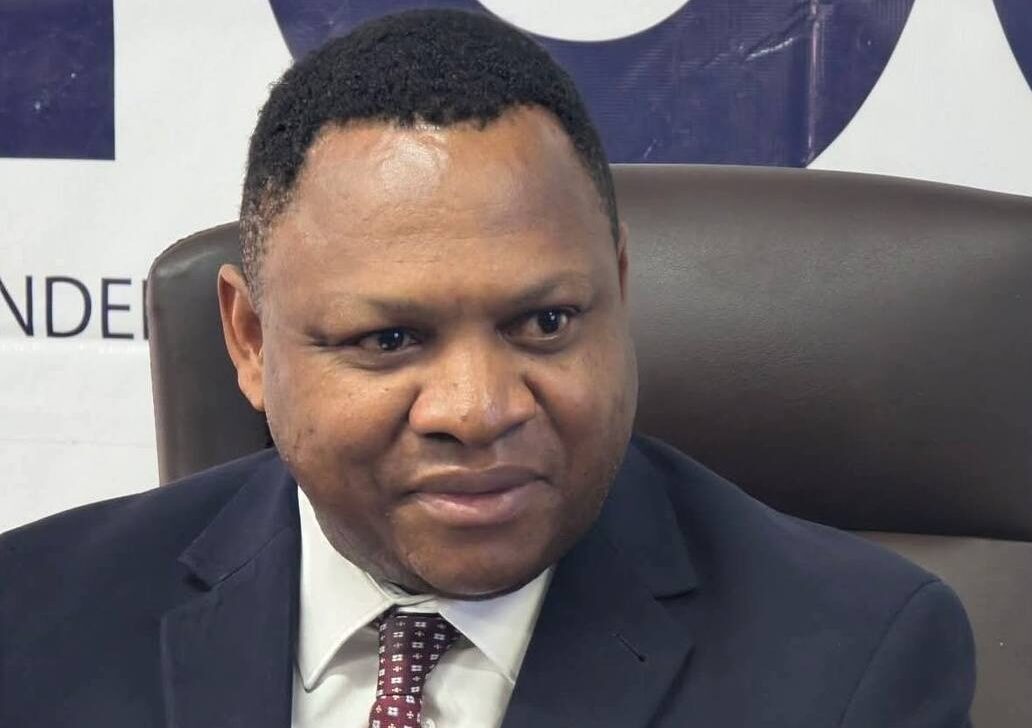
IBA Director General and Board Secretary Webster Malido
IBA Director General and Board Secretary Webster Malido made the announcement in Lusaka on Tuesday. The guidelines, he said, were developed to give broadcasters practical direction on covering elections and election-related matters while reinforcing professionalism, fairness and ethical conduct throughout the electoral period.
The framework covers seven key areas: fair and balanced election reporting; equitable allocation of airtime; conduct of political interviews and debates; broadcasting of opinion polls; coverage of polling day; announcement of election results; and complaints handling procedures.
Under the new framework, broadcasters are required to provide equitable and impartial coverage to all political parties and candidates. Stations are also expected to divide available advertising airtime fairly during campaigns, while political interviews and debates must be conducted in a professional and impartial manner.
The guidelines further require broadcasters airing opinion polls to disclose sponsors, sources, sample sizes and other methodological information attached to any survey made public. The authority says the measure is intended to improve transparency around election-related polling during the campaign period.
Polling day restrictions carry immediate operational implications for broadcasters. No station will be allowed to air campaign interviews for political parties or independent candidates on election day, while prediction of election results before official confirmation has been prohibited. Throughout the electoral period, election results may only be announced on the basis of verified and officially confirmed information.
Beyond the seven core provisions, the guidelines prohibit the broadcasting of hate speech, tribalism, incitement to violence, misinformation and unverified election-related content which the authority says could undermine peace, national unity and the integrity of the electoral process.
The framework has already triggered legal and political concern among sections of the public.
So far, some citizens, political actors and governance stakeholders have described portions of the guidelines as illegal and unconstitutional, particularly provisions viewed as potentially restricting media freedoms, election commentary and independent election verification processes. Some stakeholders say parts of the framework may conflict with constitutional protections surrounding freedom of expression, access to information and independent media operations during elections.
Attention is especially focusing on clauses limiting unofficial election projections and tightly controlling election-day broadcasting. Governance stakeholders say those provisions could create room for regulatory overreach if interpreted aggressively during the results period.
Discussion is also intensifying around whether the restrictions could affect Parallel Vote Tabulation exercises, commonly known as PVTs, which civil society organisations and election observers have historically used as independent verification tools during elections.
The guidelines themselves make no direct reference to PVTs. Questions are already emerging over how broadly the IBA could interpret the prohibition on unofficial result projections before official confirmation. Governance stakeholders say the practical application of that provision may become one of the most politically sensitive regulatory questions of the election period.
The complaints handling mechanism also places the regulator at the centre of election-period disputes. Broadcasters are expected to respond to complaints within two days, while the IBA says investigations and directives will be concluded within four days. Complaints emerging around polling day could therefore produce regulatory action while vote counting is still underway.
The guidelines apply to all broadcasting stations in Zambia and are grounded in the Electoral Process Act No. 35 of 2016, specifically provisions governing media conduct during elections. The IBA Board approved the framework during its 45th Board Meeting held on May 20, 2026, and all broadcasters have been directed to familiarise themselves with the rules and comply fully. Active monitoring will continue throughout the electoral period.
The broader principle behind the framework,credible, balanced and responsible election coverage, remains largely accepted across political and media sectors. The larger question now shifts toward enforcement, interpretation and whether the rules will be applied consistently across broadcasters with differing political alignments.
Those questions are unlikely to disappear quietly as the country moves closer to August 13.
Editor’s Note: “Election broadcasting rules become most controversial when regulation intersects with political competition, media freedom and public trust in the electoral process.”



What is IBA? A censorship board for the Mass Media? Then it’s misplaced.
Who approved it? It should go live in the second republic where we left all political authoritanism.
The media should replace this paper tiger with a truly independent self regulating institution that focuses on ethical direction not this state police masquerading as a professional girdle. IBA is as irrelevant as the ministry of broadcasting.
What is IBA? A censorship board for the Mass Media? Then it’s misplaced.
Who approved it? It should go live in the second republic where we left all political authoritanism.
The reason why the UPND government is implementing all these unnecessary and undemocratic measures is because their performance has been low——-they have not delivered. Why would you be afraid of an opinion poll? It’s interesting that people who do not like competition are the very ones who want to be in politics forever.
Opinion polls within private media is that IBA is a big let down. And trying to prove relevant. Their sponsor themselves is government, so what do you expect. Sometimes it is better for these new comers to just keep quiet than trying to spoil the good name of the IBA
Their appointing authority has failed. Economy and governance on their knees. Clutching to the straw of free education, a unip initiative
And to think people what this chap again ??
Where’s a challenger
People have memories, they do not forget
People do forget still praising KK
For the first time in Zambia’s history, we have an INDEPENDENT Broadcasting authority that has guided FAIRLY. Only people who mean evil will fight this.
I dont know what defensive app some people have in them, just correcting the IBA is taken as a fight? Learn to learn
Things rise above.
How independent is this supposedly independent organisation?
I’m a journalism lecturer and wont hesitate to tell you that from the attitude it exudes this is not an independent institution
It cajoles the police to help it in its underground objectives. Since when did journalists in a democracy act as a wing of the police?
Journalists had set out to form a self regulatory body but got hijacked by government. This body cries for government support and lambasts those not toying its imaginary line.
Yes government appoints the IBA exec. Now these scribes are part of the pied piper’s entourage to the lake of doom.
Please let ZNBC also follow this guidelines especially the part about giving equal and fair coverage to all parties. We dont want every news segment starting with President did this or said this today or visited this place etc.
IBA wont bother with DeadNBC because that is Government’s Muppet show. I worked there so I know that it’s news diary is filled with instructions from government via the ministry of information and broadcast.
Noone dare broadcast anything outside those orders. That’s why Berry Lwando was fired and government is busy looking for a puppet to take over.
With the help of Police, IBA will focus on those whose diary government doesn’t dictate. Job separation.