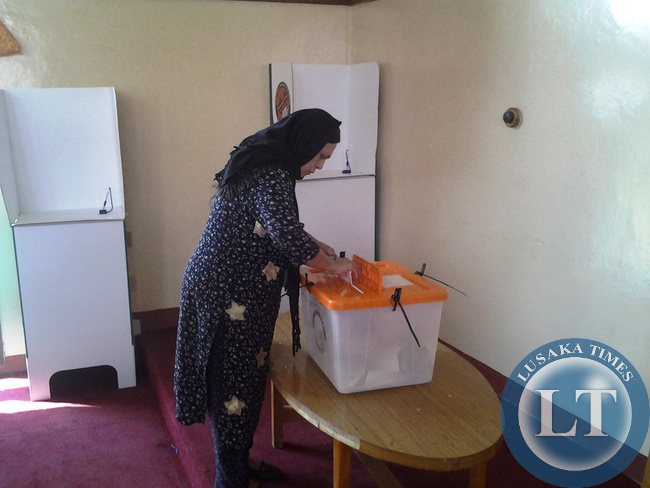
The Southern African Development Community (SADC) says although the region has recorded progress in women participation in politics, it still remains a challenge as first past the post electoral system which inhibits women’s participation in politics is still being used among SADC member states.
The SADC Acting Head of Gender Unit Elizabeth Kakukuru disclosed this during a media briefing held at the Gaborone International Convention Centre (GICC) in Botswana today.
Ms. Kakukuru said the first past the post electoral system is difficult for women who have to stand against men who at most times tend to have an upper hand as compared to them.
She also cited the factor of cultural norms as another hindrance that continues to render women as poor participants in political leadership.
“The increase in Gender Based Violence cases for certain countries is also contributing to this situation, “cited Ms. Kakukuru.
Ms. Kakukuru stated that although the region has recorded progress in women participation in politics, only a few SADC member states have recorded beyond 40 per cent, which is still below the SADC Gender attainment participation of 50 per cent women empowerment.
She however observed that although some member states have not done well in enhancing women empowerment in political leadership, they have made positive strides in public services.
Ms. Kakukuru further added that in some quarters, SADC countries have been engaging women in conflict resolution assignments which have yielded a positive record for the region.
“A number of women have been seen participating in peace keeping assignments,” she illustrated.
According to Ms. Kakukuru, targets set under the Gender protocol among SADC member states is that by 2015, member states are to abolish the minority status of women and that with the 50-50 target , no member state has yet achieved it as the nearest for the region stands at 47 per cent.
Additionally, addressing the gender stereo types on education is currently at 23 per cent and that member states to reduce gender based violence by half in 2015.