Aid Must Not Be Used as Leverage, Zambia Warns
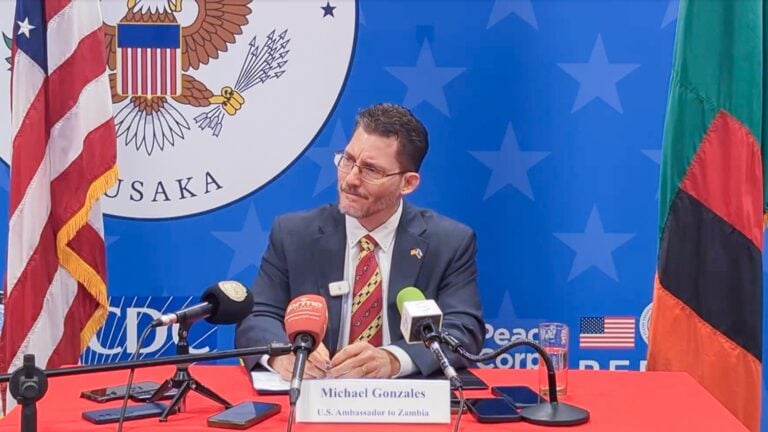
Government has defended Zambia’s sovereign right to determine its economic and mining policies following remarks attributed to Ambassador Gonzales, arguing that development assistance should not be conflated with trade interests or used as leverage to influence national decision-making.
According to reports carried in the Times of Zambia and supported by commentary emerging in other publications, officials expressed concern that linking aid to commercial or geopolitical interests risks undermining the principle of partnership on which development cooperation is founded. They stressed that Zambia welcomes cooperation with all international partners, provided such engagement is conducted on the basis of mutual respect and non-interference.
Government sources emphasised that aid is intended to support social development, poverty reduction, and institutional capacity building, not to serve as a tool for exerting pressure over policy choices. They said attempts to frame development assistance as conditional upon alignment with specific trade or mining interests distort the purpose of aid and weaken trust between partners.
Zambia’s mining sector, which attracts investment from a range of international players, operates under national laws designed to balance economic growth, environmental protection, and community welfare. Authorities said decisions relating to the sector are guided by domestic policy objectives and legal frameworks, not external pressure.
Officials also reiterated that Zambia maintains diversified international partnerships and values constructive engagement with all countries. They said the government’s approach is anchored in transparency, fairness, and the pursuit of national development goals that benefit citizens broadly.
The response comes amid heightened global debate over resource governance and the role of external actors in developing economies. Government representatives stressed that Zambia remains committed to responsible mining practices and to engaging partners who respect national sovereignty.
They further noted that Zambia’s recent economic reforms and debt restructuring efforts reflect a commitment to restoring macroeconomic stability and creating an environment conducive to sustainable investment. These reforms, they said, should not be undermined by conditional approaches that blur the line between aid and trade.
Analysts note that maintaining a clear distinction between development cooperation and commercial negotiation is critical to preserving trust in international partnerships. They argue that aid effectiveness depends on respecting recipient countries’ policy autonomy.
Government said it will continue engaging diplomatically to clarify its position and ensure that international cooperation supports, rather than constrains, Zambia’s development agenda.