Wednesday, June 17, 2026
13.2 C
Lusaka
Home Blog Page 216

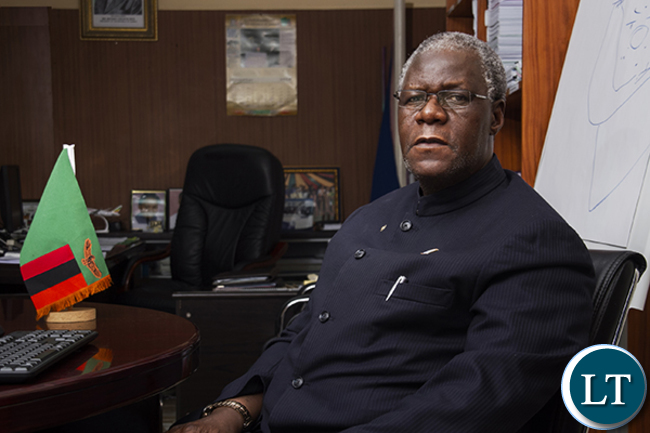
Lubinda Accuses Government of Hijacking PF Through Registrar

Patriotic Front acting president Given Lubinda has said government has no authority to involve itself in the internal affairs of the opposition party, insisting that matters relating to discipline and leadership within PF fall outside the mandate of the State.

He maintained that recent public statements by government officials on PF disciplinary actions amounted to political interference and risked misleading the public on the constitutional separation between party affairs and state authority.

Political parties, Lubinda noted, are voluntary associations governed by their own constitutions and internal rules. Decisions taken within those structures, he argued, cannot be overridden, validated, or dismissed through government pronouncements or public commentary.

From that standpoint, he rejected any suggestion that government officials had a legal basis to comment on or arbitrate internal PF decisions, including those involving Members of Parliament whose conduct may conflict with party resolutions.

Lubinda warned that attempts by government representatives to present themselves as referees in PF matters undermined constitutional principles that guarantee political parties the right to manage their internal affairs without state interference.

The PF constitution, he said, clearly outlines disciplinary procedures and leadership structures, adding that disputes arising within the party must be addressed through established internal mechanisms rather than external commentary from the executive.

He further pointed to what he described as a persistent blurring of the distinction between party membership and parliamentary office. While Members of Parliament enjoy constitutional protection in the execution of their legislative duties, party membership, he emphasised, remains subject to party rules and discipline.

From PF’s perspective, party discipline cannot be dictated by external actors, including the executive arm of government. Allowing such involvement, Lubinda cautioned, would establish a precedent capable of being used against any political organisation.

In his view, government’s role is limited to upholding the law and protecting constitutional order. Intervention in political party disputes, he argued, exceeds that mandate and erodes institutional boundaries.

Lubinda linked the current controversy to what he described as an earlier “hijacking” of PF leadership through administrative action by the Registrar of Societies. According to his account, a rogue party president was allowed to hold PF documents that did not reflect the truth or the party’s constitutional position.

He alleged that Chabinga was recognised as PF president through the Registrar of Societies without any PF constitutional process, including the holding of a convention or endorsement by the party’s governing organs. That recognition, he said, amounted to leadership being imposed from outside the party.

Such actions, Lubinda argued, would one day be tested in court, maintaining that the Registrar of Societies had exceeded its administrative mandate by interfering in matters that were strictly internal to the party.

He contrasted the current situation with the conduct of a previous Registrar of Societies, whom he credited for refusing to bend to political pressure. That resistance, he said, prevented manipulative attempts to weaken PF or bar it from contesting elections, a trend he claimed had since taken root.

PF, Lubinda stated, remains committed to resolving its internal matters in accordance with its constitution, regardless of public speculation or commentary by government officials.

Respect for institutional boundaries, he added, is essential for political competition in a multiparty democracy. Failure to uphold those boundaries weakens democratic practice and creates confusion among citizens.

On that basis, PF expects government to focus on governance and service delivery rather than commentary on opposition party affairs, while the party continues to assert its independence and resist what it describes as political overreach.

MPs Told to Prioritise National Interest Over Party Loyalty

Members of Parliament have been urged to place the interests of citizens ahead of political party considerations when dealing with national matters, amid growing criticism of what has been described as excessive party-driven conduct in the National Assembly.

Academic and politician Professor Naison Prof Ngoma said the current parliamentary system was failing to adequately serve citizens because it was being operated primarily on political party positions rather than on principled debate and independent judgment.

Speaking in an interview with The Mast, Prof Ngoma said Zambia’s parliamentary system had become distorted, arguing that legislators were increasingly compelled to reflect party directives instead of openly advancing positions that represented the needs and interests of the electorate.

He said Parliament should not function as an extension of political party machinery, particularly when addressing issues that had a direct impact on citizens’ lives. Prof Ngoma said matters brought before the House ought to be guided by national interest rather than partisan advantage.

Prof Ngoma expressed concern over what he described as a lack of discipline among MPs when handling critical national issues. He said the conduct of some legislators suggested a prioritisation of political survival and party loyalty over accountability to voters.

He acknowledged that proposals aimed at increasing representation of youths, women and persons with disabilities in Parliament carried potential benefits. However, Prof Ngoma said such reforms should have been implemented in a manner consistent with the judgement of the Constitutional Court.

According to Prof Ngoma, the manner in which some constitutional matters had been handled raised questions about the motivations and discipline of MPs, particularly within the opposition. He said reports suggesting that some legislators may have been influenced by personal considerations rather than constituency interests were troubling.

He said MPs had an obligation to exhaust internal party processes before taking positions that contradicted party resolutions. Prof Ngoma said legislators who disagreed with party positions should have demonstrated principled engagement within their political organisations before adopting alternative stances in Parliament.

Prof Ngoma contrasted the conduct of opposition MPs with what he described as greater discipline among Members of Parliament from the ruling United Party for National Development. He said MPs were expected to demonstrate consistency and integrity when representing both their parties and constituents.

He further stated that the conduct of MPs during the passage of contentious legislation had eroded public confidence in Parliament as an institution. Prof Ngoma said citizens expected legislators to act as representatives of the people rather than as agents of political parties.

Looking ahead to the 2026 general elections, Prof Ngoma said voters should critically assess the performance and conduct of sitting MPs. He argued that legislators who had failed to uphold national interest and ethical standards should not be returned to Parliament.

Prof Ngoma said restoring credibility to Parliament would require a renewed commitment to discipline, transparency and principled leadership. He said MPs must demonstrate that their primary responsibility was to serve citizens and protect national interests rather than advance partisan objectives.

CEC Targets Over 300MW Solar Capacity by 2027

The Copperbelt Energy Corporation says it remains on track to exceed 300 megawatts of solar energy generation by the end of 2027, citing ongoing investments and projects at various stages of development that are expected to come on stream beginning next year.

CEC chief financial officer Mutale Mukuka said the company had continued to expand its renewable energy portfolio through both operational assets and new developments, with a focus on strengthening energy security and supporting sustainable operations.

Mukuka said CEC had already commissioned two solar power plants that were contributing to its current generation capacity. These include the 60 megawatt Itimpi Solar Photovoltaic Power Station in Garneton, Kitwe, which was commissioned in 2024, and the 34 megawatt Riverside Solar Plant, both of which are fully operational.

He said the two facilities were financed through CEC Renewables, a subsidiary of the utility, using proceeds from a US$200 million green bond. Mukuka said the bond had enabled the company to make progress in scaling renewable energy projects while aligning with sustainability objectives.

According to Mukuka, CEC currently has 94 megawatts of solar capacity in operation and a further 173 megawatts under development. He said the largest component of the projects under development was the expansion of the Itimpi Solar Project, which is expected to add approximately 136 megawatts to the grid in 2026.

In addition to the Itimpi expansion, Mukuka said the company had a 25 megawatt solar project nearing financial close and a further 12.5 megawatt project already under construction. He said these projects were also scheduled for commissioning in early 2026.

Mukuka said that once the projects under development were combined with existing operational assets, CEC’s solar portfolio would reach close to 270 megawatts, placing the company within reach of its 300 megawatt target. He said further project announcements were expected in 2026 to push the company beyond the target threshold.

He described the year 2025 as challenging from a business perspective, noting that the company had operated in an environment characterised by limited energy availability. Mukuka said despite these constraints, CEC had continued to supply customers and navigate operational challenges associated with power shortages.

Mukuka said CEC viewed itself as a sustainability partner to its customers and had set strategic objectives aimed at long-term energy reliability. He said renewable energy, particularly solar photovoltaic generation and battery storage technologies, would remain central to the company’s future investments.

CEC Renewables, the group’s renewable energy arm, is focused on advancing solar photovoltaic projects alongside battery storage solutions to support grid stability and enhance power availability during peak demand periods.

Mukuka said the company’s continued investment in solar energy reflected its commitment to addressing energy supply challenges and positioning itself to meet future demand. He said further details on upcoming projects would be announced as development milestones were reached.


Government Begins Works on 100MW Chisamba Solar Facility

Works have begun on the remaining 100 megawatt phase of the Chisamba Solar Photovoltaic power plant, marking a key step toward completing the project’s initial 200MW capacity intended to begin supplying solar-generated electricity to the national grid.

The second phase of the Chisamba Solar project is expected to cost approximately US$76 million. Once completed, the development is projected to contribute to addressing the electricity deficit the country has experienced in recent years, particularly during periods of reduced hydropower generation.

Speaking at the official launch of the construction works, Minister of Energy Makozo Chikote said the commencement of the phase two project reflected government’s commitment to stabilising electricity supply and expanding the use of renewable energy sources. He described the start of construction as a signal of progress in efforts to diversify the country’s energy mix.

Chikote called on the local community to play an active role in safeguarding the project during and after construction, noting that community participation was necessary for timely completion and long-term sustainability. He said public cooperation would be critical in protecting infrastructure once the power plant becomes operational.

The Energy Minister further stated that the Chisamba Solar project would benefit citizens across the country, with particular emphasis on employment opportunities for residents of the surrounding area. He said directives had been issued to ensure that people from Chisamba District would be prioritised for jobs created during the construction phase.

According to Chikote, renewable energy projects such as Chisamba were part of a broader programme aimed at strengthening electricity supply and supporting economic activity. He encouraged citizens to embrace the solar developments being implemented as part of the country’s energy transition.

ZESCO Limited managing director Justin Loongo said the power utility was confident the second phase of the Chisamba Solar project would be completed within the planned timeframe. He said ZESCO was committed to ensuring that the project progressed smoothly in order to deliver the expected capacity additions to the grid.

Loongo expressed optimism that the completion of the project would support national development efforts by improving energy availability. He said the project would contribute to job creation and support local communities through economic activity linked to construction and operation of the facility.

PowerChina project manager Tian Hongjun said the contractor would work within Zambian laws and regulations to ensure the successful delivery of the project. He assured government and stakeholders that the company was committed to compliance and cooperation throughout the construction process.

Tian stated that the project would remain open to employment opportunities for local residents and that the contractor would engage with communities in line with agreed standards. He said PowerChina recognised the importance of working closely with ZESCO and government institutions to achieve project objectives.

The Chisamba Solar project forms part of a wider portfolio of energy developments being implemented by ZESCO Limited to address electricity shortages. The power utility has indicated that several projects are underway across the country as part of efforts to expand generation capacity and improve supply reliability.

Once completed, the second phase is expected to bring the total installed capacity at Chisamba to 200MW, positioning the facility as one of the country’s major solar power installations and a contributor to ongoing efforts to reduce dependence on hydropower during periods of low water levels.

Government launches construction of phase two solar plant in Chisamba

6

Minister of Energy Makozo Chikote has launched the construction of the phase two 100 megawatts Solar Power Plant in Chisamba District in Central Province at a cost of US$70 million.

The media reports that Mr Chikote says the project, which is being undertaken by ZESCO Limited in partnership with Power China, marks another significant milestone in increasing the country’s power generation capacity and cushioning the deficit.

Speaking during the ground breaking ceremony for phase two of the Solar Power project which is part of a broader initiative to end load shedding in the country, Mr Chikote said the expansion project is a clear demonstration of the government’s unwavering commitment towards transforming Zambia’s energy sector.

“We are advancing a strategic agenda that places energy as a key driver of the country’s economic development. We have over the years depended on hydropower but because of climate change, we have decided to come up with solar energy to address electricity challenges the country has been facing,” he said.

Mr Chikote said the project is part of the policies the government has put in place to transform Zambia into a net exporter of electricity in the country.

He said the investments have nothing to do with the 2026 general elections but are part of the government’s robust programme to end load shedding and boost the country’s power generation capacity.

He said the government will continue investing in other alternative sources of energy such as solar, coal and wind to increase the country’s power generation capacity.

“Energy is a critical enabler of economic development. ZESCO and Power China should prioritise local human resources by employing the people of Chisamba,” Mr Chikote said.

He further urged the media to effectively report on all projects being undertaken across the country to ensure citizens are fully aware of what is being done towards ending load shedding.

“I wish to call for more Public Private Partnership in the implementation of developmental projects. The Chisamba phase two solar project stands as a strong symbol of progress,” he said.

Central Province Permanent Secretary, Milner Mwanakampwe said the Chisamba power project is a strategic and timely investment aimed at making load shedding a thing of the past.

Power China Project Manager, Song Mingi said the US$70 million investment into the second phase of the project is an indication that the company is happy with Zambia’s investment environment.

Chisamba Member of Parliament, Chushi Kasanda urged the people of Chisamba to continue supporting government programmes.

Chief Chamuka of the Lenje people of Chisamba District, delivering the vote of thanks, commended the government for its sound energy policies.

The commencement of the phase two project comes barely four months after the commissioning of phase one of the 100 megawatts solar project by President Hakainde Hichilema.

The 200 megawatts Chisamba solar project is in line with the government’s policy on the promotion of clean energy aimed at reducing over-reliance on hydro power due to climate-change challenges.

Malunga calls on Government to construct OYDCs in all Provinces

5

Oriental quarries boxing promotions (OQBP) Manager, Christopher Malunga has called for the government to construct Olympic Youth Development Centers (OYDCs) in all provincial centers.

Malunga stressed on the need to extend sports development centers beyond the railway-line, noting that this will help in sports talent identification.

Malunga who featured on a  TV programme everything sports observed that there is a lot of talent among the youths in rural areas which is untapped.

“We recently signed a boy from Kaputa, in Luapula Province through our Talent identification program (TIP), the boy has the heart of a lion,” Malunga said.

At the same Tv programme, Malunga gave an update on the preparation of the upcoming international boxing bout, set for December 27, 2025 at government complex.

The bout will see Zambia’s World Boxing Council (WBC) Champion, David Sniper Mwale defend his title against Lusizo Manzana of South Africa for the first time since winning the title back in may this year.

Broadleaf Urban Properties launches digital Application

1

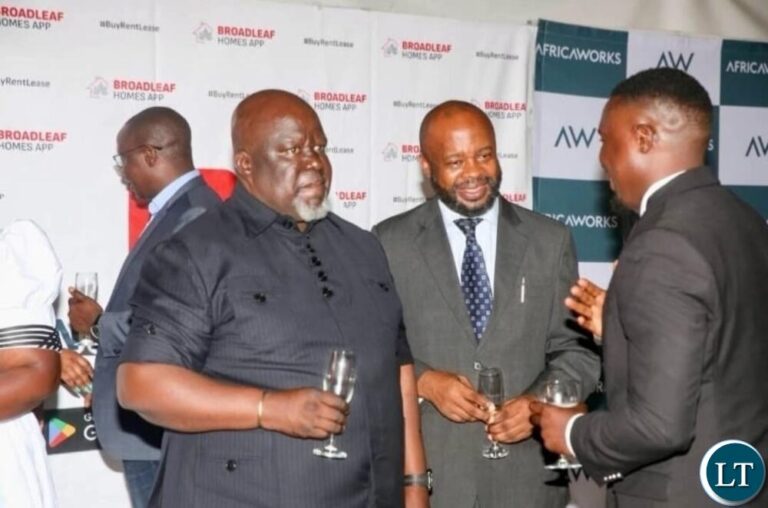
Government has commended Broadleaf Urban Properties for launching a digital Application (App) for listing properties.

Speaking last night during the launch of the Broadleaf Home APP, Minister of Local Government and Rural Development, Gift Sialubalo said the launch of the App is timely as it will enable people to easily access properties for rent.

Mr Sialubalo said the innovation enhances transparency, traceability, and accountability within the housing market.

He stressed that the Broadleaf Home App complements the objectives of the national decentralisation that aims to bring services closer to the people.

And Minister of Technology and Science, Felix Mutati praised Broadleaf Urban Properties for using digital technology to bring sanity to the housing market space.

The media reports that Mr Mutati said the government will continue to expand and invest in digital infrastructure on which technology rides on to encourage more innovations, such as the Broadleaf Home Application.

Meanwhile, Broadleaf Urban Properties Board Chairman, Sobrick Sakala bemoaned that access to prosperity in Zambia is fragmented, hence the decision to launch the Broadleaf Home Application.

Mr Sakala charged that many people have experienced losses and frustration due to the informal system of searching for properties for rent using unregistered agents.

YLP distributes food items to Chama’s disaster victims

0

Youth Life Project (YLP) has distributed food items to disaster victims in Chama District in Eastern Province, directly benefiting up to 40 households.

Acting Chama District Commissioner, Andrew Mkandawire has appreciated the gesture, saying the government will always embrace partnerships with the private sector in strengthening disaster‑response efforts.

The media reports that Mr Mkandawire said the partnership with YLP demonstrates the government’s commitment to creating an environment that allows civil society and private sector actors to support citizens.

“Collaborations like these are essential in ensuring timely assistance to disaster victims and building resilience in vulnerable communities,” he said.

Meanwhile, Youth Life Project District Coordinator, Lyson Mkandawire says the distribution of food to affected households is a clear demonstration of the project’s unwavering commitment to ensuring help is rendered to citizens who find themselves in troubled situations.

“We express gratitude to government and partner organisations such as CoLaborers International, CoLaborers Zambia and the intervention from SPAII Project in partnership with ActionAid Zambia, for making this distribution of assorted food items a reality,” he noted.

Meanwhile, beneficiaries of donation have expressed appreciation to the government and Youth Life Projects for their support.

The residents say the assistance will help address household hunger.

President Hichilema Announces Reduction in Official Travel Entourage to Curb Costs

9

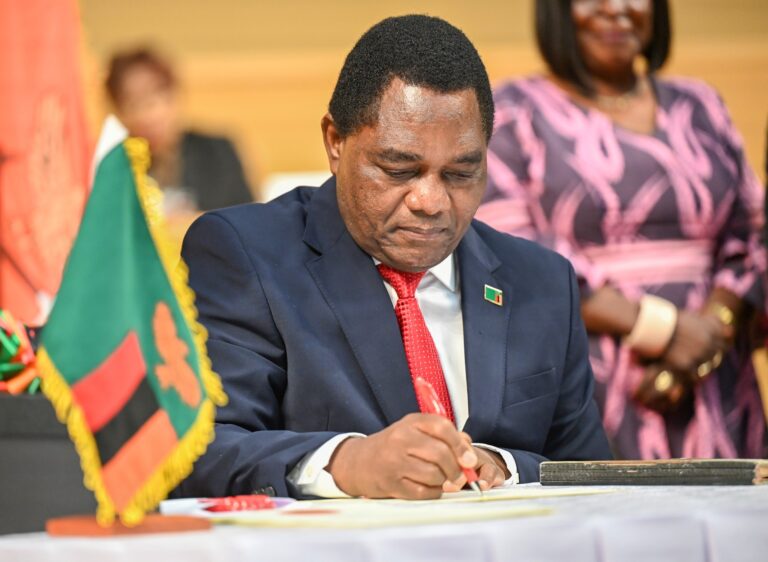
LUSAKA — President Hakainde Hichilema has announced that the size of his official traveling delegation has been reduced from approximately 120 people under the previous administration to about 25 individuals at present, as part of efforts to conserve public resources.

Speaking at the Basic Education Teachers Union of Zambia (BETUZ) Silver Jubilee celebration, President Hichilema stated that his administration has also shortened the duration of foreign trips to ensure prudent use of government funds.

“Before our time in government, every time there was a UN General Assembly, over 100 to 120 public servants travelled to New York. Now, if the President travels, it’s 25 people,” he said.

The President also reaffirmed his government’s commitment to education, describing it not merely as a social sector but as an economic one, and pledged to continue channeling more funds into it.

During the same event, BETUZ reported that its membership has more than doubled, a development it attributes to the extensive teacher recruitment undertaken by the New Dawn government.

The Silver Jubilee celebration, held under the theme “Celebrating 25 years of unity, innovation and resilient growth,” attracted over 2,500 teachers, provincial education officers, deans of DEBS, and head teachers from all 10 provinces.

Ministry of Health Reports Major Advances in Funding, Medicine Availability, and Diagnostic Technology

1

LUSAKA — Over the past four years, the Ministry of Health has recorded significant progress across multiple areas, driven by a substantial increase in government funding. Budgetary allocation to the health sector has risen from approximately 7% of the national budget in 2021 to just under 12% at present.

Officials state this increased investment has had a direct impact on service delivery. The availability of essential medicines has improved considerably, now ranging between 85% and 90% at health facilities nationwide, a sharp rise from about 35% in 2021.

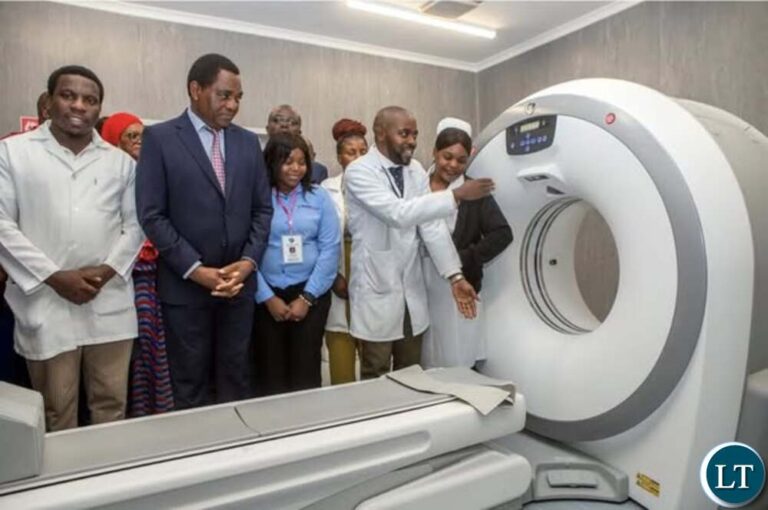
A major technological modernization effort is underway in medical imaging. The Ministry has been transitioning from outdated analogue systems to digital technology. In 2025 alone, 79 digital X-ray machines and 107 ultrasound machines have been installed across the country. The diagnostic capacity has been further strengthened with the deployment of 20 CT scanners this year.

In a significant leap for specialized care, the government has procured a PET-CT scanner and a cyclotron, an advanced system used to produce radionuclides for imaging. This technology allows for precise detection of diseased tissues and will be available domestically, eliminating the need for patients to seek these services abroad.

The rollout of equipment continues to expand. The Ministry has distributed 86 portable digital X-ray units nationwide and 10 C-arm machines for real-time imaging in operating theatres. Additionally, 10 mammography machines have been procured, ensuring each province will have at least one unit for breast cancer screening.

President Hichilema reaffirms commitment to Teachers’ recruitment

3

President Hakainde Hichilema has assured Teachers and the nation that the government will continue recruiting and upgrading teachers as part of sustained efforts to strengthen the education sector and improve learning outcomes across the country.

The President has called on unemployed trained teachers to remain hopeful and not lose morale, stating that the government is committed to expanding recruitment as fiscal space improves.

President Hichilema reaffirmed his administration’s continued support to teachers, describing them as highly valued professionals who play a critical role in shaping the minds, character, and future of learners.

“I want you to continue doing what you are doing and be aware that you are critical to the development agenda of the country,” President Hichilema said.

The Head of State was speaking when he officiated at the Basic Education Teachers Union of Zambia (BETUZ) Jubilee Celebration held in Lusaka district.

The media reports that President Hichilema reiterated the importance of teachers in national development, noting that they contribute significantly to economic growth through the provision of quality education that builds a skilled and productive workforce.

He further called for the extension of internship programmes to Secondary School level, explaining that expanding internships beyond tertiary institutions would enable pupils and students to acquire practical skills and secure employment earlier in life.

On free education, the President said the policy remains a top priority for his government, emphasising that every child is entitled to quality education as a basic necessity.

He explained that the government has deliberately prioritised education by redirecting resources from non-essential expenditure to the sector, describing education as Zambia’s most critical economic sector, the best investment, the greatest equaliser, and the nation’s most valuable inheritance.

President Hichilema said the introduction of free education has necessitated massive teacher recruitment due to increased enrolment, adding that government interventions such as school feeding programmes, meal allowances, student loans and bursaries, and the expansion of Early Childhood Education centers are transforming the sector.

The President called for continued partnership between government, unions, and other stakeholders to further improve the learning environment and enhance the welfare of both teachers and learners.

He urged unions to maintain a spirit of dialogue and cooperation, saying peaceful engagement is key to national stability and progress.

President Hichilema also encouraged teachers to help learners identify and nurture their talents, while calling on the Ministry of Education to reintroduce career guidance in schools to assist learners in making informed career choices.

He stressed that skills training and digital learning are essential in reducing unemployment and promoting entrepreneurship among the youth, and commended the Ministry of Education for introducing the new school curriculum with a strong focus on practical skills.

On the civil servants ‘salary matters, the President assured teachers that the government is aware of ongoing negotiations between unions and government, and said the issue of salary adjustments will be concluded soon.

Earlier, Minister of Education Douglas Syakalima announced that the government is finalising the construction of 165 Secondary Schools across the country.

Mr Syakalima also disclosed that additional schools supported by the World Bank are nearing completion.

The Minister further revealed that the number of students accessing government bursaries has increased from 23,000 in 2021 to 53,000 in 2025, reflecting expanded access to higher education.

Meanwhile, BETUZ General Secretary, Henry Sinkala thanked President Hichilema for officiating at the jubilee celebrations, saying his presence demonstrated the high premium the government places on education.

Mr Sinkala said over 40,000 teachers have been recruited in the past four years, with BETUZ membership growing from 35,000 in 2021 to more than 72,000 in 2025.

He also highlighted BETUZ’s investment ventures, including the establishment of a finance company and the acquisition of land for teachers, aimed at improving teachers’ livelihoods.

During the celebrations, BETUZ honored President Hichilema in recognition of his commitment and contribution to the education sector.

Government spends K99 million on Lusaka drainages

3

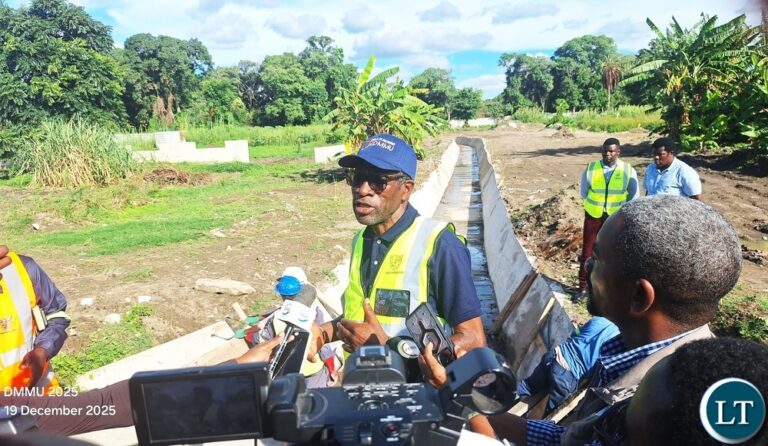
Disaster Management and Mitigation Unit (DMMU) National Coordinator, Norman Chipakupaku says the Ministry of Finance released K 99 million at the beginning of 2025 meant for the construction of drainages in Lusaka District.

The media reports that Mr Chipakupaku said the construction and opening up of drainages in Lusaka district is part of the directive issued by President Hakainde Hichilema following the floods that were experienced last year.

Speaking to journalists shortly after touring drainage construction works in Kalundu, Road 55, and Kalusha Bwalya road, Mr Chipakupaku expressed happiness with the workmanship exhibited by the Zambia National Service (ZNS).

He expressed optimism that once construction of the drainages is completed, flooding in Lusaka district will be a thing of the past.

Meanwhile, Mr Chipakupaku has urged the media to conduct sensitisation programmes aimed at educating residents not to dump garbage in drainages.

He said the dumping of garbage in drainages is a big concern to the unit.

Mr Chipakupaku attributed flooding in most parts of Lusaka district to drainage blockages.

And ZNS Kalusha Bwalya drainage Project Officer, Major January Phiri said the construction works are progressing well.

Maj Phiri indicated that currently, they are working on the concrete baseline so as to allow water to freely flow.

He further stated that 600 meters of the drainage has been excavated.

Chief Government Spokesperson Cannot Reinstate an Expelled MP ..

15

Chief Government Spokesperson Cannot Reinstate an Expelled MP from a Political Party

By Jeremy Kangwa – Concerned Citizen

Recent public statements suggesting that Government has nullified the expulsion of certain Patriotic Front (PF) Members of Parliament have understandably caused confusion among citizens. The claim that an expelled MP can be “reinstated” through an executive pronouncement raises a basic but serious constitutional question: can Government interfere in how a political party disciplines its members?

This column is not written to defend or attack any political party. It is written to clarify constitutional roles, because democracy depends not only on elections, but on restraint and respect for institutional boundaries.

Political parties in Zambia are voluntary associations governed by their own constitutions. Like any association, a party has the right to discipline, suspend, or expel its members in line with its internal rules. Government does not run political parties. It does not sit on their disciplinary committees, and it does not approve or cancel their internal decisions. When a party expels a member, that decision remains an internal party matter. Where due process is disputed, the remedy lies in internal appeals or in the courts of law, not in executive declarations.

Much of the public confusion arises from the failure to separate party membership from parliamentary office. Expulsion from a political party is not the same as automatic removal from Parliament. The Constitution of Zambia is clear that whether a Member of Parliament loses their seat after ceasing to belong to the party that sponsored them is a matter handled through parliamentary and constitutional processes. In practice, it is the Speaker of the National Assembly who determines whether a seat becomes vacant, guided by the Constitution, parliamentary procedure, and where applicable, court decisions. The Executive branch has no constitutional mandate to decide who sits in Parliament on the basis of party discipline.

Some have attempted to justify Government intervention by invoking parliamentary privileges and immunities. These protections exist to safeguard freedom of speech in Parliament and to ensure MPs can perform their legislative duties without intimidation or prosecution for words spoken in the House. Those privileges are important, but they do not shield an MP from their own party’s internal rules. They do not prevent a party from disciplining or expelling a member. Legislative independence and party membership obligations are constitutionally distinct.

Why, then, are the Government’s statements concerning? Because words from those in power carry weight. When the Executive appears to claim authority it does not legally possess, it creates the impression that Government can intervene in opposition parties whenever it suits political convenience. Even where no formal action follows, such statements weaken public confidence in constitutional limits.

A constitutional democracy functions because roles remain clear. Government governs. Parliament legislates. Courts interpret the law. Political parties manage their own internal affairs. Once these lines are blurred, democratic erosion begins quietly, through precedent and normalisation rather than dramatic rupture.

If there were genuine constitutional concerns about the PF expulsions, established remedies were available. The affected MPs could seek relief from the courts. The Speaker could await legal guidance before making any determination. Government could remain institutionally neutral. Public intervention by the Executive was neither necessary nor appropriate.

Citizens should care about this issue because today it may involve PF MPs, but tomorrow it could involve another party. Constitutional overreach does not discriminate by political colour. Once tolerated, it becomes habitual.

Zambia’s democracy will not be preserved by loud statements or political point-scoring, but by restraint and fidelity to the rule of law. Government does not nullify party expulsions. Only courts and Parliament, acting through the Speaker and guided by the Constitution, can determine their legal consequences. Anything else risks reducing constitutional governance to political theatre.

Which brings us to the question that remains unanswered and that should have been addressed first: who, within the Patriotic Front, is legally and procedurally eligible to expel a member? As matters stand, there is an unresolved leadership dispute, an alleged president installed without a convention, a clear vacuum of authority, and an acting leadership arrangement involving Mr Given Lubinda. Until that internal question is settled lawfully, the PF remains trapped in uncertainty. The party needs space to resolve its leadership and disciplinary questions freely, without executive commentary. Loosen the PF. Allow a level playing field. Only then can constitutional order, inside parties and outside them, begin to stabilise.

2026 Hunt For Successor Part 1 (Launch)

28

The Twin-Engined King Kasongo

By Dr. Field C. Ruwe

Hakainde Hichilema Taunting Zambians 

King Kasongo is the bold and reckless warthog featured in various viral YouTube videos, known for its ability to evade dangerous situations, and outrun lions with speeds of 30-35 mph (48-50 km/h) propelled by a “V16 turbo engine.” The videos, some juxtaposed with the song “Kasongo” composed by Orchestra Super Mazembe create a “Warthog versus Lions,” scenario in which the obstinate King Kasongo emerges as the “new King of the Savannah.”

In launching the 2026 Hunt for Successor series, the videos featuring King Kasongo are employed as a metaphorical tool to emphasize the reckless political semantics and ramifications tied to President Hakainde Hichilema. His shrewd and audacious “Us versus Them” strategy is testing the patience and forbearance of Zambians. Various groups, including Generation Z, the opposition, religious leaders, social media influencers, political activists, and the general discourse describe Hichilema’s style of governing as deeply disturbing and indicative of catastrophic consequences.

The dominant national narrative suggests that, having admitted he has failed to end load-shedding, and to alter the trajectory of poverty over the past four years, Hichilema’s stronghold is no longer the vision of a thriving self-sufficient Zambia. Instead, it has shifted to the hijacking of the multiparty democratic process through tribal politics and constitution manipulation. Much like King Kasongo, Hichilema has his V16 turbo engine firing on all cylinders, zigzagging and taunting Zambians with calculated recklessness intended to confuse them with his “Us versus Them” mentality.

In one of the “Warthog versus Lions” videos, King Kasongo audaciously rattles the established hierarchy of the animal kingdom by ploughing headfirst into a group of male lions lounging beneath a tree. His bold act causes them to scatter in fear, interrupting their serenity. As some lions chase after him, he bravely challenges them to a game of “catch me if you can,” racing at speeds surpassing 30 mph, weaving to disorient them, and swiftly reversing into a burrow, thus earning himself the designation of “King of the Savannah.”

In the like manner, feeling empowered and as egocentric as King Kasongo, Hichilema is seizing on the moral integrity of Zambians; a people who are as patient as the lions shown in the videos; a people known for their earned multiparty democracy, peaceful transition of power, and a poly-ethnic culture that blossoms under the banner of “One Zambia One Nation.” Political analysts label him as an egocentric leader who is undermining the intelligence of Zambians. He thinks Zambians are politically ignorant, disengaged, vulnerable to manipulation and too patient to care.

Evolutionary history indicates that all species exhibit and exploit tribalism to gain and maintain power. Upon recognizing his capacity to intimidate the world’s apex predators, King Kasongo has developed excessive confidence in his unmerited power. He has established an in-group with his fellow warthogs and initiated cooperative partnerships with meerkats for mutual defense. Lately, a meerkat can be seen perched on King Kasongo’s back in a symbiotic relationship, acting as a lookout for potential dangers.

Similarly, following his inauguration, the overconfident Hichilema, who hoodwinked Zambians, particularly Generation Z, into casting their vote for him in 2021, abandoned the foundational principle of national unity encapsulated in the motto “One Zambia One Nation.” Instead, he unveiled the UPND scheme, which outlines a strategy for transforming Zambian politics through a lens of “Us versus Them” mentality.

It has been noted that Hichilema indulged in tribal politics during the coalition established in 2011 between his United Party for National Development (UPND) and Michael Sata’s Patriotic Front (PF) party. His notion of “Us versus Them” played a significant role in the collapse of the alliance. Members of the PF accused him of surrounding himself with individuals from his Tonga tribe in an effort to maintain the UPND quota system, which sought to position a Tonga in State House.

Immediately following his victory in the 2021 presidential election, Hichilema turned to tribal politics as a means to strengthen his authority. He initiated this process by referencing Harry Nkumbula’s Bantu Botatwe classical strategy, which involved garnering support from the Tonga, Ila, Lenje, and several affiliated tribes in the Zambezi region. It was through this tribal unity that Hichilema formed the bulk of his in-group and appointed the most number of ministers, civil servants, and diplomats.

Hichilema’s in-group included his Principal Private Secretary, Bradford Machila, who is considered the brain behind Hichilema and the advocate of the “Tonga First” precept. Others included his attack dog Jack Mwiimbu, who holds the position of Minister of Home Affairs and Internal Security, and the current Minister of Foreign Affairs Mulambo Haimbe, who was Minister of Justice at that time.
In an autocratic rule, the aforementioned ministries are crucial for the consolidation of power. The Ministry of Home Affairs and Internal Security acts as Hichilema’s main instrument for upholding total control by quelling dissent, surveilling the populace, imprisoning political opponents, and solidifying his authority through an extensive internal security network.

The Ministry of Justice facilitates Hichilema’s governance through decrees, undermining constitutional norms. He is currently exploiting the ministry as a tool to prolong his tenure beyond the established two-term limit. This tactic is swiftly unfolding via the annulled amendment of the Constitution of Zambia (Amendment) Bill No. 7 of 2025, which has successfully progressing to the second reading in parliament.

By stubbornly enforcing unpopular agenda on Zambians, Hichilema mirrors King Kasongo, who has, until now, disrupted the lion kingdom and usurped control. Aware the lions’ relative inability to oppose him, King Kasongo has bolstered his audacity to solidify his dominion. Consequently, his power has impaired his ability to acknowledge the lions’ desire for peace. He now engages in perilous behavior, such as releasing firecrackers, sounding truck horns, and dropping hornet nests on the lions, to incite and intimidate. What King Kasongo does not understand is that while each provocation may provide a feel of victory, it may inevitably lead to his downfall.

As for Hichilema, he exudes confidence in his ability to denigrate the intelligence of Zambians. Driven by a high level of autocracy, he has become increasingly unable to appreciate the perspectives of Zambians and comprehending their emotions. After acknowledging his failures, he has resorted to rhetorical strategies to influence the emotions and behavior of Zambians. His primary aim is to undermine the institutions designed to uphold democratic governance, and transform Zambia into a one-party state.

It is at this point I enter the ring of fire. The 2026 Hunt for Successor articles serve as a pressing appeal for Zambians to reclaim their democratic multiparty system by contesting Hichilema’s pursuit of a second term. This initiation establishes the framework and suggests forthcoming articles. The central figure is Hakainde Hichilema, whose actions and choices will propel the narrative and whose shortcomings will be exposed. The objective of the series is to identify the appropriate presidential candidate capable of guiding Generation Z into the future.

In composing the 2026 Hunt articles, I remain profoundly cognizant of the severe ramifications. By instituting the Cyber Security Act No.3 of 2025 alongside the Cyber Crimes Act No.4, Hichilema has effectively set traps designed to stifle Generation Z, and eliminate academics, opposition leaders, journalists, human rights advocates, critics, and individuals who dare to speak truth to power. Should we fail to emphasize the crucial safeguarding of our multiparty democracy and the rule of law, it is entirely possible that Hichilema will fulfill his dream.

Please Note: I am a scholar. There is a misconception that writing academic papers is the only scholarly traditional metric. A scholar is fundamentally an academic who raises epistemological concerns, indulges in critical thinking, and has deep expertise in a particular subject. The Oxford Dictionary, along with the broader academic community, defines a scholar as an intellectual possessing a doctorate degree. I am affiliated with Northeastern University, Boston, USA. Ruwe©2025

Govt reaffirms commitment to educating women

1

Lusaka Province Minister Sheal Mulyata has emphasised the need to promote female education, as a drive to national development and social transformation.

Ms Mulyata notes that an educated woman contributes not only to her family’s well-being but also to the nation’s economic growth.

She said this in a speech read on her behalf by Lusaka Province Deputy Permanent Secretary Alex Mapushi at the 15th graduation ceremony of Gideon Robert University held in Lusaka today, where Speaker of the National Assembly Nelly Mutti, received two honorary doctorate degrees.

The Minister also stated that President Hakainde Hichilema has consistently described education as the greatest equalizer, capable of levelling social and economic disparities and creating inclusive development.

“This is why the government has several landmark interventions aimed at strengthening access to education, including the rollout of free education, the expansion of student loan schemes to all public universities, and increased scholarship opportunities through mechanisms such as the Constituency Development Funds (CDF), she emphasised.

The Lusaka Province Minister noted that the growing number of female graduates is a clear indication that government policies are yielding positive results.

She has since encouraged the graduates, particularly women, to use their education to become innovators, ethical leaders and agents of change, capable of contributing meaningfully to national development.

And speaker of the National Assembly Nelly Mutti has called for sustained investment in girl-child education, stating that educating a girl has the power to transform families, institutions and nations.

She emphasized that when a girl is given a chance to learn, she can grow into a woman capable of leading institutions, shaping policy and influencing generations.

Ms Mutti encouraged young women to remain focused, resilient and purpose-driven, adding that leadership is built through character, service and commitment to excellence.

Meanwhile, Gideon Robert University Vice Chancellor Ronald Kaulule reaffirmed the institutions committed to producing graduates who are capable of responding to national and global challenges.

The Vice Chancellor said the university places special emphasis on women education, stating that empowering women through education leads to healthier families, stronger communities and sustainable economic growth.

He has since commended President Hakainde Hichilema for prioritising education as a key pillar of national development.