Friday, June 12, 2026
12.9 C
Lusaka
Home Blog Page 293

Government disburses over K200 million for farmer payments

2

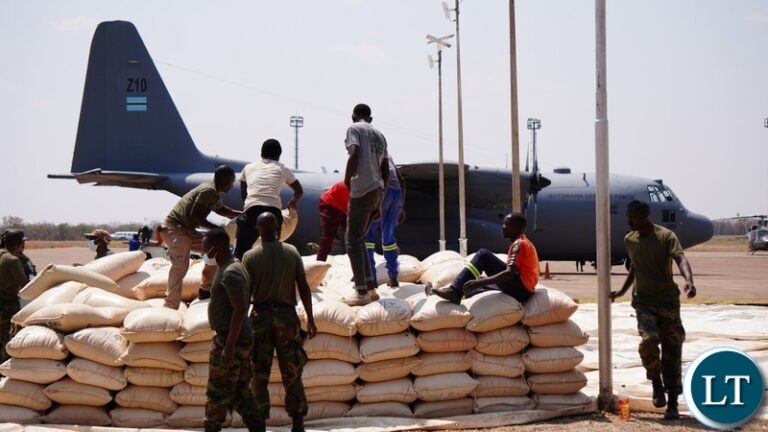
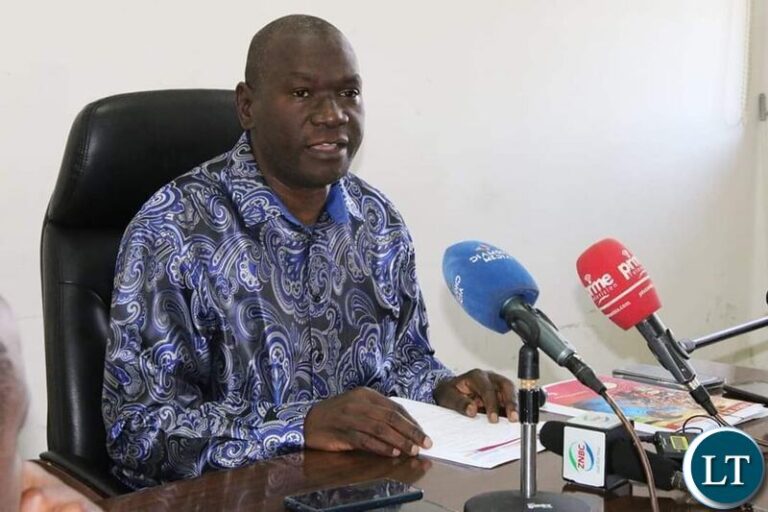
Government has disbursed over K200 million to the Food Reserve Agency (FRA) to pay farmers that have sold their maize to the agency in the ongoing crop marketing season in Central Province.

Provincial Permanent Secretary Milner Mwanakampwe says K222 million has been released to pay the farmers.

The Permanent Secretary was speaking during a meeting with public service workers in Mkushi district.

Dr Mwanakampwe said the government will ensure that the farmers are paid on time to enable them to prepare for the 2026-2027 farming season.

“I am happy to announce that a total of K222 million has been disbursed to the FRA to pay our farmers in Central Province. All the farmers who have supplied maize will be paid as a matter of urgency,” Dr Mwanakampwe said.

He said the FRA has so far bought 174,000 metric tonnes of maize in the region in the ongoing crop marketing season.

He said the province was given a target of buying 80,000 metric tonnes of maize this year but it has gone beyond target because of the bumper harvest the region recorded in the 2024-2025 farming season.

He commended the farmers in the province for their hard work that made it possible for the country to record a bumper harvest in the 2024-2025 farming season.

Dr Mwanakampwe said government will continue implementing sound agricultural policies to enhance national food security.

He urged agriculture extension officers in the province to continue providing the required support to the farmers on the best farming practices to boost agricultural production in all districts.

Zambia intensifies its social protection agenda by scaling up the Social Cash Transfer Programme

1

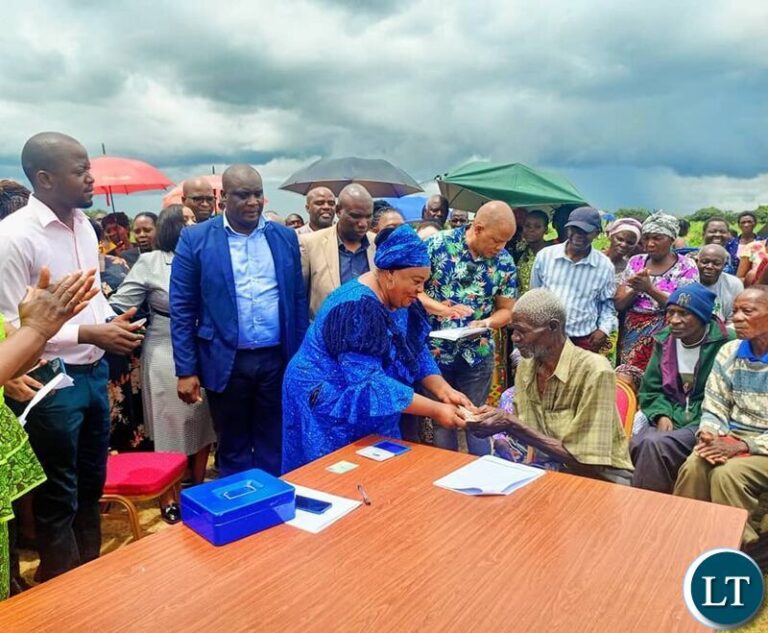
The Ministry of Community Development and Social Services, has intensified its social protection agenda by scaling up the Social Cash Transfer Programme.

The initiative, which has already transformed the lives of thousands of vulnerable households, is set to reach even more families across Western Province.

Currently, the province records 160,000 beneficiaries, but this figure is projected to rise to 180,000 following the ongoing scaling-up exercise.

The process involves the systematic enumeration of households to determine levels of vulnerability, thereby ensuring that only the most deserving families access the support.

Western Province Social Welfare Officer, Macnon Luwaile, says the programme has had a far-reaching impact on communities in the region.

“The Social Cash Transfer has drastically improved the welfare of households, particularly in enhancing food security. We are grateful that government has decided to expand the program so that more households can benefit,” he said.

In Mitete District, the programme currently covers 6,032 beneficiaries, but an additional 1,020 households will be introduced on the programme once the enumeration exercise is completed.

District Social Welfare Officer, Sandra Mwame, acknowledged the significance of the programme, particularly for households with limited sources of income.

“The programme has greatly supplemented the Free Education Policy, as families are now able to purchase school requirements and food for their children. This has brought dignity and hope to many vulnerable households,” she explained.

Ms Mwame, who led a team of Provincial Social Welfare Officers in monitoring the listing exercise, emphasized that fairness and transparency remain at the core of the process.

The exercise specifically targets households with the aged, child-headed families, the chronically ill, and persons with disabilities.

And Chief Kakulunda of Mitete District described the government’s decision to enroll more vulnerable households on the social protection initiative as a game-changer in the fight against poverty.

“This program is significantly reducing poverty in most households in the district. Government’s commitment to uplift the most vulnerable cannot go unappreciated,” he stated.

Godwin Chinyama, a resident of Mitete, testified that the cash transfer has brought relief to struggling families.

“Before, many people here went to bed hungry, but today households are able to buy food and meet essential needs. The government deserves commendation for prioritizing the poor,” he said.

Another resident, Mary Nasilele, echoed these sentiments, praising the government for its consistency in reaching out to the most vulnerable.

“The Social Cash Transfer has restored dignity to many families. We are grateful to the government for this programme because it shows that no one is being left behind,” she added.

With the scaling up of the Social Cash Transfer Programme, thousands of vulnerable families across Western Province are set to experience renewed hope, improved welfare, and a pathway towards breaking the cycle of poverty.

Government commends Twashuka community project

1

Government commends Twashuka Seventh Day Church (SDA) for the resolve to expand and improve the place of worship.

Ministry of Information and Media, Permanent Secretary Thabo Kawana said that it is a powerful demonstration of faith in action.

Speaking at the church Building Promotion Day, represented by Director Planning, Louis Mwansa, Mr Kawana commended the church’s commitment to enhancing its facilities to better serve its congregation and the community at large.

He highlighted the significance of the church as a sacred home where faith is nurtured, hope is strengthened, and love unites the community under God.

Mr Kawana further reminded attendees that the initiative to construct modern toilets and complete the pulpit is not merely about infrastructure development but about building a lasting foundation for worship, fellowship and service.

He added that the aim is to ensure the church remains a beacon of light and a refuge in times of need, serving as a source of spiritual nourishment for generations to come.

Mr Kawana congratulated the leadership and members of Twashuka SDA Church for their dedication, vision and commitment to the growth of the congregation.

The Twashuka SDA Church hosted a fundraising event aimed at completing the construction of modern toilets and the church’s pulpit.

Men still shun contraceptives services

0

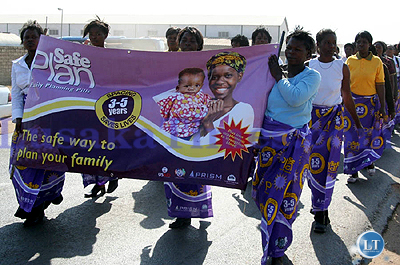
Kalingalinga Clinic in Lusaka district today engaged in community sensitisation activities to commemorate the World Contraceptive Day.

Kalingalinga Clinic Facility In-Charge, Chisuwa Kapumba, told ZANIS in an interview that the community sensitisation programmes are aimed at increasing awareness levels on contraceptive methods.

“This week, we have been conducting community outreach programmes where we have been able to give family planning to community members,” Ms Kapumba said.

And Kalingalinga Clinic Contraceptive Provider under Maternal and Child Health Department, Hellen Manda, disclosed that the institution has today received over 50 people asking for contraceptives.

Ms Manda further said male involvement in contraceptive matters has continued to be a challenge.

She said only two females have been accompanied by their partners to get contraceptives during the week.

And Kalingalinga resident, Edina Chishala, encouraged other women to be on family planning as it helps to control child spacing and help parents to provide a favourable environment for raising children.

Meanwhile, Petauke Day Secondary School Management have revealed that the education facility has recorded a decrease in the number of teen pregnancy cases among its learners.

School Head Teacher Elita Salanga says the school recorded 34 cases in 2021, noting that the school has only currently recorded three to four pregnancy cases among its learners, this year.

Speaking during the cascading of the Children’s Voices Matter Project and trainer of trainers training on child participation, Ms Salanga attributed the decrease in pregnancy cases at her school to the various interventions from government and partners like the Zambia Civic Education Association (ZCEA).

“Teen pregnancies have reduced because of the capacity buildings given to us. Like at my school, I can say there has been an 80 percent decrease in the number of pregnancy cases. For instance, in 2021 we were at 38 pregnancies but now it is three or four pupils,” she said.

And speaking at the same training, Save the Children Petauke District Child Protection Coordinator Elijah Nsonge said his institution has installed water reticulation systems to more than 21 schools in the district, in efforts to fight teen pregnancies and child marriage.

“We have over 21 schools that have been empowered with water reticulation systems. We have increased our coverage of various child protection services to 82 schools from 33 schools,” he said.

Meanwhile Eastern Province Senior Child Development Officer Glentwyn Chinjili appreciated the various departments in the district that were implementing child protection programmes, in order to uphold the wellbeing of the children in need.

Zambia Charts a Course for Resilience and Prosperity

ANALYSIS | K253.1 Billion 2026 Budget: Zambia Charts a Course for Resilience and Prosperity

When Finance and National Planning Minister Dr. Situmbeko Musokotwane rose to deliver the 2026 National Budget in the National Assembly on Friday afternoon, he was not merely announcing figures. He was presenting a roadmap that seeks to anchor Zambia’s recent economic gains and propel the country toward a more stable, prosperous future.

Under the theme “Consolidating Economic and Social Gains Towards a Prosperous, Resilient and Equitable Zambia”, the K253.1 billion budget signals a deliberate shift from crisis management to structured economic expansion, underpinned by fiscal restraint and a growing reliance on domestic resources.

Over the past four years, Zambia’s economic story has undergone a quiet but profound transformation. From being the first country to default on its debt in the post-COVID era, Zambia is now held up as a success case for debt restructuring under the G20 Common Framework. Average economic growth has climbed from a modest 1.6 percent in the pre-2021 period to 5.2 percent, even amid shocks such as the pandemic and the devastating 2024 drought.

This turnaround has been accompanied by tangible social reforms. Free education has opened classrooms to millions of children who were once locked out by poverty. The Constituency Development Fund (CDF) has decentralised development in a way unseen since independence, financing schools, health facilities, water projects and local businesses across the country.

Dr. Musokotwane’s 2026 budget aims to consolidate these achievements while addressing lingering vulnerabilities such as youth unemployment, infrastructure gaps, climate risks and persistent poverty.

The macroeconomic targets set for 2026 are both ambitious and disciplined. The government is projecting GDP growth of 6.4 percent, keeping inflation within the 6–8 percent band, and reducing the fiscal deficit to 2.1 percent of GDP. Domestic revenue is expected to rise to 22.3 percent of GDP, signalling an intention to strengthen tax mobilisation rather than rely excessively on external borrowing.

Inflationary pressures have already eased, dropping from 16.7 percent in December 2024 to 12.3 percent, thanks to a bumper maize harvest, Kwacha appreciation and reduced fuel prices. Fiscal deficits have narrowed significantly, while gross international reserves now stand at US $4.9 billion, offering 4.8 months of import cover.

Such macroeconomic stability lays the groundwork for the sectoral investments outlined in the budget, but sustaining it will depend on consistent execution, particularly in revenue collection and debt servicing.

The K253.1 billion budget, equivalent to 27.4 percent of GDP, will be financed with 82 percent drawn from domestic sources. This represents a marked assertion of fiscal sovereignty. A total of K206.5 billion will come from local revenue, K12.1 billion from grants, and K34.5 billion from borrowing.

The lion’s share — 36.6 percent (K92.6 billion) — is directed to General Public Services, primarily for debt repayments: K52 billion for domestic obligations and K21.7 billion for external debt. Economic Affairs accounts for 23.2 percent (K58.6 billion), funding strategic sectors such as agriculture, road infrastructure, mining, energy and tourism. Education receives K33 billion (13 percent), Health gets K26.1 billion (10.3 percent), while Social Protection is allocated K15.7 billion (6.2 percent), including a significant K7.6 billion for the Social Cash Transfer Programme.

The mining sector remains the cornerstone of Zambia’s economic ambitions. Copper production is expected to exceed one million tonnes in 2025, supported by the expansion of large-scale operations like First Quantum’s S3 Project, Barrick Lumwana’s Super Pit, KCM, Mopani and the development of new mines such as Mingomba and Kitumba. Artisanal and small-scale mining is also gaining formal recognition through licensing and the establishment of new marketing centres.

In agriculture, the government has set bold targets: 10 million tonnes of maize, 1 million tonnes of wheat, and 1 million tonnes of soya beans annually by 2031. The nationwide rollout of e-voucher systems, irrigation investments and improved seed production are expected to turn surplus production into export earnings. Expansion of livestock disease-free compartments is intended to position Zambian beef competitively in export markets.

The energy sector is undergoing one of its most significant transitions since independence. To address power shortages caused by drought, the government plans to add 1,500 MW of solar and 300 MW of thermal power in 2026, aiming to increase the share of non-hydro renewables from 3 percent to 33 percent. Rural electrification is being accelerated, and a new interconnector with Tanzania is expected to deepen regional power trade.

Infrastructure development remains central to the growth strategy. The Lusaka–Ndola Dual Carriageway is nearing the halfway mark under a PPP model, while feeder roads, provincial airports and strategic corridors like TAZARA and Lobito are receiving sustained investment.

Road rehabilitation is underway in multiple provinces, while airport infrastructure upgrades in Kasama, Chipata, Mongu and Solwezi, and planned new airports at Choma and Nakonde, are expected to boost connectivity and unlock tourism, agriculture and mining opportunities.

Beyond the economic metrics, the 2026 budget continues to place human capital at the centre. Since the introduction of free education in 2022, an additional 2.3 million learners have enrolled in schools. Over 42,000 teachers have been recruited, and more than 300 secondary schools have been completed or are nearing completion. The Home-Grown School Feeding Programme has been expanded to reach 4.6 million learners.

In the health sector, over 18,000 personnel have been hired, 282 facilities built, and essential drug availability increased to 90 percent. Investments in cancer treatment centres, health posts and digital patient management systems are aimed at improving access and quality of care across the country.

Recognising the growing climate threat, Zambia is integrating sustainability into its fiscal framework. Over US $150 million has been raised through green bonds to finance solar energy projects. Expanded weather monitoring networks and carbon market initiatives are being rolled out to enhance resilience.

Governance reforms — including a revised tax administration bill, state-owned enterprise legislation and strengthened anti-corruption laws — are designed to improve transparency and fiscal discipline.

The 2026 National Budget reflects a clear commitment to fiscal self-reliance, with 82 percent of spending financed domestically, and sets out ambitious growth and social development targets. It demonstrates a disciplined approach to macroeconomic management and continues to invest strongly in education, health, infrastructure and key growth sectors such as mining, agriculture and energy.

However, challenges remain. Heavy domestic debt servicing continues to crowd out other priorities. Infrastructure gaps are still significant, particularly in rural areas. Successful implementation will depend on effective revenue collection, prudent expenditure, and timely project execution. Climate vulnerability also poses a lingering risk to agriculture and energy stability.

Our view is that this budget represents a confident and credible step forward. If execution matches the ambition, Zambia could consolidate its recovery and lay the foundations for sustained, broad-based growth. But if implementation falters, the impressive fiscal framework risks remaining a statement of intent rather than a transformative reality.

Zambia Unveils K253.1 Billion 2026 Budget to Consolidate Economic Gains

7

Zambia Unveils K253.1 Billion 2026 Budget to Consolidate Economic Gains

Lusaka, 26 September 2025

Zambia has unveiled a K253.1 billion national budget for 2026, setting out an ambitious agenda to consolidate the country’s economic and social gains while maintaining fiscal discipline. Finance and National Planning Minister Dr. Situmbeko Musokotwane presented the budget to the National Assembly on Friday under the theme: “Consolidating Economic and Social Gains Towards a Prosperous, Resilient and Equitable Zambia.”

Dr. Musokotwane said the 2026 budget builds on the UPND government’s achievements since 2021, citing stronger economic growth, successful debt restructuring, expansion of free education, and a scaled-up Constituency Development Fund (CDF) as key milestones that have changed Zambia’s economic narrative.

Macroeconomic Outlook and Fiscal Performance

Zambia’s economy grew by 3.8 percent in 2024 and is projected to expand by 5.8 percent in 2025, supported by increased mining activity, agricultural recovery and a strong information and communication technology sector. Over the past four years, average annual growth stood at 5.2 percent, up from 1.6 percent in the four years prior to 2021.

Inflation has declined from 16.7 percent in December 2024 to 12.3 percent, aided by a bumper maize harvest, Kwacha appreciation and reduced fuel prices. Fiscal discipline has seen deficits narrow from 9 percent of GDP in 2021 to 3.5 percent in 2024, while gross international reserves increased to US $4.9 billion, covering 4.8 months of imports.

For 2026, the government has set targets of 6.4 percent GDP growth, inflation within 6–8 percent, a fiscal deficit of 2.1 percent of GDP, and domestic revenue rising to 22.3 percent of GDP.

Budget Financing and Allocations

The K253.1 billion budget, representing 27.4 percent of GDP, will be financed through K206.5 billion in domestic revenue, K12.1 billion in grants, and K34.5 billion in borrowing.

The largest share, 36.6 percent (K92.6 billion), goes to General Public Services, mainly for debt servicing: K52 billion for domestic debt and K21.7 billion for external debt. Economic Affairs receives 23.2 percent (K58.6 billion), with major investments in agriculture, road infrastructure, mining, energy and tourism.

Education is allocated K33 billion (13 percent), Health gets K26.1 billion (10.3 percent), while Social Protection receives K15.7 billion (6.2 percent), including K7.6 billion for the Social Cash Transfer programme.

Sector Priorities

Mining: Output is projected to surpass one million tonnes of copper in 2025, driven by major expansions at First Quantum’s S3 project, Barrick Lumwana, KCM, Mopani, and new mines like Mingomba and Kitumba. Artisanal mining is expanding, with new marketing centres and regulatory support.

Agriculture: Government aims to increase maize output to 10 million tonnes by 2031, roll out e-voucher input systems nationwide, and strengthen irrigation and seed production. Livestock compartments are being expanded to tap export markets.

Energy: To tackle shortages, 1,500 MW of solar and 300 MW of thermal power will be added in 2026, increasing the share of non-hydro renewables to 33 percent. Rural electrification projects continue.

Transport: Key road, rail and airport upgrades continue, including the Lusaka–Ndola Dual Carriageway, feeder roads and regional corridors like TAZARA and Lobito.

Tourism and Manufacturing: International arrivals doubled to 2.2 million in 2024. Manufacturing has attracted over US $4 billion in investments across economic zones, creating thousands of jobs.

Human and Social Development

The budget maintains free education, which has seen an additional 2.3 million learners enrolled since 2022, alongside the recruitment of over 42,000 teachers and the completion of hundreds of schools.

In health, over 18,000 health workers have been recruited, 282 health facilities built, and essential drug availability has improved to 90 percent. Social protection coverage continues to expand, with 1.5 million households expected to benefit from cash transfers in 2026.

Environmental Sustainability and Governance

The budget strengthens Zambia’s climate resilience, with US $150 million raised through green bonds for solar projects, expanded weather monitoring systems, and carbon market initiatives. Fiscal reforms, tax administration changes, debt management strategies, and anti-corruption legislation remain central to the governance agenda.

Looking Ahead

Dr. Musokotwane said Zambia is moving from crisis management to sustainable growth. “The measures already taken since we came into office and those that will follow are designed to take our economy to a level not experienced in our country before,” he told Parliament.

The 2026 budget now awaits parliamentary deliberation.

Zesco Cuts Back on Exports to Ease Domestic Power Strain

14

Zesco Cuts Back on Exports to Ease Domestic Power Strain

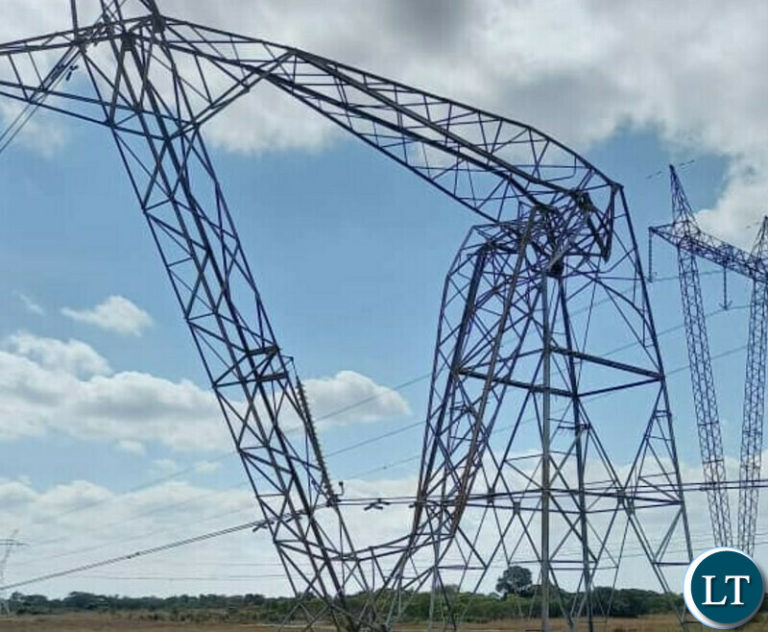
ZESCO, Zambia’s state-owned power utility, has announced a significant reduction in electricity exports to neighbouring countries in order to prioritise domestic consumption. The move follows mounting public frustration over load-shedding, which has increasingly disrupted households and businesses, as well as a broader acknowledgment of the country’s strained generation capacity.

Officials explained that while exports have been an important source of foreign exchange earnings, ensuring steady supply for Zambian consumers has become the government’s overriding priority. This shift reflects the growing pressure on authorities to demonstrate responsiveness at a time when rolling blackouts have undercut economic productivity and eroded public confidence in energy planning.

The utility’s decision comes against a backdrop of reduced generation capacity driven largely by low water levels in key hydroelectric reservoirs. These facilities, which contribute the bulk of Zambia’s electricity, have struggled under erratic rainfall patterns exacerbated by climate variability. ZESCO management indicated that load curtailment for domestic users had become politically and economically untenable, particularly as frustration boiled over in affected communities and urban centres.

For many businesses, inconsistent power has meant scaled-down operations, higher costs from backup generators, and lost production time. For households, especially in low-income areas, load-shedding has translated into cold meals, interrupted studies, and deteriorating food storage. The cumulative effect has been a wave of dissatisfaction that has spilled into public debate, with calls for government to act decisively.

By trimming electricity exports, ZESCO seeks to ease this pressure. However, analysts warn the measure, though immediately popular, only scratches the surface of deeper structural problems. Zambia’s energy mix remains heavily dependent on hydroelectricity, leaving the country vulnerable to droughts and shifting climate patterns. Unless new generation capacity from solar, thermal, and other renewable projects is brought on stream, officials risk fighting a recurring cycle of shortages.

There are also financial implications. Electricity exports to regional markets, particularly through the Southern African Power Pool, have been a steady source of foreign revenue for ZESCO. Reducing this flow may provide short-term political relief but comes at the expense of forex earnings. Balancing domestic needs with financial sustainability is thus a delicate act, particularly at a time when Zambia is working to consolidate economic reforms and strengthen external reserves.

The decision highlights the policy tension between addressing citizens’ immediate concerns and pursuing long-term energy sector reforms. While cutting exports demonstrates sensitivity to public frustration, the durability of the measure depends on how quickly Zambia can diversify its power sources and expand investment in generation.

Ongoing projects, including solar plants and thermal expansions, are touted as key to stabilising supply in the medium term. Yet, questions remain about timelines, financing, and whether implementation can keep pace with rising demand. In this context, the government faces the dual challenge of delivering urgent relief while maintaining credibility on its energy promises.

Observers note that clear communication will be vital in the weeks ahead. Transparent updates on generation levels, load management, and the progress of new projects can help temper frustration and build confidence. Citizens and businesses may accept hardship if they believe solutions are truly underway, but opaque handling risks deepening mistrust.

Ultimately, ZESCO’s export cut is a political as much as a technical decision. It signals that government recognises the centrality of electricity to social stability and economic recovery. Whether it marks the start of a coherent energy turnaround or simply a temporary reprieve will depend on what follows: investment, innovation, and the discipline to turn pledges into power at the socket.

Choma court grants businessman leave to amend writ of summons in Airtel case

4

The Choma Subordinate Court has granted businessman Fines Malambo 14 days leave to amend his writ of summons in a case against Airtel, after it was established that the wrong entity had been sued.

Mr. Malambo had initially taken legal action against Airtel Network Zambia PLC over funds he sent through Airtel Money that were mistakenly transferred to the wrong recipient.

However, Airtel’s legal team argued that mobile money services are not operated by Airtel Network Zambia PLC, but by Airtel Mobile Commerce Zambia Limited — a separate entity licensed to handle Airtel Money transactions.

“Airtel Network Zambia PLC has been wrongly sued. The correct party to this action is Airtel Mobile Commerce Zambia Limited,” the defendant’s lawyers submitted in their affidavit in support of summons to strike out the matter.

In response, Mr. Malambo said all his transactions and complaints had been handled at Airtel offices in Choma, without any indication that Airtel Money was operated by a separate company.

“When I registered my SIM card and used Airtel Money, I was attended to by staff at the Airtel offices in Choma. At no point was I told there was a different company responsible for Airtel Money,” he stated.

He further argued that to the general public, Airtel operates as one company since the same staff and premises serve customers, making it unreasonable to expect them to distinguish between the two entities.

Delivering his ruling, Magistrate Brian Malambo declined to dismiss the case and instead granted the plaintiff leave to amend his writ of summons.

“The plaintiff is granted 14 days leave in which to amend the summons and sue the proper defendant, Airtel Mobile Commerce Zambia Limited,” ruled the magistrate.

The matter has since been adjourned.

Kasempa 18 year old man allegdly raped

3

Police in Kasempa have launched investigations into a case in which an 18-year-old motorbike rider was allegedly sexually abused by three women in Kikonkomene area.

North-Western Province Commissioner of Police, Brighton Siwale, confirmed the incident, which occurred on September 17, 2025, around 22:00 hours.

According to a statement made to the media in Kasempa, Mr. Siwale identified the victim as Mabenga aged 18, of Kikonkomene village.

Mr. Siwale explained that Mabenga reported being booked by an unknown woman to transport her home. Upon arrival, the woman allegedly entered her house, pretending to collect money, before later inviting him inside.

“When Mabenga entered, the woman locked the door, demanded sex, and was joined by two other women who threatened to call people to assault him and seize his motorbike if he refused,” Mr. Siwale stated.

He said the victim was then forced into a bedroom where he had unprotected sex with one of the women, whom he claims he can identify.

Mr. Siwale added that three days later, Mabenga reported feeling unwell and sought medical attention. He was advised by health workers to report the matter to police, who issued him with a medical report and opened a docket of rape.

He further revealed that no arrests have been made so far as investigations continue.

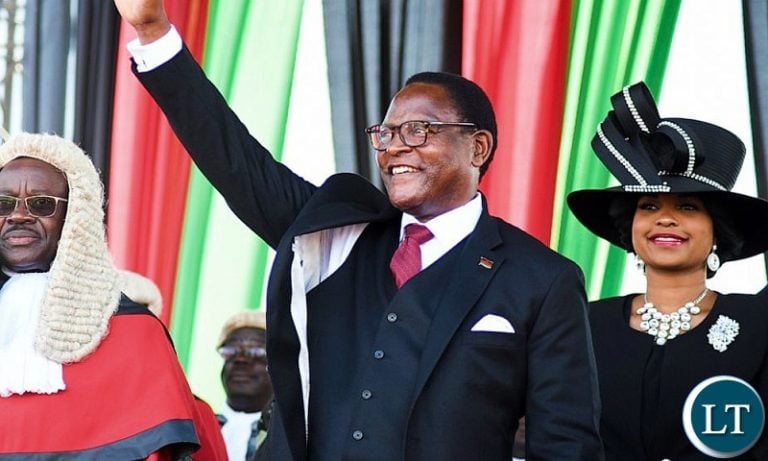
Outgoing Malawi President paid the price for ignoring the Church

16

Edward Chisanga

On September 15, 2025 or a day prior to elections, I published an article entitled, “Why Malawi’ chief salesman of words is not coming back to sell more words.” I got one main reaction from a blogger who said, “The problem with Malawi is same problem we have in Zambia. No serious opposition and Chakwera is coming back.” Well, I thank the blogger for his reaction. But Chakwera is not coming back.

At the heart of my article was a collapsed Malawian economy that triggered Mr. Chakwera’s downfall. I argued that the economy, in particular the GDP per capita had contracted so much, amid its infinitesimal size, that it is, as he leaves office, in the abyss. I expand on that and include the Church, which also warned about the poor state of the economy.
The Church, in particular in Africa represents a better member of parliament for the people than the politically elected MPs. While the elected MPs are largely driven by an insatiable and unbridled appetite for material gains from their jobs, the Church stands out as an honest and material-free MP, representing real interests of the people wherever the Church is found. While elected MPs line up for monthly allowances and other benefits, the Church depends on donations from its followers.

While elected MPs spend limited time with the poor, afflicted and helpless, the Church is permanently available providing health care, food, water and divine support. Elected MPs and their leaders are often artificial thriving on self-approbation while the Church stands realistic. Elected MPs come and go while the Church remains. The Church is the people just as the people are the Church in most African countries.

In other words, the bond that exists between the Church and those it serves are far more important than with political leadership. That’s why, any reasoning politicians will only ignore the Church at his or her own peril. Of course, politicians buy poor people by giving them bribes. But the Church does not have that money. Even if it had, that simply is not the way it works.

You’ve to visit the official website of the Catholic Church of Malawi to see how many letters it wrote to President Chakwera and his government to understand the extent to which Mr. Chakwera, who campaigned on the church as a ‘messiah’ on earth, failed his own God. You’d expect divine logic to play a major role in Chakwera’s governance of Malawi, in particular working closely with the Church. But he failed.

Chakwera failed for many reasons. But one extremely important is that he failed to listen to the Church. The church referred to him as salesman of words. Yet he did not take hid to that warning or sign. The Church repeated asking Mr. Chakwera’s government to address basic needs of governance. On February 25, 2024, a pastoral letter of the Catholic Bishops of the Episcopal Conference of Malawi was published by a newspaper. It listed concerns similar to those found in almost every African country.

The Church was concerned about what it called, “Fruitless engagement with the state president. It complained to Malawians that despite privately engaging the state president several times, it fails to see any positive change in the general governance of the country or improvement in the plight of poor people across the country. “We’ve repeatedly warned the Government leadership that if poor governance continued, the state of our nation would become far worse than it was four years ago. Unfortunately, our prediction has come true.

It complained about judiciary, saying, “Even the judiciary appears to have abandoned its integrity and has embroiled itself in corruption and partisanship. The price of judges and magistrates is no longer taboo; it’s an open secret that some lawyers thrive by bribing judges and magistrates to defeat the ends of justice. Some judges and magistrates are accountable to no one.”

The Church is concerned about the evil of religious intolerance and violence based on physical and verbal attacks inter-party squabbling. The Church complained about the suffering of the poor who cannot afford three decent meals a day because of high prices of essential goods and services. It was concerned that Malawi and its people were not arriving at the promised land.

It must be remembered that the Church seeks no allowances, political appointments or fame in asking for collaboration with African governments in making lives of the poor better. The Church is not an opposition party seeking to outperform the ruling party. The needs of the Church are simple. It simply wants to fulfil teachings of Jesus Christ.

The Book of Luke says, “Then he looked up at his disciples and said: ‘Blessed are you who are poor, for yours is the kingdom of God. Blessed are you who are hungry now, for you will be filled. Blessed are you who weep now, for you will laugh.’ The Book of Matthew says, “Then the king will say to those at his right hand, ‘Come, you that are blessed by my Father, inherit the kingdom prepared for you from the foundation of the world; for I was hungry and you gave me food, I was thirsty and you gave me something to drink, I was a stranger and you welcomed me, I was naked and you gave me clothing, I was sick and you took care of me, I was in prison and you visited me.”

The Church simply wants equality, dignity and fair treatment of the poor. The high cost of living is the main problem in Malawi. The poor need food, clean water, sanitation, energy, and other essential things. The poor are equally entitled to jobs in Zambia’s embassies and missions abroad, in government departments and parastatal organizations, to public contracts, and other government facilities. The poor deserve to be an integral part of government, not simply as tools for winning votes but for benefiting from government.

Finally, when the Church speaks, it does so on behalf of the poor who it always sees confronted with social, economic and even political problems every day at their doorstep. The Church therefore is or can be government’s hope for success. If Chakwera has worked with the Church, that represented his MPs much better, because of its closeness with the people, today, he would have been waiting to be installed to serve his second term. He ignored the Church at his own peril. The Church or God is the most effective invisible opposition party because of the followers behind it.

Mr. Chakwera invested more in words than action. It’s no wonder, the Church nicknamed Chakwera salesman of words. Of course, this has implications and lessons for other African leaders. If it has brought the downfall of many governments, why are leaders of today not learning from these mistakes and doing better? Why can’t we simply do the rights things and let people judge? Why can’t we simply serve the people in dignity? When a father or husband in the house does good things for the family, he doesn’t remind them. Instead, they do.

He promised to donate laptops to all students in Malawi. He gave free handouts. He proclaimed and pronounced economic and other achievements. HE STILL LOST. So, change while the sun shines. The problem is not losing elections. It’s the impact that it brings on private life of Chakwera and his family and close friends.

Sishuwa Petitions President Over “Unconstitutional” ECZ Composition

14

Sishuwa Petitions President Over “Unconstitutional” ECZ Composition

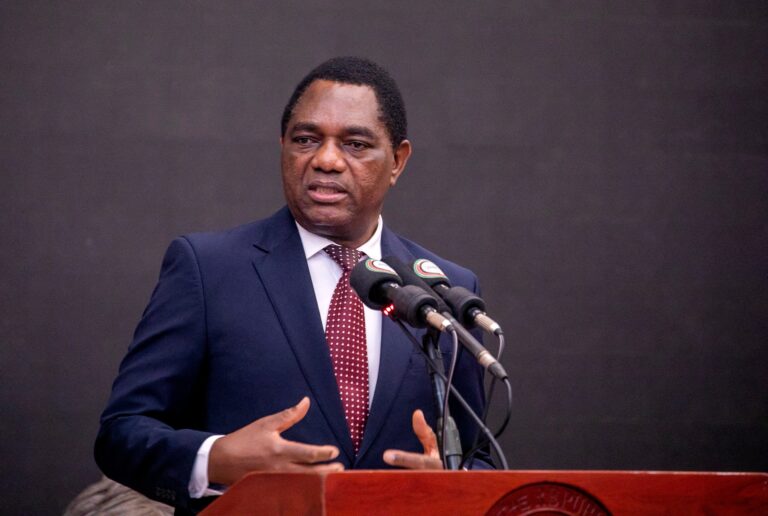
Prominent academic and governance advocate Dr. Sishuwa Sishuwa has raised alarm over what he terms the “unconstitutional composition” of the Electoral Commission of Zambia (ECZ), urging President Hakainde Hichilema to urgently address the matter or risk undermining the credibility of the forthcoming elections.

In a strongly worded press statement issued on 25 September 2025, Dr. Sishuwa argued that the current four-member composition of the ECZ falls short of the constitutional requirements of inclusivity, regional balance, youth representation, and participation of persons with disabilities.

According to him, three of the current commissioners — Mrs. Frances Mwangala Zaloumis, Maj. Gen. Vincent Mbaulu Mukanda (Rtd), and Ms. Ndiyoi Muliwana Mutiti — all hail from Western Province, while the fourth, Mr. McDonald Chipenzi, comes from Southern Province. This, he said, leaves eight provinces without representation and excludes key demographic groups such as the youth (defined in law as under 35 years) and persons with disabilities.

Dr. Sishuwa contended that this arrangement violates several provisions of the Constitution, including Articles 259, 173, 23, 45, and 46, which collectively demand regional diversity, gender balance, inclusivity, and the fair participation of all groups in public institutions. “This exclusion undermines public confidence in the ECZ at a critical moment in our democracy,” he stated.

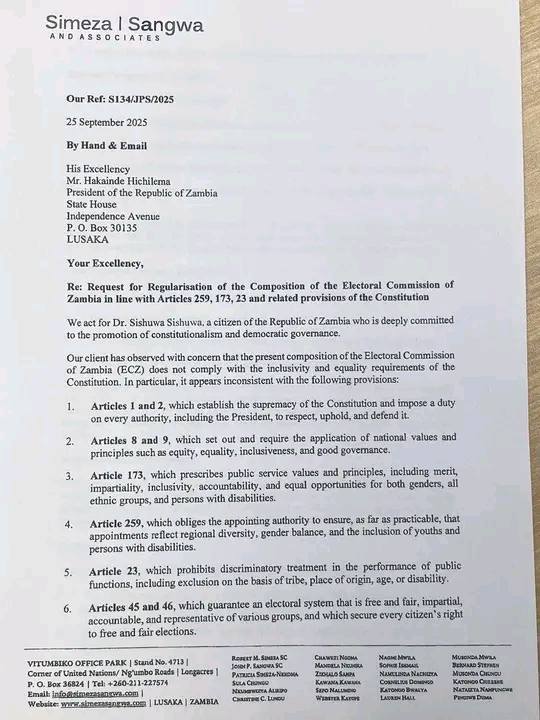
Through his legal representatives at Simeza | Sangwa & Associates, Dr. Sishuwa has since written to President Hichilema demanding corrective measures within 14 days. The lawyers warned that failure to act would compel their client to seek redress from the Constitutional Court. They are seeking a declaration that the current ECZ composition is unconstitutional and an order compelling government to ensure compliance with the constitutional provisions before the upcoming elections.

The matter touches on the integrity of Zambia’s electoral process, with critics warning that the exclusion of certain provinces and social groups could raise questions of bias and diminish public trust. “Every citizen has a stake in ensuring that our electoral body is representative, inclusive, and constitutional,” Dr. Sishuwa emphasised in his statement.

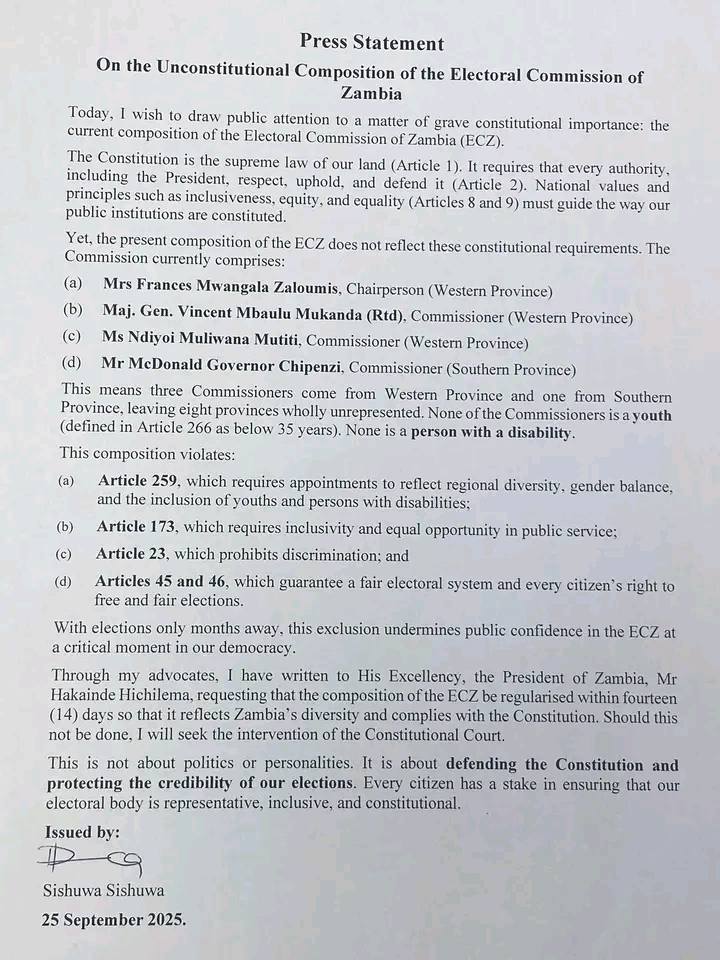
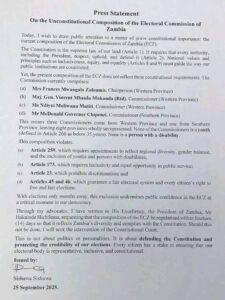
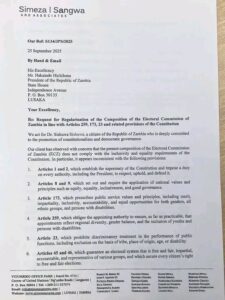
The full press statement and the detailed letter of demand to the President, copied to the Attorney General, the Speaker of the National Assembly, and the Chairperson of the ECZ, are below and attached images below

Press Statement
On the Unconstitutional Composition of the Electoral Commission of Zambia

Today, I wish to draw public attention to a matter of grave constitutional importance: the current composition of the Electoral Commission of Zambia (ECZ).

The Constitution is the supreme law of our land (Article 1). It requires that every authority, including the President, respect, uphold, and defend it (Article 2). National values and principles such as inclusiveness, equity, and equality (Articles 8 and 9) must guide the way our public institutions are constituted.

Yet, the present composition of the ECZ does not reflect these constitutional requirements. The Commission currently comprises:
(a) Mrs Frances Mwangala Zaloumis, Chairperson (Western Province)
(b) Maj. Gen. Vincent Mbaulu Mukanda (Rtd), Commissioner (Western Province)
(c) Ms Ndiyoi Muliwana Mutiti, Commissioner (Western Province)
(d) Mr McDonald Governor Chipenzi, Commissioner (Southern Province)

This means three Commissioners come from Western Province and one from Southern Province, leaving eight provinces wholly unrepresented. None of the Commissioners is a youth (defined in Article 266 as below 35 years). None is a person with a disability.

This composition violates:
(a) Article 259, which requires appointments to reflect regional diversity, gender balance, and the inclusion of youths and persons with disabilities;
(b) Article 173, which requires inclusivity and equal opportunity in public service;
(c) Article 23, which prohibits discrimination; and
(d) Articles 45 and 46, which guarantee a fair electoral system and every citizen’s right to free and fair elections.

With elections only months away, this exclusion undermines public confidence in the ECZ at a critical moment in our democracy.

Through my advocates, I have written to His Excellency, the President of Zambia, Mr Hakainde Hichilema, requesting that the composition of the ECZ be regularised within fourteen (14) days so that it reflects Zambia’s diversity and complies with the Constitution. Should this not be done, I will seek the intervention of the Constitutional Court.

This is not about politics or personalities. It is about defending the Constitution and protecting the credibility of our elections. Every citizen has a stake in ensuring that our electoral body is representative, inclusive, and constitutional.

Issued by:
Dr. Sishuwa Sishuwa
25 September 2025


Simeza | Sangwa & Associates
Our Ref: S1344/PS/2025
25 September 2025

By Hand & Email
His Excellency
Mr Hakainde Hichilema
President of the Republic of Zambia
State House
Independence Avenue
P.O. Box 30135
LUSAKA

Your Excellency,

Re: Request for Regularisation of the Composition of the Electoral Commission of Zambia in line with Articles 259, 173, 23 and related provisions of the Constitution

We act for Dr. Sishuwa Sishuwa, a citizen of the Republic of Zambia who is deeply committed to the promotion of constitutionalism and democratic governance.

Our client has observed with concern that the present composition of the Electoral Commission of Zambia (ECZ) does not comply with the inclusivity and equality requirements of the Constitution. In particular, it appears inconsistent with the following provisions:

  1. Articles 1 and 2, which establish the supremacy of the Constitution and impose a duty on every authority, including the President, to respect, uphold, and defend it.

  2. Articles 8 and 9, which set out and require the application of national values and principles such as equity, equality, inclusiveness, and good governance.

  3. Article 173, which prescribes public service values and principles, including merit, impartiality, inclusivity, accountability, and equal opportunities for both genders, all youths, and persons with disabilities.

  4. Article 259, which obliges the appointing authority to ensure, as far as practicable, that appointments reflect regional diversity, gender balance, and the inclusion of youths and persons with disabilities.

  5. Article 23, which prohibits discriminatory treatment in the performance of public functions, including exclusion on the basis of tribe, place of origin, race, gender, or disability.

  6. Articles 45 and 46, which guarantee an electoral system that is free and fair, impartial, and inclusive, representative of various groups, and which secure every citizen’s right to free and fair elections.

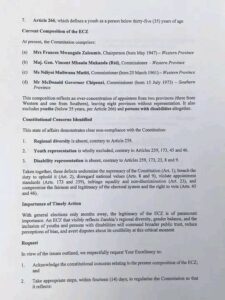
  7. Article 266, which defines a youth as a person below thirty-five (35) years of age.

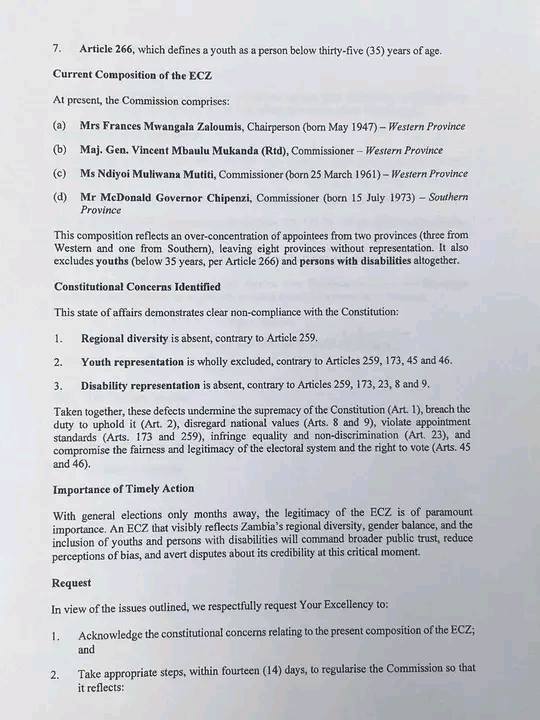
Current Composition of the ECZ
At present, the Commission comprises:
(a) Mrs Frances Mwangala Zaloumis, Chairperson (born May 1947) – Western Province
(b) Maj. Gen. Vincent Mbaulu Mukanda (Rtd), Commissioner – Western Province
(c) Ms Ndiyoi Muliwana Mutiti, Commissioner (born 25 March 1961) – Western Province
(d) Mr McDonald Governor Chipenzi, Commissioner (born 15 July 1973) – Southern Province

This composition reflects an over-concentration of appointees from two provinces (three from Western and one from Southern), leaving eight provinces without representation. It also excludes youths (below 35 years, per Article 266) and persons with disabilities altogether.

Constitutional Concerns Identified
This state of affairs demonstrates clear non-compliance with the Constitution:

  1. Regional diversity is absent, contrary to Article 259.

  2. Youth representation is wholly excluded, contrary to Articles 259, 173, 45 and 46.

  3. Disability representation is absent, contrary to Articles 259, 173, 23, 8 and 9.

Taken together, these defects undermine the supremacy of the Constitution (Art. 1), breach the duty to uphold it (Art. 2), disregard national values (Arts. 8 and 9), violate appointment standards (Arts. 173 and 259), infringe equality and non-discrimination (Art. 23), and undermine the fairness and legitimacy of the electoral system and the right to vote (Arts. 45 and 46).

Importance of Timely Action
With general elections only months away, the legitimacy of the ECZ is of paramount importance. An ECZ that visibly reflects Zambia’s regional diversity, gender equality, and meaningful inclusion of youths and persons with disabilities will command broader public trust, reduce perceptions of bias, and avert disputes about its credibility at this critical moment.

Request
In view of the issues outlined, we respectfully request Your Excellency to:

  1. Acknowledge the constitutional concerns relating to the present composition of the ECZ; and

  2. Take appropriate steps, within fourteen (14) days, to regularise the Commission so that it reflects:
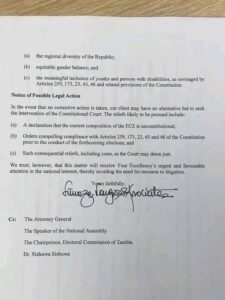
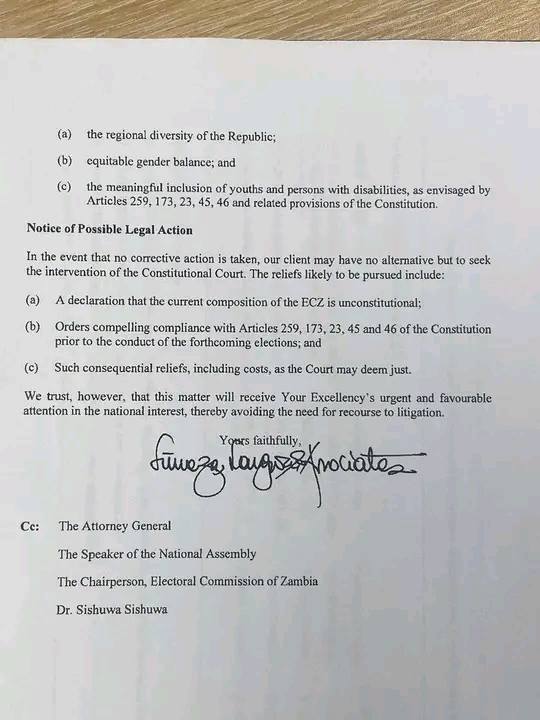
    (a) the regional diversity of the Republic;
    (b) equitable gender balance; and
    (c) the meaningful inclusion of youths and persons with disabilities, as envisaged by Articles 259, 173, 23, 45, 46 and related provisions of the Constitution.

Notice of Possible Legal Action
In the event that no corrective action is taken, our client may have no alternative but to seek the intervention of the Constitutional Court. The reliefs likely to be pursued include:
(a) A declaration that the current composition of the ECZ is unconstitutional;
(b) Orders compelling compliance with Articles 259, 173, 23, 45 and 46 of the Constitution prior to the conduct of the forthcoming elections; and
(c) Such consequential reliefs, including costs, as the Court may deem just.

We trust, however, that this matter will receive Your Excellency’s urgent and favourable attention in the national interest, thereby avoiding the need for recourse to litigation.

Yours faithfully,
Simeza Sangwa & Associates

Cc: The Attorney General
The Speaker of the National Assembly
The Chairperson, Electoral Commission of Zambia
Dr. Sishuwa Sishuwa
Trump’s H-1B visa hike to backfire on US and reward India and China

1

The Trump administration’s decision to impose a $100,000 charge on every new H-1B visa application is poised to damage America’s own tech and innovation leadership while handing a competitive edge to countries such as India and China, according to Nigel Green, chief executive of global financial advisory giant deVere Group.

“This policy is meant to shield American workers, but it’ll likely have the opposite effect,” he says.

“By pricing out the world’s brightest engineers, data scientists and AI specialists, the US is pushing the very talent that built Silicon Valley to competing economies. India and China are ready to capture the opportunity.”

The H-1B visa program has long been a cornerstone of US growth in advanced industries, admitting around 85,000 highly skilled foreign professionals each year—roughly 70 % of them from India and about 12 % from China.

These workers contribute an estimated $100 billion annually to American output and have founded or led a majority of US billion-dollar start-ups.

“For decades the US imported the world’s best minds while other nations paid the education costs. This advantage is now being surrendered,” Nigel Green notes.

Markets reacted swiftly to the new fee. India’s Nifty 50 and Sensex indices dipped as investors priced in higher costs for outsourcing firms reliant on US placements.

Yet analysts predict a rapid rebound as multinationals redirect projects offshore.

“When barriers rise in Washington, global companies don’t cancel innovation, they relocate it,” Nigel Green explains.

“Past visa restrictions led to expanded Indian delivery centres and research facilities and this hike is far larger.”

India’s technology and business-process exports already exceed $280 billion, supported by a steady rupee, a million new engineering graduates each year, and government incentives for software parks, data centres and 5G networks.

“India has the scale, the infrastructure and the intellectual property protections to take work that once flowed to the US,” Nigel Green says.

China is moving aggressively too. In recent weeks Beijing introduced a streamlined “K Visa” to attract foreign STEM experts and reverse years of brain drain.

Provincial governments are offering research grants, tax breaks and housing subsidies to lure talent who might once have headed to California or Boston. “China sees a strategic opening and is wasting no time,” the deVere CEO adds.

The fallout will not stop in Asia. Canada, the UK, Germany and South Korea are easing pathways for high-tech immigrants, while US universities warn that international PhD enrolments, which are already responsible for more than 60 % of American computer-science doctorates, could decline if post-study work prospects dim.

“Raising the cost of entry does not create domestic expertise overnight,” Nigel Green warns.

“It motivates corporations to shift high-value projects to where the talent already resides and where governments welcome it. Investment capital and research dollars follow that talent.”

He highlights likely consequences for the US: slower progress in semiconductors, biotechnology and AI; fewer start-ups; reduced tax revenues from relocated firms; and a dampening of the entrepreneurial energy that has underpinned decades of US economic leadership.

“This is a signal for investors to look closely at markets and companies positioned to benefit from the talent reallocation,” Nigel Green opines.

“Indian IT leaders, Chinese AI ventures and multinational firms with deep offshore capacity are obvious winners.

“Conversely, US companies dependent on imported expertise will face rising costs and longer development cycles.”

Nigel Green concludes: “History teaches us that protectionist barriers on skilled immigration never safeguard growth—they export it.

“The $100,000 H-1B levy will not protect American jobs; it will likely redirect innovation and investment to India, China and every country smart enough to open its doors.

“The policy is self-defeating and the global market is already adjusting.”

Hichilema Calls for Unity and Development in Meeting with Chiefs

15

Hichilema Calls for Unity and Development in Meeting with Chiefs

President Hakainde Hichilema has reaffirmed his administration’s partnership with traditional leaders, urging them to continue fostering unity and stability as the foundation for Zambia’s development agenda. Addressing hundreds of chiefs from across the country at the Mulungushi International Conference Center, he stressed that Zambia’s prosperity depends on collective purpose, peace, and sustained hard work.

The Head of State described the gathering as both cordial and frank, noting that it was an opportunity to exchange views openly while reinforcing a shared national mission. He reminded traditional leaders that their role extends beyond preserving culture and heritage, pointing out that they are central to nurturing harmony within their chiefdoms and bridging divides across the nation.

Hichilema emphasized that unity is indispensable for channeling national energy into growth. “Our Chiefs should continue fostering love and harmony within their chiefdoms and across the nation, because only in unity can we truly build a prosperous Zambia,” he told the assembly.

Reviewing his government’s performance over the past four years, the President highlighted achievements he considers critical to laying a strong economic foundation. He cited the restoration of the rule of law, the successful restructuring of Zambia’s external debt, and the rebuilding of business credibility and investor confidence. According to him, these milestones have repositioned the country on a path toward sustainable growth.

Yet he cautioned that development cannot thrive in an environment of discord or complacency. Peace, unity, and hard work, he said, must remain the driving forces of national transformation. He urged traditional leaders to see themselves not as adversaries of government but as partners in charting a shared future.

Part of that future, he added, rests on reviving agriculture at community level. Hichilema called for renewed effort to encourage farming households to work harder while adopting a culture of storing surplus harvests for consumption between seasons. Such resilience, he argued, would reduce hunger, stabilize families, and improve long-term food security.

The President concluded by underscoring the administration’s mission to uplift all communities without leaving anyone behind. He reiterated that traditional leaders have an enduring role in mobilizing citizens, fostering unity, and reinforcing values of self-reliance and discipline that underpin national progress.

By positioning chiefs as development partners and linking unity with economic stability, Hichilema is not only reaffirming the government’s policy direction but also appealing directly to the grassroots through trusted custodians of tradition. The message reflects his broader strategy of building consensus around Zambia’s reform path and ensuring that reforms translate into tangible benefits for households across the country.

Discipline Those Dividing The Country On Tribal Lines, Siamunene Urges HH

Discipline Those Dividing The Country On Tribal Lines, Siamunene Urges HH

Former Defence Minister Richwell Siamunene has called on President Hakainde Hichilema to take decisive action against individuals fanning tribalism, warning that silence risks eroding the national unity Zambia has long cherished.

Mr. Siamunene’s comments follow the circulation of a leaked audio recording allegedly featuring the Road Transport and Safety Agency (RTSA) Chief Executive Officer, Amon Mweemba, making remarks suggesting ethnic bias in recruitment.

In an interview, the former Sinazongwe Member of Parliament stated that the President’s leadership is critically tested by how he handles such divisive incidents. He emphasized that the head of state must send an unambiguous message that tribalism is unacceptable in public service.

“Whoever wants to divide us must be disciplined so that others who are in the habit of doing that, when given an opportunity to serve, know that there are consequences,” Mr. Siamunene told the Daily Revelation.

He expressed concern that a senior public official could hold such views, noting that it undermines the principle of a merit-based civil service. Mr. Siamunene urged President Hichilema to reassure the nation promptly that national unity remains a non-negotiable priority.

“It doesn’t matter whether one comes from Eastern, Northern, or anywhere else. The President is father of the whole country, and everyone is looking up to him,” he said.

The former minister cautioned against the dangerous trend of equating leadership with ethnic identity, urging citizens to value competence and merit above tribal affiliation.

“People should not fight to elect leaders from their tribes just to receive favour when those individuals enter government. Whoever becomes President should be accepted as a national leader capable of looking after the welfare of all citizens, regardless of tribe,” Mr. Siamunene advised.

The leaked audio has ignited significant public debate, occurring at a time of existing political polarization. While Government institutions have indicated an investigation will be launched, this incident has prompted calls for swift and transparent accountability from various quarters.

Mr. Siamunene, drawing from his experience in a portfolio central to national security and cohesion, stressed that investigations must be conclusive and any sanctions must be seen to be applied fairly.

“You discipline officers not because of where they come from, but because they have acted against the unity of Zambia. That way, everyone learns that tribalism is unacceptable,” he stated.

He further warned that if left unchecked, tribalism could lead citizens to believe that leadership is a tribal entitlement, a notion he described as detrimental to the nation’s fabric.

“If we are not careful as a country, this is what is going to happen — people will begin to think leadership is about their own tribes. That is dangerous,” he warned.

With the 2026 general elections on the horizon, the issue of national unity has taken on increased urgency. Mr. Siamunene’s appeal culminates in a direct call to the President to affirm his role as leader for all Zambians.

“You are the President for all Zambians,” he said, addressing President Hichilema. “Discipline those who divide us, and show that Zambia’s unity is stronger than any tribe.”

The appeal from the former minister highlights a critical challenge for the administration: balancing the need for due process with the public’s demand for clear leadership in safeguarding one of Zambia’s most valued assets,its unity in diversity.

Ten Hours of Light – A Cause for Celebration or a Sign of National Decline?

8

Ten Hours of Light – A Cause for Celebration or a Sign of National Decline?

The recent announcement extending electricity supply in many of our compounds to ten hours a day has been met with a palpable sense of relief. After nearly two years of debilitating blackouts that have stifled businesses and darkened homes, any reprieve is understandably welcome. However, this moment demands not just gratitude, but sober reflection. The question we must ask is: have our national standards fallen so far that we now celebrate what was once considered a basic necessity?

There is a growing and legitimate concern that this incremental improvement is less about a genuine turnaround and more about political expediency. With the 2026 general elections looming, the timing is, to be charitable, conspicuous. For months, the narrative from ZESCO and the Ministry of Energy was one of constrained capacity, blaming low water levels at our hydroelectric dams. If the utility has indeed found a way to consistently provide these additional hours of power now, it logically invites the question: could this have been done sooner? The suspicion that Zambians are being used as pawns in a high-stakes political game—pacified with temporary power today at the risk of a return to darkness tomorrow—is a corrosive thought that undermines public trust.

This leads to the second, more profound point of contention: the celebration of mediocrity. Zambia was once a nation renowned for its reliable, 24-hour power supply. To now frame ten hours as an “achievement” is to tacitly accept a dramatic downgrade in our national aspirations. It risks normalising a crisis that should be treated as a national emergency. True leadership would be managing expectations while delivering tangible, permanent progress, not presenting a partial restoration of a essential service as a monumental feat.

The government’s defence of its approach has, at times, been equally troubling. The Energy Minister’s recent comments suggesting that residents in affluent areas like Woodlands can afford solar solutions, while compounds should get more grid power, is a dangerous line of reasoning. It inadvertently creates a tiered system of citizenship based on postcode and perpetuates a divisive narrative. A national crisis requires a unified, national solution. The government’s primary role is to ensure stability for all, not to outsource its responsibilities based on perceived wealth. The economy is an interconnected web; when a business in Woodlands suffers from high operational costs due to relying on expensive generators, it ultimately affects employment and prices for everyone, including those in the compounds.

It is impossible to ignore the weight of unfulfilled promises. The President came into office on a wave of hope, pledging to end load-shedding with methodical planning and amano—wisdom. Four years on, the crisis has, by all accounts, deepened before this recent, slight easing. The public is right to question what became of that promised wisdom. Is it lost, or as some critics wryly ask, has it been “privatised”?

We must, in the interest of balance, acknowledge the complex challenges: climate change affecting water reservoirs and legacy debts in the energy sector. These are not problems of this administration’s making alone. A sustainable solution requires time and significant investment. However, the opacity in communication, the perceived prioritisation of power exports to neighbours, and the sudden, election-adjacent timing of improvements fuel public cynicism.

Therefore, our stance is not to dismiss the relief that ten hours of power brings. For the welder who can now work, the student who can study, and the homeowner who can preserve their food, it is a significant improvement. But we must not allow this relief to lull us into complacency.

Zambians deserve more than a temporary fix. They deserve a clear, credible, and long-term energy strategy that will restore the 24-hour power supply that was once our norm. Celebrating ten hours as a victory risks setting a dangerous precedent of lowered expectations. As a nation, we must demand not just light in our homes, but accountability from our leaders. The true test will be whether this flicker of electricity becomes a lasting beacon of progress or simply a dim light meant to guide us to the ballot box, only to be switched off once the votes are counted.