Saturday, June 6, 2026
26.9 C
Lusaka
Home Blog Page 580

Zambia’s Restructured Debt Sets Foundation for a Bright Future-MOF

Zambia’s Restructured Debt Sets a Solid Foundation for a Transformative Journey to a Bright Future, says Ministry of Finance

Zambia’s restructured debt, combined with robust international support, is poised to have a transformative impact on the country’s socio-economic landscape, according to Ms. Lois Mulube, the Acting Permanent Secretary of Zambia’s Ministry of Finance and National Planning. Speaking during Zambia’s Second Voluntary National Review (VNR) presentation at the High-Level Political Forum on Sustainable Development held at the United Nations Headquarters in New York, Ms. Mulube highlighted that the debt restructuring efforts would enable the country to allocate its resources more efficiently, ultimately driving positive change.

With a restructured debt of US$6.3 billion, Zambia has laid a solid foundation for its transformative journey towards a brighter future. The debt restructuring process is expected to provide Zambia with increased financial stability and flexibility, empowering the nation to address pressing developmental challenges effectively.

Zambia has made noteworthy strides over the past year in achieving its Sustainable Development Goals (SDGs). The government has implemented comprehensive social protection programs aimed at safeguarding the most vulnerable segments of society. Ms. Mulube emphasized the importance of these programs, stating that they provide essential support to those in need.

The nation has also made substantial progress in enhancing access to critical healthcare services, particularly during the challenging period of the Covid-19 pandemic. Through increased budgetary allocations for the procurement of medicines and improved supply chain management, Zambia aims to improve the availability of essential medicines and supplies to more than 66 percent of the population.

Education remains a top priority for Zambia, and the government has implemented various reforms to enhance the quality and accessibility of education for all citizens. These reforms are crucial in ensuring that every Zambian has equal opportunities to acquire knowledge and skills needed for personal and national development.

Despite these accomplishments, Zambia faces systemic obstacles in the areas of energy, information development, environmental sustainability, and job creation. Poverty and inequality persist as pressing development challenges. However, Ms. Mulube assured that the government remains steadfast in its commitment to addressing these issues and implementing effective solutions.

In a statement delivered to the UN during the VNR Civil Society session, Ms. Glenda Mulenga, the Country Director of Sightsavers Zambia, called upon the Zambian government to enhance stopgap measures to alleviate the hardships faced by those left behind. She emphasized the importance of strengthening health, education, and social safety nets to mitigate the adverse effects faced by vulnerable populations.

Zambia’s commitment to overcoming these challenges is evident through its proactive measures, restructuring of debt, and collaboration with international partners. As the country progresses on its transformative journey, the hope for a brighter and sustainable future remains strong.

Issued by: Namatama Njekwa
First Secretary for Press and Public Relations Permanent Mission of Zambia to the United Nations

Message For Today: No Harm

Todays Scripture

“The blood will be a sign for you on the houses where you are, and when I see the blood, I will pass over you. No destructive plague will touch you when I strike Egypt.”
Exodus 12:13, NIV

No Harm

Friend, in the Old Testament, God sent plagues on Pharaoh and his people for not letting the Israelites go free from slavery. The final plague was that the firstborn sons were going to die. God told the Israelites they had to put blood on the doorposts of their houses. When the death angel came, as long as they had blood over their house, no harm would come to their family. That night thousands of Egyptian lives were lost but none of the Israelites who lived nearby. What was the difference? One had the blood, and the other didn’t. One was under the shelter of the Most High, the other wasn’t. When you keep the blood over your house, when you honor God, He hides you when trouble comes. Things that take other people out can’t take you out. Trouble that defeats others won’t stop you. You don’t have to live worried, fearing what might happen, fearing disease, fearing being laid off. You have blood on your doorpost. You belong to the Most High God.

A Prayer for Today

“Father, thank You that I am covered by the blood of Jesus. Thank You that I have Your protection over every area of my life and family. I believe that You have put a blood line of protection around me and no weapon formed against me will prosper. In Jesus’ Name, Amen.”

How long shall we arrest them?

According to Radio Phoenix FM main news monitored in Lusaka the other day; the police swung into action and arrested and charged 52 notorious and dangerous junkies from different townships for idle and disorderly behaviour.

Police Spokesperson Rae Hamoonga disclosed that the 52 junkies were apprehended in selected areas of Kamanga, Obama, Big Jose, Chris Mall, Ndeke Meanwood, Kampasa village, Kaunda Square stages 1 and 2 as well as other crime infested areas.

Hamoonga has since appealed to members of the public that could have been attacked by junkies in these areas to report to Chelstone Police Station and help in identifying them so that other appropriate charges can be slapped on them. What do we make of this?

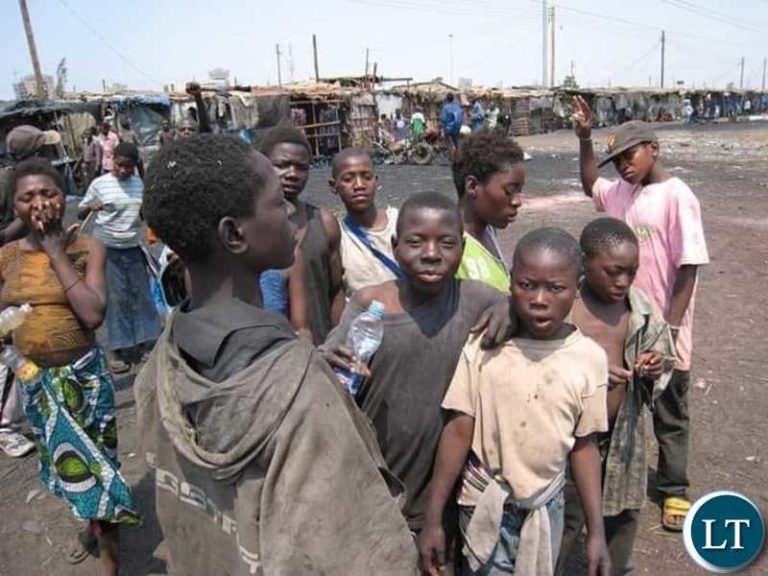
Not so long ago, a similar operation was unleashed in Kitwe that saw street kids and suspected junkies rounded-up, dramatically! While street kids were taken to safe homes, the junkies were charged for idle and disorderly conduct and whisked away to the penitentiary.

After being detained for a while, these junkies have been let off the hook and are now prowling the streets……and probably resumed their nefarious activities!

How long shall the junkies be arrested and detained, released and be re-arrested? Are we doing them any good making them easily walk in and out of prison as though they are taking a stroll in the park on a quiet Sunday afternoon as they enjoy ice cream. Can somebody please stop the drama and perhaps apply a better solution…..

Rounding-up and hauling the street kids and junkies to detention facilities isn’t obviously the best panacea to the challenge that this combined problem poses to society. Continuing to do so is actually akin to applying Vaseline to a festering wound!

It’s important to appreciate that most of those that qualify to pass as junkies were once street kids themselves eking a living on the streets. Once they graduated from being urchins, they obviously retreated to the townships where they’ve since regrouped and organised themselves into violent gangs that are now causing terror and mayhem in our communities.

What can be done to address this problem?

This definitely calls for thinking outside the box. As opposed to dumping them into a dungeon where no one doesn’t even bother openning their eyes and attempting to walk them through a journey of helping them rediscover themselves, what the street kids and these junkies need are opportunities. Opportunities to acquire vocational skills; Opportunities to gain employment without having anyone unnecessarily stereotyping them; Opportunities to join co-operatives and access capital to start their own projects!

After the botched privatization exercise implemented by the MMD regime that saw a good number of our people wound up on the streets; President Chiluba established a Vendors Desk at State House to personally see to it that citizens who were setting up enterprises on the streets as an alternative to their predicament received his utmost attention without any encumbrances.

Can somebody perhaps whisper to the president to consider appointing a Commission on Street Kids or perhaps a Directorate under the Ministry of Community Development and Social Services which would be instrumental in mobilizing the street kids and junkies into co-operatives so that they are better assisted not only to secure funding, but also encouraged to work the land to produce food to feed the nation and for export to the neighbouring countries; delve into the bowels of the Earth to extract gold, sugilite and diamonds etc or perhaps take to the Forest to harvest rosewood to manufacture desks for our schools.

Until next time, I rest my case.

Prince Bill M Kaping’a
Political/Social Analyst

Stealing HH’s thunder – Lungu’s script at redemption is eye-catching

22

By Chimwemwe Mwanza

First, it was a cup of tea at his residency with Dr Sishuwa Sishuwa – at which the duo seem to have smoked a peace pipe.
The revered Arch, Telesphore Mpundu followed suit. He too had honest and frank discussions with Edgar Lungu. Civil rights activist, Brebner Changala was the next high-profile personality to break bread with the former Head of State at his Ibex Hill home. Add this to Lungu’s early morning jogs, which by the way are fast becoming a hit with ordinary citizens, there seem to be enough reasons for the former President to keep causing rancour in the ranks of government.

Pick your side, the infamous ‘Uko Kuntumpa’ jibe thrown in the way of Lungu by the incumbent at a rally on the copperbelt was not a random epithet but was carefully stitched to nudge the former President to staying in his lane. Said differently: ‘We expect you to have hang your political gloves by now, what are you still doing in the ring,’ was the tacit reminder in HH’s rebuke to Lungu. Spare a thought for the UPND, Lungu isn’t about to disappear into the sunset anytime soon.
Anything the man does, be it inspecting the price of Mealie Meal pa kantemba or tending to his makeshift vegetable garden, he won’t just stop hogging headlines. And prosecutorial bodies such as DEC and the ACC are unconsciously supplying him with free oxygen ensuring his relevance in our psyche. For clarity, in no way is this assessment a pronunciation of his complicit, guilt or innocence thereof to the raft of graft charges facing his family or his close acquaintances. As the saying goes, there is a thin line between prosecution and persecution. Actually, this tends to have credence more so when state organs begin to ventilate sensitive cases in newsrooms instead of courts.
At this rate and before you wake up, Tasila, Daliso and Chiyeso among others will have become martyrs. Curiously, even UNZA students – who at some point declared Lungu a persona non-grata at the Great East Road campus, blaming him for his government’s decision to scrap their allowances are now scrambling to join him on his morning jogs. This newly found allure is a far cry to the rejection and shellacking he suffered at the Presidential polls. Don’t forget: the booing he was subjected to at Heroes Stadium during President Hakainde Hichilema’s inauguration was an apt reflection of the gulf of distance between him and the citizenry.

Tempting as it may to dismiss these developments as insignificant sideshows playing out in Zambia’s political terrain, it’s important first to dissect what could have prompted the Lungu and Dr Sishuwa dalliance. You see, Dr Sishuwa is not your ordinary citizen. An outspoken critic and arch nemesis of the PF government, he was among a handful of political pundits that accurately predicted the PF’s 2021 electoral defeat to the UPND – this when it seemed unfashionable to go against the grain. He also represents a rare breed of Zambia’s intelligentsia that are unafraid to speak truth to power.
So, imagine this for a second – two roads, one coming from Moscow and the other from Kiev intersecting somewhere in Ibex Hill – of course not on a scale of a Putin and Zelensky meet up for tea in Lusaka but mid-tier combatants from Moscow and Kiev hugging in plain sight of their blood thirst commanders? I shudder to imagine the outcome.

While we may never know who between the two extended a hand of friendship, the fact that Lungu played host is enough a hint. Even more baffling was the former President’s decision to voluntarily make public a few details of this tea session. In fairness, this is not the sort of effrontery we have grown accustomed to Lungu. On this one, he certainly outperformed his standards. Suffice to add, his missive to Dr Sishuwa following the tea meet epitomised a rare act of benevolence by a senior citizen trying hard to make amends with his nemeses – of course not knowing whether this is for his own or in national interest.

And the good old Arch’s visit to Lungu’s residency? It is fact, Catholics are a monolith to Zambian politics. Archbishop Mpundu – equally a vocal critic of the PF, knows all too well that he represents a powerful religious movement which has consistently played a critical role in shaping Zambia’s political trajectory since the advent of plural politics in 1991. Hate him or love him, the Arch is a person of impeccable credentials. Put succinctly, Mpundu is the incarnate of the late Bishop Evaristo Mutale, that gallant man of cloth who contributed immensely to ending one party rule.

Mano, mulilo, uwayikatako, apya,’ we grew up belting this anthem as a homage to Mano Convent school in Mafken (Mufulira) – that was Catholic indoctrination for you. (Ernest Mweemba, Chitembo Kalungu and Melanie Mulenga – wherever you maybe, can you remember those days?) Back to serious stuff, could it be that the Catholics are now coalescing around an alternative to the current government? The simmering tension with government points to something more shadowy.

What is difficult to comprehend but is naked to the eye is Archbishop Mpundu’s newly found disdain for the UPND. How times have changed. This development is a remarkable reversal of fortunes for the UPND government given the civic role that the good old Arch played in helping them despatch the PF from power.

What of Changala. He is a beacon of political morality – always providing checks and balances to respective governments be it MMD, PF and now the UPND. However, he too has turned his back on the current government. That said, it’s tempting to ask, what then is the political undertone in the trio’s pilgrimage to Lungu? Your guess is as good as mine. What is indisputable though is that Lungu is working very hard to mend fences. Is he succeeding in winning the hearts and minds of Zambians?

Here is a clue. The perceived victimisation of those close to the former President shouldn’t be seen as random acts and neither should we become tone deaf to ramblings from those that are still pontificating PF’s misrule – almost 3 years after its demise. This is HH’s economy, he wanted it and now owns it. He must also own the spotlight.
About the Author: Mwanza is an Anglican and enjoys reading Political History and Philosophy. He is currently reading ‘Winnie & Nelson’ Portrait of a Marriage by Jonny Steinberg. What a read. For feedback, email [email protected]

Sichone Wary of COSAFA Cup Final Foes Lesotho

1

Chipolopolo assistant coach Moses Sichone is wary of Lesotho ahead of Sunday’s COSAFA Cup final at King Zwelithini Stadium in South Africa.

Sichone, who is heading the Zambia bench at the regional championship, is predicting a tough COSAFA Cup final against Lesotho.

Champions Zambia reached the COSAFA Cup final on Friday evening after beating South Africa 2-1 in the semifinals as Lesotho eliminated Malawi on penalties at the same stage.

Sichone said Lesotho have experience and consistency in their team.

“The pressure is always there but as a coach you need to help players soak the pressure . We are playing an experienced team. Playing Lesotho won’t be an easy game,” Sichone said.

He, however, expressed confidence that Zambia would triumph over Lesotho.

“I have seen the strongest points of Lesotho. They have old and experienced players. We can work on the speed and put up a good final,” Sichone said.

The COSAFA Cup final is scheduled to kick off at 18h00.

Evans Kangwa Welcomes 2026 Fifa World Cup Group EDraw

1

China based Chipolopolo striker Evans Kangwa has welcomed the 2026 FIFA World Cup qualifying draws that have seen pitted against Morocco in Group E.

The Chipolopolo Boys will also play against Congo Brazzaville, Tanzania, Niger and Eritrea in Group E of the world cup qualifiers.

In a facebook post, Kangwa said to play at the World Cup Zambia must beat good teams like Morocco who excelled at the recent World Cup in Qatar.

“To play at the World Cup, you have to beat the Best,” Kangwa posted.

Only one team from the group will qualify for the 2026 FIFA World Cup.

President HH meets Catholic Bishops

17

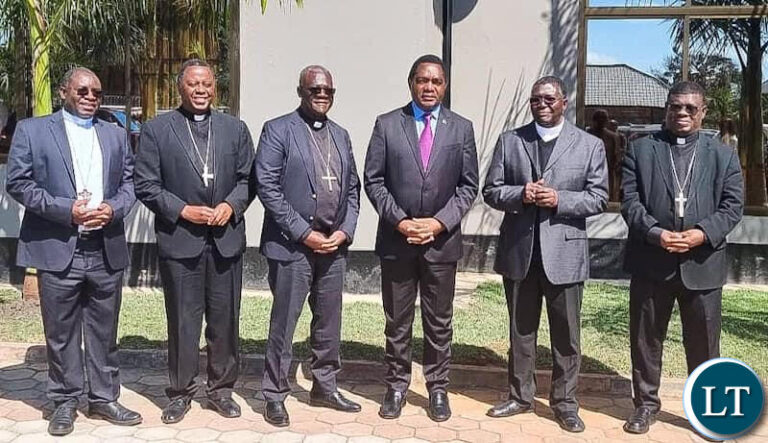
President Hakainde Hichilema on Friday met Catholics Bishops at State House.

President Hichilema engaged the Zambia Conference of Catholic Bishops (ZCCB), led by Most Rev. Ignatius Chama, Archbishop of Kasama and President of the ZCCB.

His Grace Archbishop Chama was accompanied by the Right Rev. Charles Kasonde, Bishop of Solwezi, who also serves as the Vice President of the ZCCB.

Also present were Most Rev. Alick Banda, Archbishop of Lusaka, Rt Rev. Bishop Evans Chinyemba, Bishop of Mongu, and Rt Rev. George C. Z. Lungu, Bishop of Chipata.

According to President Hichilema, the meeting was conducted in a warm and friendly atmosphere, characterized by love, mutual respect, and a spirit of brotherly dialogue.

In his Facebook posting, President Hichilema expressed happiness at the outcome of the meeting in which both parties agreed to maintain ongoing engagement in the future.

UPND AND PF ARE SIAMESE TWINS IN THE CORRUPTION FIGHT

By Isaac M. Mwanza

ONE of the key promises that Republican President His Excellency Dr. Hakainde Hichilema made before and after forming government was his commitment to fighting corruption and other crimes.

In the fight to end violent cadrerism, President Hichilema has done quiet well although incidences of violent behaviour among his cadres still exist.

Given that the level that violent cadrerism and impunity had become widespread and a norm over the last 30 years, this may be understandable but he must not lose guard.

Last week, the corruption fight was a popular topic in the media, generated by discussions among opposition political figures, Government and civil society.

Patriots for Economic Party (PeP) President, Sean Tembo, questioned the basis upon which the anticorruption body and the courts arrive at a determination and verdict that a person had indeed property that is reasonably suspected to be proceeds of crime.

The prosecution formula of using market values of property, and attaching that value to known earnings of an accused person is not only flawed and laughable but also produces greater injustice.

An argument from those opposed to the law on “proceeds of crime,” is that our law enforcement agencies are engaged in lifestyle audit of those whom government is not uncomfortable with, to determine who gets to be prosecuted.

In simple terms, the work of investigators has been reduced to assessing an individual’s income, assets and investments in order to form suspicion that the property and gains could be a result of some unknown crime. But the catch in that crime is that suspicion ought to be “reasonable.” That, however, is a topic for another day.

During the week, Socialist Party President Fred M’membe has also raised eyebrows in government when he boldly alleged that President Hichilema’s administration is a “looting machine:”

“…we insist that there is absolutely no corruption Mr Hichilema is truly fighting and that the current fight against corruption is nothing but sheer hypocrisy and vengeance all of which serve to conceal current and ongoing, let alone expanding, corruption,” wrote Dr. M’membe on his Facebook page.

The social media posting attracted a sharp official response from Government with Chief Government Spokesperson, Hon. Chushi Kasanda writing:

“Government encourages and welcomes constructive criticism aimed at improving governance and eliminating corruption. However, we expect such discussions to be based on facts and supported by credible evidence.”

Like Siamese twins with the previous regime which dismissed corruption allegations, information minister adopted the coined “mfwiti, mfwiti” (witch-hunting) style of dismissing these new allegations. She further wrote:

“The claims by Dr. M’membe questioning Government’s sincerity in fighting corruption are without merit and lack substantive evidence (to find “mfwiti” in the village) …We have implemented comprehensive measures to strengthen anticorruption institutions, enhance transparency in public procurement processes and foster a culture of accountability across all sectors.”

In the belief of Hon. Minister Kasanda, some measures implemented by her government have resulted in the Anti-Corruption Commission (ACC) investigating several cases and securing a number of convictions.

Am aware that Dr. M’membe has comprehensively made a response to this statement, citing a number of cases bordering on alleged corruption. But there are also several other questions the statement by the Ministers raises.

What are those measures, if any, which could have been undertaken that have strengthened the anticorruption body? Apart from the alleged corruption and abuse of authority that happened under the previous regimes, how many new cases of corruption have been investigated and where conviction has been achieved?

If the Minister had done a little research, she would have discovered that 99 percent of the cases that have been investigated and taken to court are not connected with the alleged corruption that happened under the new dawn administration.

And the reason could be simple: the manner in which LEAs operate has always focused on alleged corruption in previous regimes and, in extremely rare cases, to wrongdoing in a present regime.

Commenting on the recent arrest of Ministry of Finance Permanent Secretary Mukuli Chikuba, Civil and political rights activist Brebner Changala observed that Mr Mukuli was quietly arrested without drama associated with other arrests of persons in similar position because he is allegedly close to the powers and on the side of those in government.

Since time immemorial, this has remained the biggest problem in Zambia’s corruption-corruption drive. The Minister may no longer see it because she is now in government but ordinary citizens clearly see this kind of scheme.

There is always a powerful and well-connected group whom officers from these LEAs would investigate but cannot not dare bring to book.

Currently, we have an alleged corruption at the Water Management Authority (WARMA), reported by various media, where people in senior positions forged contracts of employment and services in order to gain illicit enrichment.

It has been alleged that some senior directors at WARMA got additional income, based on the contracts they forged when the WARMA Board had been dissolved by the New Dawn Government.

In another instance, these senior bureaucrats entered into some motor vehicle “agreements” which facilitated payment of monies directly from WARMA into their personal bank accounts.

Some inquiry with these local companies who purportedly supplied vehicles reveal that no such sale was made; there are no financial records to show that necessary taxes were paid to government by these motor vehicle dealers for the alleged “sale” of vehicles in question.

Question is why has there been total silence to deal with this illicit enrichment, fraud, abuse of authority and tax evasion at WARMA. Is it because persons under investigations have made themselves close to the powers that be and on the side of those in government?

According to media reports, the inertia is attributed to fact that WARMA allegedly pays allowances to some UPND members, without the knowledge of the President. But how is that possible that a government institution can be paying allowances to cadres?

Under the PF, there are some reports that known cadres were employed at ZESCO and walked away with hefty salaries, which some allege were being shared with some senior party officials without the President knowing.

In the current situation, the question is whether Government is aware that some cadres who hold diplomas are getting employed in government institutions, including WARMA, and are allocated salaries for degree holders. Could it be that they are also sharing these salaries with senior party officials in the UPND?

What does the WARMA Board know about what is going on in the institution they preside over? Is it that the Board is an accomplice to the wrongs or they prefer to have their board allowances in silence?

If there are lessons top bureaucrats in government can learnt from their colleagues who are now being pursued is that these cases which get swept under the carpet usually pop-up another day in future. These very institutions that look the other side today do magically wake up the following day to bite.

It is the belief of this author that President Hichilema has shown good intentions to fight corruption but his intentions are threatened by the systemic crippling of institutions by his powerful lieutenants.

Former Luapula Province Minister Derrick Chilundika was not bluffing when he said he was going to cripple the system. The evading and eventual arrest of officers and highly influential people connected to the Suglite scandal shows that it is indeed possible to cripple the law enforcement system.

As this author joins many in commending President Hichilema for taking a decisive action against his former Minister, some erring law enforcement officers and his own party officials, I urge him to listen more to public sentiments and tell his ministers to avoid being dismissive when issues are brought up.

Of course, society must treat all suspects as innocent until proven guilty by a competent court of law. These suspects or accused persons deserve to enjoy their rights, including the right to bond or bail and to be fairly tried in court than in the media.

There are many law enforcement officers and civil servants who still have trust in President Hichilema’s leadership to fight corruption and other crimes but these are getting resigned to help because the system is being crippled by powerful politicians and senior bureaucrats within his circles.


Fighting Corruption: Calls for Asset Declaration Intensify as Speculations Surround Dismissal of Minister of Luapula Province

President’s Omission Raises Questions of Commitment to Transparency and Accountability

By Alexander Vomo

In the ongoing battle against corruption in Zambia, recent developments have brought to light critical concerns regarding the commitment of the government, particularly the president, to transparency and accountability. The dismissal of a minister amidst speculation of involvement in an illegal sugilite mining scandal has shed light on the extent of corruption within the administration. At the same time, the absence of asset declaration by the president has raised questions about the consistency and determination of the government in its anti-corruption endeavors.

The abrupt dismissal of the Luapula Province Minister has left the public puzzled and seeking answers. While the reason behind the dismissal remains undisclosed, speculations have surfaced linking the minister to an illegal Sugilite mining scandal. This scandal, which has implicated numerous individuals, including police officers and officials from the ruling United Party for National Development (UPND), underscores the urgent need to address corruption within the government’s ranks.

Amidst the allegations and dismissals, a significant inconsistency emerges. The president, who has emphasized the fight against corruption, has not declared his assets since assuming office. This omission raises doubts about the government’s commitment to transparency and accountability. Asset declaration by the president would serve as a crucial demonstration of leadership, ensuring that the highest office in the land is held to the same standards as others and fostering a culture of openness and integrity.

The symbolic importance of the president declaring his assets cannot be overstated. It would send a powerful message to the public, stakeholders, and international partners that Zambia is serious about fighting corruption. By leading by example and voluntarily disclosing his assets, the president would enhance credibility, rebuild public trust, and create a foundation of transparency upon which the government’s anti-corruption efforts can stand.

Addressing the contradictions and addressing the concerns surrounding corruption requires consistent action. While the dismissal of officials allegedly involved in corrupt practices is a step forward, it is equally vital for the president to complement such actions with asset declaration. This move would not only align with the government’s anti-corruption rhetoric but also demonstrate a genuine commitment to transparency, ensuring that the fight against corruption begins at the top.

The recent dismissal of the Luapula Province Minister without a disclosed reason, combined with speculations of their involvement in an illegal Sugilite mining scandal, highlights the seriousness of corruption allegations within the government. The involvement of multiple individuals, including police officers and party officials, suggests a wider network of corruption that needs to be addressed.

Lack of Asset Declaration by the President since assuming office, while simultaneously emphasizing the fight against corruption, raises questions about consistency and commitment. Asset declaration by the president would
demonstrate a proactive approach to transparency, reinforcing the government’s commitment to accountability and providing a benchmark for others to follow.

The president’s declaration of assets would send a powerful symbolic message to the public and stakeholders that he is genuinely dedicated to combating corruption. It would reinforce the notion that leaders should be held to the same standards as others and that the fight against corruption begins at the top.

Failure to declare assets can create skepticism and erode public trust. It may lead to perceptions that the government’s anti-corruption rhetoric is not being fully backed by actions. In contrast, asset declaration would enhance the president’s credibility and demonstrate a genuine commitment to transparency, thereby strengthening public trust in the government’s anti-corruption efforts.

In the face of corruption allegations and ongoing efforts to combat this pervasive issue, the importance of asset declaration by the president cannot be understated. The call for the president to declare his assets grows louder, with citizens and stakeholders seeking reassurance of the government’s commitment to transparency and accountability. Only through consistent action and leading by example can Zambia effectively combat corruption and restore faith in its governance.

Zambia Economic Performance for Half Year ended 30 June, 2023

By Mwansa Chalwe Snr   

This article is an independent economic analysis of the performance of the Zambian economy for the first six months period ended 30th June 2023. The evaluation is based on empirical evidence from credible sources – both local and international. The targeted audience are ordinary Zambians who do not understand the technical language of the other economic commentaries available on the market.
The approach that has been taken in assessing the performance of the economy, is somewhat unorthodox and unique, inspired by the graphs controversy. A market-based approach has been used to explain what is happening in the economy. Four main markets that have been identified as the main drivers of the economy. These are: the goods and services market, the money market, jobs market and the foreign exchange market. The approach taken is meant to simply the interpretation of the economic data.

GOODS AND SERVICES MARKET

The goods and services market is the number one driver of the economy. This is where the private sector produces goods and services for various consumers such as businesses, households and the government. This market’s performance is measured by an increase in the level of activities that took place during any period under review.
In the first quarter of 2023, private sector activities deteriorated. Businesses were unable to procure and produce goods and services at the level they would have wanted, due to various constraints. Consequently, they could not employ people, and some even retrenched their staff. Businesses were also not able to pay as much taxes to government due to lower sales and profitability.

The main reasons for the low production levels were shortage of cash (finance); high costs of inputs including fuel due to kwacha depreciation; low demand from consumers; government failure to pay Suppliers and Contractors the billions owed to them, and the Civil Service and Regulatory Agencies’ inertia and bureaucracy.
There was, however, slight improvements in business activities in the second quarter months of April and May. The evidence to support this assessment of performance for the first half of the year, was reflected in the Stanbic Purchasing Manager Index (PMI).
The Stanbic Purchasing Manager Index (PMI) Survey measures private sector purchasing activity, output and employment. Any number below 50 indicates poor performance of private sector activity. In the first quarter, this index (number) fell to 46.9 from 49.1 in December, 2022. However, there were signs of improvement starting from April when it rose to 48.7, and this continued to May and June when it increased to 51.4 and 51.2 respectively.
It should also be noted that during the period under review, the cost of living and cost of doing business for households and businesses went up respectively. The proof of the escalation in these costs were captured by surveys carried out by the Jesuit Centre for Theological Reflection (JCTR) and Zambia Statistics Agency (ZSA).
The JCTR food basket increased to K9, 112 in May from K8, 982.82 at end of last year. The ZSA statistics showed that inflation had increased from 9.4% in January, 2023 to a peak of 10.2% in April. At the half year stage of June 30, 2023, however, it dropped to 9.8% which was still higher than at beginning of the year, as well as outside the Bank of Zambia targeted inflation range of 6-8%.

MONEY MARKET

This market is made up of lenders and borrowers. It is dominated by Commercial Banks and the Central Bank (Bank of Zambia), and it deals with the cost of money (interest rates). The cost of money to businesses and households increased during the six month period to 30th June, 2023.

The continued high cost of money was clearly demonstrated by the Bank of Zambia’s policy actions. The Central Bank increased the interest rate that it charges banks when lending to them. This is called the Monetary Policy Rate (MPR).This rate was increased from 9.0 % at the beginning of the year to 9.50%, compelling commercial banks to increase their lending rates to their customers too. In general, Banks in Zambia hardly react to changes in monetary policy rates and inflation, unless it is in their favour. This is clearly a market failure which needs to be addressed immediately as one of the post debt restructuring action plans in order to solve cash problems and the low economic activity in Zambia.
The current average Commercial Banks lending rate is in excess of 25%, but Banks pay their savers average interest rates of about 8%, which is below inflation. This is hardly an incentive to save. The difference between the savings rate, inflation rate, monetary policy rate and Commercial Banks’ lending rates is in excess of 15%. Banks in well-functioning economies of the region do not earn such margins.
In the international fora, President Hakainde Hichilema has bemoaned interest rates charged to African countries. And as they say: charity begins at home. He needs to address the extremely high interest rates charged by Zambian Banks to remove this long standing hurdle to private sector growth and job creation. There are many possible measures that could be explored. This could include the capping of the amount Banks can invest in Government Treasury bills and Bonds, like government will do to foreign investors as part of the recent debt restructuring deal that was clinched in Paris.

JOB MARKET/ LABOUR MARKET

Zambia currently has a problem when it comes to getting reliable and timely Job Market data. The last Annual Labour Survey Report was in 2021. There are no 2023 Quarterly Labour Survey reports available on the Ministry of Labour and Social Services website, and half year has gone.
The Bank of Zambia and the Ministry of Finance and Development Planning do provide quarterly reports and briefings. It is important that the Ministry of Labour and Social services should also start providing the public with Quarterly Labour Survey reports as their South African counterparts do.
Although there is scanty information on Labour market statistics, information from secondary sources indicates that the Zambian economy was shedding, and not creating jobs in the first half of 2023.The Stanbic PMI reports, and government Suppliers and Contractors confirmed retrenchment of workers.
The high level of unemployment, especially among the Youth, in the last six months and prior periods, can also be inferred from the recent government recruitment exercises. The recruitment of teachers attracted 100,877 for 30,496 positions; medical personnel attracted 137,139 for 11,276 vacancies; Zambia defence forces attracted 236,000 for 5,000 positions; ZRA received 53,345 for 115 vacancies and Ministry of finance received 128 042 applications for the 46,800 temporary census jobs in 2022 Census.
It is vitally important that government ensures that timely collection and publication of Labour statistics is done, if it is to solve the unemployment problem. In the absence of data on labour, how can they craft an effective job creation strategy? It is like shooting in the dark, as the management guru Peter Drucker famously said, “If you can’t measure it, you can’t manage it.” This is because it is impossible for government to solve the unemployment problem, if it does not know its exact magnitude. It is currently believed that Youth unemployment runs in millions. And if one was to ask: what is the unemployment rate in Zambia in the first half of 2023, it’s doubtful if there is anyone with an answer. The Authorities need to realize that in order to solve a problem, the size of the solution has to fit the size of the problem.

FOREIGN EXCHANGE MARKET

During the six month period ended 30 June, 2023, the Kwacha was unstable. It fluctuated from a high of K21.4 to the dollar, to a low of K15/16. In the first quarter, the currency lost 16.8% against the dollar to an average rate of K19.20. And in order to support the Kwacha, the Bank of Zambia withdrew $377million from the country’s savings (foreign reserves) and pumped it into the foreign exchange market to facilitate imports because of the high demand for dollars. This resulted in Zambia’s foreign exchange savings dropping to $2.9billion at the end of March, from $3.1 billion at end of December, 2022.
In the second quarter, the Kwacha appreciated by 16.8% against the dollar to K17.73 following the IMF staff Level agreement with Zambia. The currency closed the half year with an average exchange rate of K17.40 on 30 June, 2023.The total gain for the month was about 12.6%.
The value of the kwacha is very important to ordinary Zambians because the rate of exchange directly affects their pockets as the cost of living either goes up or down depending on the movement in the rate. This is because the country imports most of its supplies. Zambia’s cost of living is in large measure basically imported.
A fluctuating currency, like the kwacha performed in the first six months of the year, is not good for the economy. It creates uncertainty and unpredictability. What is required is a stable currency, which can enable all economic players to plan. The expectation and hope is that the currency will be more stable going forward, after the restructuring deal that Zambia struck with its official Creditors.

FUTURE ECONOMIC PROSPECTS

There is reason to be optimistic about the economic prospects for Zambia in the next 12 months. The uncertainty about the Debt restructuring deal which was constraining so many economic variables has been lifted. Consequently, it is expected that businesses will increase their level of activities with the possibility of some jobs being created.

When one looks at the trend in total economic activities in the last two half years, it does give the country some hope. In 2021, the economy grew by 4.6%. And there was a slight improvement of 4.7% in 2022. It is only rational to conclude and expect that in the light of the recent debt restructuring deal, and the expected recovery of the mining, agriculture and construction sectors, the prospects for higher economic growth rates are quite good.

But in order for economic growth to have any impact on poverty, and to be inclusive, the country’s economic activities ought to be increasing above 10 %. And to achieve this growth rate, it requires engagement of experienced local thinkers, who understand Zambia and its culture, in order to generate unique and innovative practical solutions. In addition, the bulk of the targeted growth, should be generated by domestic and Zambian owned businesses so that the wealth stays in the country.

It is apparent from past experience in the mid-2000s – during the copper price boom – that the high economic growth rates of 7% plus that were largely driven by foreign investment, did not make any impact on job creation and poverty levels. The answer is simple: most of the wealth created was being shipped out of Zambia, and the country was a mere transit. This has to change, if the country is to make progress towards development.

As Professor PLO Lumumba observed: “GDP and per Capita income means nothing if you have no money in your pocket. Nobody eats GDP, because it is not edible at all, and what matters is the money in people’s pockets”. And his views were supported by African Development Bank President Dr. Akinwumi Adesina who said in his 2020 report: “Growth must be visible. Growth must be felt in the lives of people.

CONCLUSION

The summary diagnosis of the economy’s half year performance ended 30 June, 2023, is that both the cost of living and doing business went up, unemployment increased, borrowing interest rates were unaffordable, and there was a general shortage of cash in the economy and our wealth in terms of foreign reserves reduced to $2.9billions. The basic questions that ordinary Zambian citizens would always want authorities to answer as part of economic accountability will be about jobs, cost of living, cost of money, value of kwacha and increase in country’s wealth in terms of foreign reserves. And the answers to all these questions are provided by the four main markets and the basic diagnosis has been done in this article.
The debt restructuring deal that Zambia struck with its bilateral creditors towards the end of the half year, should be able to help improve the country’s economic performance going forward, if it is accompanied by some common sense practical interventions to improve economic activities, rather than rely on trickle down stimulation strategies, and hoping things will happen by themselves. There is need to guard against complacency, borne out of the excitement of the restructuring deal. Government has to tone down people’s expectations because debt restructuring is a balance sheet activity which merely affects cash flow timings and payment deferral. The real focus should now be on income statement related activities of production, income generation and expenditure containment.
The Civil Service bureaucracy and regulatory hurdles, including multiple licences, that are slowing down private sector activities and hindering the emergence and growth of domestic MSMEs, must be removed. There may be a need to the apply Psychologist Douglas Mc Gregor’s theory X management style, through heightened supervision and penalties to overcome the inertia.

The writer is a Chartered Accountant and Author. He is an independent financial commentator and Analyst. He is also an Op-Ed Contributor to the Hong Kong based, Alibaba owned, and South China Morning Post (SCMP). Contact: [email protected]

Matambo opens ZNS Chingola Milling plant

9

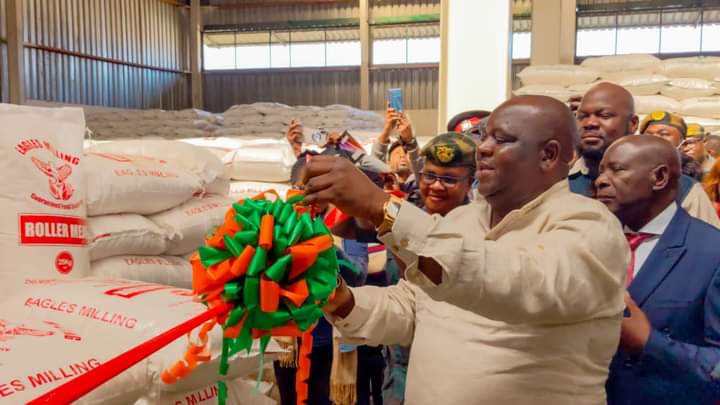
Copperbelt Provincial Minister Elisha Matambo  has opened the Zambia National Service(ZNS) Eagles Mealie- Meal at Muss Milling Plant in Chingola District  to enhance national food  security.

Mr Matambo said at the official opening of the Muss milling plant in Chingola that the government has placed high premium on stabilising mealie- meal prices across the country through such ventures.

The Minister said the Milling Plant has a daily production capacity of 240 metric tonnes of Mealie-meal and to be produced under a collaborative partnership between ZNS and Muss Milling of  Chingola.

The Minister noted that the partnership is  cardinal because it will not only add to the variety of Mealie- meal brands on the market, but will also  make it available to the people of the Copperbelt at an affordable price.

Meanwhile, Mr. Matambo disclosed that the Milling Plant Will be producing breakfast meal which will be fetched at  K185, roller meal at K160,  number  three meal at K85 and Gem meal  which will be sold at K100.

He stated that the Government  is aware that Mealie- meal prices in Chingola and on the Copperbelt in general are on a  higher side with breakfast Mealie- meals selling  between K200 to K230 while roller meals pegged at K160 to K180.

Mr. Matambo said the flagging off of the sale of Eagles Mealie-meal will go a long way in addressing the situation and fulfilling Government’s resolve of providing cheaper Mealie- meal to its citizens.

“Government is convinced that construction of additional Milling Plants will assist in reducing production costs of our the staple food, this will result in reduced high prices of the commodity,” he said

He urged the people of Chingola and the Country at large to endeavor to buy Zambia National Service (ZNS) Eagles branded Mealie-meal and other locally produced goods to support the growth of the economy.

The Milling Plant is able to produce 3800 bags of Mealie- meal every day.

Mr. Matambo warned those who will be found smuggling or selling Eagle mealie-meal at more than K185 to be arrested.

Speaking earlier, Zambian National Service (ZNS) Commander and Chief Staff Major General Reuben Mweewa said ZNS is committed to supplementing the Government’s efforts of producing affordable Mealie-meal to the citizens.

Mr. Mweewa explained that the Government through Food Reserve Agency (FRA) had allocated 5, 000 metric tonnes of maize to ZNS to produce Eagles breakfast and roller meal at the Milling Plant in Chongwe, Monze, and Mpika.

“Today we are here in Chingola to continue with this national program that Government and ZNS attach great importance to and has been made possible by Muss Milling Limited,” he said.

He assured the public that ZNS is always ready to work with the local private sector to help better the lives of the citizens.

Muss Milling General Manager Mayi Wanga thanked Government for partnering with ZNS and it will be more beneficial to the Company to address the challenge of food security in Chingola and on the Copperbelt

Chipolopolo silences their noise neighbour Bafana bafana

3
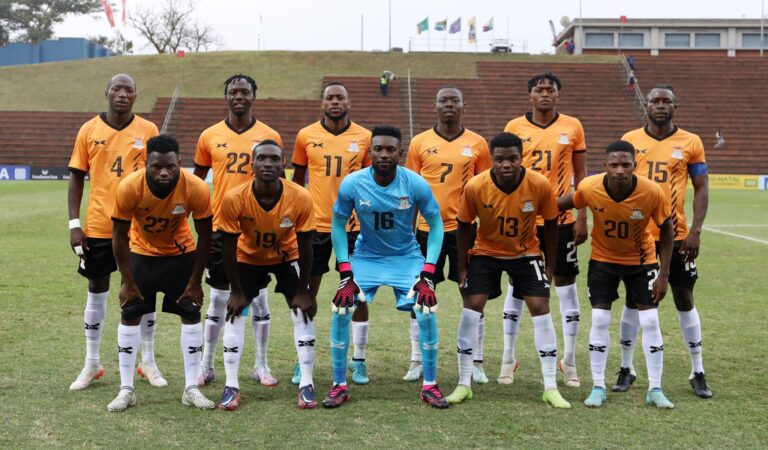
Zambia booked a final date in the 22nd edition of the COSAFA Cup after defeating and silencing their noise neighbours South Africa 2-1 in the semifinals played this evening in Durban.
Moses Sichone’s boys came from a goal down at the break to win thanks to goals from Green Buffaloes midfielder Golden Mashata five minutes after the break and Red Arrows striker Albert Kangwanda’s well-taken free kick in the 69th minute.
Zambia will take on Lesotho who are themselves looking to win the COSAFA Cup for the first time in their history. Lesotho defeated Malawi 3-0 in post-match penalties after the match was tied 1-1 after 90 minutes.
Expressing his satisfaction with the team’s performance, Zambia coach Moses Sichone praised the players, saying, “Compliment to the guys they have done very well from the first half we created a lot of chances, although South Africa managed to convert one of theirs.
“I told the boys at the break to just continue playing well because we were the better side. We planned well we saw how South Africa played in other games and used their weaknesses and we won. I’m happy my boys followed the instructions,” Sichone said
South Africa’s coach acknowledged the team’s lapse in concentration, which led to conceding the first goal, and expressed disappointment at not reaching the final. Reflecting on their performance, he stated, “I am proud of the team’s efforts throughout the tournament.
“Unfortunately, we couldn’t progress to the final. Our execution in the final third was lacking, resulting in a loss of possession. We needed more aggression to break down the opposition’s defense. Despite doing everything within our capabilities, victory eluded us,” he said.
Zambia’s captain, Kelvin Kapumbu, who was named the Man of the Match, attributed their success to their adherence to the coach’s instructions. He emphasized his commitment to executing the coach’s strategies, particularly in midfield play and maintaining effective link-up play.
The final will be played on Sunday, July 16, in Durban.

Monze farmers get inputs

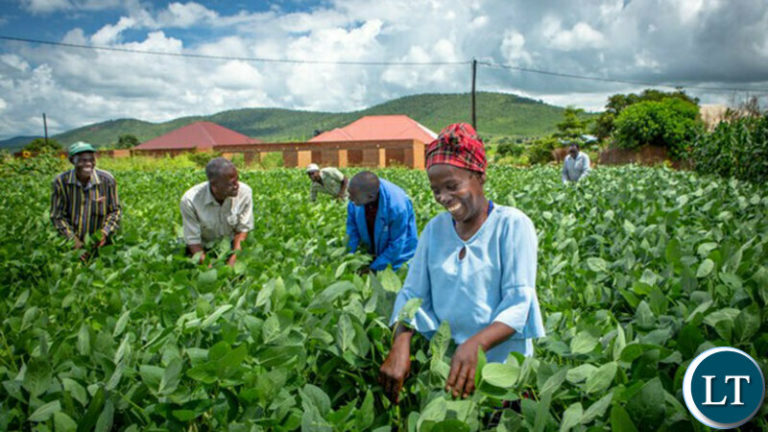
The Ministry of Community Development and Social Welfare has commenced the distribution of farming inputs to 700 vulnerable but viable farmers under the wetland component of the Food security Pack (FSP) in Monze district.

Flagging off the exercise in Machiinga area, Monze District Commissioner, Mwanza Malambo says government is committed to end poverty among vulnerable households through continued efforts of empowering them with farming inputs.

Mr Malambo said the empowerment of vulnerable households with inputs will reduce poverty, increase household food security and enhance income generation among poor and vulnerable farmers in the district.

 “Today, I am very pleased to flag off the distribution of farming inputs to 700 vulnerable but viable farmers because this is part of many programmes the new dawn government is implementing  to reduce poverty, increase household food security, and improve income among farmers through sale of their produce,” said Mr Malambo.

He urged vulnerable but viable farmers to fully embrace such interventions by government if poverty is to be addressed.

And Mr Malambo has disclosed that government has already delivered 195 metric tonnes of basal fertiliser under the Framer Input Support Programme (FISP) in readiness for the 2023/2024 farming season.

Acting Community Development officer, Trustina Manda says the wetland component of the FSP promotes the cultivation of crops during the dry season.

Ms Manda said the beneficiaries of the programme include people with disabilities, female headed households and the unemployed youths.

She explained that the wetland component was a special grant with beneficiaries expected to pay back K300 adding that the money was for more projects to benefit the farmers.

“We received a total of 1,400 by 50 kilogram bags of fertiliser and 700 by 5 kilogram bags of white maize for distribution in the entire district under the wetlands component. Each beneficiary farmer  will receive a 1 by 50 kilogram bags of urea, 1 by 50 kilogram bag of basal and a 1 by 5 kilograms bag of white maize for them to grow using irrigation, to meet our objective of  enhancing  food production,” she said.

She explained that so far since the launch of the wetland component in 2000, there has been a noticeable reduction in poverty among the beneficiary farmers.

One of the beneficiary farmers, Cleopatra Kasamu thanked government for the programme which has drastically improved her welfare and that of her household.

She, however, requested the government to sustain the programme and cater for more vulnerable but viable farmers who are excluded on the FISP.

The wetlands component of the FSP was reintroduced by the new administration in 2023 after it was halted for close to 7 years and aims at providing inputs to vulnerable but viable farmers to enable them cultivate crops even throughout the year.

Local government PS counsels PRs, media

Local Government and Rural Development Permanent Secretary for Administration Maambo Hamaundu has assured all Public Relations personnel in local authorities of his support in enabling them perform their roles of informing the public on decentralization and Constituency Development Fund (CDF).

Mr. Hamaundu said Public Relations personnel perform an important role of communicating the operations of the local authorities and should be provided with adequate information from all departments of the council.

He challenged PRs to inform him if faced with challenges in collecting information from other departments at the council.

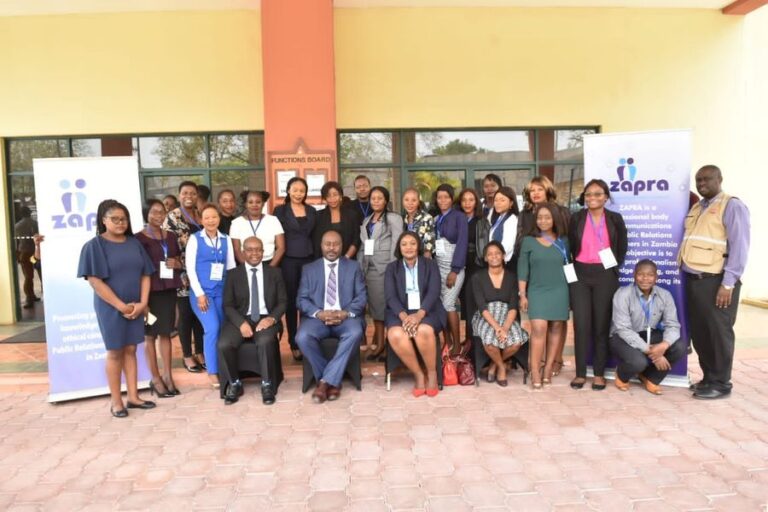
The permanent secretary, who was speaking when he officially closed a five day capacity building workshop for public relations officers and media on decentralization and CDF, further urged the PR officers to collaborate with the media in disseminating factual information on decentralization and CDF.

He expressed hope that the interaction between the media and PRs has enabled the media to appreciate the operations of the local authorities and will be more effective in reporting on the activities of the local authorities.

And speaking on behalf of the participants, Kabwe Assistant Public Relations Manager Nancy Chenga thanked the Local Government Association of Zambia LGAZ, Decentralisation Secretariat and the German Development Aid GIZ for sponsoring the workshop, which she said has benefited participants.

Ms. Chenga disclosed that the training will enable participants to effectively communicate with stakeholders, develop media and communication policies and enhance collaboration between the media and the public relations practitioners.

The workshop, which was organized by the Local Government Association of Zambia, with support of GIZ drew participants from local authorities across the country and the public, private as well as community media.

Situmbeko happy that economy is on track following multilateral support

5

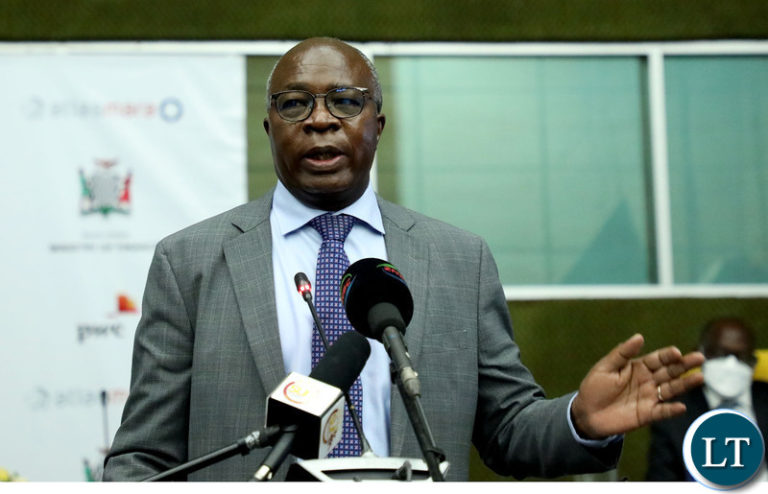
Finance Minister Situmbeko Musokotwane has expressed confidence that the country’s debt burden will soon be brought under control.

The minister says following the review by the country’s official creditors resulting in the disbursement of 189 million US dollars under the Extended Credit Facility (ECF) the country’s economy will soon be back on track.

Mr. Musokotwane said this at a press briefing in Lusaka today.

He said the successful review by the International Monetary Fund (IMF), the World Bank and other multilateral lenders means that the country will now have more resources channeled into infrastructure development to support investment.

Mr. Musokotwane said the government is on course to ensure that the country’s debt situation is brought under control to encourage investment.

He said going forward the country will focus on getting a deal with private creditors in the second review.

Meanwhile, Bank of Zambia Governor Denny Kalyalya said 50 percent of the 189 million US dollars of the Extended Credit Facility will be channeled to budget support while the other 50 percent will be put into foreign reserve build up.

On July 13 2023 the country’s official creditors comprising the IMF, World Bank and other multilateral lenders successfully reviewed Zambia’s reform efforts resulting in the disbursement of 189 million US dollars under the Extended Credit Facility.