Saturday, June 13, 2026
24 C
Lusaka
Home Blog Page 91

I Am Offering Zambia Something Different – Mudolo

PATRIOTIC Front (PF) presidential hopeful Willah Mudolo has unveiled plans to demolish and rebuild Zambia’s major learning institutions, pledging that his government will not tolerate unsafe and outdated infrastructure.

Mudolo said that, if elected, his administration will tear down dilapidated structures at institutions such as the University of Zambia, Copperbelt University, Mulungushi University, and Northern Technical College, replacing them with modern facilities that meet international standards.

He explained that the new campuses will feature safe learning environments, quality student accommodation, and ensuite facilities, aimed at restoring dignity and safety in the education sector.

“The massive reconstruction programme will be completed within 24 to 30 months,” Mudolo said, describing it as a practical and time-bound plan to fix the country’s universities.

He assured that learning would not be disrupted during the process, highlighting plans to expand online education and provide temporary facilities for critical programmes such as medicine and science.

“I am offering Zambia something different… we will end this cycle of neglect and rebuild our institutions properly,” Mudolo said.

The announcement comes in the wake of the tragic death of 18-year-old University of Zambia student Emmanuel Bwalya. Yesterday, UNZA students took to the streets to protest after a fellow student drowned in a pit that was being dug to repair a blocked sewer system.

Mudolo said the incident was not just an accident but a reflection of leadership failures by past administrations, which left students in unsafe and inadequate learning environments.

He added that after more than 60 years of independence, it was unacceptable that universities in Zambia remain outdated and dangerous, emphasizing that his plan is not only about infrastructure but about creating a system that supports students and prepares them for the future.


Once Elected, I Will Rule Like Lungu – Mundubile

TONSE Alliance president Brian Mundubile has pledged that, if elected, he will lead the country in the footsteps of the late President Edgar Lungu, who he says left the nation united.

Mundubile emphasized that the Alliance is committed to ensuring peace, even for those who previously sought to divide the country, noting that vengeance should be left to God.

Speaking during a media briefing  while welcoming new members into the Alliance, Mundubile called on party supporters to work together in promoting national unity and development.

He urged citizens to embrace reconciliation and to prioritize the nation’s interests above personal or political differences, saying that a united Zambia is essential for sustainable progress.

“The late President Lungu demonstrated leadership that brought people together, and we must continue in that spirit. As a nation, we must focus on peace, dialogue, and inclusivity,” Mundubile said.

He added that the Alliance would not discriminate against anyone based on past political affiliations and that all Zambians would have a role to play in the country’s growth.

Mundubile also appealed to political actors to respect the democratic process, cautioning against actions that could incite division or unrest.

“Our mandate is to serve the people, and we call on everyone to contribute positively. The path to development is through unity, collaboration, and respect for each other,” he stated.

The event saw a large turnout of new members, who pledged their support to the TONSE Alliance and committed to promoting peace and stability in the country.

Treasury Regrets Indeni’s Shift to Fuel Trading

Secretary to the Treasury Felix Nkulukusa has expressed regret over the transition of Indeni Energy Limited from an oil refinery company to an oil marketing company. He stated that if it were possible to reverse time, such a move would not have been permitted.

Appearing before the Committee on Parastatal Bodies on Tuesday, Nkulukusa noted that fuel trading requires substantial resources, which the government cannot fully provide for Indeni.

“Obviously, our feeling from the Treasury, or my personal view, is that Indeni should be repurposed; they cannot manage fuel trading. Fuel requires enormous resources, not only for purchasing the fuel itself but also for investment in human capital and technology,” he said.

He added that the company’s operational model is not suited to compete effectively in fuel marketing, where significant capital is needed to procure, store, and distribute petroleum products.

“Government cannot raise sufficient capital for Indeni to engage in fuel trading at a competitive level. This puts the company at a disadvantage and limits its ability to operate sustainably,” Nkulukusa explained.

The Treasury Secretary suggested that Indeni should instead focus on areas aligned with its original mandate or explore partnerships that could strengthen its capacity. He also called for a comprehensive review of the company’s strategy to ensure it delivers value to the nation.

Members of the Committee on Parastatal Bodies acknowledged the challenges highlighted and committed to working with relevant stakeholders to determine the best path forward for Indeni Energy Limited.

Espionage Charge Against Findlay Shocks Lawyer

12

LUSAKA businessman Valden Findlay has been detained on allegations of espionage, with his lawyer raising concerns over the process after police confirmed the arrest and said investigations are ongoing.

Police spokesperson Godfrey Chilabi said Findlay, 63, was apprehended on March 31 by a joint team of law enforcement officers acting on intelligence linked to national security. He said the suspect remains in custody while investigators work to establish the full facts surrounding the case.

“The Zambia Police Service takes matters of national security very seriously. Findlay was apprehended on credible information linking him to espionage activities. Investigations are still underway to establish the full facts,” Chilabi said.

The confirmation places the case among the most serious legal matters currently under investigation, with espionage carrying heavy penalties under Zambian law. Authorities have not publicly outlined the specific acts forming the basis of the allegation, stating that the inquiry is still in progress.

Findlay’s lawyer, Milner Katolo, said the manner in which the case is being handled has raised immediate concern, particularly the absence of a formal interview before the detention was effected.

“It is very concerning that my client was charged without being formally interviewed. We are yet to see the evidence against him. We will ensure that his legal rights are fully protected, and we will challenge any irregularities in the process,” Katolo said.

Katolo described his client as a respected businessman with no known criminal record and called for a process that is both transparent and consistent with legal standards. He said the defence team expects clarity on the allegations and the evidence supporting them as the case progresses.

Police have urged members of the public to refrain from speculation, noting that the sensitive nature of the case requires careful handling while investigations are underway. Authorities said further updates will be provided once key stages of the inquiry are completed.

The detention has also drawn attention following indications linked to the case that a definitive charge may not have been fully established at the time of the arrest. Accounts associated with the matter suggest that investigators were still determining the specific offence, a development that has intensified scrutiny around procedure.

The sequence of events surrounding the apprehension is now central to the unfolding situation. While law enforcement maintains that the arrest was based on intelligence, the defence is questioning whether due process has been fully observed at each stage of the investigation.

Nkana Member of Parliament Binwell Mpundu has also weighed in on the matter, questioning why a summons was not issued if authorities suspected wrongdoing. He said handling such cases in a manner that appears irregular risks undermining confidence in institutions responsible for enforcing the law.

The case is unfolding within a broader environment where issues of governance, accountability and institutional conduct are under close public attention. That context has amplified interest in how the investigation is being conducted and how quickly clarity will emerge.

For now, Findlay remains in custody as investigations continue, with the next stage expected to determine whether formal charges will be clearly defined and presented before the courts, and whether the evidence meets the threshold required for prosecution.

UPND Urges Members to Embrace Defectors as Clement Tembo Joins Party

Patriotic Front (PF) member Clement Tembo has defected to the ruling United Party for National Development (UPND), crossing over with several PF supporters from his constituency.

Speaking after joining the ruling party, Tembo said he would continue supporting vulnerable and underprivileged people in Kabwata and other parts of the country. He stated that his move to UPND was influenced by his long-standing association with the party, noting that he had worked with it during its early years alongside President Hakainde Hichilema.

Receiving the defectors in Lusaka, UPND Lusaka Province Chairperson Obvious Mwaliteta urged party members to welcome the new entrants and work together in promoting national development.

Mwaliteta also said the ruling party is aiming to secure 80 percent of the vote by August 13, 2026, in an effort to avoid a presidential election re-run.

Meanwhile, Democratic Party Chairperson for Elections Justine Nkongwe has called on Zambians to support President Hichilema ahead of the 2026 general election.

Cyber Security Agency Strengthens Leadership, Vows Tough Fight Against Cybercrime

1

Since his swearing-in on June 10 last year by President Hakainde Hichilema, Cyber Security Agency Director General Dr. Schmidt Chintu had been operating without a full support structure.

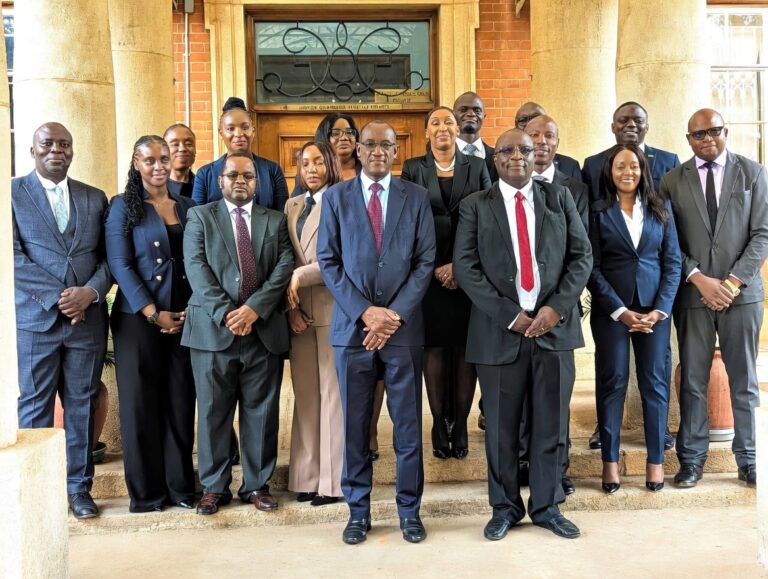
That situation has now changed following the swearing-in of 15 senior management officials, including directors, deputy directors, and heads of units, by Constitutional Court Deputy President Justice Arnold Shilimi.

During the ceremony, Justice Shilimi urged the appointees to carry out their duties diligently, emphasizing their responsibility as custodians of Zambia’s cyberspace. He noted that their work must contribute to protecting the public and securing critical information infrastructure.

“I’m pleased to note that you are the new statutory body under the Office of the President responsible for the administration of the Cyber Security Act No. 3 of 2025,” he said.

Speaking after the ceremony, Dr. Chintu described the appointments as a major milestone in the Agency’s efforts to fully execute its mandate. He said the new team would strengthen operations and improve coordination in addressing cyber threats.

Among those sworn in were Deputy Director General Garry Akalemwa Mukelabai, Director Legal and Licensing Maureen Banda, Director Finance Obert Ngandu, and Director of Strategy Affairs and Engagements Namuya Maureen Jangulo.

Others included Director of Human Capital and Administration Mutinta Muchindu, Director of Critical Information Infrastructure Nalucha Imasiku, Director of Threat Intelligence and Investigations Taslim Mukabe, and Deputy Director of Threat Intelligence and Investigations Lwiimbo Kasweshi.

Also appointed were Deputy Director of Critical Information Infrastructure Mutinta Chilobe Esther Cholwe, Deputy Director of Human Capital and Administration Chonzi Mulenga, Deputy Director of Research, Education and Awareness Edgar Mlauzi, and Deputy Director of Policy and Standards Abel Bihinda.

The heads of units sworn in included Head of Corporate Communication Lusubilo Gondwe, Head of Procurement Muna Mweemba, and Head of Strategy Monitoring and Evaluation Akokwa Liwena.

Dr. Chintu said the Agency had previously relied on staff seconded from institutions such as the Zambia Information and Communication Technology Authority (ZICTA), which limited its effectiveness.

“Today, I have gotten a support system,” he said. “For a long time, I did not have these members and we were working with officers from other institutions, but now we have almost a full directorate.”

He noted that with most director-level positions now filled, the Agency is better positioned to stabilize Zambia’s cyber ecosystem and deliver on its mandate.

Dr. Chintu explained that the institution is responsible for securing financial systems, protecting citizens from cyberbullying and online abuse, and ensuring a safe and business-friendly digital environment.

“We are the prime institution for cyber security in Zambia. It is our responsibility to regulate, oversee and set standards,” he said.

He warned that cybercrime remains a significant threat, revealing that Zambia has lost hundreds of millions of kwacha in recent years due to cyberattacks, including ransomware incidents targeting major institutions such as banks.

He cautioned that without strong systems in place, key sectors like health, education, and finance remain vulnerable to disruptions and data breaches.

Despite these challenges, Dr. Chintu expressed confidence that the newly appointed team would enhance coordination and strengthen efforts to combat cybercrime.

He also issued a warning ahead of the upcoming general elections, cautioning against the misuse of digital platforms and artificial intelligence to spread misinformation or attack others.

“People must be aware that they would have themselves to blame if they are found on the wrong side of the law,” he said.

Bucket of Water Claims Life of One of Twin Toddlers

0

A 20-litre bucket of water has led to the death of one of 10-month-old twins after the infant drowned.

The incident occurred yesterday in Lumezi when the twins’ mother, Enala Phiri, 22, had briefly gone to visit her aunt, a few metres from her home in Tiyeseko Village in the Mwasephangwe area.

At the time, the twins were playing outside the family’s compound with their four-year-old sister while their father was asleep.

Moments later, the older sibling left the twins unattended. When she returned, she found one of the infants floating in a bucket of water.

The girl raised an alarm and attempted to rescue her sibling but was unable to do so.

A passerby responded to her cries and rushed to assist, but it was too late.

The father, who had been asleep, woke up during the commotion and found the child unconscious and unresponsive.

Eastern Province Police Commanding Officer Robertson Mweemba confirmed the incident, stating that it occurred around 15:00 hours.

“The child was quickly rushed to Mwasephangwe Mini Hospital where the child was pronounced dead,” he said.

Police conducted a physical inspection of the body and ruled out any foul play.

The body has since been handed over to the family for burial.

Mob Attacks Teen Girl Over Missing K200 in Nalolo, Three Arrested

3

A 16-year-old girl in Nalolo District was attacked by a mob following allegations that she had stolen K200.

The incident occurred on the night of March 31, 2026, in Mushukula Section of Muoyo Royal Village.

The teenager was severely beaten and nearly killed by the mob after she was accused of taking the money.

According to police, the girl had spent the night at a friend’s house when the K200 went missing, leading to suspicion being directed at her.

After being questioned, some identified individuals allegedly assaulted her, accusing her of theft. The situation escalated as more community members joined in, turning the incident into a mob attack.

Police responded after receiving a distress call and managed to rescue the victim. She was taken to Nalolo Police Station and placed in protective custody.

The mob later followed officers to the police station, where they threw stones and demanded that the girl be handed over to them.

Police fired warning shots into the air to disperse the crowd.

Three suspects—Sitali Sitali, 20, Mulemwa Wamundila, 24, and Mukela Mufalo, 19—were arrested and are in custody, facing charges of Assault Occasioning Actual Bodily Harm.

The victim sustained injuries and was issued a medical report form before spending the night under police protection.

Western Province Police Commanding Officer Rae Hamoonga confirmed the incident and said investigations are ongoing, with a manhunt launched for other individuals involved.

“The Zambia Police Service strongly condemns acts of mob justice and wishes to remind members of the public that taking the law into their own hands is a criminal offence,” Hamoonga said.

He urged members of the public to report suspected criminal activities to the police and allow the law to take its course.

Government Releases K23 Million for UNZA Sanitation Improvements

4

Government has released K23 million to improve sanitation conditions at the University of Zambia (UNZA) Great East Road Campus.

According to the Ministry of Education, the funds were released following a directive from President Hakainde Hichilema, who acknowledged students’ concerns after recent unrest triggered by sanitation challenges.

Ministry of Education Permanent Secretary for Technical Services, Kelvin Mambwe, announced the development when he addressed students at the Great East Road Campus.

Dr. Mambwe said the funds are intended to address sanitation issues at the institution, as well as improve the campus water reticulation system.

“The money that the President has ordered to be released is to ensure that we bring sanity and improve the sanitation situation here,” he said.

He assured students that the funds would help improve sanitary conditions at the campus.

As an interim measure, Dr. Mambwe said government will provide mobile toilets across the campus to ensure students have access to proper facilities.

He added that the mobile toilets would be made available on April 2, 2026, as a temporary solution.

Earlier this week, UNZA students at the Great East Road Campus protested over ongoing water disruptions, blocking roads in response to the situation.

The sanitation and water challenges were further highlighted by the death of a second-year student who drowned in a pit that had been dug as part of efforts to resolve the crisis.

President Hichilema expressed his grief over the incident and extended condolences to those affected.

Hichilema Mourns UNZA Student Emmanuel Bwalya

1

President Hakainde Hichilema has stated that no further loss of life at any higher learning institution will be acceptable, emphasizing that no family should have to receive such tragic news.

The President’s remarks follow the death of 18-year-old University of Zambia (UNZA) student Emmanuel Bwalya, who drowned in an open pit that had been dug to repair a blocked sewer system at the institution.

Earlier, the Head of State had directed immediate action after the university experienced sanitation challenges linked to blocked and ageing sewer lines.

In a statement issued after learning of the incident, President Hichilema said there is a need to address the sanitation challenges not only at the University of Zambia but across all higher learning institutions and colleges.

“No further loss is acceptable. No family should ever receive this kind of news again,” he said.

The President also urged students who protested following the incident to remain calm and engage through dialogue.

State House Chief Communication Specialist Clayson Hamasaka said the Head of State was deeply saddened by the incident.

“President Hakainde Hichilema has learnt with profound sadness of the death of Emmanuel Bwalya, a second-year student in the School of Humanities at the University of Zambia. Emmanuel was a young Zambian with a bright future ahead of him. His loss is truly a tragedy for his family, his fellow students, and the nation at large.

“The Head of State extends his deepest condolences to Emmanuel’s family, the entire University community, and all who had the privilege of knowing him,” he said.

The President has urged the nation to keep Emmanuel’s family in prayer as they mourn their son.

“Let this be a moment where we come together with a shared commitment to resolving the challenges facing not only the University of Zambia, but all higher learning institutions and colleges,” Hamasaka stated.

High Court Acquits Lusaka Lab Technologist in COVID-19 Test Kits Case

1
The High Court has acquitted a laboratory technologist from CHIPATA Level One Hospital who had previously been convicted and sentenced for allegedly stealing COVID-19 test kits valued at over K2.8 million.

Hilton Kasanyika, 28, was earlier sentenced by the Lusaka Magistrates Court to two years’ imprisonment with hard labour after being found guilty of theft involving COVID-19 Rapid Diagnostic Test (RDT) kits worth K2,834,777.

However, a panel of High Court judges sitting at the Economic and Financial Crimes Court (EFCC) in Lusaka ruled that the prosecution did not prove the case against him beyond reasonable doubt.

Kasanyika had appealed his conviction, which stemmed from charges of theft contrary to Section 272 of the Penal Code.

He had been jointly charged with Judith Dzekedzeke, 46, a biomedical technician; Malama Nkhata, 44, a driver; and Langson Kampango, 54, a station handyman. The charges included theft by public servant and theft.

It was alleged that between January 1 and March 30, 2022, the accused individuals stole COVID-19 test kits belonging to the Government of the Republic of Zambia.

In a judgment delivered by three judges led by Justice S.M. Wanjelani, the court found no evidence that Kasanyika stole, converted, or caused the theft of the kits.

“The evidence on record reveals that the Appellant was not found in possession of any stolen items,” the court stated. “It further reveals that there were no witnesses who testified that the Appellant physically took, diverted or caused the removal of the COVID-19 test kits from the facility, and no such kits were found in his possession.”

The court noted that Kasanyika’s role in making requisitions for laboratory supplies was part of his normal duties and did not constitute proof of theft.

According to the judgment, deliveries were carried out by drivers, particularly co-accused Malama Nkhata, at whose residence some of the test kits were later recovered.

“There is no evidence on record that the Appellant directed Accused No. 4 to divert the goods or that he benefitted from the recovered items,” the judgment stated.

The High Court also criticized the trial court for basing its conclusions on assumptions rather than evidence.

“The trial Court’s conclusion that only one benefiting would act without authority was pure speculation unsupported by evidence,” the judges said.

The court further observed that Kasanyika’s employment records confirmed he worked as a Medical Laboratory Technologist under the Lusaka Provincial Health Office, with responsibilities related to laboratory operations and supplies.

It emphasized that criminal convictions cannot be based on suspicion, administrative lapses, or poor stock management.

“Raising requisitions, without more, does not constitute theft nor amount to fraudulent conversion in the absence of proof of intent or participation,” the court stated.

“The Courts are required to act on the evidence placed before them. If there are gaps in the evidence, the Courts are not permitted to fill them by making assumptions adverse to the accused.”

The judges reiterated that suspicion alone, regardless of its strength, cannot substitute for proof beyond reasonable doubt.

The High Court also found that the trial court failed to properly distinguish Kasanyika’s role from that of his co-accused and did not sufficiently analyze whether the legal elements of theft had been established.

“The trial Court did not adequately analyse the evidence as it specifically related to the Appellant,” the judges noted.

They added that the lower court did not explain how the amount of K2,834,777 was attributed to Kasanyika.

“We have found that the essential elements of theft were not proved beyond reasonable doubt. We have further found that the conviction was founded on speculation and misdirection,” the court stated.

“For these reasons, we hold that the conviction of the Appellant is unsafe and cannot stand. Accordingly, the appeal is allowed. The conviction is quashed, and the sentence set aside,” the judges ruled.

Bye Zambia! Hello Chambia!!

We Normalize and Not Analyze Failure 

By Dr. Field Ruwe 
 

The aerial beauty of Lusaka, the capital city of Zambia, evokes a sense of pride. This vibrant capital seamlessly melds modern architecture with distinctive British colonial buildings. It has recently been graced by the Chinese with stylish skyscrapers. Lately, Lusaka has become a place where men and women walk with their heads held high, as if they are the ones who transformed it into what it is today with their ingenuity.  
 
I equate Lusaka with the Trojan Horse myth of the city of Troy. During the ten-year siege of Troy, the Greek soldiers built a massive hollow wooden horse in which they concealed a selected number of their soldiers. They feigned its abandonment and pretended to sail away, leaving the horse as an “offering to the goddess Athena.” The Trojans pulled the horse into their city. At night the concealed soldiers emerged from the horse’s belly, opened the city gates and the rest of the Greek soldiers ran in and took over the city.  
 
Envision for a moment the same happening to us; waking up to find the city of Lusaka is gone, fallen in the debt-trap taking Zambia with it. It came close to happening in 2018 when John Bolton, then National Security Adviser for the United States tasked with Washington’s Africa strategy, disclosed that China intended to seize certain state-owned enterprises if the Zambian government failed to fulfill its debt obligations. At that time, Edgar Lungu had driven Zambia’s external debt to an alarming $26.94 million, a move that almost cost us the country. 
 
Presently, the external debt under Hichilema stands at approximately $16 billion, making the seizure still probable. It is in the wake of Zambia’s 2020 default that the Chinese Trojan Horse stratagem has been applied. The Beijing Boys’ strategy has shifted towards the imposition of the Chinese Yuan as a convertible currency in Zambia. 
 
In October 2025, Zambia became the first African nation to formally recognize the Chinese yuan (RMB) as a valid currency for mining taxes and royalties, aiming to alleviate a debt estimated between $4 billion and $6.6 billion. It was at this critical moment the Beijing Boys got out of the “Trojan Horse” opened the Zambian gates, dazzled our “ingenious” president, colonized us, and left our “well-versed economic gurus” in shame. 
 
The Chinese replicated the actions taken by Britain against them during the Opium Wars (1839-1860). Through the implementation of the ‘unequal treaties,’ Britain compelled the opening of Chinese ports and obtained Hong Kong, which was ceded by the Qing Dynasty and governed as a colony from 1841 to 1997. Once in complete control of Hong Kong, the British enforced their currency to integrate the local population into the imperial cash economy. This manipulation served as a vital instrument in establishing the mercantile system, where Hong Kong existed solely to generate wealth for Britain. 

Over the years, China, frequently motivated by geopolitical factors that underscore pertinent economic and social inquiries, has been examining African intellectualism with the intention of imitating the British. 
 
China’s advancement in African studies has evolved from the period of “Sensing Africa” (1900-1949), aimed at comprehending its geography and populace, to the phase termed “Supporting Africa” (1949-1965) during the Cold War, and subsequently to “Studying Africa” (1977-2000), which signified the onset of a more structured academic exploration of Africans, as well as the commencement of the Sino-imperialist era.
  
Now we are in the “Owning Africa” phase (2000-present) which has resulted in the creation of “debt-traps” through infrastructure development aimed at enhancing political influence and industrial supremacy to fulfill their objective of blatant neo-imperialism. Similar to the British, the Sino-imperialist strategy encompasses the enforcement of their language (Mandarin) upon Africans to increase their “soft power,” that is, the capacity to sway the preferences, behaviors, and outcomes of other nations through attraction and persuasion. 
 
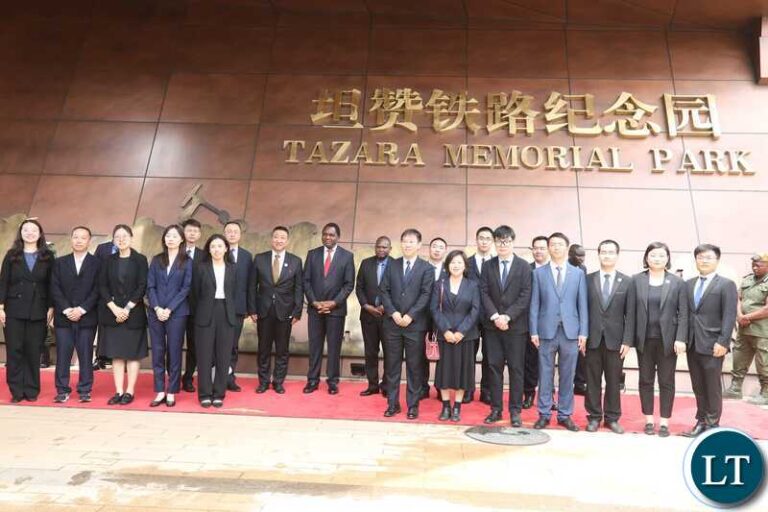
Why did China choose Zambia as a litmus test for Africa? Because it was the first African country where China implemented its most substantial single foreign aid project, the TAZARA Railway, between 1970 and 1975. During their five-year engagement in Zambia, Chinese workers found us lacking an innovative mindset. 

Upon their return home, they described us as people who do not cultivate deep curiosity, take calculated risks, perceive challenges as chances for innovation, and employ available resources in a creative and original manner. President Xi Jinping and his “Beijing Boys” at the Ministry of State and Security (MMS) depict us in a similar light—as a society that is more inclined to normalize failure than to analyze it.
 
The acceptance of the Chinese yuan into our monetary system serves as a testament to the normalization of failure. It reveals our subpar standards that have led to serious repercussions, ultimately culminating in the relinquishment of our sovereignty. Our vulnerability is underscored by a societal acceptance of failures, economic difficulties, and insufficiently funded educational systems that fail to generate enough graduates capable of confronting, challenging, and exposing those who enter our country to exploit us.
 
According to the latest UNESCO education completion report, by early 2026, around 2.8% of Zambians possessed a bachelor’s degree, while only 0.4% held a master’s degree. UNESCO was unable to ascertain the exact number of individuals with PhDs. The latest data from 2022 revealed that Zambia had 321 professors, a significant contrast to Kenya, which boasted 10,000 PhD holders. 
 
The lack of graduates hinders our ability to embrace a “battlefield mentality” that is, the mental readiness to confront the Beijing Boys, view them as adversaries, analyze their concealed motives, and ultimately outsmart them. 
 
The duty of examining failures is assigned to the nation’s think tanks and intellectuals. Their role includes the collection and clarification of intricate data, along with providing proof concerning, for instance, the challenges that yuan-denominated revenues would pose in the processes of converting, holding, or utilizing funds within the framework of the national budget. Essentially, this requires innovative, rational, evidence-based thinking rather than emotional reactions that are ingrained in the acceptance of failure.  
 
To achieve this goal, it is essential to create a modern education system that shifts from traditional learning practices to one that emphasizes critical thinking, the incorporation of technology, and holistic development. Students in Zambia need to participate actively rather than being mere passive recipients. If we overlook this requirement, we risk confronting a future where Zambia no longer exists.  
 
In conclusion, I strongly encourage the intellectual community both domestically and internationally to come together and shift from being passive observers to proactive participants in the generation of knowledge. The Chinese have successfully fulfilled their responsibilities, exhibiting their creativity through infrastructure development. In less than twenty years, they have achieved what we have been unable to accomplish in sixty-two years—transforming Zambia’s physical landscape. 

As a nation, we face a critical choice: to either normalize or critically examine our failures. We must decide between the deterioration of our country and the proof that we possess an equivalent level of creativity as the Chinese. 
 
Author is a scholar and media practitioner affiliated with Northeastern University, Boston, USA. ©Ruwe2026

Arrows out to cut Power lead

0

Red Arrows on Wednesday afternoon face Nkana away in Kitwe, seeking to close in on Super League leaders Power Dynamos, who are not in action.

Power have a four-point lead against second placed Arrows, who sit on 48 points after playing 26 matches.

With victory over Nkana in Wusakile, Arrows will cut Power’s lead to one point.

Arrows and Nkana battle in the round 27 match after a nearly two-week international break.

Nkana are placed 11th on the table with 31 points, seven points ahead of relegation.

ZESCO UNITED VS. GREEN BUFFALOES

In other midweek fixtures, former champions Zesco United will continue with their catch-up mission as they host Green Buffaloes at the Trade Fair Grounds in Ndola.

This match appears unpredictable, although Zesco looks favourites against Buffaloes.

BATTLE FOR SURVIVAL

Second from the bottom side FC Leopards continue with their survival escapade when they host fellow strugglers Mines United in the little-known Kabwe derby.

At Konkola Stadium, Konkola Blades will host Mutondo Stars, seeking to bounce back from last Saturday’s 1-0 home loss to Nkwazi.

Konkola are ninth on the table with 35 points in 26 matches, while Mutondo are one place and two points above relegation.

At Independence Stadium in Solwezi, Napsa Stars will be hoping to jump out of the bottom four when they tackle their hosts Kansanshi Dynamos.

Napsa are placed third from the bottom of the table with24 points in 25 matches and 13th placed Kansanshi have 26 points from 25 matches played.

Kitwe Schools golf tourney saluted

1

In a bid to promote golf at the lower level, Nkana Golf Club has expanded the Primary Schools Golf Championship it started with two schools just three years ago.

This week has seen six schools competing for honours on the prestigious Nkana Golf Course.

Scores of youngsters from Lechwe, Mopani Trust, St. John’s Convent, Green View, Blueberry and Cradle to Crayon turned up for the expanded End of Term Schools Golf Championship at Nkana Golf Club in Kitwe.‎

‎This is part of the junior golf programme by Nkana Golf Club with support from IRH managed Mopani Copper Mines and the Zambia Golf Union.

‎Sylvia Kaunda, the Nkana Golf Club Events Marketing and Public Relations Coordinator, is pleased with the growth of the school’s championship.

‎”Nkana Golf Club is very passionate about junior golf,” Kaunda told journalists in Kitwe.

‎”This tournament is our baby here at Nkana Golf Club,” she said.

‎Lechwe emerged champions with newcomers Cradle to Crayon making a big statement by finishing second.

‎Nkana golfer David Michelo Mensah, who watched the children, saluted the just concluded End of Terms Schools Golf Tournament at Nkana Golf Club in Kitwe.

Mensah says golf helps to instil discipline in children.

He thanked schools for driving this school’s junior golf championship.

Sangwa blocked by registration delay as election clock ticks

LUSAKA, April 1 — Movement for National Renewal leader John Sangwa says delays in registering his political party are constraining preparations for Zambia’s August 13 general election, placing pressure on participation timelines for new entrants.

The application for party registration was lodged on March 23, 2026, but remains pending, with the process requiring clearance linked to the Office of the Inspector General of Police before completion. The delay comes as political parties intensify mobilisation ahead of a fixed election calendar.

Sangwa said the issue extends beyond administrative procedure and carries direct political implications. Without formal registration, a political organisation cannot fully operate within the electoral framework, affecting its ability to organise structures, select candidates and engage voters at scale.

He stated that the current situation limits mobilisation and national visibility at a stage where established parties are already advancing campaign activities. The timing places newer political movements at a structural disadvantage as the election date approaches.

The electoral calendar sets August 13, 2026 as polling day, leaving a narrowing window for parties yet to complete registration to build operational capacity. Delays at this stage compress preparation timelines, affecting outreach, resource mobilisation and internal coordination.

Sangwa said participation in elections depends on more than casting a vote. It requires that political actors are able to organise, campaign and present alternatives within a framework that is consistent and predictable. He added that the absence of registration interrupts that process.

The matter draws attention to the administrative pathways governing political party registration, where compliance requirements include documentation checks and security-related clearances. These processes are designed to ensure regulatory standards are met, though they also introduce procedural stages where timelines can extend.

Sangwa framed the delay as a constitutional concern tied to political participation. He said administrative systems should facilitate, not restrict, the ability of citizens and political actors to take part in elections through organised platforms.

The issue emerges within a broader electoral environment where institutional processes are under scrutiny. Government officials have pointed to the role of information management in safeguarding election credibility, with Information and Media Minister Cornelius Mweetwa calling on the media to prioritise accurate reporting and counter misinformation ahead of the polls.

That position reflects awareness that election credibility is shaped not only by procedures but also by public confidence in how those procedures are applied. Administrative consistency and transparency remain central to maintaining that confidence.

There is no indication within the available material that the delay in registration is deliberate. No formal explanation from authorities is cited regarding the status of the application or the timeframe for completion of the required clearances.

The absence of resolution has allowed the issue to acquire political weight, particularly as the election timeline advances. Questions around equal participation arise when procedural delays intersect with fixed electoral milestones.

Sangwa said the inability to fully operate as a registered political party affects core functions, including candidate selection processes, fundraising and the establishment of national structures. These elements form the operational backbone of electoral participation and require sufficient lead time to execute.

The situation also highlights the balance between regulation and access within electoral systems. While compliance measures are necessary to maintain order and legitimacy, their implementation must align with timelines that enable fair participation across all political actors.

Attention is expected to remain on how quickly the registration process is concluded and whether similar concerns emerge from other prospective political parties. The handling of such applications carries implications for perceptions of fairness within the electoral framework.

With the election date fixed, the pace of administrative processes becomes a determining factor in how evenly political actors can prepare. Institutional consistency, transparency and timeliness will shape confidence in the system as the country moves closer to polling day.