Sunday, June 7, 2026
17.3 C
Lusaka
Home Blog Page 1130

Zambia, Finland bilateral ties strengthened

2

Minister of Science and Technology, Felix Mutati says bilateral ties between Zambia and Finland have continued to expand, for the benefit of the two countries.

Mr Mutati cited innovation as one area where Zambia has enjoyed increased cooperation from Finland.

He described the existing collaboration between the two governments as productive.

The Minister said this when the Finnish Ambassador to Zambia Pirjo Chowdhury paid a courtesy call on him at his office.

Meanwhile Mr Mutati says Zambia has a lot to learn from Finland, as the country endeavors to digitalize the economy.

He stressed that Finland has been a knowledgeable economy for a long time, stating that as such, Zambia can learn a lot from that country.

He disclosed that the desire for President Hakainde Hichilema, is to transform Zambia’s economy into a fully digitalized economy.

Mr Mutati further disclosed that his ministry is working towards digitalizing government services, in order for the public to easily access various services being offered.

Speaking earlier, Finnish Ambassador to Zambia, Pirjo Chowdhury informed the Minister that Finland is looking forward to identifying new areas of cooperation.

Ms Chowdgury revealed that Finland has cooperated with Zambia in all areas of the education sector.

She noted that her country wants to diversify its support from education to trade.

Ms Chowdgury notes that Finland will create business linkages for SMEs between the two countries, adding that the vision for Finland is to ensure that there is increased trade relations.

13% National Failure Rate Recorded in the just Ended General Certificate of Education Examinations

2

Minister of General Education Douglas Syakalima has disclosed a 13 percent national failure rate, which has been recorded in the just ended General Certificate of Education (GCE) examinations.

Mr. Syakalima says that the national failure rate represents a total of 16, 960 candidates failing the 2021 GCE examinations, with mathematics being the subject with the least performance.

The Minister stated that out of the 124, 171 candidates who sat for the July 2021 General Certificate of Education (GCE) examination, a total of 4,496 have obtained certificates, representing a 3.62 percent GCE certificate acquisition rate.

Speaking at a media briefing in Lusaka today, the Minister of Education says out of the 39, 323 male candidates only 1, 618 obtained the GCE certificate in comparison with the 2, 878 females who acquired the GCE certificate out of 84, 848 females who sat for the examinations.

Mr. Syakalima says a total 102, 715 candidates obtained GCE statement of results.

“Analysis of performance by subject revealed that the highest percentage mean score was recorded in French at 75.79 percent while mathematics recorded the lowest at 18.24 percent,” Mr. Syakalima said.

Meanwhile, the Minister of Education has revealed that no leakage was recorded during the examinations.

“It is gratifying that all stakeholders worked together, once again, to ensure that the examinations were conducted leakage-free,” Mr. Syakalima said.

And the Minister says a total of 9, 299 candidates were absent, recording a national absenteeism rate of 6.97 percent.

Zambia commits to climate change resolutions

14

Zambia has underscored her commitment to biodiversity conservation, land management and fighting climate change, aimed at improving the socio-economic wellbeing of the people.

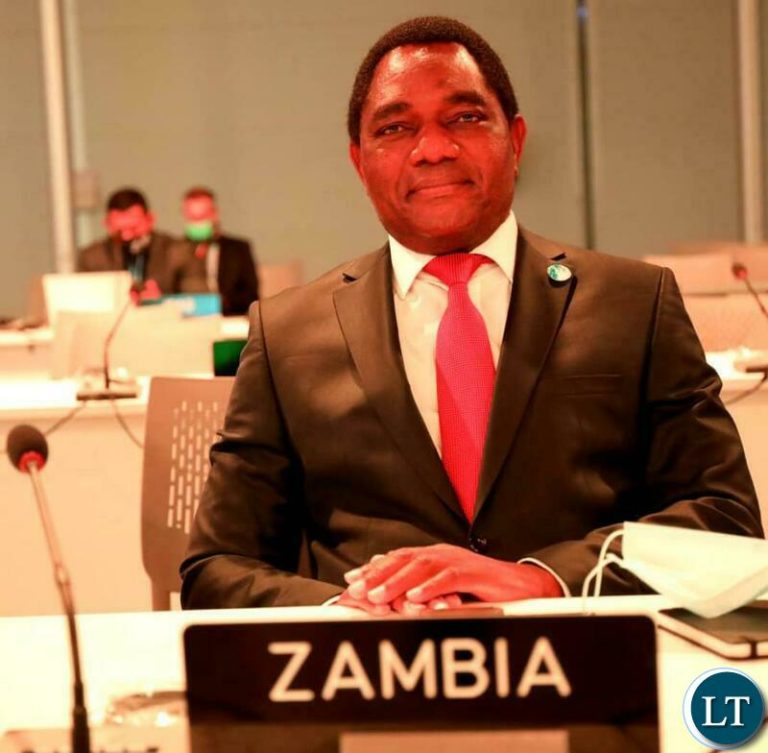
According to a statement issued to the media, President Hakainde Hichilema says the conservation of biodiversity that constitutes natural capital, is critical to ensuring that Zambia achieves its aspirations of a green economy, as well as attainment of socio-economic development for all.

In remarks delivered on his behalf by Minister of Green Economy and Environment, Collins Nzovu during a Commonwealth side-event held under the theme “Commonwealth Call for Living Lands”, at the 26th United Nations Climate Change Conference (COP26) in Glasgow, Scotland yesterday, President Hichilema observed that Zambia is endowed with abundant fauna and flora, hence her resolve to take biodiversity conservation very seriously.

“I wish to share with you my government’s determination to ensure that the green economy, which entails low carbon, resource efficient and socially inclusive approach, drives the economic transformation and recovery that we so desperately need,” he said.

The President added that to achieve Zambia’s aspirations, his administration created a dedicated Ministry of Green Economy and Environment, which galvanises functions on the country’s forests, climate change, meteorology biosafety and environmental protection in general.

He explained that bringing interrelated and critical functions in one single ministry will promote a development path that considers natural capital as a critical economic asset and a source of benefit, especially for poor people whose livelihoods depend on natural resources.

President Hichilema further said the re-alignments of portfolio functions is expected to enhance green investments that spur renewable energy and resource efficiency, prevention of the loss of biodiversity and ecosystem services.

“However, we are constrained to achieve most of these targets in time due to inadequate financial resources, making it difficult for us to make our fair contribution to global efforts, in addressing these multiple challenges,” he told the meeting.

He added that “it is equally important that our actions on biodiversity conservation, land management and fighting climate change result in improved socio-economic impacts on people’s livelihoods and our nations”.

President Hichilema has meanwhile, disclosed that Zambia was currently engaged with the global community in formulating a new post-2020 global biodiversity framework and was expectant it would soon be achieved.

Zambia has domesticated the Aichi Targets on Biodiversity, and has been implementing the National Biodiversity Strategy and Action Plan of 2015 with a view to contribute to the attainment of the Convention on Biological Diversity and foster economic development.

The COP26 summit has brought Heads of State and Government and other parties together to accelerate action towards the attainment of Paris Agreement and the UN Framework Convention on Climate Change (UNFCCC).

Macky 2 collaborates with South African Mega star AKA on ‘Beautiful Life’

Macky 2 collaborates with South African Mega star AKA on the song ‘ Beautiful Life’.

Produced by Dj Baila And Miles Came Along. The music video was directed by Studio Space And Cooper Shots For NGP.

Ghana and Zambia collaborate to consolidate digital economy gains

5

A peer project between Ghana and Zambia has been forged to leverage existing digital financial solutions between the countries.

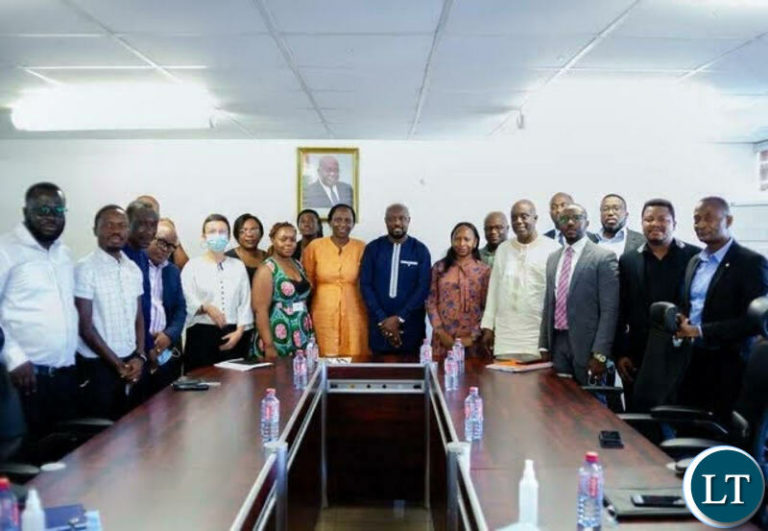
This was enacted after a high-level Zambian delegation visited Ghana to study the country’s successes in digital economy.

Facilitated by the United Nations Capital Development Fund (UNCDF), the Zambian delegation visit was to learn best practices and better understand how Ghana’s digital financial services providers and utility providers have successfully rolled out digitalized payments for utilities that have transformed Ghana’s economic landscape.

Addressing the delegation, Mr Charles Abani, the UN Resident Coordinator in Ghana, said such exchanges help to explore new ideas and impact it to the country, stressing that Africa must rise up and take its rightful place to development.

He said COVID-19 had taught the world about the importance of digitization and the need to maximize its benefits, and commended Ghana for its digitization agenda.

He said the UN had allocated huge sums of money for countries to apply for the fund to help in the recovery plan of the COVID-19 pandemic.

Madam Arianna Gaspari, Financial Inclusion Speciality, UNCDF, said about 7,258 youth have been supported through different business performance and credit scoring tools.

She stated that 430 vulnerable entrepreneurs have accessed loans for a value of almost 400,000 dollars through the innovative crowdlending platforms and mobilized 12,000 dollars on formal digital savings accounts from remote areas since March 2021.

The Zambian delegation was made of representatives of mobile network operators such as Zamtel Mobile Money, MTN and Airtel including banks, government ministries and regulators Bank of Zambia, Zanaco, Ministries of Finance, as well as the Energy and Water Development.

IMF chief Georgieva says ‘very optimistic’ about reaching loan deal with Zambia

19

International Monetary Fund chief Kristalina Georgieva said on Wednesday she was “very optimistic” about reaching a lending arrangement with Zambia, one of just three countries that has sought debt restructuring under a G20 framework.

Georgieva told Reuters on the sidelines of the COP26 UN climate conference that Zambian authorities had done “fantastic” work in terms of debt transparency and engaging with creditors, but more work was needed on financial assurances.

“We are not yet quite there, but they are very determined,” she said. “So I’m very optimistic. (It’s) not quite yet closed, but I’m optimistic that we will have a good arrangement.”

Zambia’s finance ministry on Wednesday said it expected to resume talks with the IMF on Thursday about an agreement mapping out economic reforms and a medium-term macro-fiscal framework that, together with a debt restructuring package, would restore the country’s fiscal and debt sustainability.

Zambia hopes to secure an IMF support agreement by the end of November, but Georgieva declined to give a timetable.

Zambia became Africa’s first COVID-era sovereign default one year ago after years of government over borrowing drove its debt burden above 120% of annual economic output.

An IMF agreement would help advance Zambia’s bid to restructure its broader debt burden under the G20 Common Framework agreed with the Paris Club of official creditors. Chad and Ethiopia are the other countries that have sought such help.

Georgieva said reaching a deal with Zambia would allow the country’s “very determined and progressive leadership” to address its heavy debt burden and other problems. It would also embolden other countries that needed help to step forward and seek debt restructuring under the framework, she said.

Zambia’s 2024 bond gained 0.5 cents in the dollar, rising to just under 80 cents – levels last seen in spring 2019, Tradeweb data showed.

The bonds have risen by 12 cents or more since Hakainde Hichilema secured a landslide win in the August 12 election.

Georgieva said the Zambian process also pointed to the need to reform the Common Framework, to ensure quicker timelines for setting up creditors committees and concluding the process, and finding ways to incentivize countries to seek help.

Georgieva said she and World Bank President David Malpass would continue to push the G20 economies to offer a freeze in debt payments once a country sought help under the framework.

G20 finance ministers failed to add the debt standstill to the framework when they met in Rome last week, but Georgieva’s comments make clear that the issue remains on the table.

The poisoned chalice which brought the downfall of its PF creators

15

By Edward Chisanga

I found comrade Molotoni in his study room with his head in the direction of the ceiling board of his house which, by all human logic was a message that something was in his mind. Often, in his display of normal human characteristics, he would be welcoming me with joviality and head facing me. This state of affairs left me with little room for waiting, so I asked him, “I have no doubt that something is spurious given the way you’re carrying yourself today. I’m here to share the burden.”

“He sharply replied, ‘Toti’, as he liked referring to me, “Sit down and I will soon empty my worries.”

After I had sat down, he went on to roll his sleeves, stretched his moustache and pointed his finger at me saying, “You read my mind well. I’m completely distraught my brother at what is going on in our country, in particular soon after the Presidential elections. I have read all the comments made about the elections. I have heard from different analysts’ reasons why PF lost elections. They talk about cadres, corruption and other evils as reasons. But I don’t hear anyone talking about the special poisoned chalice that was created by PF and later came to haunt them.”

Although I had an idea of what a poisoned chalice meant, my character is to always find details and clarity instead of using assumptions and generalizations. So, I asked him, “Please explain the meaning of what you have just said.”

“He answered swiftly, “According to the English dictionary, a poisoned chalice is something that is attractive when it is given to somebody but which soon becomes unpleasant.”

“So, what was so unpleasant and can you cut the long story short my friend? What exactly do you want me to hear?” I asked.

“Let me try to answer your question by asking you a question. What do you think was PF’s main campaign weapon?”

“I think every Zambian knows that PF campaigned on infrastructure development. PF leaders exhibited ostentatious and shameless information. They danced and bragged about the so-called structural change and development. They told Zambians to see the number of roads, bridges, clinics and schools that PF and Lungu had brought. Lungu was eulogized as if roads, clinics and football stadiums are the only characteristics of infrastructure. Infrastructure is an important part of development. But infrastructure is not development. And development is not infrastructure.”

Filling his glass with whisky, an alcoholic drink he had come to accept as a fad among the Zambian elite, he replied, “Not to interrupt you, my friend. You’re right. Infrastructure is simply an integral part of development. Infrastructure too is not simply roads, bridges, clinics and football stadiums. According to experts, infrastructure development “is the construction and improvement of foundational services with the goal of sparking economic growth and improvements in quality of life.” Further, they state, “Infrastructure development can include transportation, energy, water, digital, social and green infrastructure.”

I then added, “Infrastructure development must be treated in a coherent and integrated manner. It means all the parts that constitute infrastructure development must be taken into account. Coherence in infrastructure development means going beyond roads and bridges. There are much more important infrastructural issues that PF deliberately ignored. PF did not talk about the ailing energy sector whereby homes and business continue to suffer from daily energy shortages which in turn negatively affect the running of factories, retail shops, hospitals, households, and general productivity in the country. In factories and other businesses, economic activities are discontinued because of lack of continues supply of electricity.”

Motoloni who was disappointed with PF’s intellectuals for not seeing the clear writing on the walls, drew closer to where I was sitting and added, “Machines cannot work therefore productivity continues to slow. Continued electricity is important for hospitals to run yet they have been affected by lack of continued flow. Zambia’s mines are continuously affected by lack of continued flow of electricity thereby negatively affecting production and productivity. Building roads and bridges especially for business is important but energy infrastructure is as important.”

In support of Motoloni, I said, “True, export value addition cannot take place when electricity is not available. How can the private sector thrive without energy? While they bragged about roads and bridges, PF lamentably failed to address the water infrastructure which translated into continued water shortages for businesses and households. Water infrastructure was neglected by PF for many years. People live in houses without water. Most public offices and homes have no running water. So, how can this deplorable state of affairs be considered PF’s structural transformation?”

“Indeed public toilets have no water. Most schools and hospitals, including the clinics that are being built today by PF have no adequate water supply. People were voting in stations without running water. Many ministries have no running water. So, how can any reasonable Government brag that it is building unprecedented infrastructure without corresponding quality water infrastructure? Roads and bridges are often used by passenger cars most of which do not belong to the common people. While posh cars often belonging to the privileged ransack Lusaka roads daily, common people expected to provide more votes walk in dirty sides of the posh roads collecting dust on their worn-out shoes and sandals and bare feet. Poor people’s lives are often threatened by bad drivers using these roads. Yet, when time to vote comes, they are told to remember the PF. The so-called road-building seems to be mainly in Lusaka. Important towns like Kitwe, Ndola, Livingstone and many rural towns have the same roads left by the Kaunda regime. Roads from Lusaka to Kitwe, to Kasama, to Mongu, to Solwezi and many other places are neglected.”

“I totally agree with you. Like the ostrich hiding its head in the sand, PF forgot to address perhaps the most important problem. Instead of addressing it or even talking about it, they preferred to hide it from the people as if it didn’t exist. Yet, it is at the heart of politics in Africa. Can you explain what that is?”

“Of course, I will. You see, man cannot eat infrastructure alone. While infrastructure development was being used as a chalice with pure wine to drink from, PF ended up turning it into a poisoned chalice from which its leaders drank and found themselves consigned into oblivion. PF took over Government in 2011. Ever since, annual average GDP growth has been slumping. In 2010, prior to its rule, GDP growth had reached unprecedented level, perhaps its highest of 10.3% as Figure 1 below shows. Growth continued to tumble – down to minus 2.8% in 2020. Nowhere in the image below does it show significant growth during PF’s rule. But perhaps more importantly, growth of GDP per capita over the period has equally gone down miserably. It fell from a peak record of about 7.1% to minus 5.6%.”
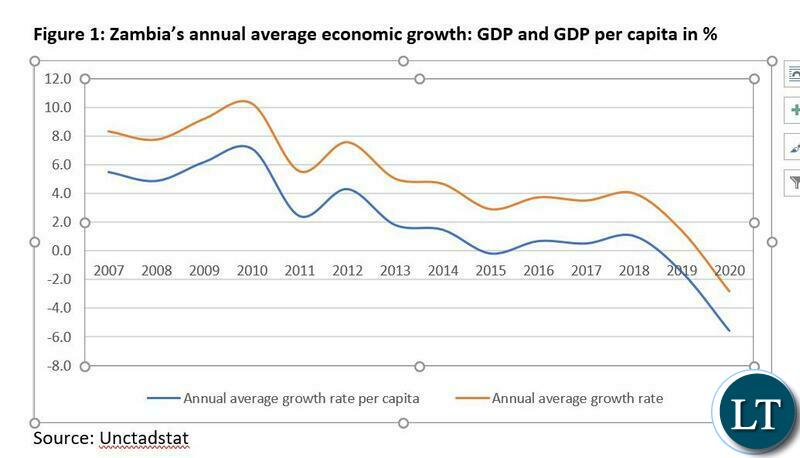
“You see Motoloni, unlike GDP, GDP per capita is what explains the relationship between common Zambians and their economy. It it here where one can tell whether the economy is able to ensure that each Zambian has three meals a day or not. The economy was performing so bad that while PF leaders and their cadres were celebrating infrastructure development and telling common Zambians to vote for them, the stomachs of the latter were slowly complaining. The majority of Zambians were shouting their support for PF on an empty stomach while a few enjoyed.”

Motoloni who was now filled with grief retorted, “Thanks for this statistical information. GDP per capita shows Zambia’s economic output per each Zambian. It is what affects Zambia’s households. When GDP per capita is growing, it provides hope for Zambians and they are likely to applaud leadership for building roads and bridges. Growth is assurance that the promised land is getting nearer. On the other hand, negative growth on an annual basis is an indication of despondence and despair. Hence, the PF period was characterized by such hopelessness.”

Then I asked, “Why do you think the PF leadership was so pre-occupied with infrastructure development at the expense of the overall economy? Why was the downturn of the economy never mentioned in their campaign? Did Zambians really complain about the ailing economy?”

“Zambians complained in different ways although no one really brought these statistics to the public. By marginalizing the economy, PF failed Zambians. Yet, if their campaign had been driven by overall economic growth, explaining how they would turn things round and show examples, perhaps Zambians would have understood and rallied behind them. The strategy to mend the economy and provide people with three meals a day would have saved the PF. In Africa, that is the building block of any political success. The Maslow Hierarchy of Needs teaches us that basic needs must be met first before going to more sophisticated ones.”

“I’m in agreement with you. Reasonable governments start by feeding their poor people before moving into infrastructure-building. It is also common strategy that common people are less associated with sophisticated things like infrastructure in roads and bridges because they hardly use them. They build a symbiotic relationship with leaders that provide them the capacity to feed themselves more than those that preach infrastructure and give them handouts. Yes, infrastructure for growing and providing food is important. It is much more important than infrastructure in roads and bridges.”

“You will agree with me that because people are the drivers of change, true development must start with people’s stomachs of three quality meals a day. It is an illusion to preach development based simply on infrastructure-building when the very people you expect to vote for you are hungry. Every Zambian has the right to food, to a decent meal and the right to put hunger behind them. Achieving a hunger-free Zambia should be the most important objective of any government because doing so has a multiplier effect.”

“Of course, I too agree with you. Then what would be the lessons for UPND and its leadership?” Motoloni asked. “A hungry-free Zambian is unlikely to cause problems. A hungry-free Zambian is likely to be motivated to vote, work hard and look after themselves and their families. A hungry-free Zambian is likely to contribute to national development. Removing hunger should not mean giving hand-outs. It should mean building capacity for people to remove hunger themselves. On their own, they don’t have resources.”

“You’re absolutely right comrade. Therefore, government must empower them to grow their own food to feed themselves and sell surplus. What President Hichilema is saying in his speeches is encouraging. He says that infrastructure development is important. But this must be based on overall economic development. Leadership should invest in a growing economy first. A growing economy will have a multiplier effect of generating three meals a day for each Zambian. Armed with three meals a day, Zambians will have little reason not to vote for UPND again. But if UPND prefers to drink from the poisoned chalice of infrastructure first, then growing the economy second, its leadership is likely to suffer the same chagrin as their PF counterparts.”
We concluded by taking our last sip and hoped UPND would work better and avoid botching up.

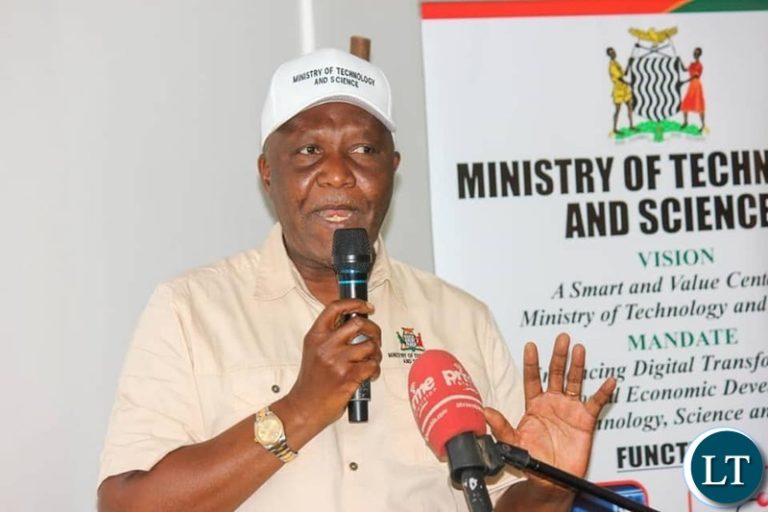
The Second National Innovation fair set for today at Mulungushi International Conference Centre in Lusaka.

4

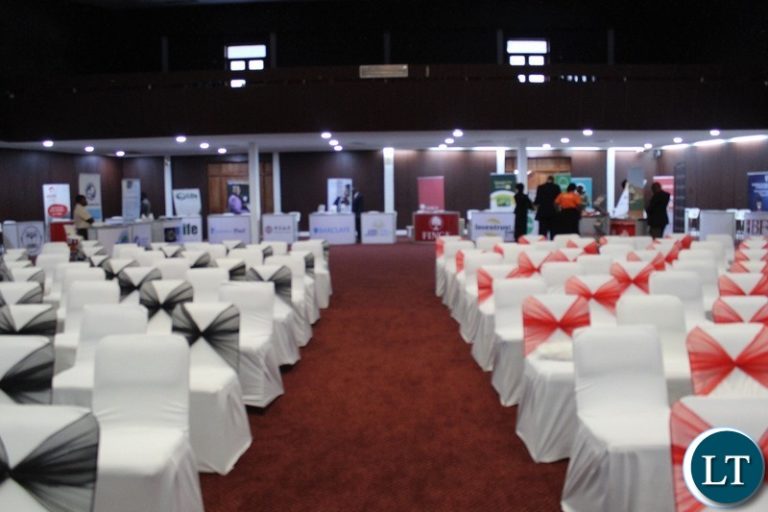
All is set for the second annual National Innovation Initiative (NII) Fair to be held at Mulungushi International Conference Centre in Lusaka.

United Nations Development Programme (UNDP) Communications Specialist, Mercy Khozi, says the two day NII is a joint initiative to map out home grown innovations across Zambian communities.

ZANIS reports that Ms Khozi in a statement says that the fair stating tomorrow is aimed at supporting the most promising initiatives with the highest potential for socioeconomic impact.

“The Ministry of Technology and Science, in partnership with the United Nations Development Programme (UNDP), National Technology Business Centre (NTBC) and the United Nations Population Fund (UNFPA); and in collaboration with the Zambia Information and Communication Technology (ZICTA) and Patents and Companies Registration Agency (PACRA) are hosting the event,” she said.

The Fair targets local innovations, technology-based start-ups and creative innovations that are solving societal challenges including COVID-19 pandemic.

45 innovators shortlisted from the ten provinces of the country have been identified out of a total 3,200 submissions.

Ms Khozi added that the shortlisted innovators were selected through a thorough and elaborate process involving a series of scouting, interrogating and evaluating the innovations by different teams of evaluators.

“ The shortlisted will, during the two-day Fair, be subjected to a competitive process of pitching their innovations before a panel of independent Judges, “ she said.

She further said the participants will also get a chance to show-case their innovations before possible off takers.

The Communication Analyst added that the Judges will be tasked to select Twenty of the most promising and impact driven projects which will be selected to undergo a business acceleration programme designed by the UNDP Accelerator Lab with its partners.

Ms Khozi further disclosed that the top 20 will also stand a chance to be among the 10 winners to receive a cash award of Zambia Kwacha 100,000 to support the scale-up of their innovations.

The Fair will host innovators from the Inaugural National Innovations Initiative and the Waste Management Innovations Call of 2020.

“This team of ingenious youths have been nominated to work with three research institutions as part of the Accelerator Lab’s experimentation programme working to test and iterate innovations with the end result of growing them into socially or commercially viable products for the socioeconomic development of the country,” she said.

She said the innovators were identified for their solutions to climate change and energy challenges.

UNDP partners with people at all levels of society to help build nations that can withstand crises, and drive and sustain the kind of growth that improves the quality of life for everyone.

Zambia Police to Re-Open Old Cases, including Kambwili’s Tribal Remarks Case

75

Inspector of Police Lemmy Kajoba has said that Zambia Police will use all legal means at its disposal to bring to book persons that have committed crimes. This follows the investigations into electoral offenses that happened, dating back to 2015.

Speaking during a press briefing yesterday, Mr Kajoba said Zambia Police is investigating cases that are of Public interest going back to 2015. and that Police is determined to revisit all cases reported to the Police in the recent past but not logically concluded.

The Police IG said the cases involve the murder of Lawrence Banda in Kaoma, the alleged case involving Obed Kasongo, and the shooting at the supreme Court in the 2016 Presidential Petition.

Mr. Kajoba said the other cases involve the arson involving a Mahindra motor vehicle in Kawambwa, Shooting incident of Mushaukwa Mushauka in Mulobezi, and the tribal remarks involving Chishimba Kambwili.

Meanwhile, Mr. Kajoba has directed all provincial commanders to enhance foot and motorized patrols in their areas of jurisdictions to curb criminal activities that have been on the rise.

Meanwhile, former State House Press Aide, Amos Chanda has pleaded not guilty to using insulting language and obstruction. This is when Mr Chanda, who is charged with his wife, Mable, as well as sister in-law, Ruth Nakaundi, appeared in the Lusaka Magistrate Court yesterday.

Mr Chanda’s co-accused have also pleaded not guilty, and immediately after, the trio took plea, the matter proceeded to trial. Anti-Corruption Commission -ACC- Prosecutor, Martin Mayembe told the court that the state was ready to start trial with two witnesses.

And an officer from the ACC narrated how Mr Chanda, his wife and his sister in-law, allegedly hailed different insults on officers from the commission. The ACC officer further said he and his team were obstructed from searching properties belonging to Mr. Chanda in Chongwe area.

Another ACC officer told the court that the team from the ACC had a search warrant, which has since been submitted to the court, which later ruled that it was legal.

Center for Mass Media Inspiration and Social Change concerned with the approach COVID-19 vaccination campaigns

0

Center for Mass Media Inspiration and Social Change (CEMMISOC) says it is concerned with the approach COVID-19 vaccination campaigns are being conducted in the country. CEMMISCOC Centre Director Steve Sichone, says his center has noticed the lack of adequate community engagement activities which need to be implemented.

Mr Sichone says in a statement obtained by ZANIS that as of November 1st, 2021, official statistics shows that only 911,685 vaccines have been administered showing that as a country have not even reached a million.

“As a center we have noted that the usual approach of having people going to the health facility may not yield much in terms of increasing numbers of people getting vaccinated evidence suggests that taking the services to the communities through outreach programmes and other social and behavioral change interventions would yield better results and provide positive health outcomes,” he said.

He has therefore called for more effective community engagement activities to help change the many myths and misconceptions around COVID-19 at community level.

Mr Sichone further commended Government for its continued effort to fight the COVID-19 pandemic which has brought about social economic challenges at household, community and national level.

He encouraged Zambians to access the vaccines and prevent further spread of the virus the acquisition of Vaccines is commendable and as a center we wish to.

He implored government and co-operating partners to intensify the use of the community groups and members to help in generating demand for COVID-19 vaccinations.

The Director disclosed that CEMMISCO stands ready to partner with government and other like-minded stakeholders to engage communities and help generate demand and utilization of the vaccines at the community level.

CEMMISOC is pioneered with the aim of promoting African pride, peer success inspiration and positive social change from a public health perspective.

Lusaka Health Office heightens surveillance in rampant diarrhea cases

1

Lusaka Province Head of Health Promotion, Environment and Social Determinants Specialist Chola Chongo says surveillance has been heightened to determine the cause of the rampant diarrhea cases in Lusaka.

This comes after a rise in the number of diarrhea cases recorded in health facilities in Lusaka, which is mostly affecting children.

Mr Chongo told the media in an interview yesterday, that a rise in the number of diarrhea cases have been recorded in Kamanga, Chawama, Mtendere, Kanyama, Matero, Bauleni and Kaunda Square townships, among other areas.

He said the Lusaka Provincial Health Office has collected samples to examine the cause of the outbreak, and the results indicated fecal contamination.

‘’Basically what we have done is we have heightened our surveillance by collecting stool samples and blood samples to examine what exactly is causing this outbreak in most areas in Lusaka,’’ explained Mr Chongo.

He however, called on members of the public to ensure that they treat their drinking water before use, to avoid further spread of the disease.

“We are encouraging our communities to drink safe water by ensuring that they boil their water, cover, and treat with chlorine,’’ he said.

Mr Chongo added that if at all a major outbreak occurs the provincial health office will be able to quickly put in measures to prevent more infections.

‘’We are actively following up the cases, if at all there is a major outbreak we will be able to quickly put in measures to prevent any further outbreak,’’ he said

Postponed 6th National census of Population and Housing creates room for consultation – Dr Musokotwane

4

Minister of Finance and National Planning Situmbeko Musokotwane says the postponement of the national Census to 2022 has created room for elevated consultations with stakeholders.

Dr Musokotwane says the move will facilitate adequate administrative arrangements to ensure success of the exercise adding that will issue a new Statutory Order to announce the revised dates for the national Census in due course.

He says government desires a Census that will meet not only the country’s requirements but also one which is conducted according to international standards.

In a statement signed by Secretary to the Treasury under the Ministry of Finance and National Planning, Felix Nkulukusa, the minister disclosed that his Ministry has received enquiries on the status of the planned National Census.

He further added that Zambia’s Sixth National Census was planned to take place in August 2020 but later postponed to 2021 due to funding challenges.

“There were also delays in two critical pre-Census processes, namely; Mapping and Listing; and, the Pilot Census. Mapping and Listing involves a Census of all physical structures in the country, including housing & non-housing buildings,” he said.

Mapping was subsequently conducted and completed in September 2020, while the Pilot Census, which is a dress rehearsal to the main Census, was eventually conducted in December 2020.

The main Census was scheduled to commence on Monday, 1st November 2021 and end on Sunday, 28th November 2021.

Dr Musokotwane explained that the pre-Census process helps to ensure that every person living in Zambia is counted during the main Census.

“Regrettably, critical preparatory activities such as procurement of Census materials and equipment, country-wide publicity, and recruitment and training of Census staff, are yet to be undertaken,” he said.

He disclosed that his ministry is scheduled to engage the Ministry of General Education, who are a critical stakeholder in availing infrastructure for training of Census personnel.

Zambia has consistently conducted Censuses since independence in 1964 with the last Census being in October 2010.

It was the fifth national Census of population. Previous Censuses were conducted in 1969, 1980, 1990 and 2000.

Zanaco FC Battle Buildcon At Sunset

0

Continental representatives Red Arrows and Zanaco are in mid-week league action this Thursday.

Both CAF Confederation Cup envoys are both home in Lusaka in rescheduled 2020/2021 FAZ Super League Week 8 fixtures.

Number 13 side and last season’s league runners-up Zanaco host Buildcon at Sunset Stadium.

Zanaco face a tough test against fourth placed Buildcon who have defied the odds despite their financial problems and are enjoying their top five statuses whose highlight saw the Ndola club lead the table in the opening three games of the campaign.

In addition, Buildcon have lost just one game this season and head into the match after holding Arrows 0-0 on October 30 at home in Ndola  that they played without four players who are on loan from The Airmen.

The match will also see Zanaco coach Kelvin Kaindu face his former assistant Boyd Mulwanda who is now Buildcon boss.

Kanidu took Mulwanda with him to Buildcon during his brief stint in 2020 and left the former there.

Zanaco are unbeaten in their last five games in which they have two wins and three draws.
But Zanaco are still battling to swim away from 13th place where they currently sit on 9 points from seven matches played.

Kaindu knows Zanaco must also show more tactical discipline after serving up a 3-3 away draw at Power Dynamos last Sunday that didn’t help their cause.

Meanwhile, 2020/2021 third place finishers Arrows are also battling to swim away from relegation zone where they are perched at the top part of the bottom four drop zone.

Arrows host 11th placed Forest Rangers who are seeking their first league win since September 25 when they beat  Power Dynamos 2-1 away in Kitwe.

Chambishi FC Fire Coach Chikwanda

0

Struggling FAZ Super Division side Chambishi have fired coach Elijah Chikwanda with immediate effect.

Club spokesperson Chali Katongo said Chambishi have mutually seperated with Chikwanda.

Newly Promoted side Chambishi are second from the bottom of the table sitting on seven points after playing nine matches.

“The Executive Committee of Chambishi Football Club has mutually agreed to part ways with Mr. Elijah Chikwanda,” Katongo said in a statement on Wednesday.

Chikwanda led Chambishi to top flight league promotion at the end the of the 2020/21 National Division 1 season.

Meanwhile, Chambishi have appointed Simonda Kaunda as new club coach.

“The Exco has appointed Mr. Kaunda Simonda as the new head coach. Mr. Simonda has brought with him Mr. Israel Mwanza as his assistant,” Katongo added.

Simonda, the former Roan United coach, last worked at Nkana as assistant coach and left at the end of last season after the non-renewal of his contract.

Chambishi’s next match is against Forest Rangers at home.

Local NGO urges guardians to seize the free education policy

0

A non-governmental Organization in Mwinilunga district of Northwestern Province has challenged parents and girl children to take advantage of free education that has been pronounced by government in the 2022 national budget.

Safrina Foundation observed that the abolishment of school, parents and Teachers Association (PTA) and examination fees as pronounced by the minister of Finance during the presentation of the 2022 national budget gives a golden opportunity for the less privileged in society to attain an education.

Safrina Foundation Executive Director Credy Aloyo told ZANIS that the financial burden on parents in rural areas hinders most girls from getting basic education.

“This is a chance which most parents should utilize to have all their children attain basic education,” she said.

Ms Aloyo said education is not just a human right but an important social equalizer hence the need to have it accessible to all especially the girl child.

She said with the free education policy, her organization expects less excuses from parents for not taking their girl children to school.

“We honestly expect less complaints and excuses from parents as to why they will not send their children to school,” she said.

She further called on other stakeholders to help government address other challenges that are faced by the girls in school such as menstrual hygiene, in order to achieve a holistic approach in resolving girl children education.