Tuesday, June 9, 2026
19.6 C
Lusaka
Home Blog Page 92

Women footballers warned against same sex relationships

9

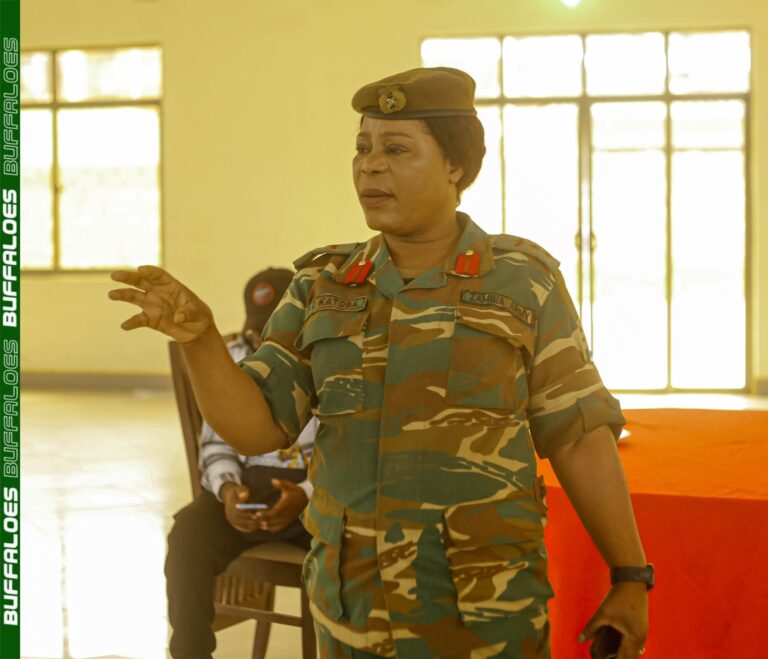
Football administrator Col. Priscilla Katoba has cautioned female footballers against same sex relationships.

Same sex relationships among women footballers in Zambia have become rife at club and national team levels.

People close to women footballers say same sex relationships are at times negatively affecting the performance of players, clubs and national teams.

There are some named senior women footballers accused of initiating youngsters into same sex relationships.

Addressing Green Buffaloes players and coaches in Lusaka, Col. Katoba, the FAZ Women’s Representative, said same sex relationships were illegal in Zambia.

“If you are found practicing same-sex relationships, you are gone. You will be jailed,” she said.

“There are consequences. Zambia, being a Christian Nation, such is not allowed in our Zambian laws, it is a warning that don’t find yourself in such. It is also a sin, even the Bible doesn’t allow such,” Col. Katoba said.

Besides same sex relationships, Col. Katoba engaged players on education, dress code, sexual harassment and discipline.

“There are those of you who could have left school at a particular level not completing the Form Five [grade 12], I have come today to encourage you to say if you are in this category, you have not completed your school, I would imagine that all of you can attain the level of Form Five. It will be good for you, your family, the club, FAZ and the country at large,” she said.

Col. Katoba continued: “I am going round speaking to everyone on dress code which hinges on discipline. Girls, if there are jean trousers, there are jean trousers for men and there are jean trousers for women, there are shorts for men and there are shorts for women. Haircuts, there haircuts we can say are specifically for men. Have decent haircuts which at least brings out your feminine appearance.”

According to Green Buffaloes Women’s Media Team, Col. Katoba concluded the meeting by encouraging the players to work extremely hard and remain disciplined on and off the pitch.

Government, opposition present conflicting economic views

Contrasting narratives over Zambia’s economic performance have sharpened ahead of the August 2026 general elections, with government and opposition figures presenting competing interpretations of current conditions and what they mean for households.

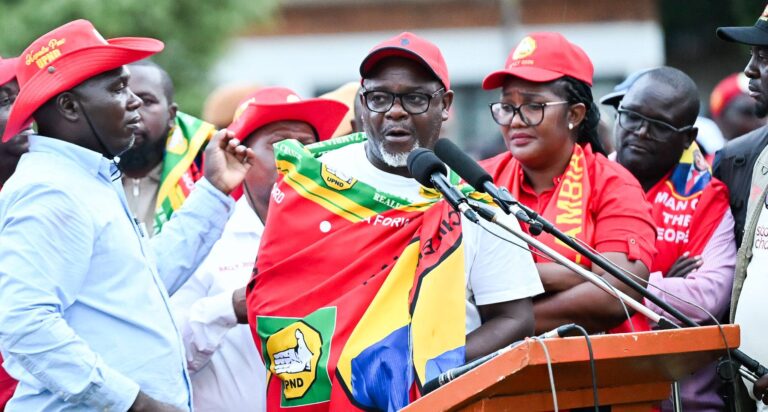
Opposition messaging has centred on the cost of living, with criticism focused on rising prices of essential goods and the pressure placed on consumers. National Democratic Congress president Saboi Imboela said the economic situation has worsened, arguing that the cost of basic commodities has increased beyond the reach of many households. She pointed to challenges in affordability, delayed economic relief, and persistent pressure on daily expenses.

The opposition perspective frames the economy through lived experience, focusing on how price changes are felt in households rather than how they are measured statistically. This approach places emphasis on everyday consumption, where food prices, transport costs, and essential goods remain central to financial pressure.

Government messaging, however, has focused on indicators showing stabilisation. Data released by the Zambia Statistics Agency shows inflation has slowed to 7.1 percent, down from 7.5 percent recorded in February. The figure remains within the six to eight percent target band, indicating that the pace at which prices are rising has moderated.

Food inflation has also eased to 7.8 percent from 8.2 percent, reflecting changes in the prices of staple commodities such as mealie meal, maize grain, rice, vegetables, and cooking oil. Non-food inflation declined to 5.9 percent from 6.5 percent, influenced by price movements in construction materials, fuel, and motor vehicles.

The government position emphasises that these indicators point to improving price stability. Slower inflation reduces the rate at which costs increase, providing a more predictable environment for households and businesses. It also supports economic planning and policy stability.

At the same time, growth figures present a more complex picture. Zambia’s economy grew by 1.6 percent in the fourth quarter of 2025, a sharp drop from 8.3 percent recorded in the same period in 2024. The decline of 6.7 percentage points reflects a slowdown in economic momentum, even as growth remains positive.

Annual GDP growth for 2025 stands at 3.8 percent, based on preliminary estimates. The figure reflects continued expansion across sectors including agriculture, construction, manufacturing, and transportation, which contributed to overall output during the year.

Trade performance has also shifted. Cumulative total trade declined by 5.6 percent, falling from K105.2 billion in February 2025 to K99.3 billion in February 2026. The reduction points to changes in both imports and exports, with implications for economic activity and external balance.

The contrast between slowing inflation and moderating growth highlights a key dynamic in the current economic environment. While price pressures are easing, the pace of expansion is not accelerating at the same rate. This creates a situation where stability in indicators does not immediately translate into relief for households.

Inflation, even when slowing, still represents rising prices. Goods and services continue to cost more than they did a year ago, even if the rate of increase has declined. This distinction remains central to how the economy is understood across different audiences.

The divergence in narratives reflects this difference. Government focuses on stabilisation and measurable indicators, while opposition voices emphasise lived experience and affordability challenges. Both perspectives draw from the same economic environment but highlight different aspects of it.

As the election approaches, economic performance is expected to remain a central issue in political engagement. Cost of living, price stability, and growth trends are likely to shape how voters assess current conditions and future direction.

The interaction between statistical data and public perception will continue to influence how the economy is framed. While indicators provide structured measurement, the interpretation of those indicators varies depending on context and perspective.

ACC summons Mundubile

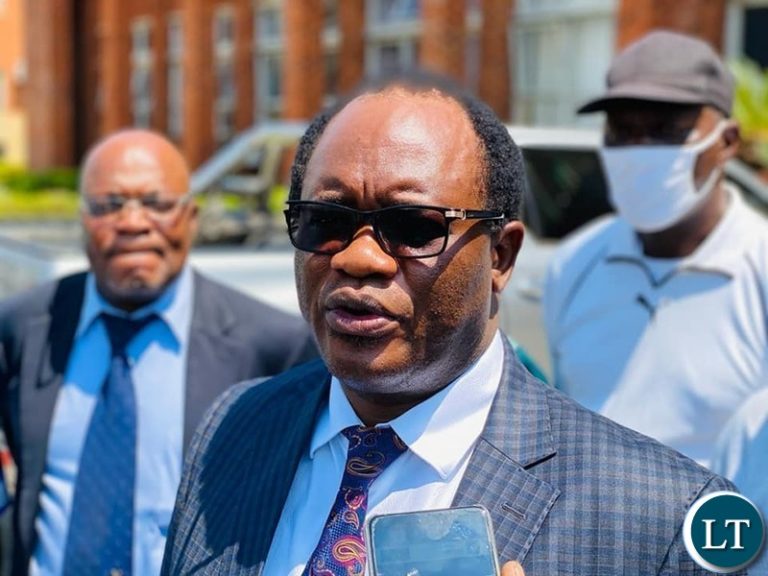
The Anti-Corruption Commission (ACC) has summoned Brian Mundubile as part of an ongoing inquiry, placing the political figure within the scope of current enforcement activity examining issues of compliance and accountability.

The summons represents a procedural step used by the ACC to obtain information, seek clarification, and assess matters under review. At this stage, no specific details of the inquiry have been outlined, and no charges have been indicated. The process remains at a fact-finding level, where authorities gather information before determining whether further action is necessary.

A summons in this context does not imply wrongdoing. It forms part of standard investigative procedures by the ACC, allowing individuals to respond to questions, provide documentation, and clarify issues that may arise during an inquiry. The distinction between investigation and conclusion remains central, with outcomes dependent on verified findings rather than initial actions.

The Anti-Corruption Commission operates within a mandate that includes investigating suspected cases of corruption, promoting integrity within public institutions, and ensuring adherence to legal frameworks governing conduct. Summons issued by the Commission enable investigators to build a factual basis for any decisions that may follow.

The inclusion of a political figure in such processes highlights the reach of accountability mechanisms across different areas of governance. Investigations can extend beyond administrative structures to include individuals where questions arise, reflecting the role of oversight institutions in maintaining standards across public life.

The current development comes within a broader environment where enforcement agencies have intensified scrutiny on financial transactions and institutional processes. Separate investigations have examined public fund management, including transactions involving significant financial amounts and questions around procedural compliance.

These parallel developments point to a pattern of oversight that spans both institutional systems and individual conduct. While each case is assessed independently, the broader framework reflects a continued focus on ensuring that established procedures are followed.

In the absence of detailed information regarding the specific matter under review, the current stage of the process remains limited to the confirmed action of a summons. Further steps, if any, will depend on the outcome of the inquiry and the findings derived from the information gathered.

The process also underscores the importance of procedural safeguards. Investigations are structured to ensure that conclusions are based on evidence, with mechanisms in place to protect the integrity of the process and the rights of individuals involved. This includes adherence to legal standards governing investigations and the handling of information.

Public communication around such developments typically focuses on confirmed actions rather than speculative conclusions. Reporting at this stage is limited to the existence of the inquiry and the procedural steps taken, without extending to assumptions about outcomes.

The summons therefore marks the beginning or continuation of an investigative pathway, rather than its conclusion. The focus remains on establishing facts, assessing compliance, and determining whether any further action is warranted under the law.

As the inquiry proceeds, attention will remain on official updates and confirmed developments. Any subsequent action will be guided by the findings of the investigative process and the legal provisions governing the Commission’s mandate.


Government clarifies Bill 7 comments amid political claims

Government and political actors have presented sharply contrasting positions over Constitutional Amendment Bill Number 7, placing the issue at the centre of political messaging ahead of Zambia’s August 2026 general elections.

Chief Government Spokesperson Cornelius Mweetwa said interpretations of President Hakainde Hichilema’s remarks on the Bill were inaccurate, explaining that the President was reflecting on past political experiences rather than predicting future election outcomes. He described the interpretation of the remarks as misleading and urged that public communication around constitutional matters remain grounded in factual context.

Mweetwa stated that the President’s reference to constitutional amendments was tied to historical patterns in which sitting governments had introduced legal changes and later lost elections. He said the remarks were not intended to suggest any predetermined outcome for the upcoming polls but were instead contextual observations based on previous political developments.

The clarification comes at a time when Bill 7 has become a central point of political engagement, with competing narratives shaping how the proposal is understood. The Bill, which relates to constitutional reforms, carries implications for governance structures, electoral processes, and representation, making it a focal issue in the broader political landscape.

Parallel commentary has raised questions about political strategy within party structures, including claims around alternative approaches to conventions and internal processes. These assertions have added another layer to the discussion, linking constitutional reform to broader political positioning ahead of elections.

The divergence in narratives reflects how legislative proposals can take on political dimensions, particularly in an election period. While government communication has focused on clarifying intent and reinforcing the procedural basis of the Bill, responses from other actors show that interpretation remains contested.

Statements and counter-statements have shaped the public conversation, with each side framing the issue within its own perspective. This dynamic highlights the role of communication in influencing how policy proposals are perceived, especially when they intersect with electoral timelines.

Bill 7’s prominence in the current environment is tied to its position within the constitutional framework. Amendments to foundational laws often attract heightened attention, as they directly affect how governance systems operate. The timing of such proposals, particularly ahead of elections, adds to their political significance.

The situation underscores the need for clarity in public messaging. In politically sensitive contexts, statements can be interpreted in multiple ways, making precise communication critical in ensuring that the substance of policy proposals is accurately conveyed.

At the same time, the reactions surrounding Bill 7 demonstrate how constitutional issues can become part of broader political narratives. The overlap between legal reform and political positioning is evident in how the issue is being discussed across different platforms.

As the election period approaches, Bill 7 is expected to remain a central reference point in political engagement. The way it is communicated, interpreted, and debated will continue to influence public understanding and shape the wider political environment.

Mayors, councillors switch sides as elections approach

A wave of political defections involving mayors and councillors has shifted local government dynamics ahead of Zambia’s August 2026 general elections, with multiple leaders moving to the United Party for National Development.

Five mayors and about 20 councillors have crossed over to the ruling party, reflecting a widening realignment within local structures as the electoral cycle approaches. Among those who defected are Kitwe Mayor Mpasa Mwaya and Chipata Mayor George Mwanza, alongside councillors from Milenge, Chembe, Lundazi and other districts.

The movement of local government leaders into the ruling party marks a significant development in the political landscape, where influence at council level often shapes grassroots mobilisation and voter engagement. Councillors and mayors serve as key connectors between national policy and local communities, making their alignment politically consequential in the run-up to elections.

President Hakainde Hichilema, addressing the development, directed existing party members to welcome the new entrants, stating that unity within the party remains essential as the country prepares for the polls. He described the party as a platform for inclusive governance and development, emphasising the need for cohesion in strengthening its national presence.

The defections come at a time when political positioning is intensifying across parties, with alliances, endorsements, and internal structures increasingly shaping campaign strategies. Movement of elected officials, particularly at local authority level, often signals shifting confidence and strategic recalibration among political actors.

In parallel reporting, similar developments have been observed involving additional political figures, including a Member of Parliament and mayors from key urban centres. These movements collectively point to an ongoing reconfiguration of political alignments, extending beyond isolated cases to a broader pattern of transition.

The implications extend beyond party membership numbers. Control and influence within local authorities can affect campaign logistics, messaging reach, and the visibility of political programmes at community level. Councils play a central role in implementing development initiatives, including projects funded under the Constituency Development Fund, placing local leaders at the forefront of service delivery narratives.

The consolidation of support within the ruling party also intersects with electoral strategy. By absorbing leaders from different regions, the party strengthens its presence in constituencies where local structures influence voter turnout and mobilisation efforts.

At the same time, defections introduce questions around party stability and internal cohesion within opposition structures. Movement of elected officials may reflect strategic repositioning or dissatisfaction within existing party frameworks, though individual motivations often vary.

Political realignments of this nature are not uncommon in the period leading to elections, where shifting alliances reflect both strategic calculations and evolving political dynamics. The scale and distribution of the current defections, however, indicate a more pronounced restructuring at local government level.

The developments also highlight the central role of local leadership in shaping electoral outcomes. While national campaigns often dominate public attention, councillors and mayors remain key actors in influencing voter perceptions through direct engagement with communities.

As the election date approaches, further shifts cannot be ruled out, with political actors continuing to assess positioning, alliances, and strategic advantage. The current wave of defections provides an early signal of how political ground may be shifting ahead of the polls.

Zambia inflation slows to 7.1% as growth weakens

Zambia’s annual inflation rate slowed to 7.1 percent in March 2026 from 7.5 percent recorded in February, signalling a continued easing in price pressures across the economy.

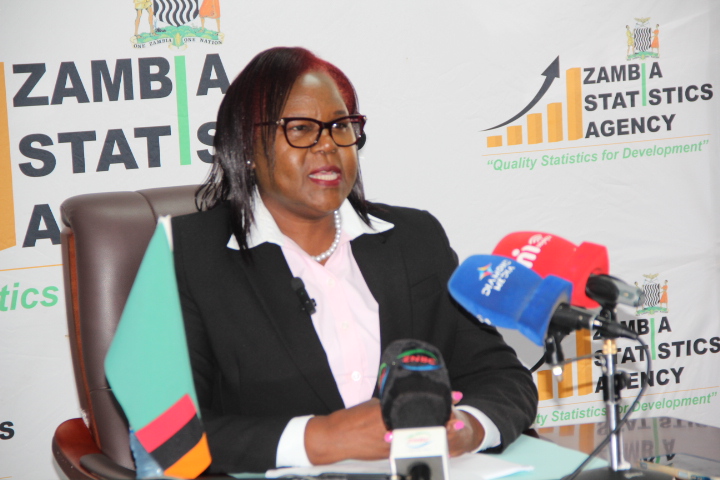
Statistician General Sheila Mudenda announced the figures during the dissemination of the March Statistics Bulletin, stating that the latest rate reflects the average increase in the cost of goods and services between March 2025 and March 2026. The moderation places inflation within the six to eight percent target band, reinforcing a period of relative price stability after sustained pressure in previous months.

The slowdown was driven by movements in both food and non-food components, which together shape the country’s inflation trajectory. Annual food inflation dropped to 7.8 percent from 8.2 percent, reflecting reduced price increases across a wide range of staple and household items.

Mudenda said the easing in food prices was linked to movements in cereals, including breakfast mealie meal, roller mealie meal, maize grain, imported rice, and wheat flour. Price changes were also recorded in fruit such as lemons, apples, watermelon, and avocadoes, alongside vegetables including lumanda, cassava leaves, tomatoes, cucumber, sweet potatoes, green pepper, and maize cobs. Cooking oil also contributed to the overall trend.

These shifts point to broader supply-side dynamics within the food sector, where fluctuations in production, distribution, and seasonal availability continue to influence household expenditure patterns. The moderation in food inflation is particularly significant given its direct impact on the cost of living.

Non-food inflation also declined, falling to 5.9 percent from 6.5 percent recorded in February. Mudenda attributed this movement to price changes in materials used for home maintenance and repair, including cement, building sand, paint, floor tiles, and glass. Adjustments in fuel prices, such as diesel, petrol, and paraffin, as well as the cost of motor vehicles, further contributed to the slowdown.

The combined effect of easing food and non-food prices has reinforced the overall disinflation trend, offering some relief in the rate at which prices are rising. However, inflation remains positive, meaning costs are still increasing, though at a slower pace.

Beyond inflation, the statistical release also pointed to shifts in economic growth patterns. Zambia’s economy grew by 1.6 percent in the fourth quarter of 2025, down from 8.3 percent recorded during the same period in 2024. This represents a decline of 6.7 percentage points, highlighting a slowdown in economic momentum.

Mudenda said the growth recorded in the fourth quarter of 2025 was supported by performance in agriculture, forestry and fishing, and construction, which contributed 1.7 percent. Manufacturing added 1.2 percent, while transportation and storage contributed 0.9 percent to overall growth.

The figures suggest that while the economy remains on a growth path, the pace of expansion has moderated compared to the previous year. Sectoral contributions continue to play a central role in sustaining output, particularly in agriculture and construction, which remain key drivers.

Preliminary annual GDP estimates further show that Zambia’s economy grew by 3.8 percent in 2025 at constant 2010 prices. The annual figure represents the combined performance of all four quarters and provides a broader picture of economic activity over the year.

Trade performance also reflected changes in economic conditions. Cumulative total trade decreased by 5.6 percent, falling from K105.2 billion in February 2025 to K99.3 billion in February 2026. The decline signals adjustments in both import and export activity, with implications for currency flows and external balance.

Mudenda said the findings provide a clear picture of the economy’s direction and are critical for planning and decision-making across sectors. The data offers insight into price movements, production trends, and trade performance, all of which shape policy and investment choices.

The March statistics therefore present a mixed picture. Inflation has moderated and remains within target, pointing to improved price stability. At the same time, growth indicators show a slowdown in economic expansion, highlighting underlying pressures that continue to affect output.

North Police records 117 sexual offences

1

Police in Northern Province say they recorded a total of 117 sexual offence cases between March 2025 and March 2026.

Northern Province Deputy Commanding Officer, Charles Mbita, has disclosed in an interview with the media in Kasama that the cases include both defilement and rape.

Dr Mbita said the command in the province is saddened by the persistence of such offences, despite existing laws carrying severe punishment for perpetrators of vices.

“The penalty is very stiff, but people still continue to involve themselves in defilement cases. The maximum sentence ranges between 35 and 40 years imprisonment with hard labour, but still people go ahead to defile young girls,” he said.

He attributed the rising number of defilement cases in the province to among others harmful cultural practices and increasing levels of drug abuse among perpetrators.

Dr Mbita has since emphasized the need for parents to take responsibility for their children, stating that negligence has also contributed to the problem.

He explained that many recent cases involve children being abused by close relatives after being left in the care of other individuals.

“In some of the recent cases we have recorded, children are being defiled by their close relatives after being left in their care by their parents,” he said.

He further revealed that Kasama District is leading in the number of reported defilement cases, citing areas such as Chiba, Chisanga, Musenga, and Mukonge as some of the areas where such cases are prevalent.

Dr Mbita has disclosed that police has since intensified community sensitisation programmes aimed at educating the public on the dangers and consequences of defilement.

He noted that initiatives such as drama performances are being used to raise awareness and discourage would-be offenders.

He added that the police are also strengthening the Victim Support Unit to improve outreach and assistance to affected individuals.

He added that sensitisation has also contributed to a rise in the number of reported cases as more victims are now coming forward.

Meanwhile, Dr Mbita has warned against the tendency by some family members, particularly women, to shield perpetrators within their households.

“Women who defend their husbands when they are found defiling their own children should stop. Let the law take its course. Girl children must be protected at all costs,” he stressed.

He reiterated that the police will not withdraw any reported defilement or sexual offence cases, emphasising that all such matters will be pursued in accordance with the law.

And Abakashana Basambilile, a Non-Governmental Organization in Kasama that cares for women and girls, has reiterated its commitment to working with stakeholders to bring perpetrators to justice.

Organisation Programme Coordinator Cecilia Lesho has revealed that the organisation is working with the Department of Social Welfare, One-Stop Centres, the police, the Human Rights Commission, and the church, to also provide support to survivors of sexual abuse.

Ms Lesho he added that the organization conducts sensitisation programmes, including focus group discussions, targeting communities identified as hotspots for such cases.

Ms Lesho further disclosed that the organization is working with traditional leaders and training in collaboration with the police to strengthen community-level responses.

“We are working with different government departments in dealing these cases, we are there throughout the court process and we facilitate access to medical care through collaboration with the Ministry of Health,” she revealed.

She said the organization is also supporting educational opportunities for both girls and boys progressing to secondary school as part of efforts to address underlying vulnerabilities.

Ms Lesho noted that ongoing sensitisation efforts have led to an increase in the reporting of sexual offences as more community members are becoming aware of their rights and the importance of seeking justice.

Kangwa cautions against procurement delays

1

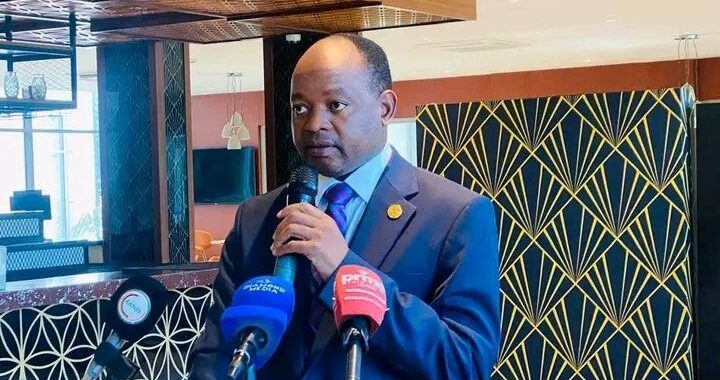
Secretary to the Cabinet, Patrick Kangwa, says procurement delays have become one of the most significant constraints to performance.

Mr Kangwa observed that most projects which have been approved have stalled due to delays in the procurement processes.

He pointed out that despite budgets being allocated to projects they are not converted into impact due to delays in procurement.

“Across government institutions, state enterprises, local authorities, private companies, and development partners, lined programmes, procurement delays have become one of the most significant constraints to performance,“ he said.

Mr Kangwa said this in a speech read for him by Cabinet Office Special Duties Permanent Secretary, Wisdom Bwalya during the Zambia Institute of Purchasing and Supply 2nd annual procurement committee training workshop.

Mr Kangwa empathized on the need to execute projects timely stating that delays in procurement processes have become bottlenecks in the implementation of projects.

He pointed out that rigidities such as capacity constraints have also contributed in delaying project implementation.

Mr Kangwa however, stressed that transparency and accountability are pillars of good governance, but should not contribute to delays in undertaking projects.

He stated that procurement must move from being viewed as a compliance gatekeeper to being recognized as a strategic enabler of development.

Mr Kangwa said procurement and efficiency directly affects the pace at which communities receive essential services especially from the local authorities.

He indicated that the effectiveness of decentralization largely depends on how quickly and responsibly procurement decisions are made.

And speaking earlier, Zambia Institute of Purchasing and Supply (ZIPS) president, Daniel Kabamba urged procurement officers to follow the law and respect procedures but also ensure that procurement processes move with agency.

President Hichilema invited to attend World Public Relations Forum

4

Minister of Information and Media, Cornelius Mweetwa has reaffirmed government’s continued support towards the growth of the Public Relations and Communication industry in the country and Africa at large.

Mr Mweetwa says this is evidenced by government’s move to appoint Principal Public Relations Officers in all ministries to enhance communication with citizens.

He added that the government also legislated the Zambia Institute of Public Relations and Communications (ZIPRC) to give the body the legal identity and ability to expand its mandate.

The media reports that the Minister said this when the President of the African Public Relations Association (APRA), Arik Karani paid a courtesy call on him, at his office, in Lusaka.

The Association extended an invitation to President Hakainde Hichilema to address the World Public Relations Forum (WPRF), which will be held in Abuja Nigeria, in November, this year.

Mr Mweetwa has told the APRA President and his delegation that President Hichilema has since accepted the invitation.

And Nigerian Institute of Public Relations President, Ike Neliaku said President Hichilema was identified to deliver an address as an authentic voice of Africa to tell the story of the continent to the international community.

Earlier, APRA President, Arik Karani explained that this year’s WPRF theme is “Responsible Communication.

He highlighted the importance of responsible communication in telling African stories.

Court Allows Tasila Lungu to Challenge Chawama Seat Decision

The Lusaka High Court has granted leave to Tasila Lungu, daughter of former President Edgar Lungu, to commence judicial review proceedings against Attorney General Mulilo Kabesha and National Assembly Speaker Nelly Mutti.

The case relates to the decision to declare the Chawama parliamentary seat vacant on November 28, 2025.

In its ruling, the Court stated that Ms Lungu had presented sufficient grounds to warrant judicial review, adding that the matter raises serious legal issues that require further examination.

The development paves the way for the court to fully hear the case and determine the legality of the decision to vacate the seat.

Zambia’s Mining Sector Attracts $12 Billion in Investment

President Hakainde Hichilema says Zambia has attracted about US$12 billion in investments in the mining sector since the United Party for National Development (UPND) came into office.

Speaking in Kitwe during the official opening of the 13th Zambia International Mining and Energy Conference, President Hichilema said the investments cut across both new and existing mining operations.

He encouraged more investors to explore opportunities in Zambia’s mining and energy sectors, describing the country as a stable and attractive investment destination.

The Head of State emphasised that mining and energy remain central to Zambia’s economic recovery and growth, adding that government has set an ambitious target of producing three million metric tonnes of copper.

Meanwhile, Mines Minister Paul Kabuswe said Zambia is working towards achieving one million metric tonnes of copper production this year.

Mr Kabuswe noted that disruptions, including the closure of Sino Metals, have affected the country’s ability to meet the target.

Kitwe District Chamber of Commerce president Alinani Simumba said hosting ZIMEC provides an opportunity for Zambia to position itself as a reliable investment destination in the mining and energy sectors.

Earlier, NEWCO Mining director Gilbert Temba thanked President Hichilema for launching a mineral resource mapping exercise aimed at determining the country’s mineral reserves.

And Kitwe Mayor Mpasa Mwaya said mining remains a key driver of the national economy, with benefits extending to surrounding communities.

KCM Set for First Mining Blast at 1,390m Level Under KDMP

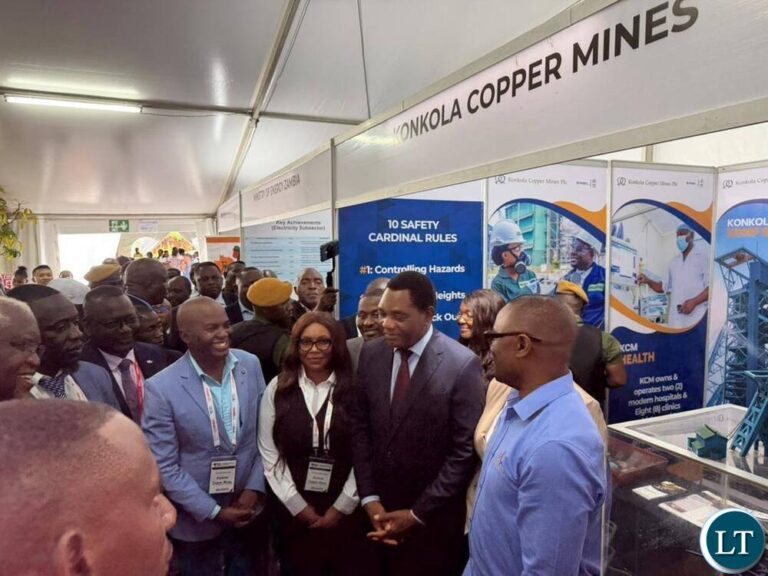
Konkola Copper Mines (KCM) has invited President Hakainde Hichilema to officiate at the first mining blast under the Konkola Deep Mining Project (KDMP), marking a major milestone in the exploitation of one of the world’s richest copper ore bodies.

The planned blast at the 1,390-metre level is seen as a critical step toward unlocking deep ore reserves, with the deposit estimated to contain copper grades of about 3.3 percent.

According to a statement issued by KCM, the milestone signals progress in advancing Zambia’s long-term copper production ambitions. The invitation follows the President’s recent visit to the KCM exhibition stand during the Zambia International Mining and Energy Conference.

The KDMP is a major investment projected to exceed US$700 million and forms part of KCM’s broader strategy to revitalise and expand mining operations following the resumption of activities at the mine.

Key developments under the project include large-scale dewatering works being undertaken by global mining contractor Mancala, as well as the installation of a high-speed underground rail system by Flint to improve operational efficiency.

KCM has also introduced modern automated raise-boring machines, aimed at enhancing safety, precision and productivity in underground operations.

KCM Chief Corporate Affairs Officer John Kunda described the first blast as a defining moment for both the mine and the country, symbolising renewed investment confidence, technological advancement and the unlocking of Zambia’s mineral potential.

Government Assures Free and Fair 2026 Elections

Information and Media Minister Cornelius Mweetwa has assured the continent that Zambia’s 2026 general election will be conducted in a free, fair and peaceful environment.

Mr Mweetwa said President Hakainde Hichilema has made it clear that the will of the people will prevail, warning that any attempts to undermine the credibility of the electoral process will attract legal consequences.

He also called on communication professionals to help curb misinformation by disseminating accurate and verified information.

Mr Mweetwa was speaking in Lusaka when he met a delegation from the African Public Relations Association (APRA).

He further revealed that President Hichilema has accepted an invitation to deliver a keynote address at the 2026 APRA Conference in Nigeria, noting that the Head of State values the media and communication sector as a key partner in governance.

Meanwhile, APRA President Arik Karani urged public relations professionals to act responsibly, particularly in light of evolving global developments.

And Ike Neliaku, president of the Nigerian Institute of Public Relations, said the invitation extended to President Hichilema was in recognition of his achievements and support for the profession.

Saki Unveils Simbao as Alliance Presidential Candidate, Dodia as Running Mate

THE We Are One Zambia Alliance has unveiled its executive leadership ahead of the August 13 general elections, appointing Kapembwa Simbao as presidential candidate and Yusuf Dodia as his running mate.

Alliance chairperson Sakwiba Sikota announced the appointments, describing the move as a significant milestone as the alliance positions itself for the 2026 polls.

Other key appointments include Muhabi Lungu as secretary general, Stephen Munsanje as youth chairperson, and Trevor Mwamba as deputy chairperson.

Sikota said the leadership team was  following the alliance’s convention held from March 6 to 7, 2026, noting that the process was guided by principles of unity, mutual respect, and collective purpose.

“Participants were advised to leave their egos behind and embrace one another rather than compete among themselves,” Sikota said during a press briefing.

He added that members resolved to prioritise cooperation over personal ambitions, fostering a united front ahead of the elections.

Meanwhile, Simbao pledged to lead with integrity, transparency, and accountability, emphasising his commitment to national development, security, and economic growth.

Dodia, who will serve as vice president, highlighted Zambia’s vast natural resources and economic potential, expressing confidence in the alliance’s ability to deliver meaningful change for citizens.

Kitwe, Chipata Mayors and Roan MP Defect to UPND

KITWE Mayor Mpasa Mwaya has defected from the Patriotic Front (PF) to the ruling United Party for National Development (UPND).

The development occurred during a community engagement hosted by President Hakainde Hichilema at the Cricket Club in Kitwe, where several councillors from Kitwe and Ndola also joined the ruling party.

Also defecting to the UPND are Independent Roan Member of Parliament Joel Chibuye and Independent Chipata Mayor George Mwanza, who is reportedly eyeing the Chipata Central seat in the August 13 general election.

Mwaya and the other defectors said their decision to join the ruling party was influenced by the government’s delivery of developmental projects in their respective areas and across the country.

Receiving the new members, UPND Copperbelt Province Chairperson Elisha Matambo said the party continues to gain support due to ongoing development programmes nationwide.

President Hichilema welcomed the new members and encouraged them to actively participate in party activities, stating that their decision to join the UPND was a sign that the government was on the right path.

“Your new assignment is to draw more new members to the party, and campaign harder so that we can win with a landslide in August and continue delivering for the people of Zambia,” he said.

The Head of State also urged existing party members to embrace the new entrants, adding that unity within the party would strengthen its ability to serve citizens effectively.