Monday, June 8, 2026
14.8 C
Lusaka
Home Blog Page 173

ECZ Gears Up for Muchinda By-Election

0

The Electoral Commission of Zambia (ECZ) has intensified preparations for the Muchinda Ward by-election slated for 12th February in Serenje District of Central Province.

Voters in Muchinda Ward of the Serenje Constituency will cast their ballots to elect a new Councillor to replace Thomas Phiri, who recently passed away after an illness.

The ECZ is currently training Voter Education Facilitators (VEFs) and members of the District Voter Education Committee (DVEC), a returning officer and assistant registration officers.

The media reports that during the training session for VEFs and DVEC members, Serenje District Electoral Officer (DEO) Stan Mwanakayaya urged the facilitators to put in their best to ensure the commission delivers a credible election.

“Voters may not take this election seriously due to its proximity to the general election in August, but your commitment is essential to encourage people to participate in the Muchinda vote on 12th February.” Mwanakayaya stated

He also encouraged trainers to equip VEFs with the knowledge necessary to effectively conduct voter education.

ECZ delegation leader, Evaristo Musonda emphasised the importance of teamwork among DVEC members and VEFs to ensure a successful election for the people of Muchinda.

And DVEC Chairperson Jimmy Nsama affirmed his committee’s commitment to providing voters in the Muchinda by-election with the information they need to vote without difficulty.

“We will make every effort to minimise spoiled and rejected ballot papers,” Mr Nsama remarked.

The Commission is scheduled to conduct nominations for candidates participating in the upcoming by-election on Thursday the 22nd of January 2026.

Muchinda ward has 4,911 registered voters.

HH Confirms Maize Payments Underway, Apologises for Delays

3

HH Confirms Maize Payments Underway, Apologises for Delays
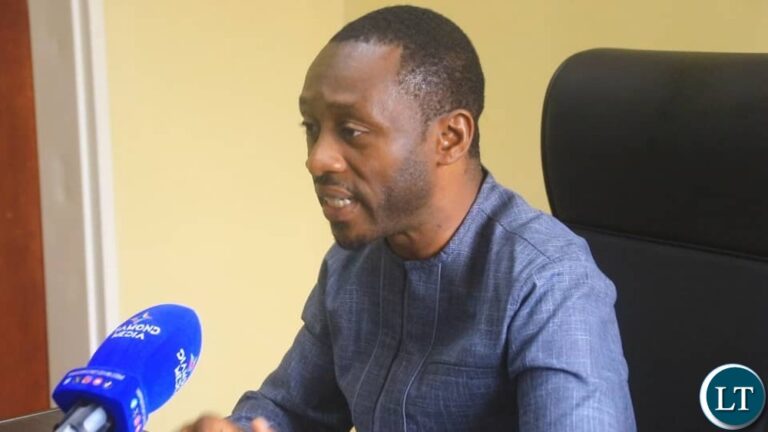
President Hakainde Hichilema has provided a detailed explanation of delayed farmer payments, Zambia’s food security strategy, power supply stabilisation, fuel logistics, and mining sector reforms during a live phone-in on Diamond TV, while dismissing speculation surrounding his health as irresponsible and misleading.

Speaking while on official leave at his farm, President Hichilema said governance continued uninterrupted, describing his leave as “working time out” rather than disengagement from national affairs.

On maize payments, the President explained that government initially planned to purchase 500,000 metric tonnes of maize through the Food Reserve Agency. However, following a drought period and a national call for increased food production, farmers exceeded expectations. Government then decided to raise the purchase target to 1.6 million metric tonnes to avoid leaving farmers exposed to exploitative buyers.

He said this expansion created a funding gap, but confirmed that the necessary resources had since been mobilised and deposited with commercial banks. Payments, he said, were ongoing but slower than expected, largely due to logistical constraints.

President Hichilema acknowledged delays and issued an apology to farmers, stressing that all those who delivered maize would be paid. He said banks had been instructed to accelerate electronic transfers, noting that challenges remained for farmers without bank or mobile money accounts.

He emphasised that protecting farmers was a deliberate policy choice, aimed at ensuring producers received fair value for their maize rather than being forced to sell at reduced prices to briefcase traders.

On food security, the President said Zambia’s annual maize consumption, including human and animal use, stood at approximately 2.6 to 2.7 million tonnes, compared to a production target of about 10 million tonnes. He said this reality made structured export markets essential.

He named the Democratic Republic of Congo, Malawi, Sierra Leone, and other countries as export destinations, explaining that government policy favoured exporting value-added products such as mealie meal and stock feed rather than raw grain.

President Hichilema described Zambia as a land-linked country whose economic growth depended on producing, processing, and exporting surplus output, noting that exports were critical for foreign exchange earnings.

The President also addressed energy supply, stating that electricity availability had improved following increased import capacity through Zimbabwe under the Southern African Power Pool. He said transmission capacity had risen from about 200 megawatts to approximately 400 megawatts.

He added that government had accelerated solar power projects and diversified energy sources to ensure resilience against drought-related hydroelectric shortages. He said the improvements delivered by December 2025 were the result of methodical planning rather than election-driven activity.

On fuel logistics, President Hichilema disclosed that Zambia had secured structured berthing arrangements at the port of Dar es Salaam through agreements with the Tanzanian government. He said these arrangements ensured predictable offloading windows each month, reducing fuel supply instability.

Turning to mining, the President said government anticipated rising global copper prices and therefore prioritised restoring dormant mines soon after taking office. He cited Mopani, Konkola Copper Mines, and Kalengwa Mine as examples, stating that improved production was the result of consistent policy implementation.

Responding to rumours about his health, President Hichilema said he was healthy and criticised attempts to politicise life and death. He said such conduct undermined seriousness in national discourse.

He concluded by stating that government reforms in agriculture, energy, mining, education, and infrastructure were intended to deliver tangible benefits to citizens and required patience and sustained effort.


Africa’s infinitesimal intra-Africa trade is due to Africa’s infinitesimal and slow growth of its economy.

0

Edward Chisanga

Introduction

My opening statement is that, much as the establishment of the Africa continental free trade area (AfCFTA), in the past seven to eight years has been preoccupied with nothing but pomp and splendor, explosive admiration, self-approbation, and the towering presence of heads of state in Addis Ababa, those who present dissenting or different views about it must also be given attention to express their views about it. In this article, I do.
The Africa continental free trade area (AfCFTA) may be the world’s largest free trade area comprising 55 countries of the African union, a population of 1.3 billion people and a combined GDP of US$3.4 trillion. The opposite is true also, that Africa has the most infinitesimal intra-Africa trade in both proportion to the world as well as in actual size in dollar values. And, even before I end this article, my advice is that perhaps African leaders, in particular the private sector should spend more time on the supply side (The AfCFTA’s weakest link) than it does on the market side. If this is not done, Africa will continue to chase shadows and claims of the largest free trade area shrinking to hollowness.
The AfCFTA Secretary General rightly hits the nail on its head when he continues to urge member states to address infrastructure, production, human capital and industrialization in order for the private sector to effectively use the free market instrument. Almost eight years since its establishment in 2018, Africa’s excessive market access stands alone, anxiously waiting for its supply side partner. With market access yawning and starved for supply, intra-Africa trade expressed in exports still oscillates at the 15% mark of world trade while its developing Asian counterpart stands at 50%. In dollar values, Africa’s internal exports of all products stand at only $160.0 billion in comparison with $4.5 trillion for developing Asia. Developing Asia’s exports to the world total $9.0 trillion, which is fourteenfold that of Africa.

Infinitesimal intra-Africa trade
As the economy, intra-Africa trade is not growing robustly. Here, instead of using growth percentages, I use growth, or increases and decreases of intra-Africa trade in dollar values. It makes more sense than explaining in growth in percentages. In Figure 1 below, I show Africa’s annual increases or decreases, or if you want, growth of intra-Africa trade expressed in exports. I want to see how much the continent gets from intra-Africa trade each year expressed in dollar values instead of percentages. To do that, I subtract exports of $75,263 of 2017 from $88,175 million of 2018 to get $12,912 for 2018. Then, I subtract $88,175 of 2018 from $80,863 of 2019. For the $8,516 of 2024, I subtract $97,487 of 2023 from $106,003 of 2024 to get $8,516.
My findings are that (i) annual increases of intra-Africa exports are too small. For example, a rise in exports of $14.9 billion in 2021 is really nothing to write home about; (ii) in years 2019 and 2020, a drop in exports of $7.3 and $11.1 billion respectively is, again nothing; and finally, annual growth or increases have not been consistent. In years 2022, 2023 and 2024, exports dropped significantly from 2021. If I showed a graph as I do for GDP per capita later, intra-Africa trade increases and decreases would show largely a contracting trend.

Table 1: Annual increases and decreases of intra-Africa exports in $ millions

 Year

2017

2018

2019

2020

2021

2022

2023

2024

 Intra-Africa exports in $millions

75,263

88,175

80,863

69,682

84,661

97,034

97,487

106,003

 Annual increase/decrease  

12,912

-7,313

-11,181

14,979

12,373

453

8,516

Source: Unctadstat

Source: Unctadstat

Infinitesimal GDP per capita
Low GDP per capita in each African nation and at aggregate levels inhibit the continent from leveraging from regional and global trade. For purposes of the AfCFTA, I use GDP per capita instead of GDP growth because clearly, it’s the purchasing power manifested in the former that will determine how much each Africa country or private sector utilizes free market access. And I find that in the last two decades, 2005-2044, Africa’s aggregate GDP per capita has remained worrisomely too infinitesimal to carry trade on its shoulders. In 2005, it was only $ 1, 244. Between 2011 and 2014 it improved to an average of about $ 2,000. But it then shrank to $1, 895 in 2024.
This information is not shown in Table 1 below. Instead, Table 1 shows annual increases and decreases in GDP per capita. It means, instead of using the usual GDP per capita growth percentages, I have decided to use dollar values because they give a more realistic picture than percentages. When I say GDP per capita grew by 5%, the 1.3 billion Africans are all unlikely to understand. So, I subtract the first number of GDP per capita of $1,847 for year 2017 from $1,901 for year 2018 to get $54 increase in 2018. Then I subtract $1,901 from $1,932 to get $31; and I continue to do the same for the remaining numbers the first from the second until I get to 2024 by subtracting $1,898 from $1,895 to get minus $3. When I use dollar values, and say GDP per capita increased to $ 54, or decreased to $ minus 133 in 2020 shown in Table 1 below, people are likely to understand better than looking at percentages.

Table 1: Annual increase/decrease of Africa’s GDP per capita in US$

 Year

2017

2018

2019

2020

2021

2022

2023

2024

 GDP per capita

1,847

1,901

1,932

1,799

1,956

2,013

1,898

1,895

  Annual increase/Decrease

54

31

-133

157

57

-115

-3

Source: Unctadstat

The main problem
Africa’s free market access partner will not be coming home soon. Dani Rodrik saw the problem and alerted African leaders and the world when he said, in 1997, “The marginalization of Africa in world trade is entirely due to the slow growth of African economies.” For many years, Africa’s economies, either as individual countries or aggregate have not been growing robustly enough to support regional or global trade. What I get is a set of annual increases and decreases from 2018 – 2024. As can be seen, these increases and decreases are very infinitesimal. They cannot help Africa to develop. They cannot help citizens to benefit from the AfCFTA. Unless these numbers increase substantially and robustly, purchasing power will remain infinitesimal. The largest increase was $ 157 in 2021. But that’s a figure no one can write home about. But look at the other increases in all the years. They’re very tiny. The other point is that there’re too many minus decreases.
So, it’s not this kind of GDP trending increases or decreases that can propel Africa’s regional or international trade. With infinitesimal GDP per capita, individual Africans will have no strong purchasing power to actively benefit from excessive free market access. To purchase, nations and their citizens need to have robust purchasing power or the ability to buy, which is often manifested in the size of GDP per capita. Unfortunately, in Africa, as per 2024 data, only two nations boast of above average GDP per capita. Seychelles has $16,131 followed by Mauritius with $12,223. South Africa has $6,205. Most nations’ GDP per capita are less than $1,000. But even GDP per capita of about $10,000 is not sufficient enough to be declared a robust symbol of purchasing power.
Zambia’s participation in intra-Africa trade
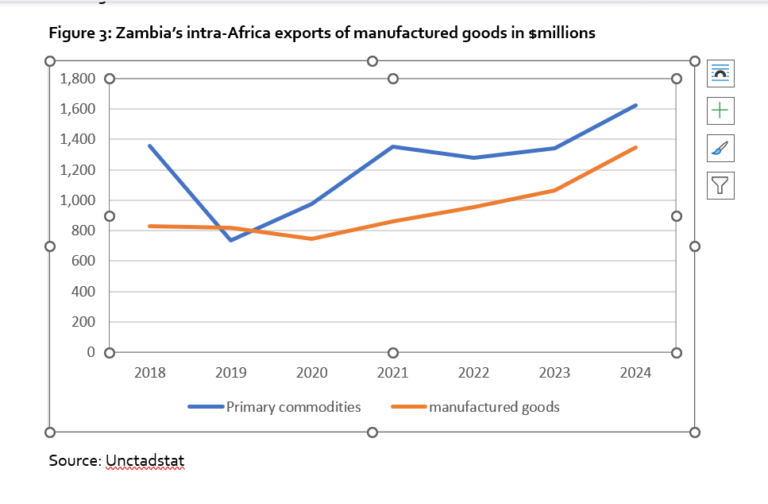
The good news is that it looks like Zambia is taking advantage of the AfCFTA’s free market access since its creation in 2018. As Figure 1 below shows, exports of non-copper products have risen from $1.5 billion in 2018 to almost double in 2024. Evidence is also that they dropped significantly between 2013 and 2016. It’s also a good confirmation that Zambia’s participation in intra-Africa focuses on exports of non-copper. But non-copper is not manufactured goods. Evidence in Figure 3 below shows that Zambia continues to export more primary commodities than manufactured goods in Africa as in the world. So, since AfCFTA was born, Zambia clings to its traditional way of doing business in Africa. It also means that there’s no major shift in Zambia private sector’s vision for the AfCFTA.

I agree with the Policy monitoring and research center (PMRC) when it says, “The implication of a small manufacturing sector for the AfCFTA is that there will be low trade in finished goods which will limit the scope for intra-regional trade.” Intra-Africa trade is skewed in favor of more exports of non-copper or non-traditional products.

Evidence that Zambia continues to export more primary commodities than manufactured goods is contained in Figure 3 below. The line above the other represents exports of primary commodities and the other, manufactured goods. The challenge is for Zambia’s private sector to match its towering and explosive public rhetoric with reality. Unless a major shift takes place, it will continue to chase shadows.

Conclusion

I conclude by going back to where I began. The problem of Africa’s limited participation in intra-Africa and global is due to Africa’s infinitesimal and slow growth of its economy. Hence, the focus of African nations, individually and at aggregate level, must be to grow economies robustly. Robustly simply means increasing productivity, through development of infrastructure, human capital with cognitive function, shifting mindset, attracting productive investment in manufacturing, or simply learning from emerging Asian nations, in particular Viet Nam, how it succeeded in developing its supply base, to enable it to overtake Africa in global exports of manufactured goods.
Sometimes I wonder what would happen if we arranged a debate, between African and Asian leaders to speak about their economic achievements. Viet Nam leaders will list exports of Electrical machinery, equipment: Machinery including computers: $74.2 billion, Footwear, Furniture, bedding, lighting, signs, prefabricated buildings, Clothing, accessories, Knit or crochet clothing, accessories, Plastics, plastic articles. All these totaled US$499.8 billion worth of exported products around the globe in 2024. What will each African leader, perhaps apart from South Africa list? Self-approbation and celebrating small economic wins.


Kambwili Says He Is Willing to Step Aside for Opposition Unity

8

Kambwili Says He Is Willing to Step Aside for Opposition Unity
Patriotic Front central committee member Chishimba Kambwili has stated that he is prepared to forego his own presidential ambitions in order to achieve opposition unity ahead of the August 13, 2026 general elections.

Kambwili said he has been engaging with several elders in the country who, according to him, are concerned about the political direction Zambia is taking. Among those he named were retired former Chief Justice Lombe Chibesakunda and Akashambatwa Mbikusita Lewanika.

He said the elders he has met are unhappy with what he described as growing polarisation in the country, particularly along tribal lines, and have encouraged efforts aimed at uniting opposition political parties.

Kambwili stated that since his release from prison, he has dedicated time to working behind the scenes to promote opposition unity. He said this effort is not driven by personal gain, but by what he believes is the national interest.

He explained that opposition unity has remained elusive largely because of disagreements over who should carry the presidential ticket, but maintained that the focus should be on presenting a single candidate capable of challenging the ruling party.

When asked whether he was ready to abandon his own presidential ambitions to achieve that unity, Kambwili responded affirmatively, saying leadership requires readiness to be led.

He stated that for the sake of the country, personal ambition must sometimes be set aside, adding that those who wish to lead must also be prepared to follow when circumstances demand it.

Kambwili declined to be drawn into debates about which opposition parties are growing or declining, including comments made by Citizens First leader Harry Kalaba regarding his party’s performance in the Chawama by-election. He said his concern was not about individual party fortunes, but about consolidating opposition strength.

He pointed to the combined vote totals from the Chawama by-election, arguing that when votes for opposition parties and independent candidates are added together, they demonstrate a strong showing against the ruling United Party for National Development.

Kambwili further dismissed claims about the existence of a so-called “PF ECL movement,” saying he did not recognise such a grouping and would not waste time addressing it.

He said the Patriotic Front needed to focus on internal unity and avoid internal conflicts, warning that infighting would only weaken the opposition’s ability to contest the August elections effectively.

Regarding PF presidential aspirant Brian Mundubile, Kambwili stated that Mundubile remained a PF member, as he had not formally resigned from the party.

Kambwili reiterated that unity discussions must remain focused on the collective objective of presenting a credible alternative in the 2026 general elections.

Copper Price Surge Lifts Zambia’s Profile in Global Financial Markets

Copper Price Surge Lifts Zambia’s Profile in Global Financial Markets
Zambia has emerged prominently in global financial circles following a sustained surge in copper prices that has lifted the country’s stock market performance and strengthened its currency, according to reports cited by Business Insider.

Copper prices have risen to consecutive record highs of approximately US$13,000 per metric tonne, positioning Zambia’s primary export at the centre of renewed international investor attention. The increase has coincided with notable gains on the Lusaka Securities Exchange, whose benchmark index has reportedly risen by about 17 percent in dollar terms this year.

According to Business Insider, the Lusaka Securities Exchange currently ranks among the world’s top-performing stock markets, edged out only by Bulgaria among 92 markets tracked globally. Other markets posting double-digit gains this year include Colombia, South Korea, and Turkey, while Nigeria recorded an increase of about 8 percent.

The surge in copper prices has been identified as a key driver of Zambia’s market performance, reinforcing the country’s profile as Africa’s second-largest copper producer. The price rally has been attributed to strong global demand, constrained supply, and continued interest in metals linked to energy transition and infrastructure.

Alongside stock market gains, Zambia’s currency has also recorded a strong performance. Since the beginning of the year, the Zambian kwacha has appreciated by nearly 12 percent against the United States dollar, making it the best-performing currency globally among those monitored by Bloomberg.

Business Insider reports that the improved performance has been supported by a combination of factors, including improved domestic energy supply and a recovery in farm output following a severe drought experienced in previous years.

The International Monetary Fund has projected that Zambia’s economic growth could rise to 6.4 percent this year, up from an expected 5.8 percent in 2025, with higher copper prices cited as a major contributor to this outlook.

Mutisunge Zulu, chief risk officer at Zambia National Commercial Bank Plc, is quoted as saying that the stock exchange is increasingly serving as a barometer of the country’s economic trajectory, reflecting resilience and improving investor confidence.

She stated that the index now tells a coherent story of mining and energy interdependence, balance-sheet strengthening, and renewed market optimism.

Market growth has been driven by strong performances from listed companies including Zambia Sugar Plc, Pamodzi Hotels Plc, and Standard Chartered Bank Zambia.

Business Insider also notes that Zambia experienced a similar surge in August last year, when the Lusaka Securities Exchange All Share Index climbed by 14.3 percent on the back of a copper price rally.

During that period, Copperbelt Energy Corporation Plc played a central role in driving market gains. In 2025, the company’s stock reportedly increased by more than 75 percent, making it the first Zambian firm to be valued at over US$1 billion.

Copperbelt Energy Corporation has since indicated that it expects a 42 percent increase in earnings per share for the first half of 2025.

The copper price boom has therefore not only strengthened Zambia’s export earnings but has also reinforced its position within global financial markets.

The Great Malambo Body Hunt, when Politics meets the paranormal

8

By Linda Banks

Not vanished like a delayed policy statement, but vanished in a way that sent citizens refreshing their social media apps and relying on rumour for updates. The President relocated to Choma, and the nation was left with silence.

In that vacuum, the M23 government spokespersons stepped forward and filled the air with creative explanations. First, the President was said to be on a working holiday. Then the nation was told he was working on his own hustle. Zambians paused. Since when did governing a country become a personal side project? Especially considering that, like the rest of us, he had just enjoyed a long Christmas break, plus an extra day he added as a day of rest to commemorate the National Day of Prayer, a day he used to refer to as useless. That is a story for another day.

When President Hakainde Hichilema finally resurfaced, it was not with a national address or an economic roadmap in the final months of his presidency. It was with a handshake, or rather, a different one. The familiar right hand was retired and the left hand made a surprise debut. Analysts are still debating whether this was symbolism, strategy, or simply a quiet announcement that something had shifted.

What did not shift, however, was the instinct to pursue perceived enemies.

Almost immediately, police were dispatched to Malambo Constituency, where they raided the home of Makebi Zulu. Officially, the police said they were responding to an illegal meeting. Unofficially, the operation looked less like crowd control and more like a search mission.

A search for what, you ask? The body, of course. The ghost that is allegedly haunting him into hiding. Allegedly, BanaBaabo, allegedly.

Makebi Zulu is not just any lawyer. He is the spokesperson of the late former President Edgar Chagwa Lungu. In today’s political climate, that role appears to come with supernatural implications. Memory has become dangerous. Association has become suspicious. Grief has become a security concern.

#BanaBaabo – Let’s be honest, this was never about visitors. Zambia has never required permits for people to greet each other. Handshakes have never been illegal, whether performed with the right hand or the newly fashionable left. But when people gather at the home of the man who speaks for a departed president, the state suddenly develops nerves.

Police officers moved in as though acting on intelligence from a spiritual source. They attempted to disperse what they described as visitors, yet their urgency suggested something else. These were not visitors in the eyes of state paranoia. These were witnesses, or worse, participants in an imagined political ritual.

One could almost hear the unspoken fear. What if the body is here? What if memory refuses to stay buried? The fat pot-bellied Bujus whispered to one another. The largest one among them stepped forward with a shamboko under his arm, wagging a finger at the crowd and bellowing, “Disperse in the name of the President.” The crowd refused to be bullied.

Now on a serious note, this anxiety, this paranoia, is not without precedent. The same administration has previously arrested and imprisoned people suspected not of plotting harm, but of attempting to be with the President. Proximity alone became criminal. In that context, raiding the home of ECL’s spokesperson follows a certain twisted logic. If closeness is a crime, then mourning is treason.

The police searched in spirit, if not in fact. Cupboards were not opened, but suspicion filled every room. Faces were scanned. The question hung in the air, quietly and absurdly. Alimo? Is he here?

Nothing was found.

No body.
No ghost.
No political resurrection.

Only a lawyer standing on his own property, calmly reminding officers of the law and that they had better leave unless they had a search warrant. The police left quietly, rather sheepishly, as crowds loudly chanted Makebi’s name. Like men who realised they had been sent to chase ghosts while the country waited for governance, they retreated with their tails between their legs.

In a nutshell, the President disappeared for weeks while his spokespersons improvised explanations. He returned with a new handshake and immediately unleashed police on the spokesperson of a dead man. In this Zambia, the most feared opposition figure is not the one mobilising crowds, but the one preserving memory.

The question answers itself. Was this really about an illegal meeting, or was it about fear that the past still has an audience?

When a government panics over visitors more than inflation, and over gatherings more than jobs, confidence has already fled. When it fears a corpse more than corruption, the problem is not the opposition. It is a haunted State House mindset.

Zambia now lives in a republic where barbecue gatherings look suspicious, nshima can be mistaken for subversion, and lawyers are treated as undertakers of dangerous history.

The President is back from hibernation. The fear has returned with him. This time, he appears ready to govern not only against the living, but against the dead as well.

Makebi Zulu Chases Police From Residence in Malambo

4

Makebi Zulu Chases Police From Residence in Malambo
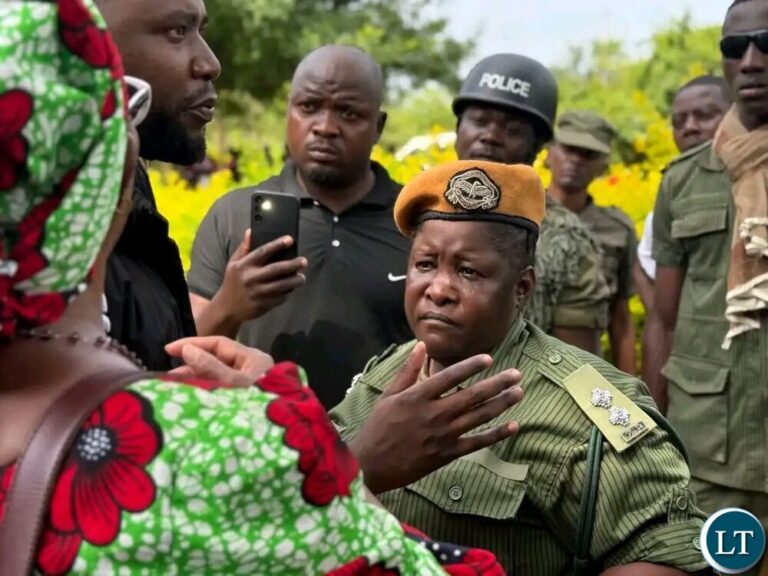
Police officers in Mambwe District, Eastern Province, visited Makebi Zulu at his private residence in Malambo area, where a confrontation unfolded that ended with the officers being ordered to leave the premises.

Zulu was at his home when police officers arrived and entered the property in the early hours of the day. Eyewitnesses said the officers mounted a visible operation around the residence, briefly cordoning off the surrounding area and drawing the attention of local residents.

According to eyewitness accounts and a recorded interaction from the scene, police officers instructed Zulu to disperse people who had gathered at the residence, stating that they were acting on information suggesting the presence of a lawful assembly.

Zulu rejected that classification, stating that the individuals present were visitors who had come to greet him at his home and not participants in any organised meeting or rally. He told the officers that they were on private property and that he was entitled to receive visitors without police permission.

He stated that the residence was his home and that the gathering was informal and social in nature. According to Zulu, the visitors had come to see him after he had recently been involved in an accident and had not been in the area for some time.

During the exchange, Zulu questioned the basis of the police operation and challenged the accuracy of the information that had prompted officers to attend his residence. He told the officers that whoever had reported the matter had provided incorrect information.

Police officers cited security considerations as justification for their presence. Zulu rejected that explanation, stating that he did not require police protection and had not requested police intervention.

As the exchange continued, officers suggested that Zulu should disperse the visitors or report himself to the police. He declined both options and stated that he had not convened any organised gathering and therefore bore no responsibility to disperse people who had come to greet him.

The confrontation escalated when Zulu repeatedly instructed the officers to leave his property. He directly ordered them off the premises, stating that their continued presence was unlawful. The officers subsequently withdrew from the residence. No arrests were made, and no physical confrontation occurred.

After the police left, residents and supporters gathered near the property seeking clarification on the purpose of the police operation.

Beyond the immediate incident, the confrontation has intensified debate around policing, political space, and the application of public order regulations, particularly as Zambia enters an election year.

Opposition parties have for several years complained of denied permits, blocked meetings, and disrupted rallies, while activities organised by the governing United Party for National Development have continued to proceed. These complaints have formed a consistent part of opposition criticism of policing practices.

Within this context, the police action at Zulu’s residence has been interpreted by opposition figures as part of a broader effort to constrain opposition political activity. They argue that such interventions risk reinforcing perceptions of selective enforcement of public order laws.

Political analysts note that repeated confrontations between police and opposition figures carry reputational risks for the government. Some argue that, if unaddressed, such incidents may erode public confidence in the neutrality of law enforcement and undermine democratic credibility.

They further contend that if the government is not directing police action against opposition voices, it bears responsibility to act decisively to ensure policing practices do not fuel perceptions of political bias.

Police officers involved in the recorded exchange did not reference any political affiliation. By the time of filing this report, police had not issued an official statement explaining the operation at Zulu’s residence.

KGTC signs MoU with Vision Hitech of China

0

Kafue Gorge Training Centre (KGTC) Director, Davies Chinkusu says the institution has embarked on major solar power projects aimed at achieving self-sustainability and supporting Zambia’s energy security.

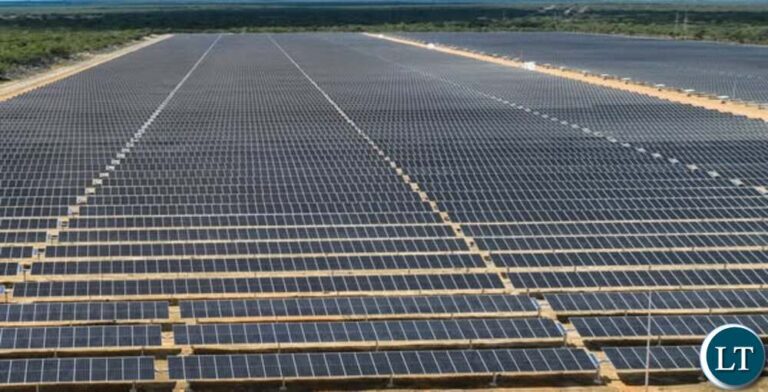
Mr Chinkusu says the centre has commenced a 10-megawatt solar project at Namalundu in Northern Province, with a second 10-megawatt phase set to begin soon, bringing the total capacity to 20 megawatts, which is expected to be completed this year.

The media reports that speaking after the signing ceremony of a Memorandum of Understanding between KGTRC and Vision Hitech of China, Mr Chinkusu said the project aligns with government policy on alternative energy and will also serve as a practical demonstration alongside energy technology training.

Mr Chinkusu also welcomed the acquisition of the former ZESCO Training Centre in Ndola, now renamed Kafue Gorge Training Centre North, saying it will increase the institution’s capacity to train more participants from Zambia and across Africa.

He added that over 1,000 participants were trained in 2025 and expressed confidence that the centre’s future remains bright.

Speaking at the same event, Vision Hitech of China, General Director, Lin Yifeng said the company is committed to bringing advanced Chinese technology and expertise to support renewable energy development projects.

Mr Lin disclosed that Vision Hitech will introduce an intelligent wind and solar power model designed to enhance public understanding of renewable energy systems, including remote control, monitoring, and sensing technologies.

He explained that the initiative will help stakeholders appreciate how modern renewable power solutions operate and how technology can improve efficiency and sustainability in the energy sector.

Mr Lin further emphasised that the project reflects the strong partnership and friendship between Vision Hitech and its local collaborators, noting that the company values long-term cooperation built on mutual trust and shared goals.

He said Vision Hitech looks forward to deepening the partnership as the project moves into the implementation stage, beginning with the formal signing ceremony.

Sinazongwe Fisherman Dies in Crocodile Attack

 A-22- Year- Old man of Nzenga village in Sinazongwe chiefdom in Southern Province has died after being attacked by a crocodile while fishing.

Deleo Maiya was attacked at Siamambo fishing harbour around 07:00 hours while fishing on Lake Kariba as he was pulling out his fishing nets.

The incident was noticed by other fishermen who were nearby after hearing his loud screams and mobilised themselves to rescue him from the crocodile that was in shallow waters.

The deceased was subsequently retrieved but had already succumbed to the crocodile attack and died.

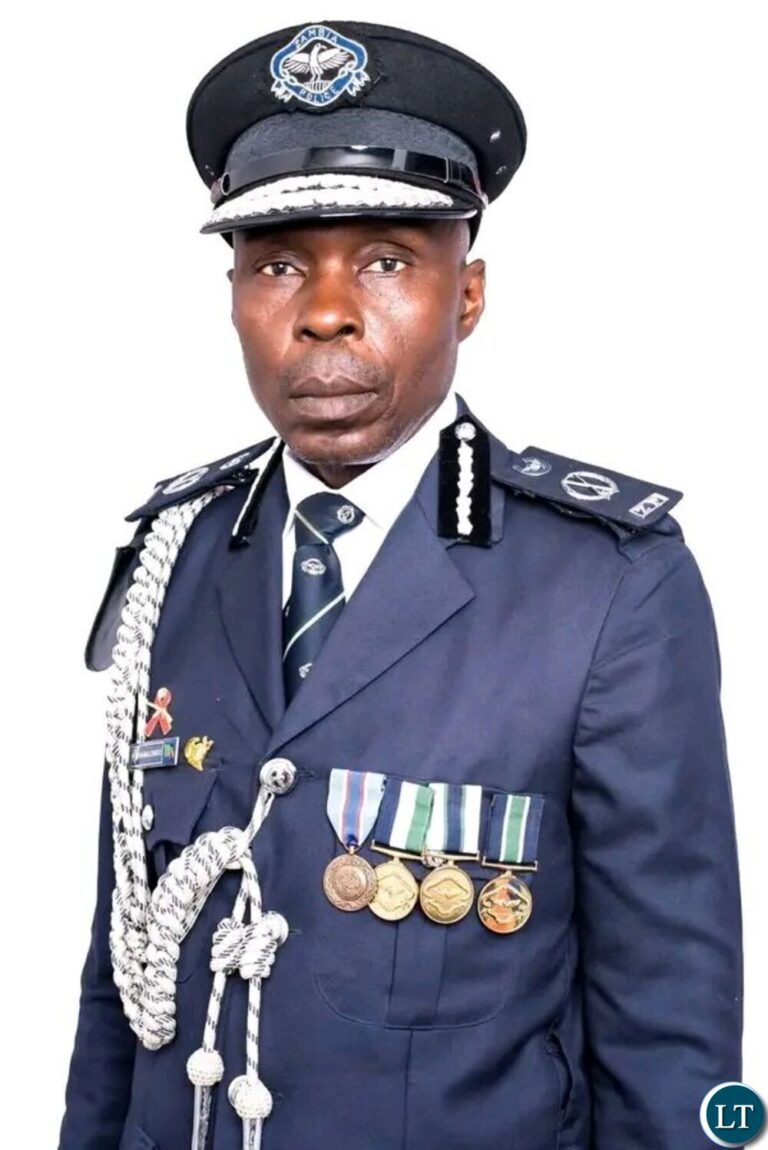
Southern Province Police Commanding Officer Moono Namalongo confirmed the incident in a press statement issued to the press.

He said the incident was reported to Police by the Father of the deceased Keficious Siamunyama of Nzenga Village in Chieftainess Sinazongwe chiefdom.

Mr Namalongo indicated that his officers visited the scene and found the body of the deceased lying along the shores of the Lake.

He stated that the body was inspected and found intact apart from the fractured left foot and no foul play was suspected and the family opted to proceed with the burial.

He said an inquiry file has since been opened over the occurrence.

In another incident a 55- year- old woman of Chomonselo area in Siabasimbi village of Chieftainess Sinazongwe chiefdom was unlawfully wounded and her property maliciously damaged.

Southern Province Police Commanding Officer Moono Namalongo confirmed to the press that Anny Daka was unlawfully wounded around 19:00 hours in chimonselo by a group of people identified as Akromy Shamacha and Bradmie Sinamba both males of unknown age.

Others were Nyati whose other names and age were  unknown and two female suspects Mata Siasuza and Nevi Siamangamu both aged 59 years of Siabasimbi village in Mweemba Chiefdom of Senior Chief Mweemba.

The victim sustained cuts to the chest and back of the neck allegedly inflicted on her using a razor blade.

It was reported that after the assault, the same group proceeded to her house where they damaged the door and wooden bed both valued at K2,450.00 on allegations that she was practicing witchcraft.

Facts of the matter indicate that on January 13th, 2026 around 19hours Anny Daka the victim was at her home when she received a call from Mata Siasuza who requested her to go to the house of Nevi Siamangamu within Siabasimbi village.

Upon arrival she found the group among which was Mr Nyati who was alleged to be a witch finder who ordered her to kneel down while accusing her of practicing witchcraft.

He then inflicted cuts on the victim’s chest and back of the neck using the razor blade while others restrained her and salt was allegedly applied to the wounds as part of what was described as a cleansing ritual.

The group thereafter proceeded to the victim’s house where they damaged property alledging that they were searching for charms.

The victim reported to the Police at Maamba Police station and police officers visited the scene, took pictures while the two female suspects Mata Siasuza and Nevi Siamangamu were apprehended and detained in custody to assist with investigations.

Police have since issued the victim with a medical report form and referred her to Maamba General Hospital where she was treated, discharged and  was  currently in a stable condition.

However, Police investigations into the matter are ongoing while efforts to apprehend the remaining suspects have continued.

Kasama youths counselled ahead of mayoral by- election

0

Minister of Youth, Sport and Arts, Elvis Nkandu, has advised youths in Kasama District of Northern Province not to be used as tools of violence during the ongoing campaigns for the January 29, Mayoral by-election.

Mr Nkandu, who is also United Party for National Development (UPND) Deputy Spokesperson, says youths should instead be empowered so that they can be productive and start contributing to the national economy.

And, in an interview with the media  in Kasama, Mr Nkandu warned political players against bringing confusion to the district during the campaign period.

He explained that campaigns in the area have generally been peaceful without any case of violence recorded, adding that political players should sustain this momentum.

“People of Kasama have demonstrated that they are peaceful people, and politicians should not come and disturb them because of their selfishness,” Mr Nkandu said.

He, however, noted that political players are not enemies but only differ on ideologies, and advised that they should instead take advantage of the campaign time and explain what they will do for the people of Kasama.

Mr Nkandu, who is in the district to drum up support for the UPND candidate, Bywell Simposya, further appealed to Kasama residents to vote for him to ensure smooth delivery of development.

And, Minister of Small and Medium Enterprise Development, Elias Mubanga, said he is confident that the people of Kasama will vote for the UPND candidate, saying people have seen how President Hakainde Hichilema and his government have transformed the country.

Mr Mubanga disclosed that Northern Province has seen massive development being implemented through the Constituency Development Fund (CDF), which has positively changed the lives of people.

“We have delivered a lot of development here in the province, and our people are no longer covering long distances in accessing services, this is the more reason the people want to vote the UPND because they want this development to run smoothly,” he said.

Six candidates are contesting the Kasama Mayoral by -election that was necessitated by the death of Patriotic Front (PF) Mayor, Theresa Kolala on December 5, 2026.

Ms Kolala was elected as Kasama mayor in the 2021 General Elections.

Other candidates include Mary Busika for the New Focus Party (NFP), Mukuka Kapambwe for United Prosperous and Peaceful Zambia (UPPZ), Peter Yuda Chikweti for the Forum for Development and Democracy (FDD), Socialist Party’s (SP) Joseph Mubanga and Aaron Zimba for Citizens First (CF).

Zambia, Germany strengthen cooperation on agricultural reforms

0

Zambia and Germany have reaffirmed their commitment to strengthening cooperation in the implementation of reforms in the agriculture sector aimed at boosting productivity and economic growth.

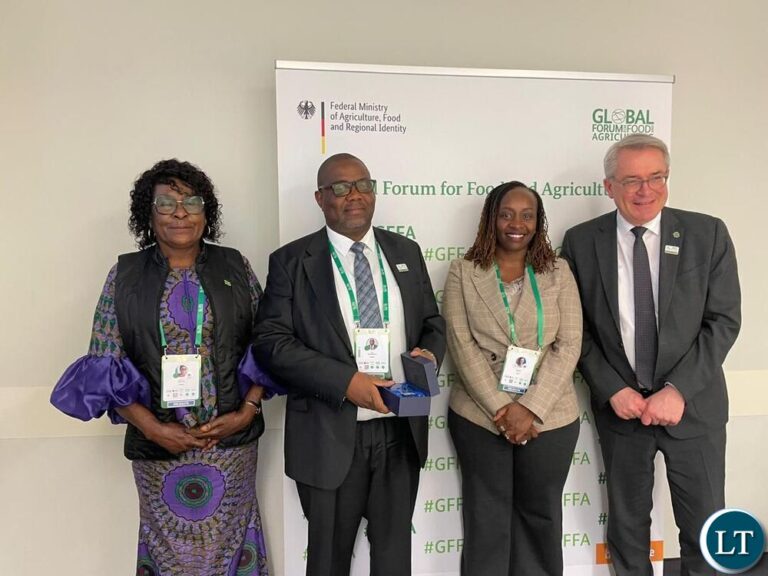
Ministry of Agriculture Permanent Secretary for Technical Services, John Mulongoti, says the partnership with Germany has been instrumental in supporting Zambia’s ongoing agricultural transformation agenda.

Mr Mulongoti was speaking on the sidelines of the just-ended 18th Global Forum for Food and Agriculture (GFFA), held in Berlin, Germany.

He noted that Germany continues to support Zambia through various initiatives, including the Comprehensive Agriculture Transformation Support Programme (CATSP), which provides a blueprint for enhancing agricultural productivity and promoting mechanisation.

The Permanent Secretary said engagements with the German Society for International Cooperation (GIZ), the German Federal Ministry for Economic Cooperation and Development (BMZ), and other participating countries showed that Zambia is on the right path in reforming its agriculture sector.

Mr Mulongoti highlighted reforms to government interventions such as the Farmer Input Support Programme (FISP), saying the re-purposing of the programme is already yielding positive and tangible results.

He added that Zambia was cited at the forum as a model for other countries on how to reform and transform agriculture from a potential sector into a key driver of economic development and job creation.

“Government was reforming some of its interventions like the Farmer Input Support Program (FISP), where benefits are now being seen. Zambia was cited as an example for other countries to learn from on how to reform and transform the agriculture sector from a potential economic sector to a real sector which will contribute largely to economic development and job creation,” he explained.

Mr Mulongoti stressed that the policy and legal reforms undertaken by the Government, coupled with the restructuring of key programmes, are beginning to deliver measurable outcomes.

He further disclosed that the Zambian delegation used the forum to showcase investment opportunities in the country’s agriculture sector, noting with satisfaction the strong interest shown by several international companies.

The Permanent Secretary expressed confidence that the engagements held during the forum will continue to generate results as Zambia accelerates reforms in the agriculture sector.

Zambia was represented at the GFFA by Mr Mulongoti, Ministry of Water Development and Sanitation Permanent Secretary, Romas Kamanga, and senior officials from both the public and private sectors.

This is according to a statement issued to the media by the First Secretary for Press at the Embassy of the Republic of Zambia to Germany, in Berlin Lubinda Kachewe.

Brother Allegedly Murders Sibling Over Mealie in Chililabombwe

1

A 40-year-old man has allegedly been murdered by his 42-year-old brother following a dispute over mealie meal taken from the deceased’s house in Chililabombwe District.

‎A media crew that visited the funeral house found that Mumba Zulu was allegedly murdered on 18 January 2026 around 22 02:00 hours.

‎The mother of both the deceased and the suspect, Grace Maloya, said she was deeply shocked by the brutal manner in which her younger son Brian Zulu aged 40 killed his elder brother.

‎Ms Maloya described the incident as unfortunate and painful, stating that she feels she has lost both her sons one to death and the other who will be imprisoned.

‎She has appealed to the government for assistance to ensure that the deceased  was  given a proper burial.

‎“I want my son who murdered his elder brother to go to jail so that I can have peace. As things stand, I am not at peace,” she said.

‎Meanwhile, the deceased’s sister, Besnat Zulu, said the two brothers had a long history of conflicts, as the younger brother often accused the family of favouring the deceased over him.

‎Ms Zulu explained that the younger brother allegedly attacked the deceased after taking some of his mealie meal without permission.

‎”When the deceased questioned him about it, the suspect became angry and went out to drink and between 21:00 and 22:00 hours, while the deceased was asleep in his house, the suspect returned and beat him using various objects around 02 hours. When community members attempted to intervene, the suspect allegedly accused them of favouring the deceased,” she said

‎She said after realising that he had killed his elder brother, he ran away.

‎Copperbelt Province Police Commanding Officer Mwala Yuyi has confirmed the incident in a statement.

‎ Mr Yuyi said the suspect has been arrested and was currently in police custody.

Govt. reaffirms commitment to digitalisation in service delivery

0

North-Western Province Deputy Permanent Secretary, Luckson Mulumbi, says government is committed to the delivery of effective and efficient public services to citizens through digitalisation.

Mr Mulumbi said this when a delegation from the Department of National Registration, Passport and Citizenship under the Ministry of Home Affairs and Internal Security paid a courtesy call on him in Solwezi today.

He commended the Ministry for introducing the electronic passport registration system, describing it as a major milestone in the digitisation of public services.

The media reports that Mr Mulumbi further called on members of the public to support the initiative, saying it will play a key role in promoting accountability and transparency in the provision of government services.

The Provincial Deputy Permanent Secretary also praised President Hakainde Hichilema for his strong commitment to the digitalisation of public services as a way of enhancing transparency and efficiency.

“We are very happy about this initiative and we commend President Hakainde Hichilema, who has been very keen and has continued to encourage us to digitise public services because that is the only way we can seal up financial leakages, deal with fraud and address challenges that sometimes make access to government services difficult,” Mr Mulumbi said.

Meanwhile, Department of National Registration, Passport and Citizenship Deputy Registrar, Kennedy Chisumpa, said the delegation was in North-Western to conduct sensitisation on the newly launched online passport registration system, which was introduced last December.

General Chisumpa said the electronic passport application system is aimed at enhancing efficiency in the issuance of passports to citizens.

He explained that the delegation will meet heads of government departments and train district officers across the province to assist in the processing of online passport applications.

“The system is expected to be more efficient and effective because we have been facing challenges with the manual system, such as long queues that accumulate daily as people try to access our services and acquire passports,” he said.

And, Ministry of Home Affairs and Internal Security Information and Communications Technology Director, Edward Chiteta said the introduction of the Government Service Bus through Smart Zambia has played a critical role in bringing services closer to the people.

The Ministry of Home Affairs and Internal Security last year in December launched the online passport registration system as part of efforts to decongest long queues that previously characterised offices of the Department of National Registration, Passport and Citizenship.

Police Raid Home of PF Presidential Hopeful Makebi Zulu in Eastern Province

4

Police officers in Mambwe District, Eastern Province, on Tuesday morning raided the residence of Patriotic Front (PF) presidential hopeful Makebi Zulu in Malambo area.

Mr Zulu, who is currently visiting his home village in Malambo, was reportedly surprised to find a heavy police presence surrounding his house in the early hours of the day.

Eyewitnesses said several police officers cordoned off the area during the operation, attracting the attention of local residents.

Meanwhile, a number of Malambo residents and supporters later gathered near the residence, seeking information on the purpose of the police operation.

By the time of filing this report, police had not issued an official statement regarding the raid, and the situation remained unresolved.

More details are expected as the story develops.

Two-Week-Old Infant Injured During Parents’ Fight in Sinda

A two-week-old infant from Sinda District in Eastern Province is receiving treatment at St. Francis Mission Hospital in Katete after being accidentally injured by the father during a fight with the mother.

Eastern Province Police Commanding Officer Robertson Mweemba explained that the victim was assaulted when the blow intended for the mother, after a marital dispute landed on the infant.

The incident occurred yesterday, January, 18, 2026 at around 13:00 hours in Geleta Village, of Chief Kawaza.

Mr Mweemba revealed that the victim, identified as Norman Banda, sustained a swollen head as a fist is alleged to have been used in the fight.

“The victim sustained a swollen head as a fist is alleged to have been used in the act and a police medical report form has been issued”, he said.

He explained that the fight started when the suspect, Lameck Banda aged 24 wanted to get a bag of fertilizer from home for resale.

“Brief facts are that the suspect wanted to get a bag of fertilizer to go and sell and use the money for beer”, Mr Mweemba said.

He disclosed that when she denied him access, the suspect began assaulting her and, in the process, a fist struck their son, who was with his sister while attempting to separate the fight.

Mr Mweemba stated that Banda’s wife, Margaret Zimba aged 23 sustained general body pains and bleeding from the mouth.

He explained that the duo, was receiving treatment at St. Francis mission hospital in Katete while the suspect has been arrested.

The police chief added that two assault dockets were opened and that the suspect will appear in court soon.