Monday, June 8, 2026
14.8 C
Lusaka
Home Blog Page 172

UPND Youth Chairman Admits Internal Failures After Electoral Loss

6

UPND Youth Chairman Admits Internal Failures After Electoral Loss

The United Party for National Development (UPND) National Youth Chairman Gilber Liswaniso, has publicly criticised some ministers and appointed officials within the ruling party, accusing them of betraying President Hakainde Hichilema and failing to protect the party’s governing mandate.

Speaking in remarks circulated on social media on Tuesday morning, the youth leader expressed disappointment with senior figures in government and within the party, saying their conduct had undermined the party’s objectives and weakened its position on the ground.

Liswaniso stated that some ministers and appointed officials had failed to play an active role during a recent electoral contest, describing their absence as a serious failure of responsibility. According to the youth chairman, the purpose of being in government was not symbolic authority but the active protection and implementation of the party’s vision and policies.

“Why are we in government?” he asked during the address. “It is to protect power so that the vision of the party and the President can be implemented.”

He argued that once political power is lost, a party can no longer implement its agenda, stressing that the responsibility of those in influential positions was to ensure continuity of governance by remaining connected to grassroots structures and electoral realities.

The youth chairman acknowledged that responsibility did not rest solely with ministers and appointees, but also extended to party leaders themselves. He included himself among those who needed to accept blame, stating that internal weaknesses had contributed to the situation facing the party.

He said some individuals within the system had ignored warnings raised earlier, particularly on issues that required consultation with party structures. According to him, decisions were taken without engaging the Patriotic Alliance Committee of the UPND, creating risks that were repeatedly highlighted but dismissed.

“There are certain things which they do which cannot even consult the party,” he said, adding that when concerns were raised, they were brushed aside by officials who believed they knew better.

The youth leader linked these actions to the party’s recent electoral loss, stating that only after defeat did some officials begin sharing information and concerns with him. He questioned why such engagement did not happen earlier, particularly when those officials were not present on the ground during the campaign period.

He described the outcome of the election as a learning moment, saying it had revealed how systems within the party and government were functioning in practice. According to him, the loss exposed gaps that needed to be addressed urgently if the party was to realign itself with its original mission.

He stressed that it was not too late to correct course, calling for renewed discipline and internal order within both the UPND and its alliance structures. He warned against what he described as a betrayal of the President’s leadership and intentions.

The youth chairman praised President Hichilema, describing him as a leader committed to national development and to ensuring that public resources benefit communities at the grassroots level. He said the President’s vision required active support from those appointed to serve in government.

“That President needs help from us,” he said, adding that everyone holding an influential position under the UPND government had a responsibility to contribute to the success of the administration.

He made it clear that his comments were not aimed at self-preservation, stating that he was prepared to face backlash from within the party. He said some officials might call for his removal from office because of his stance, but he was willing to accept that outcome if it meant defending the party’s vision.

“I would rather be fired from this position by doing the right thing,” he said, explaining that his priority was the protection of the party’s mandate and the implementation of its policies.

The youth chairman concluded by stating that he was taking the matter personally in his capacity as national youth leader, signalling that internal accountability would be a focus going forward. His remarks reflect growing internal pressure within the ruling party following electoral setbacks and renewed debate over the role of ministers, appointees, and party structures in maintaining political support.

Why Hichilema Is Camped in Southern Province: Why the Opposition Should Be There Too

6

By Kapya Kaoma

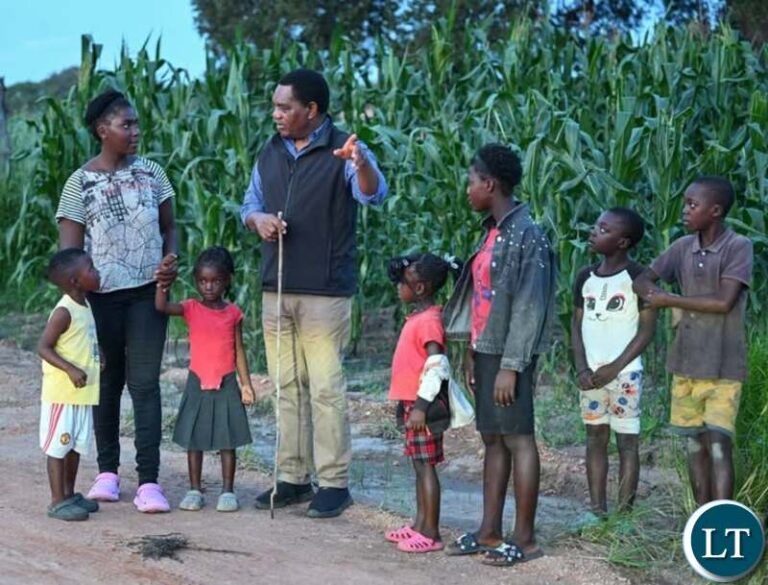
Many opposition figures are fixated on President Hakainde Hichilema’s extended stay in Southern Province. I am not. If anything, his presence there is entirely rational—indeed necessary—if he hopes to secure a second term. Southern Province is not merely his political home base; it is the electoral engine he must command to offset growing national discontent.

By now, most Zambians recognize a troubling pattern in Hichilema’s politics: casual dishonesty deployed as strategy. This is why the arrest of Miles Sampa for allegedly lying about the Chawama elections is ironic. Has Hichilema himself not repeatedly made demonstrably false claims? Among them, the assertion that Tongas are routinely attacked at Lusaka’s Inter-City Bus Station simply for coming from Choma or Dudumwenzi. Or his exaggerated depictions of educational deprivation in Southern Province.

It took a courageous Tonga woman from Livingstone to publicly challenge the President, demanding evidence. She pointed to the existence of long-established great schools, and reminded him that he is hardly the first Tonga to navigate Lusaka’s streets. Her rebuke was blunt and unambiguous: Mr. President, stop lying. Stop demeaning your own people for political gain. That such a challenge came from within his own ethnic community is telling. When leaders distort the lived realities of their base, legitimacy is already eroding.

This brings us to the real question: why Southern Province, and why now?

Hichilema already has his core “farming votes” locked in for August 13. His continued presence there is not about persuasion; it is about control—and, ultimately, rigging. For the opposition, therefore, the strategic task is not to “win” Southern Province, but to police it. Elections are not won by popularity alone; they are won through institutions, oversight, and presence.

Every parliamentary seat must be contested. Every council race entered. Opposition participation is what justifies the deployment of polling agents across the province. Without that infrastructure, polling stations are effectively ceded to the ruling UPND and the Electoral Commission of Zambia. This is the terrain Hichilema is shaping now—deciding the rules of the game before a single vote is cast.

Southern Province is his vote reservoir, and he intends to harvest it aggressively, calculating—correctly—that opposition attention will be dispersed elsewhere. This is textbook African incumbency: rig the strongholds to compensate for losses in competitive, closely monitored regions.

The narrative already works in his favor. Southern Province is treated as an unquestionable UPND bastion. On this basis, inflated claims—such as the assertion that 1.4 million new voters were registered there—circulate with little scrutiny. The implicit message is clear: over two million votes will emerge from Southern Province, and no one should be surprised if 2.5 million appear on voting day. This is not neutral commentary; it is the pre-emptive normalization of a manipulated outcome.

There is, however, a deeper layer to Hichilema’s strategy. His prolonged stay in Southern Province provides ethnic insulation for an ethnic political project. Publicly, the slogan remains “One Zambia, One Nation.” Privately, a different message circulates.

Political science is clear: identity-based mobilization, especially when framed as grievance or threat, is a powerful electoral tool. Scholars describe this as affective polarization—voters mobilized less by policy than by perceived cultural or ethnic antagonism. This is why campaigns deploy specific figures to speak to specific communities, using shared language and cultural cues to frame elections as existential contests: us versus them.

Among his own, Hichilema speaks Tonga. He signals who belongs—and who threatens. Chiefs and influential local figures are mobilized to reinforce this message, because if it were delivered openly from Community House, it would provoke national backlash. In Southern Province, however, the meaning is unmistakable. The election is framed as a question of what “we, as a people,” stand to gain—or lose. Carefully cultivated grievance becomes a mobilizing force.

But the urgency of this strategy simply reflects the President’s vulnerability. His 12 percent victory over Edgar Lungu was not a blanket endorsement but a fragile coalition of hope. Millions voted not out of conviction, but out of a willingness to “give him a chance.” That coalition has since fractured. Youth support has thinned. Disillusionment has set in. Campaign promises have collapsed under the weight of lived reality.

This leaves Hichilema with a narrow path: rig even in Southern Province. For he knows that even there, cracks are visible. When a leader begins lying to his own people—and when those people start calling him out publicly—the situation is already dire. His relocation to Choma may be less a show of strength than an act of political desperation.

Will it work?

Kaya.

But one thing is clear: this election will be decided by vigilance, organization, and a refusal to surrender any province—stronghold or not—to unchecked power and lies. There is work to be done.

PF looted the Treasury; now they’re spending big time!

4

Over the weekend, we found ourselves at a watering hole in Ngwerere settlement, Lusaka to indulge ourselves after obviously a punishing week poring over decades-long documents at the National Archives gathering vital information for our book: Dilemma of One Zambia, One Nation.

Shortly, a man clad in a blue tracksuit hobbled in. In no time, he ordered beers for everyone in the pub. I immediately identified him as a former senior Zambia Revenue Authority (ZRA) official from the previous regime sent to jail for corruption. He had just been recently released from prison on bail.

“Give everyone 6 packs…… including waitresses, and that man in the corner!” he blubbered.

Say what! I wasn’t going to remain sitting idle as this fat cat attempted to portray a picture of me as a beggar, desperate for beer!

“Excuse me…..” I retorted. “Did I ask you to buy me a beer?”

I put it to him if he had any money to waste on strangers, I wasn’t interested in being any part of it. I advised him to catch the next flight to hell if he had any issues!

Honestly, how does one go to town burning collosal sums of money buying alcoholic beverages for strangers especially when money is difficult to come by?

This was obviously ill gotten loot from our Treasury! There’s no doubt it; PF officials defrauded this country…..they stole from us big time! Sometimes we wonder why UPND failed to pursue the PF leaders ruthlessly after winning the elections……is it part of being methodical?

Take for instance the video currently doing the rounds on social media whereby Matero Member of Parliament Miles Sampa is seen handing-out money during the recent Chawama by-election?

Most of us usually think twice before spending the money we’ve worked hard for. But how come Sampa could easily throw money around? Where did he get the money he was dishing out like Santa Claus? Wasn’t it part of the loof that some of us keep complaining about?

Country men and women, let’s keep PF in check otherwise they’ll come back and visit more heinous atrocities on us like never before!

Salute!

Prince Bill M. Kaping’a
Political/Social Analyst
Zambezi

Greenland crisis: Markets believe Trump could escalate

0

Gold’s explosive surge and the sharp fall in global equities send a blunt message from markets: investors now believe US President Donald Trump could act on taking Greenland, warns the CEO of one of the world’s largest independent financial advisory organisations.

The warning from deVere Group’s Nigel Green follows a dramatic weekend of escalation after the US president said he would impose tariffs on eight European countries, including Germany, France and the UK, from next month unless they support his ambition to take control of the Arctic island.

Markets reacted with speed and force. Gold jumped as much as 2.1% to a record $4,690 per troy ounce, while silver surged 4.4% as investors rush into havens.

European equities opened sharply lower, with the Stoxx Europe 600 down 1.5%.

US futures tracking the S&P 500 and Nasdaq 100 fell 0.9% and 1.2% respectively, even with US cash markets closed for Martin Luther King Jr Day.

Nigel Green says: “Markets are delivering a verdict on credibility. It seems by the current positioning that investors believe that the president is prepared to move from threat to action.

“Gold doesn’t, typically, behave like this on headlines alone. It moves like this when markets believe follow-through is coming.”

He says the move into precious metals reflects conviction rather than caution.

“The scale and speed of the rally show investors aren’t waiting for confirmation.

“Capital is already positioning for tariffs, retaliation, and a deterioration in relations between the US and Europe.”

The Greenland dispute marks a different order of risk to previous trade tensions. This blends economics with territory and national security. Markets historically treat that combination as more destabilising and far harder to unwind.

Greenland’s strategic importance to Arctic shipping routes, natural resources, and military positioning raises the stakes.

“Investors see the dispute as one that could extend well beyond trade policy into a broader confrontation with lasting consequences for growth, supply chains, and confidence,” notes the CEO.

“Gold is acting as an insurance premium against escalation. Investors appear to expect retaliation from Europe and a cycle that proves difficult to contain.”

Equity markets feel the pressure first. European stocks absorb the immediate hit, while US futures signal spillover risk despite the holiday closure. Risk-sensitive currencies soften as demand shifts toward havens, reinforcing the global nature of the repricing.

“Tariffs aimed at allies challenge assumptions markets have relied on for decades,” Nigel Green explains.

“Predictability underpins asset prices. When policy becomes a tool of leverage between partners, risk premiums rise very quickly.”

The Greenland crisis lands at a time when investor sentiment already sits on a fragile footing.

Elevated valuations leave little room for complacency, and markets show a growing willingness to respond early to policy risk rather than dismiss it as noise.

The deVere CEO concludes: “It appears that markets now believe Trump means what he says about Greenland, and investment portfolios are adjusting.”

Police Detain Matero MP Miles Sampa Over Polling Station Claims

Police Detain Matero MP Miles Sampa Over Polling Station Claims

Police today Tuesday 20th January 2026 arrested and detained Matero Member of Parliament Miles Sampa, recording a warn and caution statement against him in connection with alleged offences under the Cyber Crimes Act, following complaints linked to his public statements and social media activity during and after the Chawama Constituency parliamentary by-election.

Mr. Sampa was summoned to Police Headquarters earlier in the day before being taken to Lusaka Central Police Station, where officers formally warned and cautioned him. He was later detained as investigations continued.

The arrest came within hours of a telephone interview on Diamond TV in which President Hakainde Hichilema commented broadly on electoral conduct and responsibility in public communication. During the exchange, the President made reference to matters arising from the Chawama by-election, including remarks that touched on the conduct of political actors. Authorities have not drawn any formal connection between the interview and subsequent police action, though the sequence of events has attracted public attention.

Police records indicate that the warn and caution statement relates to an offence of prohibition of harassment, contrary to Section 22(2)(a) and (b) of the Cyber Crimes Act No. 4 of 2025. The complaint was lodged by Ms. Victoria Banda, a member of the Christian Churches Organisation.

Ms. Banda alleged that Mr. Sampa published a post on his Facebook page accusing her of unlawfully holding another person’s national registration card and of usurping the authority of the Zambia Police Service. She further stated that Mr. Sampa shared her photograph together with an Electoral Commission of Zambia election monitor card, actions she said exposed her to public ridicule and embarrassment.

In addition to the harassment complaint, police are also investigating Mr. Sampa in relation to statements he made on polling day during the Chawama parliamentary by-election, when he alleged that the Electoral Commission had opened an illegal polling station along Ring Road in Lusaka.

A day before his arrest, Mr. Sampa publicly acknowledged that the information he had received regarding the alleged polling station was incorrect. He apologised and confirmed that the polling station in question was legitimate and duly authorised by the Electoral Commission. He also stated that, going forward, he would first engage the Commission directly before making public statements based on reports of alleged irregularities.

Despite the apology, the Electoral Commission formally reported the matter to police. Law enforcement authorities have since confirmed that investigations are underway for alleged transmission of deceptive communication under Section 19 of the Cyber Crimes Act No. 4 of 2025.

The Electoral Commission has maintained that false claims relating to polling stations carry serious implications, including the risk of undermining public confidence in elections and disrupting electoral operations. The Commission has argued that legal action is necessary where misinformation is circulated during sensitive electoral periods.

Mr. Sampa served as campaign manager for Forum for Democracy and Development candidate Bright Nundwe, who won the Chawama parliamentary by-election. His role placed him at the centre of polling-day operations and information flows from party officials and local residents.

In explaining his initial statement, Mr. Sampa said he had acted on reports from residents who claimed that voters were being ferried from outside the constituency. He later conceded that the reports were inaccurate and said the matter should have been verified before being made public.

Earlier on the day of his arrest, Patriotic Front president Given Lubinda accompanied Mr. Sampa to Police Headquarters following the summons. The Patriotic Front has since questioned the decision to detain him, citing his prior apology and retraction of the polling station claim.

The developments have revived debate around the handling of election-related disputes. Some commentators have drawn comparisons with past elections, including the 2008 presidential by-election, during which allegations of electoral malpractice were raised publicly by opposition leaders without resulting in criminal proceedings.

Supporters of the current police action argue that the digital environment has changed significantly, with misinformation capable of spreading rapidly and affecting public order. Others contend that the use of criminal processes after a public correction and apology risks discouraging accountability and restraint in political discourse.

Police have not indicated when investigations will be concluded. Mr. Sampa remains subject to ongoing inquiries in relation to both the social media complaint and the Chawama polling station allegations.

Current reduction in load shedding not for campaign – Hichilema

1

President Hakainde Hichilema has said the current improvement in electricity supply being experienced across the country is not politically motivated, but is the result of deliberate planning and structured reforms by his administration

.

Speaking during a live phone-in programme  last night, President Hichilema said the government has been working methodically on several fronts to stabilise Zambia’s power supply.


The Head of State assured that the country is expected to have sufficient electricity within the next two to three years, regardless of rainfall patterns, as long-term measures continue to be implemented.


“The improvements you are seeing are not about electioneering. We said by December 2025 the power situation would improve and it has improved,” President Hichilema said.


He disclosed that Zambia has increased electricity imports through strengthened transmission interconnectors via Zimbabwe, raising supply from about 200 megawatts to approximately 400 megawatts.


“One of the reasons I went to Zimbabwe was to increase the import capacity of the transmission lines and we have achieved that,” he said.


President Hichilema added that the government is also prioritising the completion of solar power projects across the country, which are expected to further contribute to stabilising electricity supply.

Eastern Province records 70 percent Grade 12 pass rate

0

Eastern Province has recorded a 70 percent pass rate in the 2025 Grade 12 examinations, leading national performance for the fourth consecutive year, according to results released by the Ministry of Education.

The announcement follows confirmation that Zambia’s overall Grade 12 national pass rate has surpassed the 70 percent mark for the first time. Out of 197,777 candidates who registered for the 2025 School Certificate examinations, 136,434 obtained school certificates, while 2,941 candidates failed and 3,621 were absent.

The national pass rate represents a 2.08 percentage point increase compared to the previous year. Education Minister Douglas Syakalima said the results demonstrate continued improvement in learning outcomes despite increased enrolment under the free education policy.

Of the candidates who sat for the examinations, 52.22 percent were female and 47.78 percent were male, reflecting strong female participation.

Syakalima noted that the results maintain a five-year upward trend, with national pass rates rising from 63.93 percent in 2020 to 70.27 percent in 2025.

He attributed the improved performance to government interventions, including the recruitment of additional teachers, enhanced school supervision, and the provision of desks and learning materials.

Announcing the 2025 School Certificate and Teacher Education Examination results in Lusaka, the minister also cited consistent disbursement of school grants and an improved school feeding programme as contributing factors to improved learner retention and performance.

“Further, it is worth noting that candidate absenteeism has continued to reduce, despite the consistent increase in candidature. The recorded improvement in performance and all other achievements stated are a result of the sound policies and interventions the government is putting in place,” Syakalima said.

Teachers score big in 2025 exams

0

Hundreds of teacher trainees across Zambia have recorded strong performances in the 2025 teacher education examinations, with high pass rates registered in Early Childhood, Primary and Secondary Teacher Diploma programmes.

In the Early Childhood Education (ECE) Teacher’s Diploma, 682 candidates sat for the examinations. Pass rates stood at 80.9 percent in year one, 90.98 percent in year two and 90.98 percent in year three.

Education Minister Douglas Syakalima announced that 629 candidates sat for the Primary Teacher’s Diploma examinations, recording clear pass rates ranging between 71.13 percent and 89.12 percent. The Secondary Teacher’s Diploma examinations recorded pass rates ranging from 77.5 percent to 86.64 percent across the three years.

Syakalima disclosed that a total of 588 trainees have qualified to receive their diplomas in 2025. Of these, 159 are in early childhood education, 239 in primary education and 190 in secondary education.

“Qualified trainees include 159 in early childhood, 239 in primary and 190 in secondary. The diplomas will be awarded at the graduation ceremonies to be organised by the Ministry of Education, through the Colleges of Education during the year,” he said.

The minister also reported that the 2025 examinations were conducted without any leakage of examination papers. However, he noted that a number of suspected examination malpractice cases have been reported and are under review by the Examinations Council of Zambia (ECZ).

“Despite there being no leakages, there were fifteen individuals and twenty-one whole centre cases of suspected examination malpractice reported during the 2025 School Certificate examination, affecting a total of 1,007 candidates,” Syakalima said.

He further stated that three cases of suspected examination malpractice were reported during the 2025 Teacher Education examinations, involving the use of unauthorised materials in examination rooms.

Syakalima added that results for candidates implicated in the suspected malpractice cases have been temporarily withheld pending investigations, warning that those found culpable will be dealt with in accordance with the law.

Sean Tembo must be respectful, mature if he wants to engage me – Hichilema

6

President Hakainde Hichilema has stated that if Patriots for Economic Progress (PeP) president Sean Tembo wishes to engage him on national matters, such engagement must be conducted in a mature and respectful manner.

A few weeks ago, Tembo said during a live Facebook broadcast that he would call President Hichilema every day at 09:00 hours until the Head of State answered, stating that he wanted clarity on delayed payments to farmers who supplied maize to the Food Reserve Agency (FRA).

Tembo’s calls to the President, which were made live on his Facebook page, went unanswered.

In a telephone interview on Diamond TV last night, President Hichilema said he had no problem answering calls or engaging with citizens, but emphasized that such engagements should not be used for grandstanding or mockery.

“Sean talks to me. Nobody is a problem. I am his fellow citizen. But Sean must not grandstand. These things must be done in a mature and respectful way. You don’t do them to grandstand or mock somebody,” President Hichilema said.

The Head of State added that the country was facing serious national challenges that required focus and seriousness, rather than theatrics.

“This country needs a lot of seriousness. Discussions must not be turned into a menu for theatrics. We must be serious about this country,” he said.

Kasama resident calls for establishment of a mining cadastre

0
 A Kasama resident has appealed to the Ministry of Mines and Minerals Development to consider opening a mining cadastre to be accessed by members of the public from across the country.

James Mutambo, a retired miner, says doing so will allow the public to access mining services, noting that a cadastre has several key responsibilities which can help people and companies with their business.

He told the media in an interview in Kasama that it is important that the government opens up a cadastre, saying once this is achieved, people will be enabled to obtain licenses easily, thus reducing illegal mining activities.

“This unit is very critical for those who want to venture into mining, talk of licensing, once we have a cadastre, it will be easy for mining companies and individuals to acquire licences,” noted Mr Mutambo.

He further observed that the lack of a cadastre has contributed to the mushrooming of illegal mining activities in the country.

Meanwhile, Mr Mutambo has urged illegal miners across the country to adhere to the call by the Zambia Army Commander to vacate mining areas before soldiers move in to forcibly evict them.

“All illegal miners should adhere to the Zambia Army Commander’s call for them to stop their illegal activities and vacate the sites before they are forced to do so,” he appealed.

He added that illegal mining has the potential to breed insecurities in the country, stating that the army is therefore in order to move in and safeguard national security.

Mr Mutambo also stated that mining requires people with mining skills and the right tools to prevent unnecessary deaths, which are being recorded in these illegal mining sites.

He indicated that the country has continued to lose the much needed revenue from mineral resources because of few selfish individuals who are mining illegally.

Govt receives equipments from UNDP to strengthen resettlement services

0

The United Nations Development Programme (UNDP) has handed over Information and Communication Technology (ICT) and office equipment valued at K1.32 million to the Government of the Republic of Zambia.

The equipment has been donated to the Resettlement Division under the Office of the Vice President to strengthen service delivery across the country.

speaking during the handover ceremony in Lusaka, Vice President Mutale Nalumango said the support comes at a crucial time when the Government is strengthening institutional capacity to ensure that public services are efficient, responsive, and citizen-centered.

Mrs Nalumango has described the handover of the equipment by the United Nations Development Programme (UNDP), as a critical investment in institutional efficiency, transparency, and improved service delivery in the country’s resettlement programmes.

“Today’s handover is more than just the transfer of equipment and furniture. It is an investment in institutional efficiency, transparency, and service excellence, and a clear statement of confidence in the Resettlement Division,” Mrs Nalumango said.

The Vice President noted that the equipment, consisting of computers, printers, scanners, projectors, office furniture and related ICT tools, will be distributed to all ten provincial resettlement offices, to significantly enhance coordination between provincial offices and headquarters in Lusaka.

Mrs Nalumango explained that the support is part of the Development of Basic Infrastructure (DBI) Project, being implemented by UNDP with funding from the Government of Japan through the Japan International Cooperation Agency (JICA), and forms the second phase of the Sustainable Resettlement Programme valued at US$5.3 million, running until 2027.

Mrs Nalumango said the DBI project supports refugees and host communities in North Maheba and Mayukwayukwa, which she said has already recorded tangible achievements.

“We have already seen achievements that include the construction and rehabilitation of roads and bridges, support to livelihood diversification, improved agricultural productivity, and strengthened institutional capacity at both national and local levels,” she said.

Mrs Nalumango added that ICT is no longer optional but a key driver of rural transformation, particularly in land administration and resettlement service.

The Vice President further acknowledged additional support from the World Food Programme (WFP), which has provided office furniture to complement UNDP intervention.

Meanwhile, UNDP Resident Coordinator James Wakiaga reaffirmed the organisation’s commitment to supporting Zambia’s development agenda, particularly in strengthening digital public infrastructure, saying the handover was a practical step towards enhancing the operational capacity of the Resettlement Division.

“Through this project, UNDP has provided full Starlink internet kits with a one-year subscription to headquarters and offices in Western and North-Western Provinces. This will significantly improve digital filing, document management, reporting turnaround times, and accountability,” Dr Wakiaga said.

The UNDP Resident Coordinator praised the Government’s leadership in promoting local transformation and evidence-based decision-making, particularly through programmes that require coordinated action across districts and communities.

Dr Wakiaga also revealed that UNDP stands ready to support the development of an integrated digital information management system for resettlement programmes, covering land allocation records, infrastructure assets, household profiles, and beneficiary tracking.

Alleging Fake Polling Stations Is a Criminal Offence – Hichilema

3

President Hakainde Hichilema has stated that allegations concerning the existence of fake or illegal polling stations constitute a criminal offence and should not be treated lightly.

Speaking in a phone interview , the President said claiming that a polling station exists where none has been officially designated undermines Zambia’s democratic process and amounts to an offence under the law.

The President’s remarks followed claims by Matero Member of Parliament Miles Sampa, who alleged that during the Chawama parliamentary by-election a fake polling station had been mounted in Lilayi.

President Hichilema said Zambia has made significant efforts to restore electoral credibility and uphold the rule of law, cautioning that irresponsible political statements risk undermining these gains.

“Look at Chawama. It used to be the birthplace of panga politics, but today we are having free and fair elections,” the President said.

He called on political players to act responsibly and refrain from spreading misinformation, noting that democratic processes depend on truth and respect for institutions.

Meanwhile, police have opened a docket against Mr Sampa following a formal complaint lodged by the Electoral Commission of Zambia (ECZ).

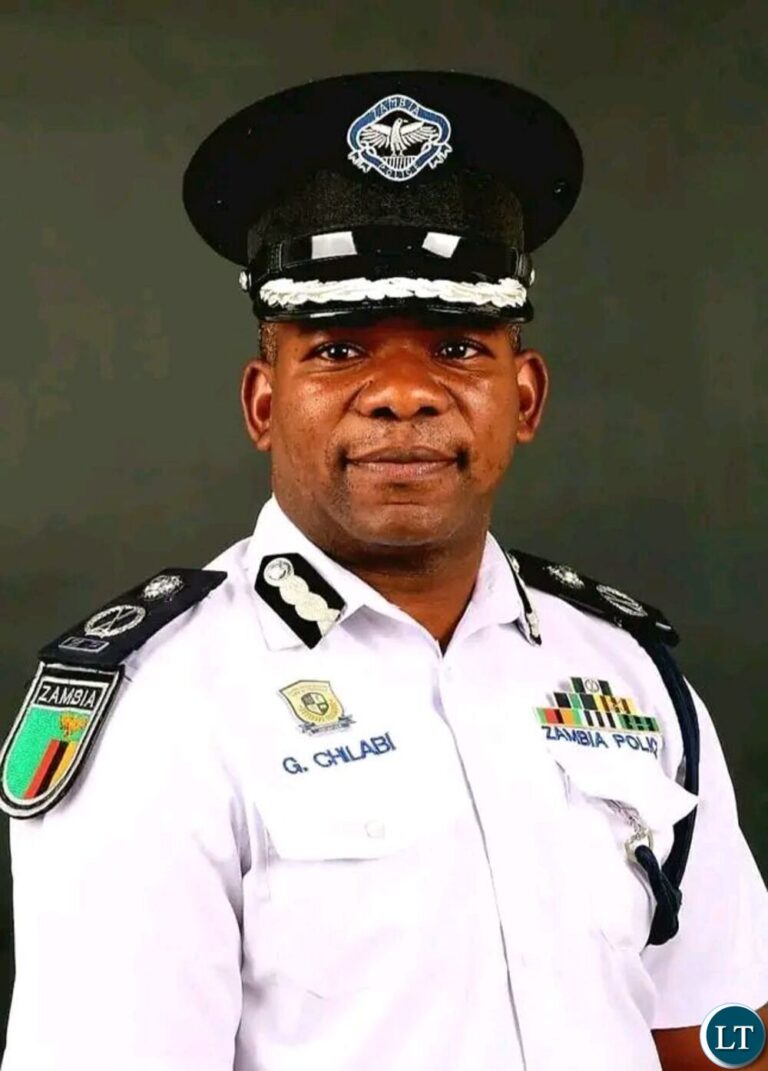
The Zambia Police Service confirmed that the complaint was reported at Lusaka Central Police Station on January 19, 2026. Police spokesperson Godfrey Chilabi said the report was lodged by ECZ Corporate Affairs Officer Raphael Phiri on behalf of the Commission.

Mr Chilabi said the matter relates to an incident on polling day during the Chawama by-election, in which Mr Sampa allegedly transmitted information claiming that a fake polling station had been opened along Ring Road in Lusaka.

Police said the ECZ maintains that the information was false and misleading.

Following the report, police opened a docket for the offence of transmission of unsolicited or deceptive communication, contrary to Section 19 of the Cyber Crimes Act No. 4 of 2025. Investigations have since commenced, and police have indicated that the public will be informed of developments as the case progresses.

Miles Sampa Source of PF Mess

3

By Nedson Katete

The internal collapse of the Patriotic Front can be traced to a single, decisive rupture: the unlawful party convention convened by Miles Sampa. That event was not a footnote in the party’s decline. It was the starting point.

Sampa is often presented as a peripheral actor in the PF crisis, a participant swept up by events beyond his control. That portrayal does not withstand scrutiny. The convention he convened was widely rejected within the party, challenged in court, and never resolved through a lawful constitutional process. By proceeding regardless, Sampa fractured the party’s legal and organisational order and created the conditions that made subsequent capture possible.

From that moment, the PF ceased to function as a coherent political organisation.

The disputed convention introduced parallel claims to leadership and authority, undermined internal discipline, and forced the party into prolonged litigation. What followed was not confusion born of disagreement but instability rooted in illegality. Once constitutional continuity was broken, the party became vulnerable to manipulation through external institutions.

The later Chabinga episode, which further embarrassed and weakened the PF, did not arise independently. It was a direct consequence of the earlier breakdown. When a party’s leadership is unresolved, impersonation and substitution become feasible. Authority becomes administrative rather than political, determined not by members but by paperwork.

It is important to state this plainly: neither Miles Sampa nor Chabinga could have executed this level of political damage acting alone. The speed and coordination with which party ownership and recognition shifted point to powerful interests operating beyond the PF itself. Administrative decisions at the Registrar of Societies, including the removal of an earlier registrar who reportedly declined to validate disputed changes, were decisive. These actions occurred without final judicial determination of the convention’s legality.

Institutional delay played a critical role.

As State Counsel Chifumu Banda has argued publicly, unresolved political litigation does not preserve neutrality. It reshapes outcomes. By failing to conclude PF-related cases, the courts allowed contested arrangements to harden into operational reality. Time replaced judgment. Silence became effect.

Yet the most troubling development is not the initial illegality. It is what followed.

Rather than holding accountable those whose actions triggered the collapse, the PF’s current leadership has absorbed them. Miles Sampa, the convenor of the unlawful convention, is now positioned as a senior executive figure within the party. The individual whose actions dismantled internal legitimacy has been elevated as part of the solution.

This is not reconciliation. It is political amnesia.

Sampa did not resolve the crisis he created. He did not reunify the party through lawful process or judicial clarity. He benefited from the disorder. His elevation signals a deeper failure within the party’s leadership, particularly under Given Lubinda, to distinguish between survival and principle.

The question this raises is unavoidable:
Is the PF being rebuilt, or is it being managed into irrelevance?

You cannot claim to represent the masses while rewarding those who dismantled your own organisation. You cannot speak of renewal while anchoring the party’s future to figures whose actions enabled its capture. Trusting Miles Sampa with the PF’s recovery is not strategy. It is surrender.

The alignment of Miles Sampa, Given Lubinda, and Chishimba Kambwili represents a convergence of ambition unrestrained by accountability. Together, they have presided over the internal neutralisation of what was once Zambia’s strongest opposition party. The ruling party did not need to outlaw the PF. The PF dismantled itself from within.

This has consequences beyond partisan politics.

When a major opposition party is weakened through unresolved illegality, administrative intervention, and internal accommodation of those responsible, democratic competition suffers. Elections remain procedurally intact, but political choice is diminished.

Any serious revival of the opposition requires a clean break with the architects of collapse. That means acknowledging responsibility, not rewarding it. Without such a break, the PF will remain operational in name but hollow in purpose, active in rhetoric yet ineffective in influence.

Zambia does not lack political voices. It lacks principled opposition.

As long as those who broke the party are entrusted with leading it, the Patriotic Front will remain a shell of its former self, unable to offer a credible alternative to the Zambian people.

Judiciary blamed for deepening PF internal conflicts — Banda

6

Judiciary blamed for deepening PF internal conflicts — Banda
State Counsel Chifumu Banda has blamed prolonged judicial delays for fuelling internal wrangles within the Patriotic Front, saying the failure to conclude long-running political cases involving the former ruling party has created confusion, uncertainty, and competing claims of authority.

Speaking in Lusaka, Banda said several PF-related political cases had remained unresolved in the courts for more than three years, preventing clarity on leadership and organisational disputes within the party. He stressed that his remarks were made in his capacity as a legal practitioner commenting on the impact of court delays on political stability.

Banda said unresolved court matters had left PF supporters and officials uncertain about legitimate leadership structures, enabling parallel claims of authority and weakening cohesion within the former ruling party. He said the judiciary’s failure to bring finality to politically sensitive cases had allowed disputes to persist instead of being settled through clear legal determinations.

He said political parties rely on timely judicial rulings when disputes arise, particularly those relating to leadership, administration, and electoral participation. According to Banda, prolonged litigation without resolution undermines confidence in legal institutions and destabilises political organisations.

Banda said the issue was not limited to the PF but warned that the party’s experience demonstrated how judicial delays could distort political processes and prolong internal conflict. He said courts play a central role in maintaining democratic order by providing clarity and finality in disputes that political actors are unable to resolve internally.

He said he was prepared, if requested, to assist as counsel in efforts aimed at resolving PF-related legal disputes, provided all parties were willing to pursue lawful and constructive engagement. He said the objective was not to undermine the judiciary but to ensure that justice was delivered within reasonable timeframes.

The Patriotic Front has faced persistent internal disputes since losing power, with rival factions repeatedly seeking court intervention over leadership and administrative control. Several of these cases have remained unresolved, creating prolonged uncertainty that has spilled into grassroots structures and public political messaging.

Banda’s comments come at a time of heightened political tension as the country approaches the August 13 general elections. Opposition figures have increasingly raised concerns about the conduct and responsiveness of key institutions in politically sensitive matters.

In Eastern Province, police conduct has also drawn scrutiny following an incident involving PF presidential aspirant Makebi Zulu, whose private residence in Malambo Constituency was entered by police officers who ordered him and visiting relatives to disperse. Villagers resisted the police presence and booed officers until they withdrew from the property.

The incident has been widely cited by opposition actors as an example of political harassment. Zulu described the action as persecution, while an editorial published in the same edition criticised the police intrusion as an abuse of state authority and a violation of private rights.a

Traditional leaders have also weighed in on the political climate. Senior Chief Chipepo urged chiefs to avoid fuelling violence and confusion ahead of the elections, reminding traditional leaders of their responsibility to promote peace and unity.

Civil society organisations have expressed concern that unresolved political disputes, combined with voter apathy and fragmented opposition efforts, could undermine democratic stability. The Southern African Centre for the Constructive Resolution of Disputes cited recent electoral outcomes as signals of broader public dissatisfaction.

Within PF circles, some supporters have framed recent electoral outcomes as expressions of resistance, linking voting behaviour to unresolved disputes surrounding the burial of former president Edgar Lungu and the treatment of his family.

Banda said the judiciary remains a cornerstone of democracy but warned that justice delayed in politically charged cases risks being perceived as justice denied. He said timely rulings would reduce speculation, discourage factionalism, and restore confidence in legal and political institutions as the election period approaches.


Police Receive Complaint Against Miles Sampa

4

The Zambia Police Service has confirmed that it has received a formal complaint against Honourable Miles Sampa.

The complaint was lodged on January 19, 2026, at Lusaka Central Police Station by Mr. Raphael Phiri, 53, a Corporate Affairs Officer at the Electoral Commission of Zambia (ECZ), acting on behalf of the Commission.

According to police, the complaint relates to an incident alleged to have occurred on January 15, 2026, in which Honourable Sampa is accused of transmitting information that the Electoral Commission of Zambia maintains was false. The information reportedly claimed that a fake polling station had been opened along Ring Road in Lusaka

.

Police have since opened a docket of case for the offence of transmission of unsolicited or deceptive communication, contrary to Section 19 of the Cyber Crimes Act No. 4 of 2025.

Investigations into the matter have commenced, and police have indicated that the public will be informed of any significant developments as they arise.