Wednesday, June 17, 2026
25 C
Lusaka
Home Blog Page 650

Criminals attack Chinese nationals in Chingola

7

Criminals in Chingola have shot and injured two Chinese nationals and got away with K200, 000.

The victims are identified as Tony Dong, aged 33 and Su Bei Qiang also a Chinese national aged 45 who sustained a gun shot in the stomach and a painful back after he was hit with a block.

The incident occurred when the criminals attempted to break into Calastone Technology Company along Lulamba road in Chingola on April 17, 2023 and around 22:30 hours.

Copperbelt Police Commanding Officer Peacewell Mweemba who confirmed the incident to ZANIS, said the two victims were rushed to Sinozam Hospital in Kitwe by fellow Chinese nationals, where they are admitted.

“Brief facts are that on the April 17, 2023 at around 22:30hrs about eight criminals who were wearing masks, armed with three pistols, others armed with pangas and an iron bar, jumped over the wall fence of the company and attacked the workers, including the guard,

The criminals later ordered one of the workers to awaken the victims who were sleeping in the house. In the process, one criminal who was near their room was gunned down by the Chinese. Whilst in pursuit of other criminals, the victim was also shot in the stomach,” Mr Mweemba explained.

Mr Mweemba said the criminals got away with a bag that contained K200, 000 cash, work permits and passports.

“Police officers rushed to the scene and found that other criminals had already run away but Police found the dead body of a criminal at the scene, who was shot at. They took the body and deposited it in Nchanga North Hospital mortuary,” he said.

Mr Mweemba said to ascertain what occurred, Police will review the CCTV cameras once the victims have been discharged from the hospital with hopes of identifying the criminals.

He said no cartridge was picked from the crime of scene and investigations will continue in the case.

Partial withdraw of pension contributions elates teachers

0

The Signing of the National Pension Scheme Authority (NAPSA) amendment Bill of 2023 into law has cheered many people in Mambwe District.

Mambwe District Education Board Secretary (DEBS), Christine Sinyangwe, says the signing of the Bill by the President had cheered most administrators in the area.

In an interview with ZANIS, Ms Sinyangwe said the actualization of the NAPSA amendment Bill of 2023 would enable many teachers who were in debts to lessen their financial burden once they accessed their partial benefits.

Ms Sinyangwe observed that the funds could be used by teachers to pay off some of their debts that they have and eventually relieve themselves of financial pressure.

She also advised teachers who would access part of their benefits to put the money to good use.

“I would advise my teachers to go and access these monies from NAPSA and use it wisely. I urge all of them to invest these monies wisely so that they can no longer be laughing stocks in society,” she said.

Meanwhile, Jumbe Primary School Teacher, Stephan Chulu, said the signing of the NAPSA Amendment Bill of 2023 into law came at the right time especially to the teaching fraternity as teachers needed a lot of support.

Mr Chulu said teachers had a lot of challenges that affected their performance in schools.

He noted that many teachers were drowning in debt, which led to many of them moving up and down searching for money that they could use to settle their bills at the expense of attending to pupils, which eventually led to poor pupil performance in school.

He further said the actualization of the NAPSA amendment Bill would help many teachers settle their debts once they accessed their funds and ultimately improve their work output.

“I see more advantages than disadvantages with the NAPSA Amendment Bill of 2023. Because of our short life span, not many people will be able to reach their retirement age,

Therefore, the partial withdrawal of one’s benefits will enable those who qualify to get their funds and invest it and also enjoy the fruits of their labour,” he said.

And Mr Chulu advised his fellow teachers who would access the funds to invest in something tangible and also keep in mind that the partial withdrawal arrangement was a once off thing, hence the need to use the money wisely.

Traders abandon a new market constructed at constructed at a cost of K179, 000

3

Shiwang’andu, District Council Chairperson, Sampa Bwali has expressed concern over the market structure which has turned into a white elephant after marketeers abandoned the trading place.

The market shelter constructed at a cost of K179, 000 in Shiwang’andu District was abandoned by marketeers two years ago.

Mr Bwali said it is disheartening to note that after spending colossal sums of money to provide an environment conducive for trading, marketeers have continued to shun the market shelter.

Mr Bwali made the remarks during an ordinary council meeting.

Mr Bwali stated that from the time marketeers abandoned the market shelter, it has been difficult for the Council to collect revenue.

“In the period under review, the Council has not collected any market fees from the traders, which has affected the revenue base of the local authority,” Mr Bwali said.

He said marketeers should be relocated without fail and instructed the area Councillor in Manshya Ward, where the abandoned market shelter is, to spearhead the task of relocating marketeers back to the abandoned market.

And Manshya Ward Councillor, Robert Mukaseka said to effectively move marketeers to the abandoned market, there is a need for intensified efforts from the local authority management and other leaders.

Government is keen on addressing bottlenecks in mining sector, Labour Minister tells Miners

1

Labour Minister Brenda Tambatamba has assured mine unions that her ministry will address all the labour bottlenecks to ensure increased production in the mining sector.

Ms. Tambatamba said the Ministry has developed a computerized Labour Information System which will help to detect and address all labour issues.

Speaking when she met mine workers union leaders in Kitwe yesterday, Ms. Tambatamba said she will not allow Zambian workers to remain in unlawful short contractual jobs and to be getting less salaries than their foreign co-workers.

She said foreign investors in the mining sectors should comply with prescribed international labour laws and avoid racial segregation on workers.

Ms. Tambatamba was responding to miner workers union leaders who complained of various unfair treatment of workers by Chinese owned mining companies.

Some of the concerns the union leaders raised include disparities in salary rates between Zambian and Chinese workers, placement of Zambian workers on one year contractual jobs for positions that are permanent, lack of respect for salary negotiations by employers, non-compliance to NAPSA and Workers Compensation contributions and the general low salaries for workers among several other issues.

And Ms. Tambatamba has disclosed that government has availed K11 billion to pay off 600,000 eligible workers under the National Pensions Scheme (NAPSA) following the enactment of the National Pensions Amendment Act No.1 of 2023 that allows partial withdrawal.

She said a further K5.4 billion is also available under Zambia National Pensions Fund (ZNPF).

Ms. Tambatamba explained that money is available and workers can immediately start accessing it.

The Minister further explained that the percent that can be withdrawn is only 20 to enable NAPSA to continue with other investments.

”As a listening leader the President Hakainde Hichilema has honoured his promise, some people were saying it is not possible, NAPSA cannot manage to pay the workers but here we are, we have done it, as union leaders now tell your members to access the money and use it to make some investments,” she said.

Earlier when Ms. Tambatamba paid a courtesy call on Kitwe District Commissioner Lawrence Mwanza

And Labour Commissioner Givens Muntengwa noted that union Leaders contributed to the poor conditions of service for workers because they concentrate more on their interests and not of workers.

And Kalulushi District Commissioner Kelly Jibinga asked the Minister to consider sending labour officers to Kalulushi to be handling labour issues.

Mr. Jibinga explained that he is made to handle labour issues when he has little knowledge on labour matters.

17 year old Mansa girl commits suicide after a quarrel with a shopkeeper

2

Police in Mansa have recorded a case of suicide involving a 17 year old girl who was found hanging from a tree in what is believed to be a suicidal act.

Luapula Division Police Commanding Officer Fwambo Siame in a statement to the media stated father to the girl Patrick Ng’andwe aged 42 years of Reuben village in Chief Chimese’s area, that Linda Ng’andwe aged 17 years had allegedly committed suicide by hanging herself to a tree.

Mr Siame said the incident is said to have occurred in the early hours of yesterday around 03:00 hours within the Ng’andwe premises.

The Luapula Divisional Commanding Officer said Police visited the scene and found the body hanging from an Avocado tree attached to a green neck tie.

Mr Siame said brief facts to the case from preliminary investigations are that on 17th April 2023, around 19:30 hours, the deceased had quarreled with a shopkeeper in the same neighborhood after the same shopkeeper had insulted her.

He said later around 20:30 hours, the deceased was heard saying that, whatever happened was going to lead her in a coffin.

Mr Saime said as she was uttering those sentiments, she was at the neighbour’s house where she used to sleep and was then taken home by her parent’s residence, where she slept.

“However, around 03:00 hours, the deceased was discovered missing from her room and the door to the house was found open,” he said.

Mr. Siame said a search by family members ensued around the house premises, where she was subsequently discovered hanging on an Avocado tree near a pit latrine.

He said further physical inspection of the body by police indicated signs of suicide with no foul play suspected.

Mr. Siame said the body has since been deposited in Mansa General Hospital Mortuary awaiting burial.

President Hichilema needs help from Banks to finance value addition, not praises.

9


By Edward Chisanga

As he was opening the new Head Office and new Longacres branch of Zambia Industrial Commercial Bank this month, I read from Lusaka Times that Zambia’s Minister of Finance, Mr. Situmbeko Musokotwane lamented, “The number one obstacle to the growth of the businesses in Zambia is access to finance. Government wants to see enhanced growth and increased productivity of local businesses because it is the most sustainable way to create wealth and alleviate poverty among the people.”Yet, another Zambian newspaper if not the same Lusaka Times reported, “Ministry of Labor and Social Security Acting Permanent Secretary, Zechariah Luhanga, said labor productivity in Zambia contracted by 21 per cent between 2019 and 2020.” According to the International Labor Organization, labor productivity is an important indicator that is closely linked to economic growth, competitiveness, and living standards within an economy.

When productivity is robustly high, that means good times for citizens. When down, it means bad news as we see in our country. Hence, keeping a rising level of labor productivity is what represents a priority for Zambian leaders and that’s why Minister Musokotwane is distraught. He is worried that the country’s private sector is not financially robust enough to increase productivity and produce more. In my own words, lack of finance impedes Zambia’s private sector from entering global and regional value chains and networks. The private sector is not vibrant and competitive at regional and global levels. It’s continued tepidity is worrisome.

There are other multiplier effects of having weak and non-productive private sector. One is that it has failed to be noticed in the region and world by its counterparts seeking to invest in Zambia. Without a vibrant private sector, it’s difficult to attract foreign direct investment (FDI). We can hyperbolize all we want about our beautiful country and the so-called opportunities for FDI. We can give governments of the world all the pulchritudinous messages about our country. But investors are not governments. They’re private companies with their own conditions. perceptions and criteria. If conditions such as dynamic and honest private sector are absent, or if cheating that has plagued this country continues unabated, foreign business will not arrive in our country.

Foreign investors want to come to a country with a progressive local private sector. They began going to Asia from America and Europe when they saw mushrooming private sector which they use as a basis for their companies’ entry and development. If we want them to partner our local private sector, it’s extremely strenuous for them to do so in their current form whereby they’re weak and have almost nothing to offer in the partnership. On the other hand, we need to build a flourishing private sector as a foundation for productive inward FDI flows or regional and global integration.

When weak, our private sector is likely to be overwhelmed in decision-making. One time I asked a South African friend who was working at their Ministry of Trade, “How can Zambia’s private sector partner South African companies to do manufacturing?” His answer was that they should form value chains and networks. But how can they do this, say in motor manufacturing when they’ve no quality leather to use as input in manufactured car seats? How can they participate with confidence and as equal partners when they have no means? I doubt that its largely government’s blame that for almost sixty years since independence, our private sector has failed to live up to global, regional and even local expectations. It always blames government.

It begins with one growth pole. Ionela Gavrila-Paven and Loan Bele explain it as, “A point of economic growth; a central location of economic activity; a point where economic activity starts and spreads to surrounding areas, etc.” A famous Economic Development Expert, Dani Rodrik argues, “The marginalization of Africa in world trade is entirely due to the slow growth of African economies. “In Asia, economies of ASEAN of ten member states have been growing robustly for a long time, forming the basis of the boom of the digital and tech industries, which in turn attract huge inward FDI flows from the US and other rich countries. Inversely, in Zambia and Africa, economic growth measured by GDP and GDP per capita has largely been shrinking at an alarming rate. In the last ten years, GDP has been falling, down to about minus 3% in 2020 while real GDP per capita downed to minus 6%. Reversing this alone is a tall order while beginning to grow robustly thereafter is even more onerous.

Ionela Gavrila-Paven

Among other factors, productivity needs huge sums of financial investment. One source is Commercial Banks in the country. Yet Zambia’s Commercial Banks are the least helpful to the business sector. Despite the self-approbation and achievements sang daily and unceasingly by its CEOs Zambia’s Commercial Banks have not listed any single private company they’ve financially supported into value addition. They’ve told us how much profit they’ve made but not how much of it has been given to private business as affordable loans. The President is asked to open their glamorous and wasteful new Headquarter Offices but is never given financial support he needs to achieve his dream of bringing value addition in the country. They praise his policies but give him nothing in return. I would ask for a quid pro quo if I were him.

Minister Musokotwane informed citizens, “According to the World Bank’s 2019 enterprise survey, the number one obstacle to the growth of businesses in Zambia is access to finance (31% of firms that participated in the survey listed it as their biggest obstacle. The report further shows that shows that, in Zambia, only 10.1” of firms have a bank loan, compared to an average of 20.4% across sub-Sahara Africa. For SMEs, the number of firms that have a bank loan is even lower at 6.3% due to the presence of structural constraints, including firm informality, and high collateral requirements.”

Researching on this topic, the United Nations Conference on Trade and Development (UNCTAD), the organization I worked for based in Switzerland also says, “The financial system in most developing countries fails to adequately channel credit towards productive investment in the real sector.” The study says that reform at the national and global levels is needed, not only to improve financial and economic stability but also to ensure that sufficient investment finance goes into productive activities and helps developing countries to address the new development challenges that have emerged in the post-crisis environment.”

The study continues, “Supporting productive investment would include greater long-term financing for industry, agriculture, services, and infrastructure. Credit, both currently and in the years leading up to the 2008 financial crisis—has too often been directed to consumption rather than to investment, and to asset bubbles in sectors such as real estate rather than to innovation and production.” The study further advises, “Developing countries must organize and manage their financial systems in such a way that they provide sufficient and stable long-term financing for expansion of productive capacities and adaption of production to new demand patterns.”

Notes Mwansa Chalwe Snr, “On the basis of available evidence, therefore, Zambian Banks do not seem to be working in the best interests of the economy, but rather in their foreign shareholders only. They’re making money from borrowing risk free money from the government and providing very little credit for the private sector.”

This country lacks financial resources enough to deliver on value addition. Successive governments have lamentably failed to mobilize resources for structural transformation. Experts argue that total government revenue in Zambia as a percentage of GDP is very small. As our country continues to fail to mobilize enough resources this impacts on government’s expenditures including on value addition, job creation and others. Perhaps one way is to link up with Asian countries which are breaking through in value addition, to learn from them how they made it.

Concluding

And I conclude that our government will do well to work with our lagging-behind private sector to improve local conditions for attracting inward FDI to raise financing for value addition. It will not help to always appeal to the USA government or others that we want value addition. Value addition is largely a product of local private sector and its partnership with foreign companies. It comes from local efforts, then complemented by foreign companies. It’s not created by foreign governments. You don’t bring value addition into Zambia by simply signing a bilateral trade or investment agreement with Turkey, USA or UK governments or by saying that Zambia has the best conditions. Foreign investors know much more about Zambia than Zambians themselves. Often, the perception of foreign investors about Zambia is not what they hear from us. Zambia must, with humility discuss with them to know exactly what their perceptions are. We should also work with international organizations some of which we know, and we can provide advice on contacting them.


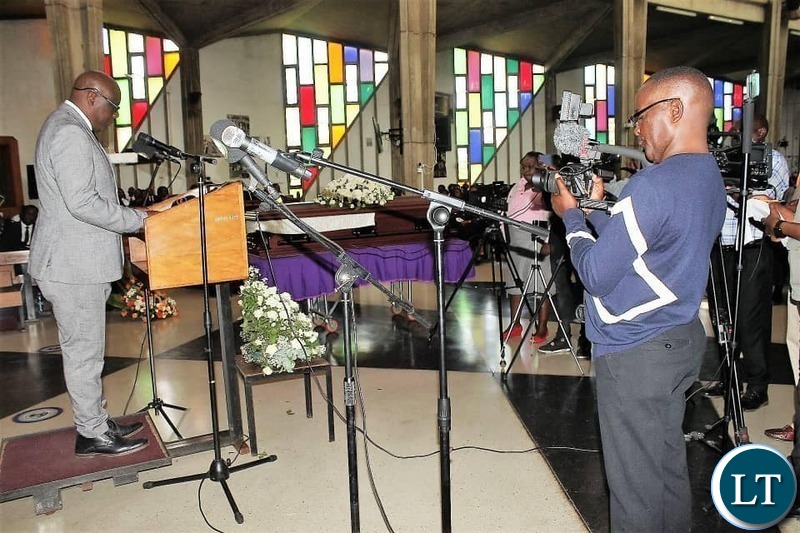
Late veteran journalist Julian Mwila interred

1

Ministry of Information and Media Permanent Secretary Kennedy Kalunga says the death of former Zambia National Broadcasting Corporation (ZNBC) Director General Juliana Mwila has robbed the country of a highly accomplished media professional.

Mr Kalunga stated during the church service of the late Mrs Mwila that she has left behind an admirable footprint of hard work, determination and focus.

He described the late Mrs Mwila as a reservoir of knowledge and a media guru.

“She was a reservoir of knowledge, expertise and experience in the media industry from which the country continued to benefit even after her retirement from active work.”

He explained that through hard work, Mrs Mwila rose from being a reporter at the Zambia News Agency (ZANA) now ZANIS to Director General at ZNBC where she later served as Board Vice Chairperson.

Mrs Mwila also served as Director for Press and Planning in the then Ministry of Information and Broadcasting Services.

Mr Kalunga said it is sad that Mrs Mwila has died at a time when government has intensified the roll out of key policy and legislative reforms that were close to her heart.

He cited access to information and media self-regulation as some of the policies she championed.

Meanwhile, Mr Kalunga has implored young journalists in the country to emulate Mrs Mwila to be professional.

Mr Kalunga said journalists can learn from the late Mrs Mwila on the need to adhere to media ethics.

And speaking earlier, ZNBC vice Board Chairperson Bernadette Phiri said Mrs Mwila was instrumental in championing mind-set and the prudent utilisations of resources at ZNBC during her tenure.

Ms Phiri recalled that the late Mrs Mwila challenged ZNBC staff to uphold media values and ethics in their discharge of duties.

Speaking at the same service, Mrs Mwila’s last born son Kaulu said her mother was a strong advocator of education in the family.

Mr Kaulu said through her strong stance on education a lot of family members and children have accomplished much in higher education.

Farmers call for reduction of fertilizer prices

0

Small-scale farmers in Kasama district have called on the government to work on reducing the price of farming inputs to motivate more people to venture into agriculture.

Speaking in separate interviews with ZANIS, John Bwalya said the price of fertilizer is too high for small-scale farmers.

Mr Bwalya said most of the farmers did not cultivate their maize fields last year because of the high prices of farming inputs.

“We will be very grateful to the government if the price of fertilizer is reduced. We are really struggling to raise money for fertilizer,” Mr Bwalya said.

And Mwila Musonda said there is need for the new administration to deliver on its campaign promise of reducing the price of fertilizer.

“I failed to cultivate one of my farms last year because of the high price of fertilizer,” Mr Musonda said.

Meanwhile, Emmanuel Sichamba said the agriculture sector could greatly contribute to the country’s economy if the price of farming inputs was reduced.

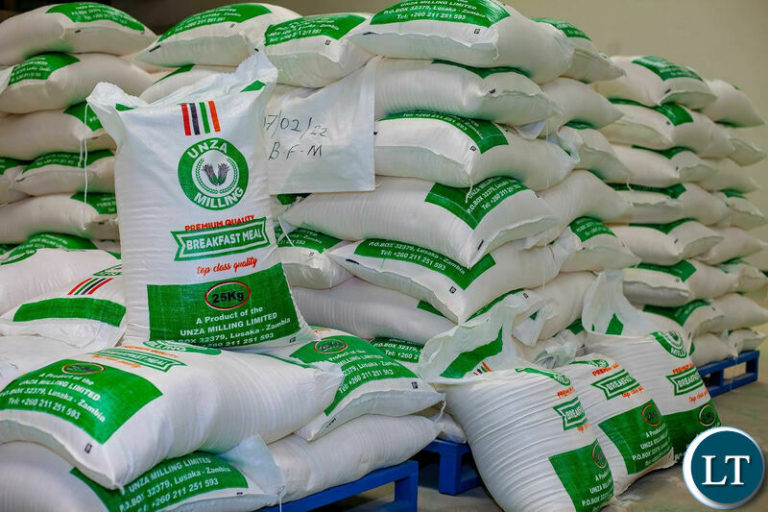
Mr Sichamba said the prevailing shortage of mealie-meal in the country is a threat to the country’s food security.

“We need to produce more maize to address this problem of shortage of mealie-meal. As farmers, we are ready to do our part if our Government works on the price of fertilizer. The price of fertilizer is too high for the farmers,” Mr Sichamba said.

Mwila Mutale said farming inputs should be affordable to an ordinary farmer and delivered on time.

Mr Mutale described the last two farming seasons as challenging.

“We received the farming inputs very late. It is also important to state that most of the farmers ended up losing their maize crop,” he said.

Speaking during the Sunday interview on the Zambia National Broadcasting Services (ZNBC), United Party for National Development (UPND) Spokesperson Cornelius Mweetwa assured the farming community in the country that government is working hard to reduce the price of fertilizer.

Mr Mweetwa said D-Compound fertilizer will be locally sourced unlike in the past when the commodity was being imported from other countries.

He said government has contracted the Nitrogen Chemicals of Zambia (NCZ) and United Capital Fertilizer to supply the much needed D-Compound fertilizer for the 2023-2024 farming season.

Current Shortage of Mealie Meal is a Wakeup call to the Government on the need to improve food security urgently

0

Catholic organisation – Caritas Zambia has said the current shortage of mealie meal coupled with exorbitant prices of the staple commodity is a wakeup call to the Government on the need to improve food security urgently

A shortage of mealie meal has hit some parts of the country with some retailers selling the staple food at exorbitant prices.

Caritas Zambia Programme Officer Eugene Ng’andu said the Government should urgently arrest the mealie meal shortages.

“Maize grain and mealie-meal are the most important food commodities and indicators of food security in Zambia. Caritas Zambia has been keenly following the unfolding of the current discourse on the shortage of the staple food commodity mealie-meal in some parts of the country where citizens were reported to be queuing to buy the commodity. As such, we note with grave concern, continued reports of shortages and increase in price of the staple food commodity mealie-meal as it has an impact on the country’s food security. To effectively address this issue, Caritas Zambia underscores the need for the government to act with sustained urgency and coordination. According to the Crop Forecast Survey conducted by the Ministry of Agriculture in 2022, maize production for the 2021/2022 production season reduced from 3,620,244 Metric Tonnes (MT) in 2020/2021 to 2,706,243 MT in 2021/2022. This represents a decline in production of 25.24%, a reduction when compared to the five-year average. This continued decline possesses a huge threat on the country’s food and nutrition security,” he said.

“While the compounding impact of the climate crisis, high cost of inputs as well as unsustainable farming practices are some of the root causes of the decline in production over the years, we also recognise the importance of intensifying efforts related to improving soil health and fertility, climate change adaptation and resilient food systems. We appreciate the commitment of the government to address the mealie meal shortage affecting certain parts of the country. However, to address the mealie meal shortage, prevent recurrence of this situation as well as ensure sustained food and nutrition security in the country, we reiterate our call on government to address the following short-term, medium-term and long-term priorities,” Mr. Ng’andu said.

Mr. Ng’andu proposed that the Government enhance support to small scale farmers while ensuring that the Food Reserve Agency procures sufficient maize during the four coming crop marketing exercise.

The government needs to update the country on the current status of the maize grain balance sheet to illustrate short-term and long-term trends. This is going to address issues of anxiety and panic buying among citizens and help stabilise the current shortage.The government should enhance and intensify security while upholding the rule of law by controlling illegal exportation and smuggling of mealie meal to neighbouring Countries. Furthermore, the mealie meal shortages being experienced should not be an avenue to import mealie meal which may contain GMO’s. Zambia has for a long time maintained its Zero-Tolerance stance on GMOs especially on the staple crop maize.

“In the medium to long-term;As the harvesting period for the maize crop gets underway, the government must ensure that the interests of smallholder farmers are protected from briefcase buyers. As such, government should consider revising upwards the maize floor price for the year 2023 to at least K250 per 50Kg bag.As the harvesting period for the maize crop gets underway, the government working through the Food Reserve Agency (FRA) should ensure to purchase and store sufficient quantities of stock in order to replenish the country’s Strategic Grain Reserve. With increasing climate variability, this will assure food security in times of food stress as well as other sorts of calamities that create volatility in prices and availability.According to the 2022 Crop Forecast Survey, smallholder farmers accounted for 96% of the total maize production for the 2021/2022 season while the commercial farmers accounted for only 4%. Despite this, smallholder farmers are the ones that are most likely to be negatively affected and vulnerable to impacts of climate change. As a result, we are restating our demand that the government immediately put into place mechanisms and strategies that will quickly assist smallholder farmers in adapting to the impacts of climate change and strengthening climate-resilient agricultural practices in time for the 2023/2024 farming season,” Mr. Ng’andu said.

Criminals attack Chinese nationals wound them

2

A 33-year-old Chinese national of Clastone Technology Company in Chingola has sustained a bullet wound in the stomach while his 45-year-old work mate, also Chinese, has a painful back after being attacked by armed robbers who were carrying three Pistols, pangas and iron bars.

Copperbelt Province Commanding Officer Peacewell Mweemba said Tony Dong, a Chinese national was shot at by criminals and sustained a bullet wound while his work mate Su Bei Qiang was hit with a block on his back by criminals.

Mr Mweemba said the victims were rushed to Sinozam Hospital in Kitwe and are currently admitted.

He said the criminals managed to get away with a bag that contained K20, 000 cash, work permits and Passports.

“Brief facts are that on April 17, 2023 around 23:00hrs, about eight criminals who were wearing masks, jumped over the wall fence of the company and attacked the workers including the guards.

The criminals then ordered one of the workers to awaken the victims who were sleeping in the house.

In the process, one criminal who was near their room was gunned down by the Chinese national.

Mr Mweemba said while in pursuit of the other criminals, one of the victims was shot in the stomach. The criminals then got away with a bag that had about K20.000, work permits, and passports for the Chinese nationals.

He said the police officers rushed to the scene and found the other criminals had already run away.

“The dead body of one of the criminals who was shot at, has been deposited at Nchanga North Hospital mortuary, “he said.

President Hichilema attends funeral of Austin Mwiinga

9

President Hakainde Hichilema has eulogized the late Austin Mwiinga popularly known as Nsabata, as a freedom fighter who used music to better the lives of people.

ZANIS reports that President Hichilema said it was sad that he has not lived long enough to see what he fought for through his music.

The President was speaking when he addressed thousands of mourners who turned up to pay their last respects to late Mr Mwiinga in Shebwe village in Mazabuka today.

President Hichilema said Mr Mwiinga was there for the party during the difficult times it went through since the time of late founding leader Anderson Mazoka.

The Head of State said the late Mr Mwiinga fought for the rule of law and freedom among other struggles he led through his music.

“He fought for the people through the songs he composed though he has not lived long enough to see that. He wanted to see freedom, rule of law,” the President said.

President Hichilema said Mr Mwiinga led a fight for the struggle through songs and the party will continue with his fight to better the lives of the people.

He said the work that Mr Mwiinga has left should continue and taken forward.

‘I see a different country in the coming few years. There is freedom now no-one is fighting or insulting each other. People are moving freely,” he said.

The President also led party officials, parliamentarians and ministers to raise funds and animals for the late Mr Mwiinga’s family.

K50, 000 and 36 animals and a piece of land have since been raised for the family.

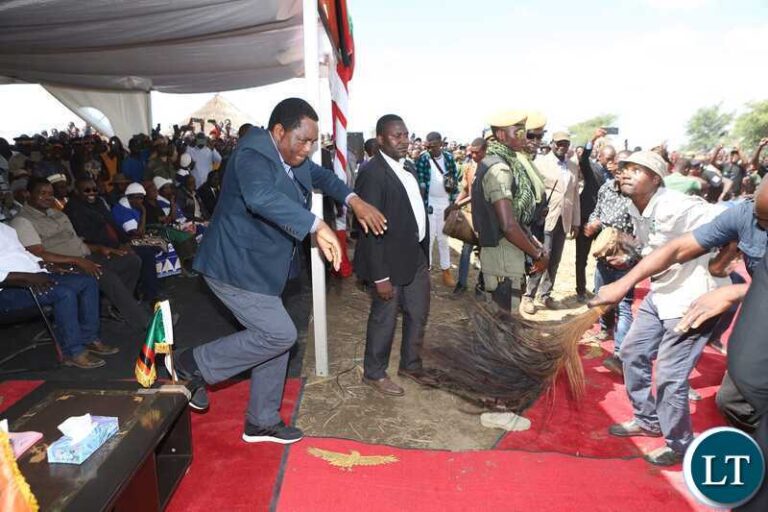
The President who performed a traditional dance, Kukweya in honour of the late Mr Mwiinga and thanked the traditional leaders and the people for turning out in numbers to mourn Mr Mwiinga.

The President said the party did all it could to keep Mr Mwiinga alive but it was God’s wish that goes to rest.

And Mazabuka Member of Parliament, Garry Nkombo said the party was there for Mr Mwiinga throughout his sickness and described him as a strong fighter.

Southern Province UPND Chairperson, Billiard Makwembo said Mr Mwiinga was a true gallant freedom fighter for the party and his work will be greatly missed.

Gonde cultural group representative, Josephine Malambo who spoke on behalf of the group said Mr Mwiinga led the group with passion.

Ms Malambo said the group has lost a leader who championed unity and respect for others through music locally and countrywide.

Four traditional leaders also attended the funeral who included Chief Hamusonde, Chief Chona, Chief Choongo and Chief Mwanachingwala’ s representative.

Minister of Commerce, Trade and Industry, Mulenga Chipoka and other senior government officials also attended the funeral.

Mr Mwiinga who was a leader of the Gonde cultural group composed songs for the UPND party since the time of late founding leader Anderson Mazoka.

The late Mwiinga was interred at Shebwe village in Magoye area this afternoon.

He died on Saturday, April 15, 2023 at University Teaching Hospital (UTH) in Lusaka after an illness and has left 11 children and two wives.

People queue for Partial Withdraws at NAPSA

3

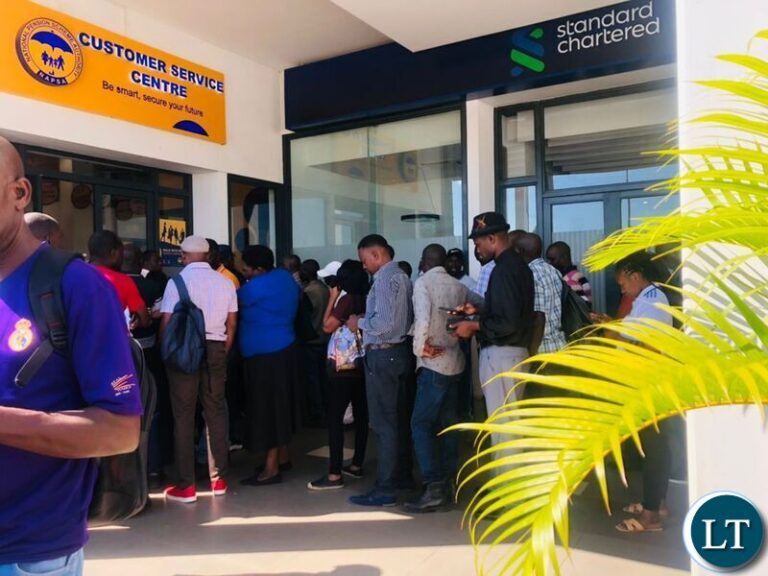
Scores of people in the Copperbelt Province have lined up at National Pension Scheme Authority (NAPSA) offices in a bid to access the partial pension withdrawal that came into effect on Monday.

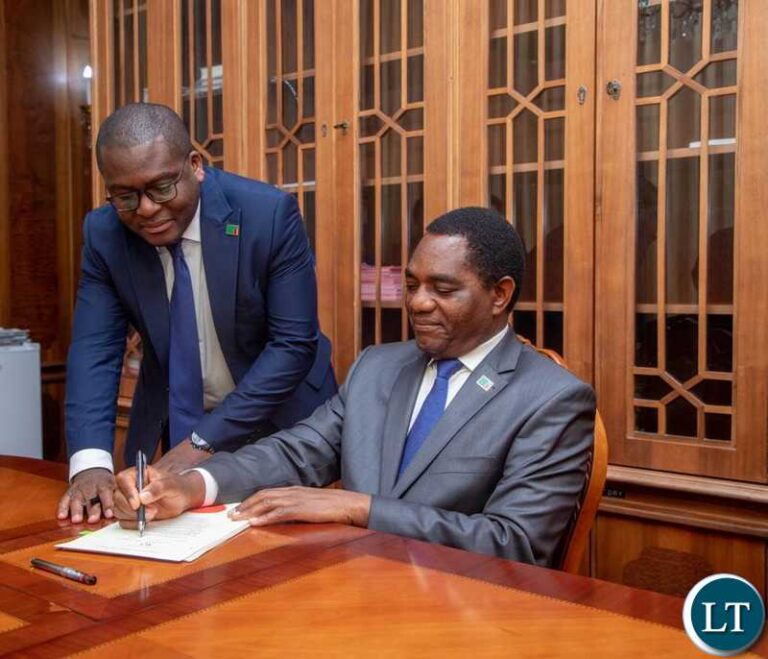
President Hakainde Hichilema on Monday signed into law, the National Pension Scheme Amendment Bill 2023 which allows for the partial withdrawal of pensions.

The new law gives citizens the opportunity to reinvest the funds into various ventures and assets of their choice.

Beneficiaries need to have made more than 60-months contributions to the Authority or be above 45-years old.

Members who qualify will have a once -off access of 20-percent of their contributions before retirement.

Early on Tuesday morning, scores of people were seen queuing up at the NAPSA customer service centre in Kitwe and Ndola.

Long and meandering queues have characterised NAPSA offices in Kitwe and Ndola with people lining up as early as 07:00 hours.

People have already started processing their papers for submission in readiness for partial payment of their NAPSA benefits.

Some people interviewed by Radio Icengelo News and ZNBC said they are expecting a smooth operation at NAPSA Offices.

“NAPSA is asking for the NRC (National Registration Card) and email address. Some of us have been told to open email accounts but it is not good for us who do not have email accounts. I am expecting NAPSA to work according to the law without delay. Most of the people who are here are not in employment so they need money to sustain their lives. They want to use that money to support their families, to start business and invest. We expect the process to be strong. Not everyone has access to emails so I think NRC is enough and some people are old to have access to smartphones. NRC shows everything so what is the point of NAPSA asking for email addresses from the people? This is causing congestion and unnecessary delays in the process,” a man told reporters at the Kitwe Branch.

Others thanked President Hichilema and the New Dawn Government for fulfilling the campaign promise of enabling people to access the partial pension withdrawal.

Another one added:”The process is just ok and I think this should have been done way back by previous governments but if you look at this government’s decision, I will commend the President. This is very important. This is what we expected if you look at the economy you will find that most of the people are not in employment. So this will accelerate the economy as people get money to invest, support their children and build houses. There are few people who have got money in Zambia. If you are to look at what is happening, things are really hard but as a Christian I would thank the President for what he has done. I looked forward to the enactment of this law.”

According to NAPSA Director General Muyangwa Muyangwa, the payment of the partial benefits will be paid to a beneficiary’s Bank or Mobile Money account.

To sign up for the pre-retirement benefit one needs to have an active personal email address, passport size photo, copy of National Registration Card , phone number registered in the name of the beneficiary.

Claimants do not need to visit the NAPSA office to claim because all claims will be done online.

When signing the bill into law, President Hichilema said the partial pension withdrawal will give citizens the opportunity to reinvest the funds into various ventures and assets of their choice.

“The new law will give citizens the opportunity to reinvest the funds into various ventures and assets of their choice. As a result more jobs will be created, contributing to our economic development agenda,” the Head of State remarked.

Court threatens to revoke Amos Chanda’s bail for absconding court sessions

6

Former presidential spokesperson Amos Chanda has been threatened with bail revocation by Magistrate Irene Wishimanga if he continues to abscond court proceedings. Chanda is facing two counts of theft and destroying evidence.

During the latest hearing, Chanda’s lawyer asked for an adjournment as his client was nowhere to be seen. Magistrate Wishimanga warned Chanda that if he does not show up for the next hearing, she will revoke his bail.

Chanda is accused of stealing property belonging to the Zambia Daily Mail, a state-owned newspaper. He is also accused of destroying evidence related to the theft. The first count alleges that Chanda, together with others, stole several items from the newspaper’s offices. The second count alleges that Chanda destroyed a memory card containing CCTV footage that could have been used as evidence.

Chanda was initially granted bail, but with strict conditions. One of these conditions was that he attend all court proceedings. However, Chanda has failed to appear in court on several occasions, leading to the warning from the magistrate.

The case has generated a lot of interest in Zambia, as Chanda was a close aide to former President Edgar Lungu. Many see the case as a test of the country’s commitment to fighting corruption, as well as a measure of the government’s willingness to prosecute high-profile individuals.

In a statement, the Zambia Daily Mail welcomed the court’s decision to warn Chanda about bail revocation. The newspaper’s managing director, Isaac Chipampe, said that the paper was committed to seeing justice done.

“We are happy that the court has sent a strong message to Mr. Chanda that he cannot continue to flout the law with impunity,” Chipampe said. “We hope that this case will be a wake-up call to others who think that they can get away with stealing from the public.”

Chanda’s lawyer, however, expressed disappointment with the court’s decision. He argued that his client had legitimate reasons for missing the hearing and that his absence was not deliberate.

“We will be filing an application to have the decision reviewed,” the lawyer said. “We believe that Mr. Chanda has not breached any of the conditions of his bail and that the court has acted unfairly.”

The case is set to continue in the coming weeks, with Chanda expected to appear before the court. The magistrate has warned that she will not hesitate to revoke his bail if he fails to attend.

Many in Zambia will be watching the case closely, with some seeing it as a key test of the government’s commitment to fighting corruption. The country has been plagued by high levels of corruption in recent years, with many ordinary Zambians feeling that they are being left behind while a small elite enrich themselves at the expense of the public.

President Hichilema signs into law the National Pension Scheme Amendment Bill 2023

8

President Hakainde Hichilema yesterday signed into law, the National Pension Scheme Amendment Bill 2023 which fulfills the UPND promise of allowing for the partial withdrawal of pensions.

President Hichilema said the new law will give citizens the opportunity to reinvest the funds into various ventures and assets of their choice. As a result more jobs will be created, contributing to Zambia’s economic development agenda.

National Pension Scheme Amendment Bill 2023, replaces the National Pension Scheme Act, 1996, so as to allow members to access a pre-retirement benefit, among others.

Under the new law a member is entitled to a pre retirement lump sum benefit. The member will have to consent in writing to access a pre-retirement benefit. The conditions for accessing the pre retirement lump sum benefit being that the person

  • Is below pensionable age and has
  • made a minimum of sixty monthly contributions
    or attained the age of forty-five.

The pre retirement lump sum benefit payable will be 20% of the indexed monthly contributions and the accrued interest.Therefore the payable benefit at retirement or any other benefit to a member who has accessed the pre retirement lump sum benefit shall be based on a member’s residual contributions and contributions made after the receipt of a pre retirement lump sum benefit.

Therefore a member who accesses a pre-retirement benefit consents to a reduction in that member’s retirement or other final benefit payable under this Act.

On his facebook page President Hichilema welcomed comments from Zambians on the benefits of NAPSA partial withdrawals.

Healthcare Federation of Zambia formed to bridge gap between public and private healthcare sectors

0

Several associations which represent a network of over 200 private clinics, hospitals and pharmacies have teamed up to form the Healthcare Federation of Zambia (HFZ) in a bid to strengthen communication and collaboration among public and private sector partners.

HFZ has attracted stakeholders that include Zambia Association for Private Hospitals (ZAPH), Zambia Pharmaceuticals Business Forum (ZPBF), Alliance for Private Health Providers (APHP), Zambia Medical Association (ZMA), Pharmaceutical Society of Zambia (PSZ), Kitwe Private Health Practitioners Association, Kabwe Medical Practitioners Association (KMPA), International Association of Public Health Logisticians (IAPHL) – Zambia Chapter, Livingstone Private Health Sector Association, Choma Private Health Sector Association and Ndola Private Sector Association among others.

Minister of Health Sylvia T. Masebo on Tuesday morning officially opened the Healthcare Federation of Zambia that will also build capacity for the private sector to deliver accessible, quality health products and services in Zambia.

In her speech, Ms. Masebo said although the private sector plays a central and fundamental role in delivering health products and services in Zambia, it is not well coordinated within the private space.

The Chongwe Member of Parliament said the private health sector has emerged as an important source of resources necessary for attaining Universal Health Coverage (UHC).

“I feel privileged to be here to officially launch the Healthcare Federation of Zambia (HFZ) as a platform for public-private sector dialogue and coordination. This federation was formed after realizing the gaps and opportunities in the public-private health sector collaborations. The USAID Zambia Accessible Markets for Health (ZAM-Health) Project has been instrumental in spear-heading the HFZ formation and I thank you. The HFZ indeed will be a critical partner to the government in health service delivery. The Governmentof the Republic of Zambia is committed to the attainment of Universal Health Coverage (UHC), an aspiration of all United Nations (UN) member countries. As countries in sub-Saharan African (SSA), we face resource constraints as a major limiting factor to deliver Universal Health Coverage. As we know, Universal Health Coverage is only reached when we provide access for the whole population to good-quality health services without the risk of financial hardship. Due to this realization, we have to devise means of overcoming health access financial challenges while we encourage those that have no limitation to chip in for the poor,” Ms. Masebo said.

HFZ was registered by the Registrar of Societies as a legal entity under the Societies Act Number 119 of the laws of Zambia in March 2023.

“The private health sector has emerged as an important source of resources necessary for attaining UHC, complementing the public sector. As a result, health services in UN member countries are increasingly being delivered through a mixed health system of public and private providers. This is by using a total market approach (TMA). A total market approach is a strategy that leverages the complementary roles of all sectors to expand the overall market for priority health products and services. Although the private sector plays a central and fundamental role in delivering health products and services in Zambia, it is not well coordinated within the private space. It is also further not well coordinated in its collaboration with the Ministry of Health. As such, the private sector does not fully participate in delivering essential health care. For this reason, private sector health providers are often left out of critical training and formulation of health policies. The uncoordinated activities impact the efficiency of service delivery. They also often lead to a duplication of efforts and wastage of funding, thus slowing progress in meeting national and global targets,” she said.

Ms. Masebo said the COVID-19 pandemic provided an opportunity for public-private collaboration and revealed prospects for long-term coordination between the sectors.

“The multi-sectoral platform created to ensure a coordinated response to the pandemic showed the potential for long-term collaboration. It further proved that there is value in information exchange for improved service delivery. For this collaboration to extend beyond the COVID-19 pandemic there is a need for integrated efforts for synergy across all healthcare services. This collaboration will require the development of trust among parties, deep investment in the careful matching of private sector capacities with public sector needs, alignment of roles and processes to support the translation and adaptation of tools and practices from one sector to the other. The objective of HFZ is to enhance participation of the private sector in delivery of healthcare services through a well-coordinated policy advocacy mechanism and regular public-private sector dialogue. The Federation will also act as a platform for business networking and sharing of best practices among private healthcare players. This will be within and across the borders of our country, and between the public and private sectors,” the Minister of Health said.