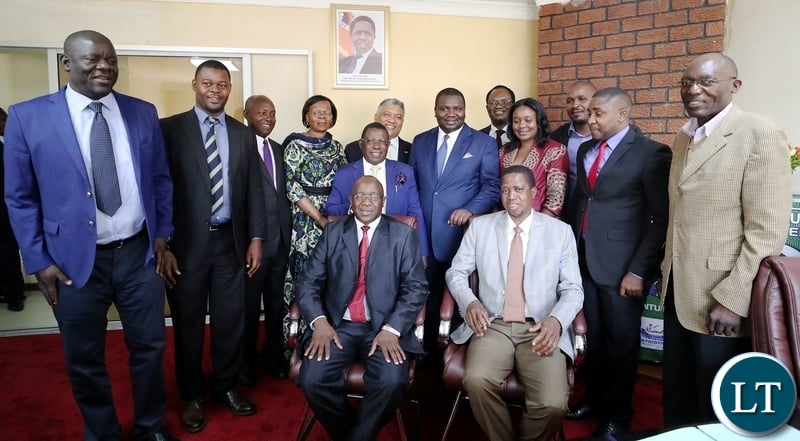
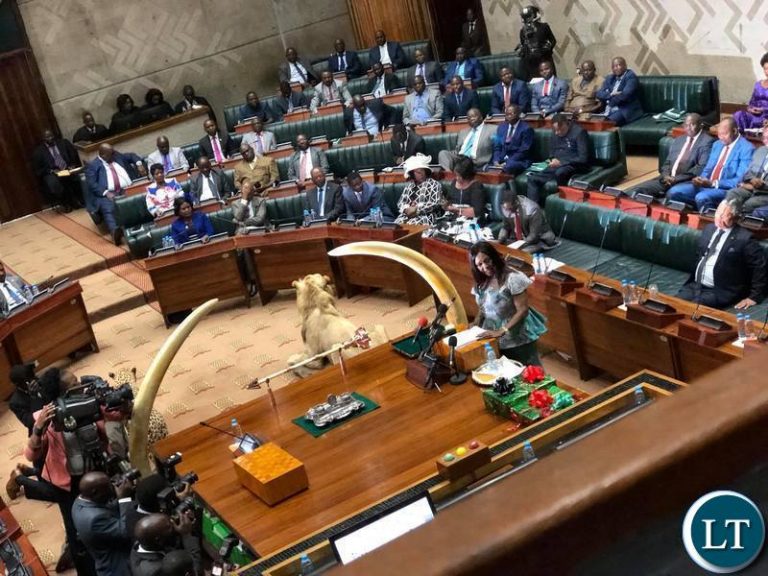
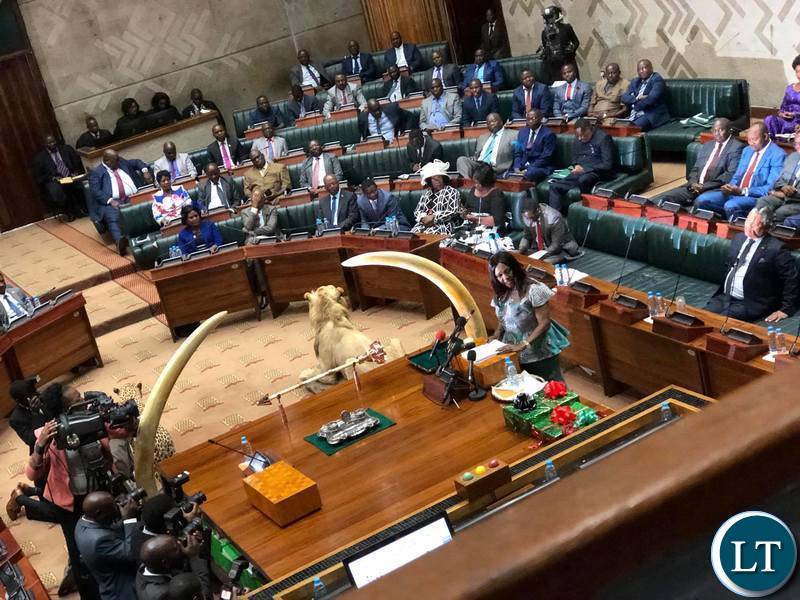
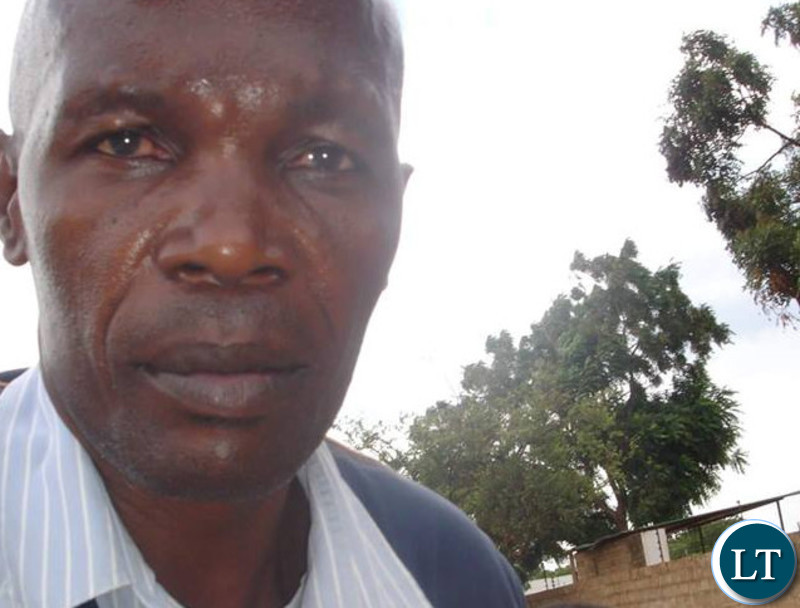
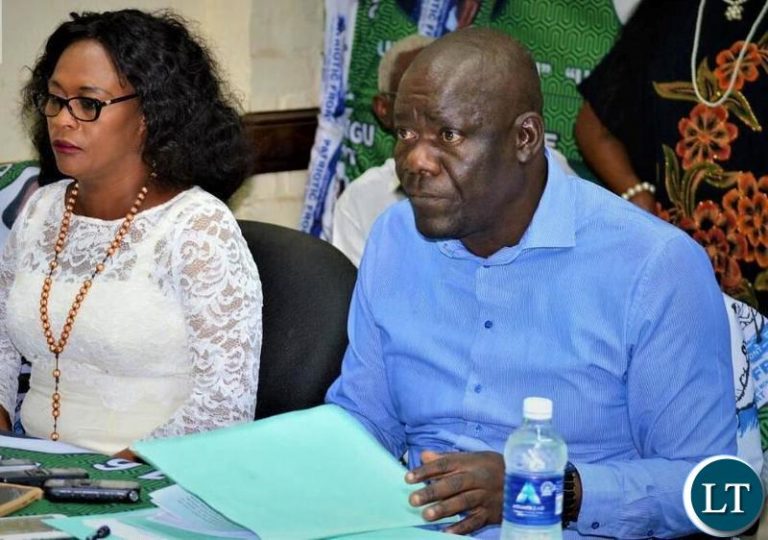
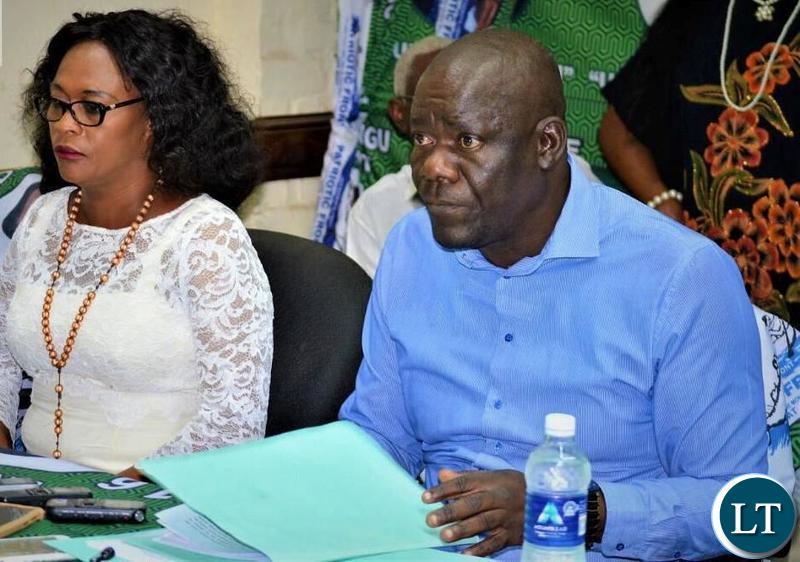
FILE: President Edgar Lungu attends dialogue process through the Zambia Centre for Inter Party Dialogue at Pf headoffice in Lusaka on 10th May 218
The Zambia Centre for Inter-party Dialogue has postponed the Political parties consultative meeting scheduled for tomorrow.
ZCID Spokesperson and Board Member, Jackson Silavwe said that the postponement has been necessitated by the need for the three church mother bodies and ZCID to conclude negotiations on the Memorandum of Understanding and Structure of the national dialogue process.
In a statement to ZNBC News this evening, Mr. Silavwe said the Church and ZCID need to also generate a consensus agenda that has the confidence of all political parties and stakeholders.
Mr. Silavwe said that this was to eliminate any possibility of failure of the important national exercise.
Mr. Silavwe also said at the request of members of ZCID, the board held an Emergency meeting where they resolved to postpone the Consultative meeting.
Earlier, State House had said that they had not received any formal invitation for tomorrow’s National Dialogue and Reconciliation meeting scheduled for Kapingila House in Lusaka.
Presidential Spokesperson Amos Chanda said that President Edgar Lungu was ready for dialogue any time as per programme set by the Church.
Mr. Chanda explained that since the two meetings the President has held with the Church mother bodies, there has been no formal invitation and programme from them and the Zambia Centre for Interparty Dialogue.
Meanwhile, President Lungu is tomorrow expected on the Copperbelt for a two-day working visit. Mr. Chanda told ZNBC News that the President has an engagement in Kitwe tomorrow afternoon and on Saturday morning.
Zesco United and Nkana will on Friday, December 28 know their 2018/2019 CAF Confederation Cup pre-group stage opponents with two recent visitors to Zambia prospective suitors in the draws to be made in Cairo.
Nkana and Zesco are among fifteen teams demoted from the 2018/2019 CAF Champions League pre-group stage who will be paired against opponents who successfully advanced from last weekend’s second round of the CAF Confederation Cup.
One of Zesco and Nkana’s potential last 16 opponents is NA Hussein Dey of Algeria.
Dey eliminated compatriots Green Eagles in last weekend’s CAF Confederation Cup second round.
Another prospect is record three-time CAF Confederation Cup winners CS Sfaxien of Tunisia who eliminated Green Buffaloes.
Meanwhile, draw against Asante Kotoko for Zesco will see them return to Ghana for the first time since 2014 when they were eliminated in the second round of the same competition by Medeama.
Nkana’s perennial nemeses Zamalek of Egypt are also lurking for the Kitwe giants.
The first legs will be played during the weekend of January 11 and the final legs are set for the weekend of January 18.
Winners over both legs advance to the group stage that starts on February 1.
PROSPECTIVE 2018/2019 CAF CONFEDERATION CUP LAST 16 OPPONENTS
-Zamalek (Egypt)
-Raja Casablanca, Hassania Agadir, RS Berkane (all Morocco)
-CS Sfaxien (Tunisia)
-NA Hussein Dey (Algeria)
-Petro Atletico (Angola)
-Faso Stars (Burkina Faso)
-New Star (Cameroon)
-Enugu Rangers (Nigeria)
-Mukura Victory Sports (Rwanda)
-Kaizer Chiefs (Republic of South Africa)
Zambia’s economy grew by five percent in the third quarter of 2018 compared to 4.5 percent recorded in the same period in 2017.
The Central Statistical Office (CSO) bulletin for the month of December indicates the 0.5 percentage points increase compared to 4.5 percent recorded in the third quarter in 2017.
CSO Acting Director of Census and Statistics Goodson Sinyenga said the percentage growth is according to the year on year comparison of the gross domestic product (GDP).
Mr. Sinyenga said the financial and insurance activities recorded the highest growth with 36.6 percent in the period under review.
He disclosed that the information and communication industry followed at 31.6 percent with the arts, entertainment and recreation industry coming third at 21.0 percent.
“The agriculture, forestry and fishing industry has continued to record negative growths in the third quarter of 2018 at 15.4 percent,” he said.
Mr. Sinyenga pointed out that during the first three quarters of 2018, the economy grew by 3.9 percent compared to 3.6 percent recorded in the first quarter of 2017.
On the labour market, Mr. Sinyenga said 3,398,294 people are in the labour force, of which 2,971,170 are employed.
He said 60.1 percent of the labour force are male and 39.9 percent are female, adding that 60.1 percent of the labour force is in urban areas while 39.9 percent in rural areas.
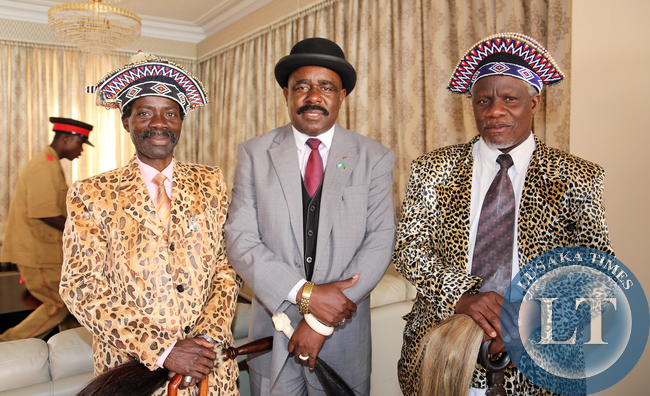
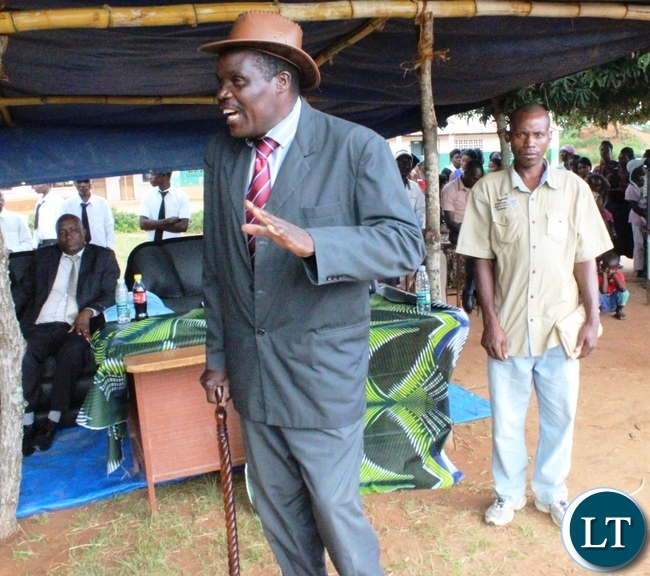
Chief Mumena With Senior Chief Ishiindi right and Chief Ishima Sankeni V1
Nyambanza residents in Zambezi District have petitioned against the sale of their 36,000 hectares ancestral land to Meanwood Agricultural Company limited of Lusaka by a local chief , Chief Mpidi.
The concerned residents have petitioned Senior Chief Inshindi to reject on their behalf the planned demarcation, alleged sale and alienation of 36,000 hectares by same named company.
In a strongly worded petition letter to Senior Chief Ishindi, people of Nyambanza area alleged that 36,000 hectares of their customary land, which falls under the jurisdiction of sub chief Nyambanza and Chizozu, has been sold without community consultation from the two areas where the land lies.
Princess Lane Kankinda said in a letter to Senior Chief Ishindi that the affected community considered the move as a hostile maneuver meant to disregard the relevance of, not only people in the area, but two sub chiefs, whom they said are custodians of the land in question.
The residents said that land in question does not lie in Chief Mpidi’s jurisdiction and that so making the sale of the land illegal and questionable.
Chief Mpidi, in his letter obtained by ZANIS to Meanwood Agricultural Company limited dated 4th August 2018, revealed that he was allocating the company 36,000 hectares of land in his chiefdom through the district council to the ministry of lands.
The letter written to Meanwood Agricultural Company Limited dated 4th August 2018, and obtained by ZANIS , revealed that Chief Mpidi was allocating the company 36,000 hectares of land in his chiefdom through the District Council to the Ministry of Lands.
When contacted for a comment, Zambezi District Acting Council Secretary, Stanley Mwanza acknowledged receiving a correspondence from Chief Mpidi on the project to be undertaken by Meanwood Agricultural limited.
Mr Mwanza, however, said that the council has no mandate to sell such vast land, adding that only the President would consent to such a move.
And Zambezi District Commissioner, Lawrence Kayumba said his office does not deal with land allocation and advised the petitioners to refer all matters to senior Chief Ishindi, who he said, has the capacity to summon the grieved villagers and the chief in question to resolve the matter amicably.
Efforts to get Meanwood Agricultural Company Limited Management for comment on the matter failed by press time as their contact mobile phone was switched off.
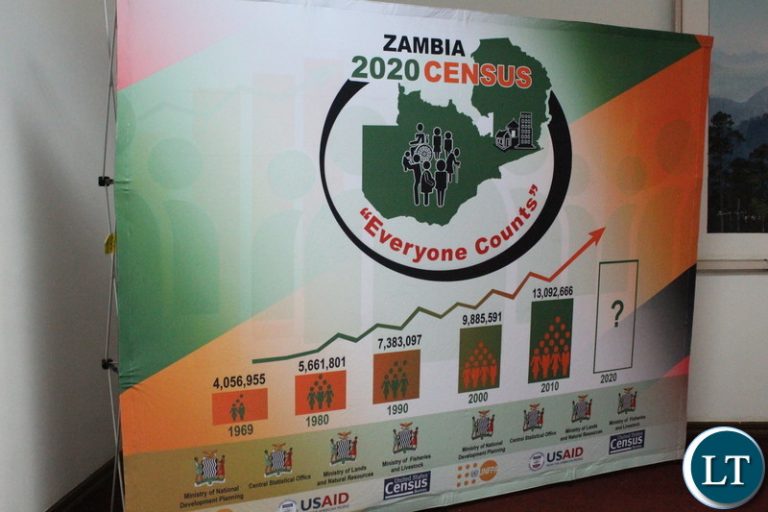
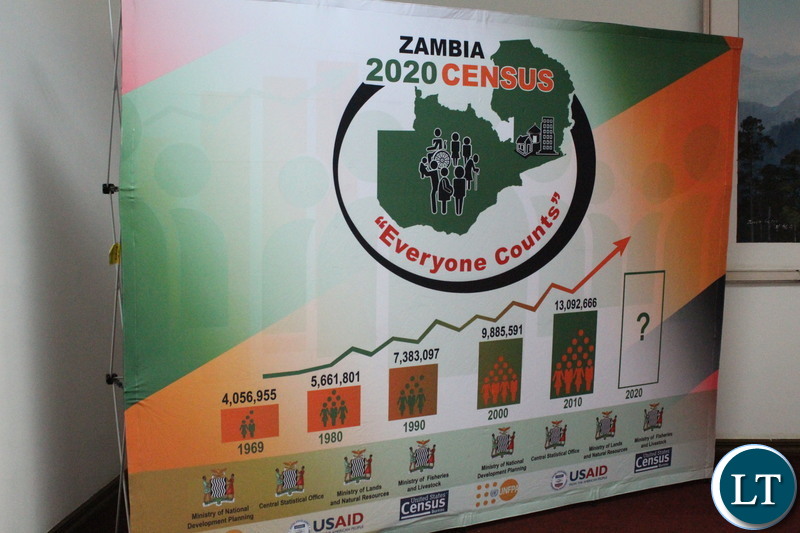
The Central Statistics Office (CSO) says preparations for the first ever electronic 2020 Census, of population and housing have reached an advanced stage.
CSO Acting Director of Census and statistics, Goodson Sinyenga, says his office has started undertaking preparatory activities of land mappings in readiness for the upcoming census.
Mr. Sinyenga explained that CSO has embraced the technological advanced system which requires the collection of the much needed accurate data.
He told journalists at a media briefing in Lusaka today, that the old system of collecting data using questionnaires, will not be used in the 2020 Census of Population and Housing.
He disclosed that his office will instead use tablets, installed with the latest software application known as Survey 1, 2, 3, procured from Israel.
“We are this time around using advanced modern system of collecting data in the 2020 census. We will not use the usual questionnaires but tablets that have the software called Survey 1,2,3 which was procured from Israel, the enumerators will collect data on key infrastructure, government projects, mobile towers and commercial buildings among others,” he said.
Mr.Sinyenga underscored that the pilot project of land mapping was successfully implemented in Chongwe and Lusaka districts using the new technology of survey software, saying that the project will be rolled out to other parts of the country in the first quarter of 2019.
He urged people in different households to cooperate with the officers doing the land mapping following the build up to the 2020 census.
A patriotic resident in Chinsali Town in Muchinga Province Town John Siwale has advised government to remain resilient as it implements the new mineral tax regime effective next year.
The new mineral royalty rate will rise by 1.5 percent points across the board, Finance Minister Margarate Mwanakatwe told lawmakers in Lusaka in her maiden budget speech in October that the proposed new mineral taxes takes effect in the first quarter of 2019.
The current tax rates range from 4 percent to 6 percent depending on the Copper price.
Speaking during a live radio programme on Muchinga FM dubbed “Breakfast show ” in Chinsali today, John Siwale said the new mineral tax regime that comes into effect in the first quarter of next year, have been done in good faith.
Mr. Siwale said during the radio show anchored by Panji Msoni and monitored by the Zambia News and Information Services (ZANIS ) that government should not be discouraged over its planned new mineral tax since mining companies have been making huge profits at the expense poor Zambians.
“ Changes in the mineral taxes should not make mining companies to start threatening the government with unjustified job cuts, “ he said.
He added that government should not entertain threats of job cuts at the expense of the much needed revenue.
Government needs revenue to develop the country and provide various services for its citizens in health and education, among other sectors, he reasoned.
In support of Mr. Siwale’s advise to government, Josephat Chitimbwa said arm twisting in the wake of new mineral tax regime should not be entertained.
Mr. Chitimbwa who is a businessman in Nakonde Town said during the same radio programme that mine companies complaining about the new mineral taxes are not being honest as they have made huge profits from the time they commenced their businesses in Zambia.
“ Although government has indicated that it is open to dialogue and submission on the matter, arm twisting through threats of job cuts should not be entertained, “ he said.
Mr. Chitimbwa said government needs the revenue for various services and companies not willing to pay new mineral taxes should hand over their companies.
He said Government should reposes or engage new investors ready to pay the new mineral taxes adding that he was wondering why the same mining companies operating in Zambia comply with sales tax laws in other countries while they should fail to comply with the same law in Zambia.
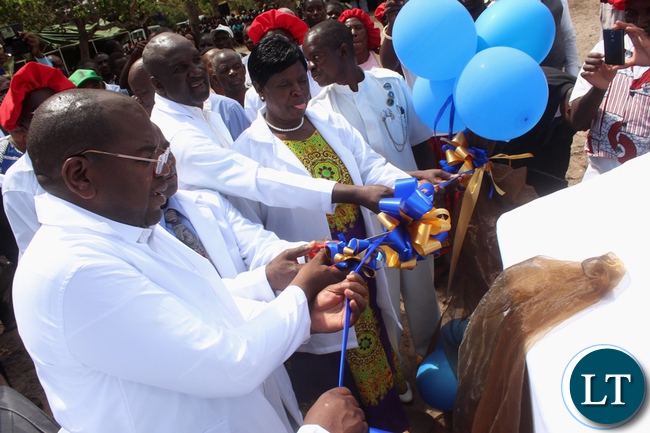
Health Minister Dr. Chitalu Chilufya (l) cutting the ribbon during the laying of a Foundation Stone for the Re-Development of Yuka Adventist Hospital in Kalabo District
Government says it is committed in securing the health of people by developing health infrastructure countrywide.
Minister of Health Chitalu Chilufya says it for this reason that government through his ministry has constructed the mini first level hospital in Shiwang’andu Town.
The mini hospital will accommodate 40 beds, including services such as x-ray, theatre and maternity services, among others.
ZANIS reports the mini first level hospital project has a stipulated time frame of 68 months, adding that the health facility will also include houses for health workers.
In Muchinga Province, government has additionally constructed Hospitals in Isoka, Nakonde and Mpika districts, apart from constructing Health Posts in other districts in the Province.
The health infrastructure is part of government’s construction programme of 108 min hospitals across the country.
The minister revealed this development when he officially opened the facility today.
And Dr. Chilufya has disclosed that , works on the stalled projects on the construction of Health posts in Muchinga Province will soon resume tomorrow Friday December 28 and that the workers with arrears from previous contractors will be settled when new contractors are engaged.
Meanwhile , government has handed over life serving modern ambulances to Mulanga Mission health facility and Kalalantekwe Clinic.
Dr. Chilufya also handed over the modern ambulances to the two health facilities yesterday which include Kalalantekwe and Mulanga mission hospital.
And Speaking earlier, Shiwang`andu Constituency Area Member of Parliament, Steven Kampyongo said he is delighted that his constituency will have a mini first level Hospital.
Mr. Kampyongo has since thanked President Edgar Lungu and the Ministry of Health for not leaving Shiwang`andu behind in health infrastructure development across the country.
The Area Member of Parliament also commended health workers in Shiwang`andu District for their hard working spirit.
Minister of Guidance and Religious Affairs Hon. Godfridah Sumaili during the 70th Anniversary of the World Council of Churches (WCC).
Minister of Religious Affairs Godfridah Sumaili says people who have been incarcerated for various offences are not in Correctional facilities to be punished but to be rehabilitated and corrected from their wrong deeds.
Reverend Sumaili said government decided to change the name of the Prison Services to Correctional services so that the facilities could operate as a form of rehabilitation and correction centre for those charged with various offences.
The Minister noted that President Edgar Lungu is keen on ensuring that inmates come out of the correctional facilities as better people having undergone rehabilitation.
Reverend Sumaili was speaking at Chainama East Correctional Hospital in Lusaka today when she donated assorted food stuffs and groceries to the facility worth approximately K6,000.
She said her ministry has decided to visit and donate to inmates in order to show God’s love for every human being ahead of the commemoration of the declaration of Zambia as a Christian nation.
Zambia will on 29th December commemorate the declaration of the country as a Christian nation under the theme, “sustained unity in diversity.”
She reiterated that her ministry will continue to work with the Ministry of Home Affairs to ensure the transformation of inmates in all correctional facilities countrywide.
And Correctional Services Deputy Commissioner General Lloyd Chilundika disclosed that Chainama East Correctional Hospital currently has 120 inmates with special needs in the custody.
Mr. Chilundika said Chainama East Correctional Hospital is among the three facilities that care for inmates with special needs from across the country.
The Deputy Commissioner General thanked government for the massive infrastructure development that have been undertaken at various facilities across Zambia.
He disclosed that in addition to what has been built, the correctional service will next year embark on the construction of 3 ultramodern facilities at Mwembeshi Correctional facility.
He thanked the Minister and her team for donating to the facility which houses inmates with special needs.
Zambia’s annual rate of inflation for the month of December has increased to 7.9 percent compared to 7.8 percent recorded during the same period in 2017.
Central Statistical Office (CSO) Acting Director Goodson Sinyenga says this means that on average, prices of goods and services have increased by 7.9 percent between December 2017 and December 2018.
Mr. Sinyenga attributed the increase in the annual rate of inflation, to the increase in the price of non- food items such as household furniture, as well as the cost in transport.
This came to light in Lusaka today during the CSO monthly briefing.
Mr. Sinyenga adds that the inflation rate for the Housing Water, Electricity, Gas and other Fuels increased to 7.3 percent in December 2018 from 6.7 percent in November 2018.
“The annual food inflation rate for December 2018 was recorded at 8.1 percent compared to 8.4 percent recorded in November 2018.the decrease is mainly attributed to price changes of vegetables such as rape, pumpkin leaves, spinach, cabbage and fruit’s. The slowing down in the month on month inflation rate is mainly attributed to price changes of food products such as meat products,” he stressed.
And commenting on the annual health Inflation rate, he said the health inflation increased to 5.1 percent in December 2018 from 4.8 percent in November 2018.
He cited that the increment as mainly attributed to price movement of products such as No cough, Kaolin, Fansida, Eye Ointment, Contraceptives and Syringe.
He further disclosed that the country’s trade deficit has however decreased by 35.7 percent, which is K2, 691.2 million recorded in October 2018 to K1, 729.5 million recorded in November 2018.
Mr. Sinyenga explained that the deficit in trade means that the country imported more at a slower rate than it exported in nominal terms.
The CSO Acting Director described 2018 as a landmark year since the statistics bill went through a third reading in parliament.
He said once enacted, the bill will respond to the modern ways of data collection as it will be universally accepted.
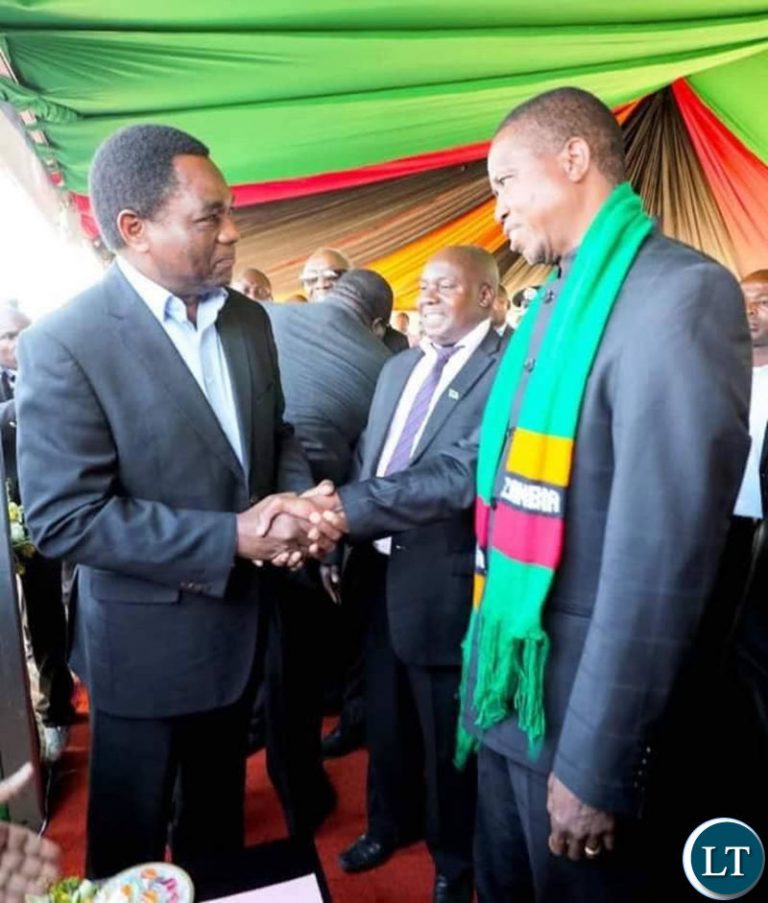
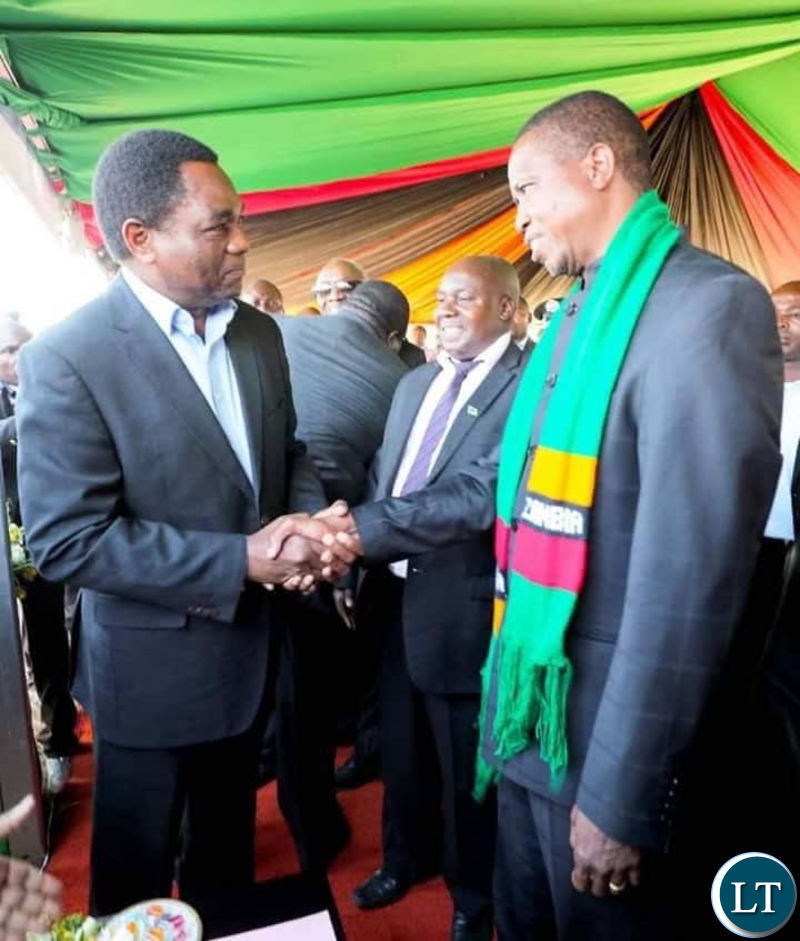
HH and President Lungu meet at late Munkombwe’s burial in Choma
All People’s Congress Party (APC) president Nason Msoni says the emphasis of two key players (President Edgar Lungu and Hakainde Hichilema) has watered down the importance and value of the forth coming dialogue talks.
The opposition leader explained that National issues should never be personalised and that his party was of the view that another opportunity has yet been lost to focus on the bigger picture.
He noted that the moment national talks become conditional and specific around individuals they become irrelevant and a sheer waste of time.
“The trouble is it is centred on individuals than on the national question. A national agenda should never revolve around individual at the expense of the bigger picture.
“Am not persuaded to attend in the circumstances and as such intend to boycott the event for reason that it is more of a handshake oriented interaction than substance pedalled,” he said.
He said as a politician who has participated in similar processes in the past he finds this particular dialogue strange as it is more focused on individual reconciliation than the resolution of the national questions.
“In my view what is at stake is far more greater than mere interactions of political leaders.
The lack of political will is apparent for all to see on the part of the PF.
“As legitimate stakeholders we cannot afford the luxury of allowing ourselves to be on the sideshow in matters of national concerns.
“Matters of reconciliation should rather be on the sidelines of the dialogue process as opposed to being the centre stage of the dialogue process,” he said.
Newly installed Chief Fwambo of the Mambwe speaking people in Mbala district of Northern Province has warned his subjects to stop drinking beers as early as 07:00hrs.
ZANIS reports that Chief Robbie Julius Fwambo says he will take punitive measures on any of his subjects found drinking beer during productive hours.
He said doing this will ensure that various development activities in his chiefdom are achieved since most of his subjects will be sober and productive.
The Traditional leader said in a letter availed to ZANIS today that the overall development in his chiefdom is being compromised by beer drinking as early as 07:00 hours, a situation he said cannot remain unchecked.
In another development, chief has implored his subjects to consider diversifying instead of growing maize alone as the crop is not profitable.
He has advised his subjects to diversify their farming activities to ventures such as growing cassava which he said has more profit.
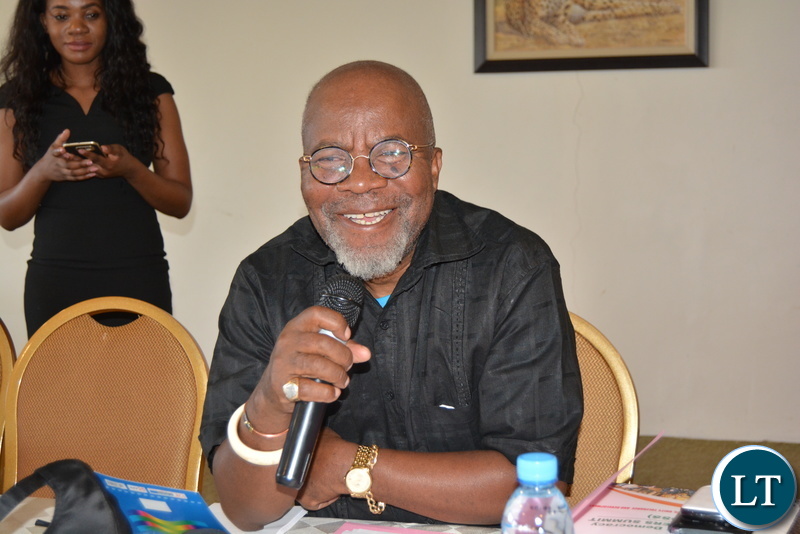
First Chairperson for the Zambia Centre for Interparty Dialogue-ZCID Dr Katele Kalumba
Former Minister of Finance Katele Kalumba has cautioned against opening up any inquiry into the privatization of Zambian assets.
Dr. Kalumba said that it is not in the best interest of the nation to start opening up issues it has limited information about.
In an interview with QTV News by telephone Dr. Kalumba has advised Zambians to let, what he has termed as the sleeping dogs, lie.
Dr. Kalumba, who was Cabinet Minister during the Frederick Chiluba MMD led government , said that whether it was an individual or a group of Zambians that benefited from the privatization exercise, this was not right to start opening issues.
Dr. Kalumba, however said that if Zambians, still want to open an inquiry into the privatization of national assets, they must also open up all information relating to the transfer of control of national enterprises.
Dr. Kalumba said that if people calling for this inquiry are doing so in national interest, they must equally ask themselves whether this national interest is strategic or vital.
Dr. Kalumba, said that he was of the view that if Zambians ask themselves these questions, they will then understand whether opening an inquiry into the privatization of Zambia’s assets is something they want to do or not.
The Former Minister of Finance has advised Zambians to realize that privatization in Zambia involved various governments and was linked to the Heavily Indebted Poor Country (HIPC) completion point, adding that this was why he is counseling people in Zambia to let the sleeping dogs lie.
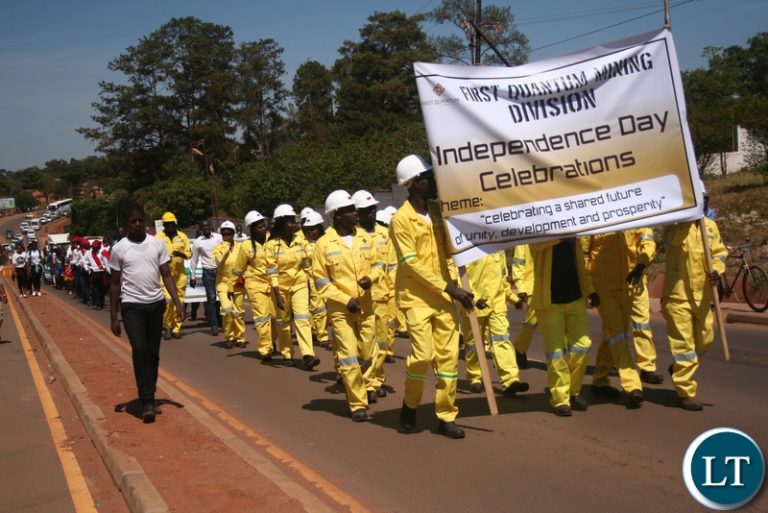
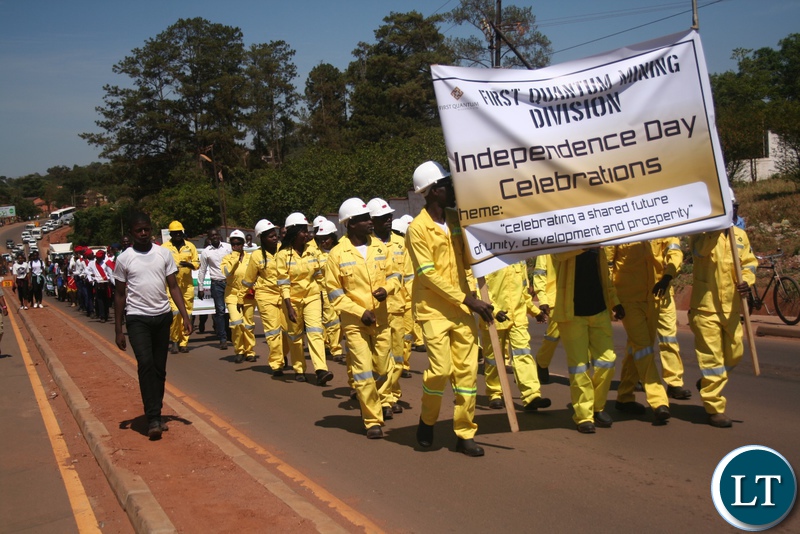
First Quantum miners marching along the Independence Highway during the commemoration of 54th Zambia’s Independence anniversary in Solwezi
Based on a company memo dated December 21, First Quantum Minerals (FQM), follows the lead of Mopani Copper Mines, of cutting thousands of jobs at their mining operations in Northwestern Province of Zambia. The irony of it all, the Director of Operations, Matt Pascall, wishes the employees ‘Seasons Greetings’, in the same memo. Christmas will definitely not be merry to the 2,500 men and women of FQM that will lose jobs. Going by Glencore’s (Mopani Copper Mines) website, an average miner in Zambia has 8 dependents. Therefore, an estimated 20,000 dependents of FQM employees would be affected by the announced job losses. To put this in context, FQM has so far made $1.256 billion (15 Billion Kwacha) in gross profits, and $243 million (2.9 Billion Kwacha) of net profit as at September 30th, 2018, as announced in their financial disclosures of Q3 earnings on the company website. To borrow the words of FQM’s CEO addressing analysts and shareholders, they are producing ‘solid results’. Clearly, FQM, and other mining multinationals, do not care about their social licenses, but continue to play lip service to corporate social responsibility, while sending tens of thousands of Zambians to the streets.
What is most troubling about this game of chicken The Government of The Republic of Zambia (GRZ) and mining multinationals are playing, is that both players do not feel the real consequences of their actions. It is the tens of thousands of Zambians that end up in the streets, while ministers live large, and so do mining multinationals and expatriates. GRZ does not seem to have contingencies in place to mitigate potential job losses from the mines, after increasing taxes. Negotiations and business disagreements like this should have positioned Zambia Consolidated Copper Mines – Investment Holdings (ZCCM-IH) to increase equity stake in some of these mining houses, to take control of Zambia’s destiny. To the contrary, ZCCM-IH seems to enjoy minority ownership status in world class mining assets, with little to no plans for growth, while paying fake dividends. MEE would ensure ZCCM-IH reaches the size of Chile’s Codelco by competing aggressively against the public sector. To add salt to injury, the government continues to view high grade mine tailings such as Kitwe’s Black Mountain, a project from which FQM was born some 20 years ago, as youth empowerment projects.
Due to high levels of national indebtedness, which the government continues to deny, low accountability of national coffers, and the continued misplacement of meagre investments, the country continues to lose leverage in strategic negotiations. GRZ continues to double down on public enterprise equity loss, by listing ZAFFICO. What does the country do, to regain leverage?
The Zambian government needs to put ethical leadership and fiscal responsibility front and center, if the mining industry is to take the PF government seriously. As a country, we lose our moral standing to call the mining industry to account, if we continue having the president reportedly building mansions in Swaziland, unaccounted for wealth accumulation among elected officials, and government agencies procuring luxury planes. While government officials and mining investors feast, there is famine in Lumezi Constituency of Eastern Province where villagers are living on mangoes.
If we must borrow as a country, we need to invest in areas of highest returns to be able to service the debt and increase equity in joint ventures. We also need to stop paying fake dividends, and plough funds back into businesses, or diversify. There are much bigger companies in the world, undergoing exponential growth, that don’t pay dividends. Amazon and Tesla are two examples, among many. This government prioritizes dividends over employee salaries, as reported at ZamPost.
To the mining industry as a whole, MEE implores them to put core values front and center, and not lay off poor employees to get the attention of government. These are tens of thousands of humans not to be used as pawns in business negotiations. Where are business ethics when they are needed most?
By Victor K. Mwaba, MBA CSSBB
MEE Head of Mining and Mineral Resource Development
The Committee to Protect Journalists says the decision by the Supreme Court is disproportional.
The Supreme Court last week sentenced Derrick Sinjela, editor-in-chief of the privately owned Rainbow Newspaper, to 18 months in prison for contempt of court.
Sinjela was convicted in September in relation to articles that accused the Supreme Court of corruption and questioned its handling of a case between two private companies.
CPJ Africa Program Coordinator Angela Quintal in New York said the jailing of Sinjela sends a very grave message that journalists, and Zambians in general, cannot criticize the judiciary without risking their liberty.
Ms. Quintal observed that a critical press is crucial for accountability and transparency within the judiciary.
Sinjela, who had pleaded guilty and asked for leniency, confirmed to the court yesterday that he did not have a lawyer, Haguta said.
At least two other people have been charged after criticizing the judiciary’s handling of the same case, which involved Stanbic Bank and Savenda Management Services, and one of those was sentenced to six years in prison in November.
Sinjela is currently detained at Chimbokaila prison in Lusaka.
In his address to Parliament on 30th September 2016, His Excellency President Edgar Chagwa Lungu stated that:
“As part of our Industrialisation and Job Creation Agenda, Mining will continue to play a key role in our economic growth and diversification to maximise benefits from this sector. Zambia possesses higher comparative advantages in mining, which has to be diversified away from copper to other precious minerals, to include oil and gas exploration; so as to mitigate against the changes in the prices of copper. There is need to shift our mind-set from the belief that we can only obtain higher growth from copper within the mining sector at the expense of other precious minerals whose prices at the international market are equally competitive.
In addition, Government will promote value addition in the sector with a view to obtain more benefits through processed products such as jewellery, cables, and other finished products, for use on the local and international markets. Within the spirit of promoting an integrated approach to development, Government will promote an environment aimed at promoting a productive relationship between the mines and mine suppliers to contribute to the growth of medium and small-scale entrepreneurs, (and) to maximise on our job creation prospects.”
As espoused by President Lungu in the speech cited above and in line with the 7NDP, the PF Government is implementing several programmes aimed at delivering “a Diversified and Export-Oriented Mining Sector” in Zambia. A few of these programmes and interventions are highlighted in the following paragraphs.
Small-Scale Miners’ Financial Access and Empowerment Programmes
In order to empower and facilitate financial access to small-scale miners in Zambia, the PF Government has prioritized the promotion and production of Artisanal and Small-scale Mining (ASM) in order to create employment and accelerate inclusive development in line with the Seventh National Development Plan (7NDP). The PF Government is promoting ASM by supporting mining of gravel, clay, stones, limestone, granite and phosphates; which collectively make a significant contribution towards diversifying the sector and economy, especially if it is quarried, processed, and manufactured domestically in industries such as agriculture, construction and manufacturing.
Furthermore, the PF Government under President Lungu is facilitating financial access to small-scale miners through such programmes as the Development Mineral Capacity Building Programme. This is an African, Caribbean Pacific and European Union (ACP–EU) Development Minerals Programme, which is a three-year €13.4 Million capacity building programme. The Programme is coordinated by the ACP Secretariat, financed by the European Commission and United Nations Development Programme (UNDP), and implemented by UNDP and the Ministry of Mines and Minerals Development.
This Programme is actively supporting sustainable and inclusive development in the industrial minerals, construction materials, dimension stones and semi- precious stones sectors through capacity development of key stakeholders such as regulatory agencies and local governments; private stakeholders including small-scale mining enterprises, construction companies, mining and quarrying associations; as well as training centres, universities, civil society organizations and community groups.
The ACP Group of States is the largest intergovernmental association of developing countries with 79 Member States from Sub-Saharan Africa, the Caribbean and the Pacific. Member States work together for the eradication of poverty, sustainable development and the integration of ACP States into the world economy. All Member States apart from Cuba are signatories to the Cotonou Agreement which gives the ACP Group a privileged relationship with the European Community.
Through this ACP–EU Development Programme, the PF Government is successfully empowering small-scale miners through capacity development and increased access to financing.
Occupational Health, Safety and Environment Strengthening Programme
Under this Programme and in line with the 7NDP, the PF Government has strengthened the enforcement of existing laws and regulations on occupational health, safety and environmental protection. This is in order to curb preventable mining accidents, and provide maximum protection to human health and environmental wellbeing.
The Vision 2030 among other things states that: “The nation Zambians aspire for, should be characterized (by) development policies consistent with sustainable environment and natural resource management principles”. By so doing, the PF Government is significantly contributing towards actualizing Zambia’s Vision 2030 objective, which is to become: “A Prosperous Middle-Income Nation by 2030”.
Promoting Local And Foreign Participation In Mining Value Chains And Industrialization
In line with the 7NDP and in order to accomplish Vision 2030, the PF Government is promoting Local and Foreign Participation (“investment”) in Mining Value Chains as well as Industrialization in general.
A prime example of such promotion of participation (“investment”) in mining value chains is, China Non-Ferrous Metals that has invested US Dollar 850 Million at the South Ore Deep Mining Project in Kalulushi. This investment has led to the creation of over 1,000 jobs for Zambians.
In addition, the PF Government is also facilitating industrialization as evidenced by the recent signing of an agreement between Central African Cement Company and Sinoma CBMI to set up one of the largest cement factories in Ndola at the total cost of 480 Million United States Dollars. Once the plant is commissioned, it will produce 2 million tons of cement will be produced per year. 1000 jobs will also be created during the construction phase.
Promoting Petroleum and Gas Exploration
In keeping with the 7NDP prescriptions to attain Vision 2030, the PF Government has established a governance framework and enabling environment for the petroleum and gas sector, as evidenced by investments into petroleum and gas exploration. The PF Government has established a governance framework and enabling environment for this promising sector so that all petroleum and gas exploration is undertaken in an efficient, safe and environmentally-friendly manner, and in a way that ensures maximum benefit to all Zambians.
The PF Government is promoting exploration for petroleum and gas in Zambia. For example, Tullow Oil, a United Kingdom firm, started exploring for oil and gas in Northern and Luapula provinces in 2017. Although Zambia does not currently produce oil, soil samples which were sent to European laboratories showed good traces of crude in the aforementioned provinces.
The exploration phase by Tullow Oil is expended to take between 2 to 10 years; the development phase will take about 3 to 10 years, while the production phase will take about 20 to 50 years. However, once oil deposits are confirmed to be in the areas under exploration, the PF Government has already put in place mechanisms which shall ensure that an emerging Petroleum Industry is well-organized, well-developed and well-managed in order to deliver maximum benefits and opportunity-sharing for all Zambians. More so, an emerging Petroleum Industry in Zambia would significantly boost current Government efforts to diversify the Zambian economy as well as create employment countrywide.
CONCLUSION
In line with the PF Manifesto and the 7NDP, the PF Government is delivering a diversified and export-oriented mining sector by implementing various programmes and projects, some of which are mentioned above. Due to these efforts by the PF Government, there has been tangible progress in diversifying, capacitating and industrializing the sector and other related sectors.
To echo the words of His Excellency President Edgar Lungu as he concluded his 2016 address to Parliament:
“We must all invest in hope and hard work that must lead all of us to a place of affluence. This we can do as a united, peaceful and democratic society. In the collective power of this nation, I have great hope. In the patience and resilience of our people, I have no doubt. Zambia is our common heritage. It is our common inheritance. Let us all work towards nation building. Let us build a nation that celebrates diversity and aspiration. Let us reject all forms of illiberal values. We are tolerant nation and so we must remain. Our country was built on a foundation of hard work and unity. Let us be patriotic in order to build a stable, peaceful and prosperous Zambia. Country interest must come before political party interest. In the words of that great son of Africa, Nelson Mandela, “let there be work, bread, water and salt for all”.
The PF Government under President Lungu has unequivocally “invested in hope and hard work” as it delivers a diversified and export-oriented mining sector for the betterment of Zambians everywhere.